







Gjør som tusenvis av andre bokelskere
Abonner på vårt nyhetsbrev og få rabatter og inspirasjon til din neste leseopplevelse.
Ved å abonnere godtar du vår personvernerklæring.Du kan når som helst melde deg av våre nyhetsbrev.

Outlines how the social dimensions of medical diagnosis can deepen our understanding of health.Diagnosis is central to medicine. It creates order, explains illness, identifies treatments, and predicts outcomes. In Putting a Name to It, Annemarie Jutel presents medical diagnosis as more than a mere clinical tool, but as a social phenomenon with the potential to deepen our understanding of health, illness, and disease. Jutel outlines how the sociology of diagnosis should function by situating it within the broader discipline, laying out the directions it should explore, and discussing how the classification of illness and the framing of diagnosis relate to social status and order. This second edition provides important updates to the groundbreaking first edition by incorporating new research that demonstrates how the social nature of diagnosis is just as important as the clinical. It includes new perspectives on diagnostic recognition, diagnostic coding, lay diagnosis, crowdsourced diagnosis, algorithmic diagnosis, diagnostic exploitation, diagnostic systems, stigmatizing diagnosis, and contested diagnosis. The new edition also features a case study of COVID-19 from a critical sociological perspective and a new conclusion.Both a challenge and a call to arms, Putting a Name to It is a lucid, persuasive argument for formalizing, professionalizing, and advancing long-standing practice. Jutel's innovative, open approach and engaging arguments illustrate how diagnoses have the power to legitimize our medical ailments--and stigmatize them.
How Stephen Jay Gould's career illustrates that criticizing science is important for American democracy.
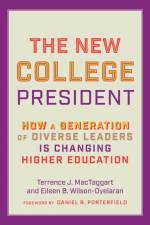
Think you know what it takes to be an effective leader in higher education? You might be surprised.Think you know what it takes to be an effective leader in higher education? You might be surprised.Why is it so difficult to find and hire college and university presidents? Perhaps search committees are recruiting in all the wrong places. In The New College President, Terrence J. MacTaggart and Eileen B. Wilson-Oyelaran share the stories of seven exceptional presidents from diverse backgrounds. Drawing on hundreds of interviews, these vivid, deeply researched narratives depict the life stories and academic careers of university presidents whose unconventional backgrounds helped them grow into uniquely qualified leaders. The university presidents whom MacTaggart and Wilson-Oyelaran profile exhibit strengths of character and perspective developed through a range of challenging life experiences. Personal qualities like grit, resilience, compassion, and intercultural competence--along with academic credibility--contribute to their effectiveness as chief executives and are critical to presidential success in a fraught era of higher education. MacTaggart and Wilson-Oyelaran, who developed a "forensic" model for improving presidential searches that requires a much deeper look into personal leadership strengths and weaknesses than is typical in current search practices, are uniquely qualified to write this book. They present a fresh perspective on higher education leadership and actionable recommendations to improve presidential searches while arguing that a commitment to diversity, equity, and inclusion is not just a moral imperative, but a valuable opportunity to recruit extraordinary leaders.Featuring Jeffrey Bullock, Waded Cruzado, Mary Dana Hinton, Freeman Hrabowski III, Robert Jones, Kwang-Wu Kim, and Mary Marcy
"This work describes how pests have shaped the production of knowledge, in addition to their relationship with nature in rural South Africa"--
The latest groundbreaking work in eighteenth-century studies. Showcasing exciting new research across disciplines, Volume 53 of Studies in Eighteenth-Century Culture explores the juxtaposition between the fanciful romances and historical realities of the global eighteenth century. Katarzyna Bartoszynska assembles a series of essays on the work of the late seventeenth-century Japanese writer Ihara Saikaku. Susan Spencer evaluates Saikaku's status as a celebrity author, David A. Brewer considers the uses of woodcuts in Saikaku's texts, and Scott Black reflects on Saikaku's relationship to modernity and realism. In other essays, new perspectives are offered on the ideological functions of literary texts and visual art produced in Britain, France, and Anglophone North America. Ziona Kocher examines the queer pleasures of cross-dressing in William Wycherley's The Country Wife, and Anaclara Castro-Santana reads Benjamin Hoadly's The Suspicious Husband as a political production. Ann Campbell assesses Moll Flanders's creative use of legal contracts, while Aphra Behn's Oroonoko leads Jeremy Chow to posit the existence of an "interspecies imaginary" in the context of the period's colonialisms. Yasemin Altun argues that Élisabeth-Sophie Chéron's controversial design for a print functioned as a feminist statement. Lilith Todd uses Sianne Ngai's concept of "stuplimity" to explain the feverish style of natural histories like Hans Sloane's Voyage, and Emma Pearce documents the subversive implications of global fashion. Michael Monescalchi's essay draws out the political theory of evangelical republicanism in the sermons of Lemuel Haynes and Timothy Dwight. A focused section on "Venice, Real and Imagined" follows, introduced by Irene Zanini-Cordi and featuring two essays: one by John Hunt on Venetian women and magic, and another by Susan Dalton on Giustina Renier Michiel's deft handling of patriotism, popular taste, and regime change. Volume 53 of SECC concludes with essays that reflect new research on fairy tales, music, and popular entertainment. Contributors: Yasemin Altun, Katarzyna Bartoszynska, Scott Black, David A. Brewer, Ann Campbell, Anaclara Castro-Santana, Jeremy Chow, Susan Dalton, Kirby Haugland, John Hunt, Timothy Jenks, Diane Kelley, Ziona Kocher, Michael Monescalchi, Sharon Diane Nell, Joseph V. Nelson, Emma Pearce, Susan Spencer, Allison Stedman, Lilith Todd, Aurora Wolfgang, Irene Zanini-Cordi
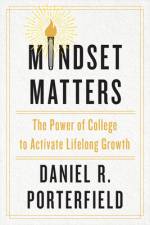
"This work shares how college fosters a growth mindset in students, and explains why such a mindset matters"--
Now completely updated! The essential guide for people with melanoma.In Beating Melanoma, world-renowned skin cancer expert Dr. Steven Q. Wang provides an indispensable guide for those diagnosed with melanoma. Now in its second edition and completely revised, this practical guide offers up-to-date research on the diagnosis, treatment, and prevention of melanoma, and a readable narrative that demystifies everything from the pathology report to the stages of cancer. This new edition features updated information on new immunotherapies and targeted therapies, as well as access to online interviews with more than 25 leading melanoma experts from fields including dermatology, medical oncology, surgical oncology, radiation oncology, dermatopathology, and genetics. Beating Melanoma approaches the disease in two phases. First, Dr. Wang lays out a step-by-step guide for approaching the "mad rush" phase--an intense and stressful period from diagnosis to completing initial treatment. Dr. Wang's calm guidance helps readers through this critical time with an easy-to-understand plan for ensuring optimal treatment and survival outcomes. Once the mad rush phase is over, the "marathon phase" begins--life resumes its normal shape but with lingering concerns about new melanoma and metastases. Here Dr. Wang addresses common questions about prevention and prognosis. This guide is a thorough, comforting, and informative book for melanoma patients and their families.
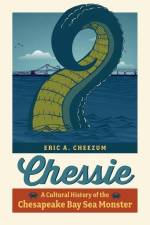
Chessie is an enthralling exploration of the profound power of a symbol that underscores both the affection the public continues to have for the monster and the cultural transformations in the region at the end of the twentieth century.
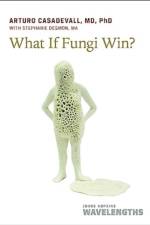
Could fungal pathogens outsmart us before we find ways to combat them?Humans and fungi share 50 percent of the same DNA. Because we're related, designing drugs to combat the varieties that attack us is a challenge. Meanwhile, in an ever hotter, wetter world, fungi may be finding new ways to thrive, queueing up global outbreak potentials for which no vaccine and woefully few medications exist; some fungi are already finding ways to resist treatment. Among other lifeforms, bats, amphibians, and essential crops are also increasingly threatened by these pathogens. Enter fungal kingdom frontiersman Dr. Arturo Casadevall, an epidemiologist, professor, and inventor. Casadevall shares how the 1990s AIDS epidemic's fungal complications drove his medical mycology work, how COVID-19's fungal incidences underscored the continuing threat to the immunocompromised, and how he and his Johns Hopkins University laboratory team are discovering ways to counter the threats posed by these smart, hungry combatants.What If Fungi Win? describes the beneficial roles of fungi along with their mischievous and deadly impacts and illustrates how committed experts like Casadevall are researching ways to save us and our food supplies. In addition to an overview of blights, lichens, molds, mushrooms, rusts, and smuts, readers will learn about: - how fungi proliferated following the mass dinosaur extinction- Oregon's ancient 2,384-acre Armillaria ostoyae--Earth's largest organism - the rye fungus ergot that may have fueled the Salem witch trials- mushrooms used to create vegan leather and eco-friendly packaging, as well as plastic-consuming fungi- why it's critical that funding institutions pay attention to fungal risks and aid scientists in their work.
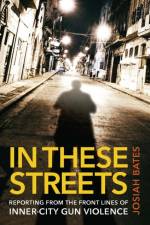
A groundbreaking expose on the rise of gun violence in recent years.Journalist Josiah Bates pulls back the curtain on a crisis that continues to plague the United States in this gripping narrative. Fueled by the convergence of the COVID-19 pandemic and social unrest, gun violence has surged to unprecedented levels, devastating marginalized communities and urban areas across the nation. Bates embarks on a heart-wrenching journey, crisscrossing the country to meet victims, perpetrators, community activists, and renowned scholars. Through their powerful stories, he unearths the hidden causes behind the escalating gun violence epidemic. From the corrosive effects of poverty to the contentious debates surrounding policing and calls to defund law enforcement, Bates fearlessly navigates the intricate web of factors influencing gun violence. Through firsthand accounts and expert analysis, he exposes the systemic failures that perpetuate this cycle of destruction and delivers a powerful clarion call for change. Bates amplifies rarely heard voices in this debate, including both victims and perpetrators of shootings, some of whom now work tirelessly to dismantle the violence in their communities. Their stories, alongside Bates's unflinching reporting, illuminate a path toward long-term solutions. As the nation grapples with this relentless epidemic, Bates presents a compelling case for unity and action. In These Streets is a groundbreaking investigation that uncovers the deep-rooted causes of gun violence, empowering readers with the knowledge, empathy, and inspiration needed to drive meaningful transformation.
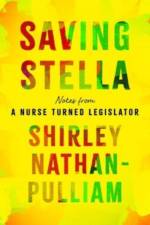
The compelling autobiography of a nurse-turned-state senator determined to make health care equitable and available for all.From her childhood in Jamaica to her early days in nursing and, eventually, to her entry into politics, Shirley Nathan-Pulliam has exemplified what it means to translate principles and values into action through legislation and advocacy. Saving Stella takes readers on her personal and political journey by highlighting the injustices faced by Stella, a woman diagnosed with breast cancer. The experience of helping Stella-a woman whose position in society denied her timely diagnosis and treatment for her breast cancer--inspired much of Nathan-Pulliam's professional path. Her gripping accounts of political battles, strategic alliances, and landmark bills provide insight into the art of governance and politics and the power of courage, perseverance, and remarkable compassion in the face of seemingly insurmountable challenges. Nathan-Pulliam's passion to ensure a future where people like Stella can get the care they need drives her tireless efforts to address health disparities and fight for meaningful change. Saving Stella is a poignant and thought-provoking autobiography that sheds light on the complex realities of health care and the profound impact of policy decisions. It is a testament to one woman's determination to make a difference and create a more equitable and compassionate health care system for all.
"This work addresses how the titular question, in and of itself, facilitates the commercialization of higher education"--
"This work is a practical guide to strategic planning for nonprofits: what it is, why you should be doing it, and how to get it done"--
"This work provides a comprehensive analysis of contemporary leadership scholarship that examines how leadership is conceptualized within higher education"--
Explores human dignity and care in the face of disease and disability.Complex contemporary experiences with disease, death, and disability in the United States have made the concept of human dignity seem outdated. In Doing Dignity: Ethical Praxis and the Politics of Care, Christa Teston challenges conventional notions of dignity and, based on analyses of clinical observations, interviews, and focus groups, encourages a new understanding of care.This thought-provoking book presents a practice-based approach to human dignity through three compelling case studies: US health care professionals' COVID-19 caretaking experiences, legislative debates about medical aid in dying, and clinical interactions between wheelchair users and health care professionals. Teston demonstrates how dignity is not an abstract idea but rather is a set of practices embedded in the politics and complexities of care. Drawing from feminist care ethics, rhetorical theory, disability studies, and critical Black studies, Doing Dignity offers a fresh perspective on the moral underpinnings of modern-day medicine. Teston explores how health care professionals enact dignity despite the challenges of market-based medicine, the commodification of care, and shifting societal discourse on disease, dying, and disability. This book transcends philosophical debates and provides practical insights for both patients and practitioners. Without falling into sentimentality or hopelessness, Doing Dignity honors human vulnerability while revealing how situational factors influence the practice of dignified care.
Explores the historical development and severe ramifications of America's strict abortion regulations.Nearly one in four women in the United States undergoes an abortion during their lives. In Regulating Abortion, Deborah R. McFarlane and Wendy L. Hansen uncover the history of the complex web of regulations surrounding abortion in the United States and shed light on the stark reality of this heavily regulated and politically divisive health care service. McFarlane and Hansen delve into the historical development of abortion regulations since Roe v. Wade. They explore the underlying reasons for the extensive regulation of what they assert is a routine and safe medical procedure. The authors examine the multitude of factors that influence state-level abortion policies, including party affiliation, religion, the representation of women in legislatures, and political contributions. By demonstrating how these factors shape the landscape of abortion regulation across different states, they reveal the varying methods and justifications used to either restrict or protect abortion access, with a particular focus on the disproportionate impacts on women of color. The recent landmark US Supreme Court decision in Dobbs v. Jackson Women's Health Organization overturned long-standing precedents. McFarlane and Hansen provide timely insights into the implications of this ruling and how it further amplifies the disparities among states in regulating abortion. An essential resource for understanding the influences driving this divide, Regulating Abortion offers a comprehensive analysis of US abortion policy contextualized by relevant Supreme Court decisions and a comparative exploration of abortion regulation in Western Europe.
Humanities have the potential to transform human culture--and an obligation to preserve it.In The Public Humanities Turn, Philip Lewis argues that universities are uniquely equipped to act as catalysts for cultural change in the face of the climate crisis. In closely linked essays that explore the evolution of the academic humanities in the era of climate change, he foregrounds the rise of the public humanities, a movement that has been gaining momentum over the past two decades. Surveying a variety of approaches to the public humanities, Lewis relates their emergence to the evolution of higher education and its achievements, problems, and goals. Current academic efforts to engage with the public at large, led by scholars with interdisciplinary commitments, are significant yet far from sufficient. Situating the university as a global institution, Lewis contends that it faces an urgent imperative to collaboratively address common needs and looming crises in a public-facing initiative that integrates the arts, humanities, and social sciences and draws them into a future-oriented dialogue with earth systems science. Advocating for the urgent educational mission of safeguarding humanity's survival on a habitable earth, Lewis proposes a sharpened focus for the public humanities that would position universities as active agents of cultural transformation. The Public Humanities Turn is a clarion call for institutional and cultural change and a must-read for anyone interested in the humanities, climate change, activism, organizational reform, and the future of higher education.
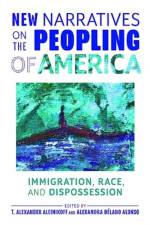
"This work comprises essays from a wide range of perspectives, from scholars to poets, to create an engaging text that challenges readers on both sides to move beyond a simplistic understandings of immigration history and policy"--
The fascinating history of the St. Louis Bridge, the first steel structure in the world.In Spanning the Gilded Age, John K. Brown tells the daring, improbable story of the construction of the St. Louis Bridge, known popularly as the Eads Bridge. Completed in 1874, it was the first structure of any kind--anywhere in the world--built of steel. This history details the origins, design, construction, and enduring impact of a unique feat of engineering, and it illustrates how Americans built their urban infrastructure during the nineteenth century. With three graceful arches spanning the Mississippi River, the Eads Bridge's twin decks carried a broad boulevard above a dual-track railroad. To place its stone piers on bedrock, engineer James Eads pioneered daring innovations that allowed excavators to work one hundred feet beneath the river. With construction scarcely begun, Eads circulated a prospectus--offering a 500 percent return on investment--that attracted wealthy investors, including J. Pierpont Morgan in New York and his father, Junius, in London. This record-breaking design, which employed a novel method to lay its foundations and an untried metal for its arches, was projected by a steamboat man who had never before designed a bridge. By detailing influential figures such as James Eads, the Morgans, Andrew Carnegie, and Jay Gould, Spanning the Gilded Age offers new perspectives on an era that saw profound changes in business, engineering, governance, and society. Beyond the bridge itself, Brown explores a broader story: how America became urban, industrial, and interconnected. This triumph of engineering reflects the Gilded Age's grand ambitions, and the bridge remains a vital transportation artery today.
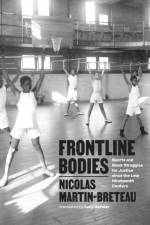
A captivating exploration of Black American civil rights activism through the lens of sport.In Frontline Bodies, Nicolas Martin-Breteau argues that sports are not--and have never been--purely about entertainment for Black Americans. Instead, beginning in the 1890s during Reconstruction, Black Americans proactively used athletics as a tactic to fight racial oppression. Since the body was the primary target of anti-Black racial oppression, African Americans turned sports into a key medium in their struggles for dignity, equality, and justice. Although Black photography and art also aimed at displaying the dignity of the Black body, sports arguably had the greatest impact on American and international public opinion. Martin-Breteau considers the work of Edwin B. Henderson, a prominent Black physical educator, civil rights activist, and historian of Black sports. Training Black children as athletes, Henderson felt, would work both to fortify racial pride and to dismantle racial prejudices--two necessary requirements for a successful political liberation struggle. In this way, physical education became political education. By the end of World War II, the tactic of racial uplift through sports had reached its peak of popularity, only to subsequently lose its appeal among younger activists, many of whom believed that the strategy was ineffective in fighting institutional racism and served mainly as an emulation of middle-class white norms. By the end of the twentieth century, Martin-Breteau argues, racial uplift through sports had lost its emancipating power. The emphasis on the accumulation of wealth for professional athletes, as well as sports' ability to reinforce anti-Black stereotypes, had become a political problem for true collective liberation. For a marginalized group of people that has been physically excluded from the democratic process, however, sports remain a political resource. By studying the relationship between athletics and politics, Frontline Bodies renews the history of minority bodies and their power of action.
"This book targets higher education leaders and provides a rare playbook for what to do and how to avoid various pitfalls"--
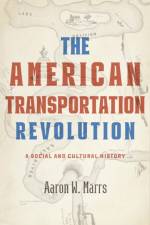
"This book highlights the rich social and cultural history of the transportation revolution"--
"This work speaks directly to the needs and strengths of the voices of leaders from marginalized groups"--
"This work illustrates how people like Smith Islanders claim their lives in an ecologically changing unstable place"--
"This work shows how university leaders can apply their values, principles, and practices during crisis"--
A spirited look at how funeral homes impacted American consumerism, the built environment, and national identities.Funeral homes--those grand, aging mansions repurposed into spaces for embalming, merchandising, funeral services, and housing for the funeral director and their family--are immediately recognizable features of the American landscape, and yet the history of how these spaces emerged remains largely untold. In Preserved, Dean Lampros uses the history of this uniquely American architectural icon to explore the twentieth century's expanding consumer landscape and reveal how buildings can help construct identities.Across the United States, Lampros traces the funeral industry's early twentieth-century exodus from gloomy downtown undertaking parlors to outmoded Victorian houses in residential districts. As savvy retailers and accidental preservationists, funeral directors refashioned the interiors into sumptuous retail settings that stimulated consumer demand for luxury burial goods. These spaces allowed for more privacy, more parking, and helped turn Americans away from traditional home funerals toward funeral homes instead. Moreover, by moving into neighborhoods that were once the domain of white elites, African American funeral directors uplifted their industry and altered the landscape of white supremacy.The funeral home has tracked major changes in American culture, including an increased reliance on the automobile and the rise of consumer culture. Preserved offers an in-depth cultural history of a space that is both instantly familiar and largely misunderstood.
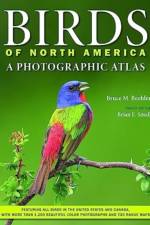
The most up-to-date and gorgeous photographic collection of all 1,144 bird species in North America (including Hawaii!).A Great Blue Heron, a Wood Duck, a Baltimore Oriole, an Eastern Bluebird, or a Belted Kingfisher--which North American bird species is your favorite? In Birds of North America: A Photographic Atlas, Bruce M. Beehler provides the information and images you need to identify and enjoy each of the 1,144 amazing and diverse bird species recorded in the United States and Canada, including Hawaii and Alaska. Featuring more than 1,200 full-color photographs and illustrations and more than 700 range maps, this comprehensive reference provides both beginners and seasoned birders with important facts about each bird's ecology, behavior, seasonal movements, nesting biology, and conservation status. Birds of North America gives bird-lovers everything they could ask for: The photographs and illustrations, selected and curated by Brian E. Small, one of America's most talented nature photographers, depict each species in its most beautiful plumage and natural habitat. The largest, most detailed, and most up-to-date range maps available anywhere provide invaluable insider information on the best birding hotspots. And the special sections rounding out the book offer helpful guidance on birding gear, field trip planning, critical resources, and conservation issues. This is the book for aspiring and veteran bird enthusiasts alike.
"This work provides a comprehensive review of the natural history of the 58 species living tortoises, the majority of which are threatened by extinction"--
Abonner på vårt nyhetsbrev og få rabatter og inspirasjon til din neste leseopplevelse.
Ved å abonnere godtar du vår personvernerklæring.