

























Gjør som tusenvis av andre bokelskere
Abonner på vårt nyhetsbrev og få rabatter og inspirasjon til din neste leseopplevelse.
Ved å abonnere godtar du vår personvernerklæring.Du kan når som helst melde deg av våre nyhetsbrev.

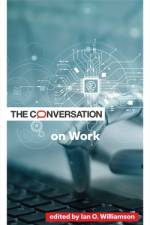
From contributors to TheConversation.com, illuminating essays on how and why working in the twenty-first century is rapidly changing.
A radical exploration of how higher education can advance transformative climate justice.
A compelling call to action to focus on what connects us in nature to solve today's problems.
This game-changing book questions long-accepted rules of primate socioecology and redefines the field from the ground up.
A critical edition of ten rare pamphlets on science and religion published from 1922-1931 by the University of Chicago Divinity School.In the years surrounding the Scopes trial in 1925, liberal Protestant scientists, theologians, and clergy sought to diminish opposition to evolution and to persuade American Christians to adopt more positive attitudes toward modern science. With funding from the Rockefeller Foundation and many leading scientists, the University of Chicago Divinity School published a series of ten pamphlets on science and religion to counter William Jennings Bryan's efforts to ban evolution in public schools. In Protestant Modernist Pamphlets, historian Edward B. Davis, who discovered these pamphlets, reprints them with extensive editorial comments, annotations, and introductions to each. Based on unpublished correspondence and internal Divinity School documents, these introductions narrate the origin of the pamphlets, as well as their funding sources and how readers reacted to them. Letters from dozens of top scientists at the time reveal their previously unknown views on God and the relationship between science and religion. Viewed together, the pamphlets and Davis's critical assessment of their historical importance provide an intriguing perspective on Protestant modernist encounters with science in the early twentieth century.
How the internet's memory infrastructure developed--averting a "digital dark age"--and introduced a golden age of historical memory.In early 1996, the web was ephemeral. But by 2001, the internet was forever. How did websites transform from having a brief life to becoming long-lasting? Drawing on archival material from the Internet Archive and exclusive interviews, Ian Milligan's Averting the Digital Dark Age explores how Western society evolved from fearing a digital dark age to building the robust digital memory we rely on today.By the mid-1990s, the specter of a "digital dark age" haunted libraries, portending a bleak future with no historical record that threatened cyber obsolescence, deletion, and apathy. People around the world worked to solve this impending problem. In San Francisco, technology entrepreneur Brewster Kahle launched his scrappy nonprofit, Internet Archive, filling tape drives with internet content. Elsewhere, in Washington, Canberra, Ottawa, and Stockholm, librarians developed innovative new programs to safeguard digital heritage.Cataloging worries among librarians, technologists, futurists, and writers from WWII onward, through early practitioners, to an extended case study of how September 11 prompted institutions to preserve thousands of digital artifacts related to the attacks, Averting the Digital Dark Age explores how the web gained a long-lasting memory. By understanding this history, we can equip our society to better grapple with future internet shifts.
"This work discusses the cost youths pay for trying to survive in under resourced communities"--
Deaths from preventable diseases have decreased life expectancy in the United States for the first time in a century, making it clear that we must deal with the crisis by embracing prevention as our nation's top health sector priority.
A doctor's firsthand account of the devastating impacts of gun violence-and how we can end this epidemic.
A timely look at the ethical, legal, and policy issues surrounding brain injury and collision sports.
An indictment of the grading system in American schools and colleges-and a blueprint for how we can change it.
The essential guide to living with orthostatic intolerance.
How surveillance perpetuates long-standing injustices woven into the fabric of higher education.
Building sustainable diversity in higher education isn't just the right thing to do-it is an imperative for institutional excellence and for a pluralistic society that works.
Legendary conservationists show us that we still have the power to prevent critical consequences of the sixth extinction in this game-changing book.
A compelling study into the history and lasting influence of enslaved Native people in early South Carolina.
Evidence-based approaches to building safe, healthy, and inclusive schools for all children.
The war in Ukraine has altered the course of global history. These authors explore how.When Vladimir Putin's forces sought to conquer Ukraine in February 2022, they did more than threaten the survival of a vulnerable democracy. The invasion unleashed a crisis that has changed the course of world affairs. This conflict has reshaped alliances, deepened global cleavages, and caused economic disruptions that continue to reverberate around the globe. It has initiated the first great-power nuclear crisis in decades and raised fundamental questions about the sources of national power and military might in the modern age. The outcome of the conflict will profoundly influence the international balance of power, the relationship between democracies and autocracies, and the rules that govern global affairs. In War in Ukraine, Hal Brands brings together an all-star cast of analysts to assess the conflict's origins, course, and implications and to offer their appraisals of one of the most geopolitically consequential crises of the early twenty-first century. Essays cover topics including the twists and turns of the war itself, the successes and failures of US strategy, the impact of sanctions, the future of Russia and its partnership with China, and more.Contributors: Anne Applebaum, Joshua Baker, Alexander Bick, Hal Brands, Daniel Drezner, Peter Feaver, Lawrence Freedman, Francis Gavin, Brian Hart, William Inboden, Andrea Kendall-Taylor, Michael Kimmage, Michael Kofman, Stephen Kotkin, Mark Leonard, Bonny Lin, Thomas Mahnken, Dara Massicot, Michael McFaul, Robert Person, Kori Schake, and Ashley Tellis.
"This work is the first comprehensive historical survey of intercollegiate athletics at American universities"--
The riveting account of how asymptomatic transmission drove COVID-19's global spread and catalyzed interventions to control it.Why was COVID-19 so difficult to contain and so devastating to people and economies worldwide? In Asymptomatic, author Joshua S. Weitz explains how silent transmission enabled COVID-19's massive and tragic global impact. Weaving the science of viral infections together with an insider's look at response efforts, Weitz guides readers through the shockwaves of successive epidemic waves as public health officials and academic research teams confronted the rise and risk of what was then a burgeoning global pandemic. The discovery of asymptomatic spread also fueled competing narratives: either COVID-19 was about to dissipate as quickly as it had emerged or completely disrupt life as we knew it. Weitz, a physicist-turned-biologist who directs a quantitative viral dynamics research group and has been immersed in COVID-19 response efforts, explains both why and how scientists tried to wade through competing narratives and warn the public of COVID-19's profound risk. As explored through a careful analysis of local outbreaks, accessible descriptions of virus dynamics, and the use of predictive models to guide response efforts, Asymptomatic provides readers a unique look into the secret ingredient that allowed COVID-19 to spread across borders and the high-impact interventions needed to fight it and future pandemics.
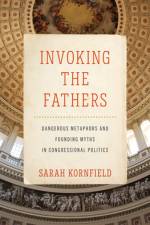
Why is the metaphor of the 'Founding Fathers' so insidious-and how does it impact American politics?
Unpacks the mysteries of COVID-19's origins to impart important lessons for future outbreaks.Unpacking the mysteries of COVID-19's origins to impart important lessons for future outbreaks.In this timely book, leading public health expert Laura H. Kahn uses the comprehensive One Health approach to investigate the COVID-19 pandemic. The concept of "One Health" recognizes the interconnected links among the health of humans, animals, plants, and the environment. By comparing the history, science, and clinical presentations of three different coronaviruses--SARS-CoV-1, MERS, and SARS-CoV-2 (COVID-19)--Kahn uncovers insights with important repercussions for how to prepare for and avoid future pandemics.The One Health approach is a useful framework for examining the outbreak of COVID-19. Understanding the origins of this zoonotic disease requires examining the environmental and molecular biological factors that allowed the virus to spread to humans. Kahn investigates the many ways in which the wild animal trade, wet markets, and the camel industry contributed to the spread of earlier coronaviruses such as SARS-CoV-1 and MERS. The book also explores the biosafety, biosecurity, and bioethics implications of gain-of-function research on pandemic potential pathogens. This important book is a must-read to understand the history, science, and geopolitics of the COVID-19 pandemic.
An inside look at the unique balance the Amish strike between tradition and the demands of the modern world.From technology to social forces, the Amish face an evolving modern world. Their facility in determining whether to accept, reject, or bargain with the options that challenge them allows for measured change that sustains their social fabric and beliefs. In Dancing on the Devil's Playground, James A. Cates employs a sociocultural model to analyze this negotiation and its applications in Amish culture. Cates, a clinical psychologist, draws on his extensive experience working with Amish families and communities as a mental health professional, as well as the scholarship of Donald B. Kraybill, a leading Amish expert who developed the "negotiation with modernity" model. Cates uses this paradigm to examine the Amish's principles of assessment and evaluation, their cautious tempo in response to change, and their strategies of critical analysis during negotiations. Dancing on the Devil's Playground features seven fascinating case studies of how the Amish interact with legal, health care, and civil authorities and will help readers better understand Amish perspectives on medical, social, and emotional aspects of life. These case studies include, for example, negotiation with the telephone, services for special medical needs, substance abuse, child sexual abuse, and domestic violence. These essays illustrate the negotiation techniques the Amish use to protect their unique culture while adapting to the needs of the modern world. The Amish adopt, adapt, defer, or decline the changes they face, all while maintaining their traditions and a unique identity that includes an appropriate distance from the rest of the world.
Abonner på vårt nyhetsbrev og få rabatter og inspirasjon til din neste leseopplevelse.
Ved å abonnere godtar du vår personvernerklæring.