








Gjør som tusenvis av andre bokelskere
Abonner på vårt nyhetsbrev og få rabatter og inspirasjon til din neste leseopplevelse.
Ved å abonnere godtar du vår personvernerklæring.Du kan når som helst melde deg av våre nyhetsbrev.

From TheConversation.com, a critical analysis of the tenuous future of higher education.Coming soon! The Conversation on Higher Ed, edited by Mary L. Churchill.
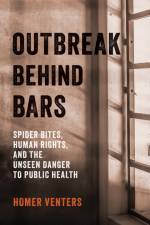
How the failure to protect incarcerated people from infections has led to preventable outbreaks--and how public health professionals can make a difference.In late 2019, Dennis Oya's persistent cough was just the beginning of a harrowing tale of neglect and systemic failure in a Washington prison. Diagnosed 18 months later with tuberculosis (TB), Oya's case sparked one of the largest prison TB outbreaks in decades, affecting over 3,000 contacts. This outbreak, and others like it, exposes the glaring weaknesses in prison healthcare systems. In Outbreak behind Bars, Homer Venters reveals the grim realities of how communicable diseases thrive in the overcrowded, unsanitary conditions of correctional facilities. From TB to Methicillin-resistant Staphylococcus aureus (MRSA), these infections spread rapidly due to systemic neglect and inadequate medical responses. The book highlights the stories of those who suffered, the failures in health care provision, and offers specific guidance for public health professionals in conducting investigations and facility inspections during outbreaks behind bars. With firsthand accounts and expert analysis, this book illustrates the urgent need for reform in prison health care to protect incarcerated people and the wider community. Outbreak behind Bars is a crucial read for anyone concerned about justice, public health, and the overlooked plight of incarcerated people, especially students, faculty and professionals in the field of public health.
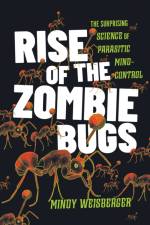
Zombies aren't just the stuff of nightmares. Explore the fascinating world of real-life insect zombification.Zombies are all around us--insect zombies, that is. In Rise of the Zombie Bugs, Mindy Weisberger explores the eerie yet fascinating phenomenon of real-life zombification in the insect class and among other invertebrates. Zombifying parasites reproduce by rewriting their victims' neurochemistry, transforming them into the "walking dead: " armies of cicadas, spiders, and other hosts that helplessly follow a zombifier's commands, living only to serve the parasite's needs until death's sweet release (and often beyond). Through vivid descriptions and captivating storytelling, Weisberger explains the sinister mechanics of nature's most cunning survival strategies, including the biological marvels and evolutionary intricacies behind zombie ants, mind-controlled beetles, and the fungi and viruses that reprogram their hosts' behavior. Blending scientific rigor with a flair for the macabre, Weisberger takes readers on a global journey--from Brazilian rainforests to European meadows--to uncover the dark secrets of parasitic manipulation. Her examination of these creatures seeks to answer fundamental questions of their existence: why is a bug's world full of zombies, why are arthropods so susceptible to this zombification, and could the creators of zombie bugs ever evolve to do the same to people? Perfect for fans of horror and science alike, Rise of the Zombie Bugs offers a chilling yet enlightening look at the hidden world of parasites. It's a must-read for anyone curious about the true terrors lurking in nature's undergrowth and the unnerving beauty of evolution's darker side.
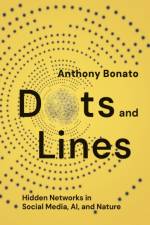
Can networks unlock secrets of AI or make sense of a social media mess? A behind-the-scenes look at how networks reveal reality.According to mathematician Anthony Bonato, the hidden world of networks permeates our lives in astounding ways. From Bitcoin transactions to neural connections, his book explains how networks shape everything from political landscapes to climate patterns and how deceptively simple dots and lines can unveil the wonders of technology, society, and even nature. From a fresh and startling look at the true impact of clever keywords in politicians' social media posts to a fun breakdown of survival strategies in reality TV shows, Bonato shows us how network theory operates everywhere. Each chapter focuses on a unique aspect of networks to reveal how they provide a captivating lens for bringing diverse phenomena into clearer focus.The book offers an accessible snapshot of networks for anyone curious about what makes the modern world tick. Bonato's insights will give readers a deeper appreciation and understanding of networks and their relevance to our everyday lives.
"This work has a collection of short stories by an American novelist"--
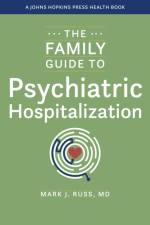
This accessible guide teaches readers: Tools to cope with difficult emotions; Strategies to empower loved ones, including how to navigate the mental health system; Communication and limit-setting skills; Approaches to supporting loved ones who have experienced trauma or have PTSD; Ways to manage common challenges, such as alcohol or drug misuse, and when a loved one declines professional help; Strategies to support children; Skills to build personal resilience and strengthen relationshipsGrounded in science, empowering, and hopeful yet realistic, this book is an invaluable resource for family members, friends, and mental health professionals.
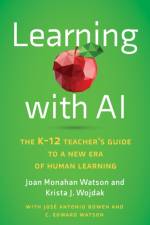
This book serves as a compass, guiding educators through the uncharted territory of AI-powered education and the future of teaching and learning.
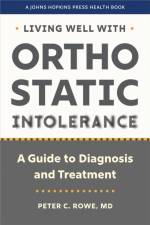
The essential guide to living with orthostatic intolerance. Orthostatic intolerance (OI) describes a group of circulatory disorders whose symptoms are characterized by a dramatic drop in blood flow to the brain when people sit down or stand up. It is often associated with other acute issues, such as substantial drops in blood pressure, tachycardia, dizziness, and fainting, or long-term problems, such as chronic fatigue, fibromyalgia, and "long COVID." Living Well with Orthostatic Intolerance is an indispensable guide for those diagnosed with the disorder, their families, and physicians. Written by Peter C. Rowe, MD, a pediatrician, researcher, and professor who directs the Chronic Fatigue Clinic at Johns Hopkins Children's Center, this guide explains:¿ The symptoms, causes, and different forms of OI¿ What a diagnosis of OI entails¿ How to manage OI symptoms using medications, physical therapy, and other treatments¿ How diet affects OIGuided by decades of research on managing and treating OI patients, Dr. Rowe provides illustrative case studies to help explain the disease and includes additional resources for further information.
A groundbreaking new history of global health from one of the greatest leaders in the field.In Change Is Possible, public health legend William H. Foege and five coauthors chronicle the failures and successes of global health through the modern age, including the massive impacts of colonialism, religious groups, philanthropies, politics, NGOs, and more.Foege, who has served in local, national, and international public health contexts-including as the director of the Centers for Disease Control and Prevention-is uniquely qualified to reflect on the history of global health. He and his Rollins School of Public Health coauthors explain why colonialism has been the greatest disaster for global health, whereas military medicine may have been its greatest asset. From the rapid development of NGOs to the impact of pharmaceutical companies over the last 35 years, to the hybrid programs that are now responsible for innovative contributions, the authors discuss multiple impacts on global health. In other chapters with coauthors Paul Elish, Alison Hoover, Madison Lee, Deborah Chen Tseng, and Kiera Chan, Foege explores additional essential topics such as the legacy of colonialism in global health, early philanthropy versus new philanthropy, and how to promote positive change. Foege also shares critical lessons from the smallpox campaign-a disease he helped eradicate-and how these historical lessons can be applied in global health work today.The book's research and reflections make this an essential book for students and readers interested in global health. In a narrative that is both deeply personal and universal, Foege shares lessons learned and personal experiences that craft a strikingly new history of global health.
Essential essays on the environmental impacts of factory farms on public health.The rapid--and relatively recent--concentration of food animal production into factory farms makes meat plentiful and cheap, but this type of agriculture comes at a great cost to human health and the environment. In Industrial Farm Animal Production, the Environment, and Public Health, editors James Merchant and Robert Martin bring together public health experts to explore the most critical topics related to industrial farm animal production.The environmental impacts of these concentrated animal-feeding operations endanger the health of farm and meatpacking workers, neighbors, and surrounding communities. Factory farms create public health hazards such as antibiotic-resistant bacteria due to the overuse of antibiotics in livestock, as well as water polluted with nitrates, microbes, and other harmful chemicals. Despite the clear need for greater worker protection and oversight to mitigate the environmental harms of these practices, factory farms are notoriously difficult to regulate. Industrial animal operations are located predominantly in rural areas, often next to poor communities and communities of color. Food companies have driven independent producers nearly to extinction, sapped the economic vitality of rural communities, and amassed sweeping political influence at both the state and national levels to effectively prevent mitigation efforts.Essays in this volume cover pertinent topics such as the history, structure, and trends in the factory farming industry; water and air pollution; infectious disease health effects; community and social impacts; environmental justice and sustainable agriculture; and the impacts of COVID-19 among meatpacking workers.
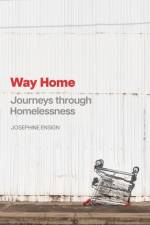
Can one city's solutions to homelessness help the United States face the issue nationally?The United States grapples with a solution for the unhoused by employing a patchwork of uneven rhetoric and policy. How can policymakers and public health professionals address this urgent problem in more innovative and sustainable ways? In Way Home, Josephine Ensign explores the contemporary landscape of homelessness by focusing on Seattle in King County to assess how their innovative local solutions can be scaled up nationally. From consumer-led shelter programs to the expansion of the Housing First model of care, Seattle-King County is a leader in this area. Ensign assesses the effectiveness of policies such as child tax credits, rental subsidies, eviction moratoriums, and programs for vehicle residents. As an expert in the field who has also experienced homelessness, Ensign draws from an extensive oral history project to share poignant firsthand accounts that inform and enrich her storytelling. This narrative incorporates human rights, support services, public health issues, and a path forward that acknowledges the true realities of people living unhoused. Amid the rapidly evolving public health and political landscape accelerated by the COVID-19 pandemic, Way Home deepens our understanding of the historical roots of homelessness and highlights innovative public policy and program efforts at the national, state, and local levels to address it.
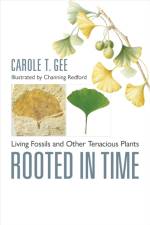
An intriguing portrait of persistent plants with deep roots that have survived eons on earth, featuring exquisite watercolors and numerous color photos.Plants are tenacious organisms. Their green ancestors were among the earliest living beings on Earth, while clubmosses and ferns that arose 400 million years ago still thrive in the moist understory of temperate and tropical forests. Plants like these are considered "living fossils," as they have remained unchanged for hundreds of millions of years or are the sole survivors of their once diverse lineage. In Rooted in Time, paleobotanist Carole T. Gee shares stories of the remarkable plants that first appeared eons ago, yet still green the planet today. This romp through the plant kingdom begins 3,500 million years ago, with the first photosynthesizing organisms on earth--the cyanobacteria. It then leads us down fascinating evolutionary paths to the ancient cousins of the evergreen wreaths on your own front door. Rooted in Time highlights more than eighteen plants with extreme longevity, exploring their botanical significance, cultural importance, natural history, and ethnobotanical usefulness. Between the plant vignettes, Gee explains how plants met the challenges of growing in new habitats and ecological niches by conquering life on land, evolving seeds and cones, and making flowers. Rooted in Time pulls together facts from cutting-edge paleontological research and botanical science to offer engaging narratives on unique plants that grace our world with their quiet dignity and extraordinary longevity. Lavishly illustrated with more than a hundred color photos and exquisite watercolor portraits, this book will appeal to plant lovers at all levels--from avid gardeners and botanical garden enthusiasts to college students and plant science professionals.
From the author of Generous Thinking: A Radical Approach to Saving the University comes a compelling guide to the art of collaborative leadership.
"This work provides a detailed look at how teaching and learning in higher education has changed after the pandemic"--
"This book holds up the honey bee colony as a lens through which we can view the evolutionary processes that give rise to complex organisms"--
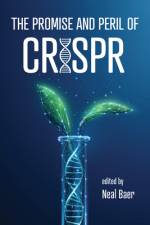
A timely collection of essays on the pressing possibilities and risks of gene-editing technology.Scientists and genetic engineers are becoming increasingly adept at editing the human genome. How far can--and should--they go in editing future generations? In The Promise and Peril of CRISPR, editor Neal Baer brings together a timely collection of essays by influential bioethicists, philosophers, and geneticists to explore the moral, ethical, and policy challenges posed by CRISPR technology.We are at a technological and ethical crossroads in grappling with the impacts of genetic editing. Gene-editing technology holds the promise of curing more than 7,000 known genetic diseases. Yet with that promise comes the peril of using CRISPR to edit the human genome, which could not only lead to manipulating human evolution, but also to creating and releasing pathogens capable of wreaking havoc on human, animal, and plant life. Although CRISPR has already cured several genetic diseases, it could also be used to design biological weapons or to edit the embryos of people who can afford to purchase genetic "enhancements" for their children. What role can and should the public play in discussing the far-reaching implications of gene editing? What oversights should be put in place to prevent a rogue scientist from engineering another baby - as was recently done with twins in China?Essay contributors offer informed predictions and guidelines for how the uses of CRISPR today will affect life in the future. Decisions we make now may have unpredictable consequences for future generations. For anyone concerned about the uses and potential abuses of gene editing, these essays provide a critical and comprehensive discussion of the central issues surrounding CRISPR technology. Contributors: Florence Ashley, R. Alta Charo, Marcy Darnovsky, Kevin Doxzen, Rosemarie Garland-Thomson, Gigi Kwik Gronvall, Jodi Halpern, Katie Hasson, Andrew C. Heinrich, Jacqueline Humphries, J. Benjamin Hurlbut, Ellen D. Jorgensen, Peter F. R. Mills, Carol Padden, Marcus Schultz-Bergin, Robert Sparrow, Sandra Sufian, Krystal Tsosie, Ethan Weiss, Rachel M. West
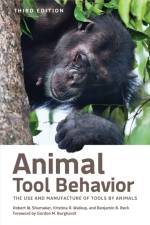
"This third edition is the essential, gold use standard reference of how animals use and manufacture tools, with a decade of new findings"--
A new history of the First Barbary War, a conflict that helped plant the seeds for the United States' ascent to a global superpower.
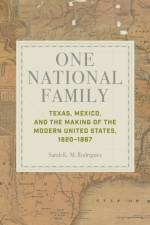
A fascinating new history of Texas that emphasizes the importance of Mexico's political culture in attracting US settlers and Texas's unique role in the nation-building efforts of both Mexico and the United States.
A unique history of how private spaces in public-such as public restrooms and dressing rooms-developed in the United States at the turn of the twentieth century.
This authoritative volume brings together decades of insights from one of the longest terrestrial fossil records on the planet.
The true story of David Henry White, a free Black teenage sailor enslaved on the high seas during the Civil War, whose life was falsely and intentionally appropriated to advance the Lost Cause trope of a contented slave, happy and safe in servility.
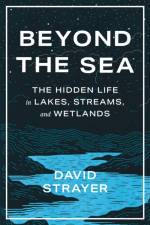
"This work brings to life the wonders of our inland waters and the vibrant species that live there"--
Abonner på vårt nyhetsbrev og få rabatter og inspirasjon til din neste leseopplevelse.
Ved å abonnere godtar du vår personvernerklæring.