





















Gjør som tusenvis av andre bokelskere
Abonner på vårt nyhetsbrev og få rabatter og inspirasjon til din neste leseopplevelse.
Ved å abonnere godtar du vår personvernerklæring.Du kan når som helst melde deg av våre nyhetsbrev.

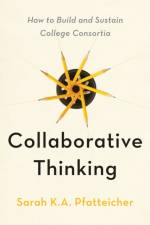
A blueprint for what's possible when higher education institutions embrace collaboration over competition.In Collaborative Thinking, Sarah K. A. Pfatteicher offers an insightful guide to the transformative potential of consortial thinking in higher education. With extensive experience leading one of the largest and oldest higher education consortia, Pfatteicher presents a framework for fostering collaboration that transcends the competitive mindset dominating many campuses today.The book examines how consortial partnerships--whether sharing academic resources, administrative functions, or cultural programs--can amplify institutional strengths, promote cost efficiencies, and tackle enormous societal challenges like climate change and social inequality. Combining real-world examples with practical guidance, Pfatteicher explores the structures, funding models, and leadership strategies that drive successful collaboration. She emphasizes the skills and motivations needed to create and sustain these partnerships, from building trust and shared purpose to committing resources and adapting to evolving needs. The book also offers cautionary tales of attempted collaborations gone awry--and how to avoid such missteps.Collaborative Thinking not only provides a blueprint for creating effective consortia but also demonstrates how the principles of collaborative leadership can also strengthen stand-alone campuses. In an era of rising costs, demographic shifts, and global challenges, this book makes a compelling case for the power of working together to reimagine the future of higher education.
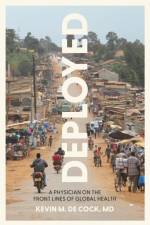
An insider's account of a global health leader's career tackling infectious diseases and systemic public health challenges.In Deployed, Kevin M. De Cock, MD, chronicles his extraordinary career as a physician who has confronted the world's most pressing infectious disease crises. Beginning his work at a time when infectious diseases were widely considered to be vanquished, De Cock emerged as a pivotal figure in battling the AIDS pandemic, outbreaks of Ebola and Yellow Fever, and the COVID-19 pandemic.Through vivid storytelling, De Cock shares the realities of global health work, balancing scientific discovery, cultural challenges, and political intricacies. This book provides a rare, insider's perspective on decades of public health evolution, from the early recognition of AIDS as a global health priority to the struggles of addressing emerging pandemics in the twenty-first century amid systemic challenges like health inequities. Rich in lessons for medical and public health professionals, this powerful book highlights the urgency and complexity of leading global health efforts in an interconnected world.Spanning continents and crises, Deployed offers a unique exploration of the intersections among medicine, epidemiology, and global public health. De Cock draws from his experiences in diverse settings, from African hospitals tackling endemic diseases to high-stakes international efforts addressing viral outbreaks. This compelling narrative bridges the gap between the clinical and cultural, offering both inspiration and practical guidance to a new generation of global health leaders.
A physician's candid guide to self-discovery and organizational effectiveness in the pursuit of health equity.In Healing in a Changing America, Dr. George Rust offers advice on improving health equity especially targeted to the people who need to hear it most: white men, many of whom are in leadership positions throughout health care systems and medical education. He shares lessons learned pursuing health equity in diverse settings on his personal journey as a white male physician, from training in a large urban public hospital and practicing in a rural farmworker clinic to teaching and leading in a historically Black medical school. This candid guide confronts uncomfortable truths and nuances of privilege, systemic inequities, and the role that leaders must play in creating inclusive, equitable health systems. How can we ensure diversity and build trust and strength within a health care organization? How do we know when our voice will be helpful--and when it will drown out others'? Through deeply personal and memorable stories, Rust addresses these questions and more. Drawing from decades of experience as an educator, physician, and advocate, he charts a roadmap for individuals willing to confront their own biases and embrace the challenges of fostering diversity and equity in health care. From building trust and empowering underrepresented voices to promoting structural changes in medical education and practice, Rust shares the mistakes and successes of his own experience to equip readers with practical tools to effect meaningful change. Healing in a Changing America offers profound insight into the transformative power of humility, listening, and learning. Whether navigating the complexities of organizational leadership or grappling with societal shifts, this essential work inspires readers to become true allies in the pursuit of justice and equity.
A beautifully illustrated account of the evolutionary journey of mammals in Africa.For more than 80 million years, "Island Africa" was a vast, isolated landmass south of the ancient Tethys Sea. Despite this isolation, waves of pioneering mammals crossed the sea, sparking remarkable evolutionary success stories that include the ancestors of elephants, primates, aardvarks, and more. Follow the extraordinary evolutionary journey of African mammals in this definitive account of how Africa's unique isolation shaped the development of some of Earth's most iconic species. Emmanuel Gheerbrant, a world-renowned expert in mammal evolution, weaves together paleontological discoveries and cutting-edge molecular research to illuminate this fascinating history. Through a comprehensive exploration of fossil evidence and stunning original artwork, this book reveals the origins and adaptations of extraordinary creatures, from the extinct Arsinoitherium and Moeritherium to today's elephants and lemurs. Gheerbrant explores the environmental and climatic forces that shaped these mammals, the impact of Africa's collision with Eurasia, and the enduring legacy of its evolutionary innovations on today's global biodiversity. Meticulously researched and beautifully illustrated, The Rise of Mammals in Africa provides an unparalleled window into a critical chapter of natural history. Whether you're a paleontologist, evolutionary biologist, or a curious reader captivated by Africa's natural wonders, this book is a gorgeously illustrated resource for understanding the origins of life as we know it.
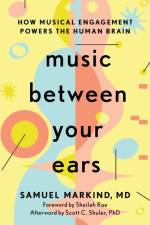
Explores the profound power of music to influence brain function and well-being.Why does music influence how we feel so deeply--and what are the scientific mechanisms behind this phenomenon? In Music Between Your Ears, Dr. Samuel Markind explores the intriguing relationship between music and brain function. Using evolutionary theory, he illuminates the pivotal role that music plays in human survival and procreation. From communication and caregiving to social bonding and partner selection, music has molded the human species and continues to shape our lives in remarkable ways.This book combines insights from neuroscience and psychology with helpful drawings and vivid examples to present compelling evidence for music's life-enhancing potential. Dr. Markind highlights the brain's instinctive capacity for music: from newborns' natural affinity for rhythm and melody to the effect that music has on brain development throughout the lifespan. Music also helps people learn at any age and in any condition, so it can improve speech, movement, and memory in both healthy individuals and those suffering from illness or injury. Dr. Markind encourages readers to engage actively with music. Whether through singing, dancing, or instrument playing, the benefits of active participation are profound and accessible to everyone, regardless of musical background. This book, filled with straightforward and practical suggestions, is an inspiring guide for anyone seeking to enrich their life through music.Music Between Your Ears shows how the act of engaging with music can profoundly impact your mental, physical, and emotional well-being. And the benefits of music go far beyond entertainment--they're essential to the very fabric of what makes us human.
How American universities operate as social and economic engines that shape society beyond their traditional educational roles.University Keywords gathers, contextualizes, and develops original understandings of 27 key terms that define the study and operation of the American university today. Editor Andy Hines and the book's contributors invite readers to rethink the university beyond its public image as a space of learning and understand how it also operates as a real estate powerhouse, a hedge fund, a debt machine, and even a crisis-producing entity embedded in the broader American economy.Through essays written by over thirty contributors from a variety of disciplines, this book examines the university's intersecting functions, from its financial entanglements to its often-contradictory roles in society. Contributors illustrate how universities simultaneously link and separate communities--faculty, students, nurses, janitors, and the surrounding public--through administrative processes that promote a sense of isolation and division, even within shared spaces. By defining and expanding the terms that drive public and scholarly conversations about postsecondary education, University Keywords situates what appear to be auxiliary aspects of colleges and universities as directly impacting and at times displacing the central academic mission of these institutions.In its role as a crucible for societal hierarchies and economic interests, the university both drives and reflects major shifts in social structure, labor practices, and economic power. The book's exploration of key terms like "debt," "police," and "union" offers readers a new framework for understanding the university's transformation into an instrument of capital accumulation, as well as its ongoing relevance in the fight for a world where education, labor, and social justice converge.
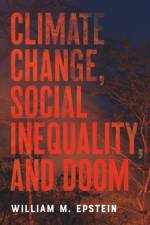
A critical examination of how inequality and cultural inertia hinder meaningful climate action.The challenges of climate change, like so many issues today, are not evenly distributed across social and economic lines. In this sobering exploration of the interconnected crises of climate change and social inequality, William M. Epstein examines how entrenched cultural values and systemic inequities thwart meaningful climate action, driving humanity closer to catastrophic consequences. Epstein outlines three potential climate futures--ranging from manageable to devastating--and scrutinizes society's inability to confront these realities with meaningful action. He argues that solutions exist, but they demand sacrifices and transformations that clash with deeply rooted societal norms. Epstein highlights the global indifference to equality and environmental stewardship and exposes the tragic inertia that imperils democracy, the environment, and humanity itself. By examining the broader implications of inequality--ranging from resource distribution to policy inertia--he reveals how societal values shape environmental outcomes and the growing divide between those who bear the brunt of climate change and those who remain insulated. Offering a sharp critique of romanticized individualism and its role in undermining collective action, this provocative book challenges readers to rethink society's capacity and willingness to confront existential and environmental threats. A profound and timely work, Climate Change, Social Inequality, and Doom confronts the moral and political failures that define the climate crisis and reveals the stark choice between an equitable, sustainable future and irreversible decline.
Offers reflections, provocative questions, and practical strategies for ethical, responsible approaches to health history.In Do Less Harm, editors Courtney E. Thompson and Kylie M. Smith bring together a group of leading historians and scholars to confront one of the most pressing questions in health history: How can we ethically approach stories of medicine and health without perpetuating harm? This thought-provoking collection invites readers into a crucial conversation about the responsibilities of historians when documenting the past. Through carefully curated essays, the contributors explore the ethical dilemmas that arise in researching, teaching, and writing about the history of health care. From patient privacy to the politics of archives, the essays cover how health histories have often overlooked, misunderstood, or misrepresented the people and communities most affected by medical practices. The contributors challenge the assumptions of the field, offering a more thoughtful approach to historical research--one that emphasizes empathy, accountability, and inclusivity. The book raises provocative questions and proposes practical strategies for historians and scholars to do less harm in their work and is organized around key themes such as research, teaching, writing, and public engagement, making it an indispensable resource for anyone working in the history of health care, ethics, or the health humanities. With its engaging style and accessible insights, Do Less Harm offers a fresh and timely perspective for academics, students, and readers interested in the ethical challenges of representing the past.
Abonner på vårt nyhetsbrev og få rabatter og inspirasjon til din neste leseopplevelse.
Ved å abonnere godtar du vår personvernerklæring.