




















Gjør som tusenvis av andre bokelskere
Abonner på vårt nyhetsbrev og få rabatter og inspirasjon til din neste leseopplevelse.
Ved å abonnere godtar du vår personvernerklæring.Du kan når som helst melde deg av våre nyhetsbrev.

The Idea of the American South moves the debate over Southern identity from speculative essays about the "central themeof Southern history and, by implication, past the restricted perception that race relations are a sufficient key to understanding the history of Southern identity.
Authoritative, comprehensive, holistic, and highly illustrated, The Caregiver's Encyclopedia will help you figure out how to be the best caregiver you can be.
The third part discusses what contemporary issues in British-Chinese relations were at the time the book was written.
Among these are Christopher Haedy, the Duke of Bedford's chief agent; James Loch, king of estate agents in nineteenth-century England; Henry Morton, the Earl of Durham's land agent; and William Blamire and James Caird, two of the Inclosure Commissioners.
Austen, Kaplan contends, participated actively in a women's culture that promoted female authority and achievement-a culture that not only helped her become a novelist but influenced her fiction.
The inventory of philosophers that Cairns examines includes Plato, Aristotle, Cicero, Aquinas, Hobbes, Spinoza, and Hegel.
The author discusses the domestic opposition to Tito and the complex reality of the national and political civil war in Yugoslavia.
Decentralized and loosely coordinated, this network promoted home ownership through flexible strategies of design, planning, financing, and construction which the author describes as a new and "entrepreneurialvernacular.
Although differing in their emphases, all three contributors seek a more plausible and nonskeptical philosophical account of the status of scientific theories in relation to observation.
Patrick looks first at parliamentary behavior, particularly in the tumultuous first eight months, and then analyzes this behavior in terms of the deputies' background.
Lumiansky traces Malory's originality through Malory's treatment of the main generic features of the Suite du Merlin.
Singleton attempts to restore the allegorical elements to the foreground of interpreting the Comedy.
Unmasking the mysteries of frogfish evolution and phylogenetic relationships through close examination of their fossil record, morphology, and molecular reconstruction, Frogfishes demonstrates the surprising diversity and beauty of this remarkable assemblage of marine shorefishes.
Monsman aims to discover in Pater's fiction the use of old scientific-religious patterns of myth to explain moments of religious and cultural awakening, to reveal the way in which one man arrived at a credo that would answer to the desolation of life and culture.
The fact that these essays are on the whole critical gives them a heuristic value that dogmatic or expository essays would not have.
Lovejoy's philosophical interpretation is a model of penetrating insight and helpful criticism.
These essays do not contribute to metaphysical and epistemological questions; they are primarily historical.
In short, the Fifteenth Amendment was not a radical document but rather was pushed by Republican moderates in an effort to consolidate their power.
The lingering shame was crucial to Stalin's development into a Soviet dictator.
It then turns to the close interaction between Soviet and foreign policy before situating the event into the broader timeline of Soviet history.
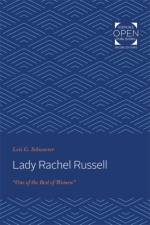
Schwoerer suggests that the horizons of women's lives in the seventeenth century may have extended farther than is often supposed.
She addresses timeless questions of how to provide for a nation's defense while preserving individual liberty, citizen responsibility for military service, and the relationship of executive and legislative authority over the army.
The Clark papers make possible a clearer understanding of the incessant conflict between Clark and Frank and show how this unusual relationship gave vitality to the Second Circuit.
Professor Higgs finds that French nobles changed with their century, but given their small numbers in the national population, they maintained a grossly disproportionate presence in politics, in culture, among the wealthiest landowners, and in economic life.
Marxism and Deconstruction is an innovative and controversial contribution to the fields of literary criticism, philosophy, and political science.
The epilogue traces the impact of the French Revolution on domestic service and sketches some of the changes in the household that were to come in the nineteenth century.
Originally published in 1976. This book is a study of the charitable institutions of one French town, Aix-en-Provence. It begins with their foundation during the Counter-Reformation and ends with their dissolution during the Revolution. It details the impulses behind their foundation and describes how they were financed and administered. It also explores the lives of the people they helped. The study is based primarily on surviving records of the charities. These are the same sort of records that charitable institutions today accumulate: entrance registers, minutes of board meetings, account books, and fund-raising pamphlets. Records of the local and central government and court records were also consulted. One purpose of this study is to bring readers closer to the reality of the problem of poverty in Old Regime France. Another purpose is to historicize contemporary perceptions of poverty in the minds of French historical actors.Chapter 1 outlines the social and economic makeup of Aix-en-Provence. Chapter 2 deals with the attitudes and assumptions behind the foundation of the charities. Chapter 3 describes how the institutions were administered and financed, and the many important roles they played in the community at large. Chapter 4 describes the types of assistance available to the poor and the types of people who received it. Chapter 5 discusses the most important alternatives to charity for the needy--beggary and crime. After 1760, the traditional charities entered a period of decline. Both the economic and social realities of poverty, and popular perceptions of those realities, changed drastically after 1760. Flooded by increasing numbers of the poor, paralyzed financially because of declining donations and general mismanagement, repudiated by public opinion, and subject to increasing control by the state, the charities were ineffective and indeed almost moribund after 1760. Chapters 6 and 7 detail these developments.
The final part analyzes the concept of objectivity and estimates both the extent to which the inquiries of historians can be said to be objective and the limits of that objectivity in some types of historical accounts.
Each of these forces had its own particular reasons for wanting to hold out for far-reaching territorial gains, yet one aim that most of them had in common was ensuring, through a successful peace settlement, the continuation of the existing order, to their own advantage and to the political and economic detriment of the majority of the German people.
Abonner på vårt nyhetsbrev og få rabatter og inspirasjon til din neste leseopplevelse.
Ved å abonnere godtar du vår personvernerklæring.