




Gjør som tusenvis av andre bokelskere
Abonner på vårt nyhetsbrev og få rabatter og inspirasjon til din neste leseopplevelse.
Ved å abonnere godtar du vår personvernerklæring.Du kan når som helst melde deg av våre nyhetsbrev.

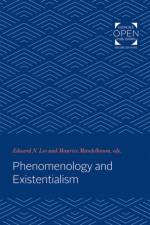
Originally published in 1967. Focusing on key philosophers and the tenants of their thought, Phenomenology and Existentialism forms a wide-ranging introduction to two important movements in modern philosophy. Included are essays by Roderick M. Chisholm on Brentano, Aron Gurwitsch on Husserl, E.F. Kaelin on Heidegger, J. Glenn Gray on Heidegger, George L. Kline on Hegel and Marx, James M. Edie on Sartre, Frederick A. Olafson on Merleau-Ponty,Herbert Spiegelberg on Phenomenology and psychology, and Albert William Levi on the alienation of man.
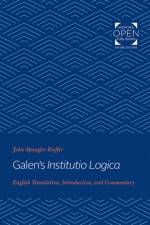
Originally published in 1964. This book is a translation of Institutio Logica, which was probably written by Galen, although scholars disagree on the possibility of this work being a forgery. It provides a survey on the history of logic written around the third century.
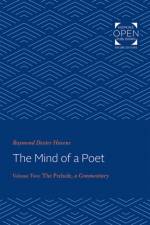
This book seeks to study the mind of a poet, specifically by picking William Wordsworth as a case study. The reason for signaling out Wordsworth as the person in whom to study the mind of a poet is that The Prelude reveals with unusual fullness a mind that is fundamentally poetic. Even its peculiarities, its numerous limitations, and its unusual emphases are in the main those of a poet. Besides, poetry-not, as with many other writers, religious or social problems, humanitarianism, science, politics, economics, metaphysics, or literary criticism-was the chief concern of his creative years. Further, the sheer amount of verse, criticism, letters, and journals Wordsworth produced makes him an excellent choice for a study of this kind.
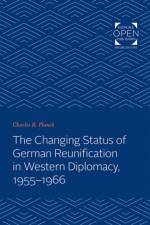
With its accession to NATO, the West German government under Adenauer continued its policy of rehabilitating the German people in the eyes of the Western political community by playing a willing and sometimes leading role in joint ventures whose purpose was said to transcend the nation-state.
Originally published in 1970. The question of man's freedom to exercise his will-as active an issue among twentieth-century philosophers and theologians as it was in the Jesuit and Jansenist camps known to Pascal-is basic to this study. Pascal's theological thinking, which Professor Miel demonstrates to be the source of unity and coherence in virtually all phases of his thought, is preoccupied by a concern for man's limitations. In his analysis of Pascal's theology, Miel is concerned not only with characterizing Pascal's theological position but also with evaluating it in terms of the history of the church. In a concise and lucid review of the Christian doctrine of grace from the pre-Augustinians through the Renaissance, the author identifies the intellectual-theological atmosphere that created the need for Pascal's strong defense of Augustinian theology. Miel considers Pascal's Ecrits sur la grace, Lettres provincials, and Pensees as well as shorter compositions and correspondence. He establishes the content of Pascal's vision of grace and free will, noting both its originality and its sense of history. Most importantly, he asserts that Pascal's affirmation of Jansenism predated his association with Port Royal and, indeed, was basic to all his adult thought and work. The author finds in the writings of Pascal a style that anticipates twentieth-century theology, a sophistication that belies charges of Pascal's theological naivete, and a concern to uphold rather than to undermine doctrinal traditions of the church.
The first chapter provides readers unfamiliar with medieval history the background required for understanding the chapters on chivalry.
Finally in 1216 he was chosen regent of England for the young king, Henry III, and his biography becomes for three years the history of England.
His book challenges the traditional view of the Hundred Years' War as pivotal to the transition from twelfth-century lords and vassals to the nobility of the fifteenth century; from Painter's perspective, the feudal structure of the military had dissipated by the thirteenth century.
The final chapter considers the major international associations of which Britain is a member and with which it operates in African affairs in the aftermath of colonialism.
This book should make clear the full meaning of this expression.
Finally, Duckworth underscores Austen's awareness of the importance of a society of individuals whose behavior is socially informed.
At a time when an American's investment in the democratic process has largely been reduced to an annual contribution to a political party or organization, Downsizing Democracy offers a critical reassessment of American democracy.
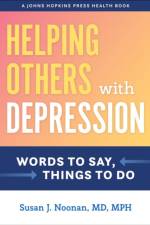
It is of enormous value to the layperson, hungry for knowledge about how best to interact and help their loved one face the dreadful ravages of depression."-Nursing Times
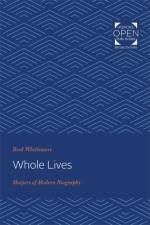
Whole Lives offers an informative-and refreshingly informal-look at one of the most enduringly popular genres.
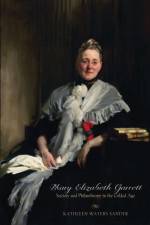
Sander's thoughtful and informed study of this pioneering philanthropist is the first to recognize Garrett and her monumental contributions to equality in America.
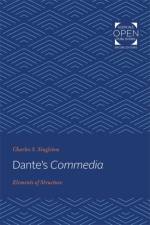
But for Singleton, each dimension has a depth that reaches to the core and substance of Dante's poetry, so they are, in Singleton's view, elements of its structure.
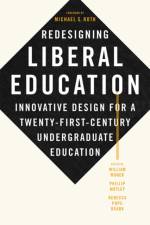
Fischman, James W. Fraser, Guangwei Hu, Arie Kizel, Jari Lavonen, Lauren Lefty, Wei Liao, Jason Loh, Silvana Mesquita, Hannele Niemi, Lily Orland-Barak, Paula Razquin, Carol Anne Spreen, Eduard Vallory, Yisu Zhou
Voelker, Scott Windham, Mary C. Wright, Catherine Zeek
Gross, Brent Hardaway, Mark Hiller, Beth Ireton, Thomas Kloos, Jeremy Mathis, Miriam McKisic, Morey Menacker, Denise Patriaco, Elyse Pegler, John Pitsikoulis, Michael Schweitzer, Bryan F. Smith
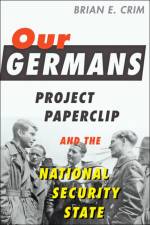
As this engaging book demonstrates, whether characterized as an expedient Cold War program born from military necessity or a dishonorable episode, the project ultimately reflects American ambivalence about the military-industrial complex and the viability of an "ends justifies the meanssolution to external threats.
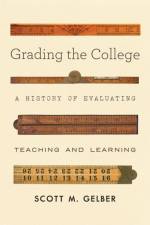
By providing a deeper understanding of how evaluation operated before the dawn of high-stakes accountability, Grading the College seeks to promote productive conversations about current attempts to define and measure the purposes of American higher education.
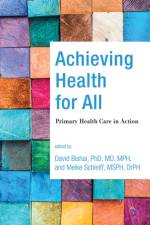
Perry, James F. Phillips, Meike Schleiff, Melissa Sherry, Rita Thapa, Kebede Worku
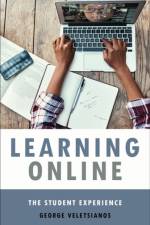
Writing in an evocative, accessible, and concise manner, Veletsianos concretely demonstrates why it is so important to pay closer attention to the stories of students-who may have instructive and insightful ideas about the future of education.
Reeder's comparative approach provides a new vision of imperial power and makes a forceful case for expanding the archive of British literary studies.
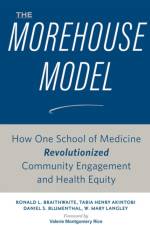
It will be a touchstone for anyone conducting community-based participatory research, as well as any institution that wants to have a positive effect on its local community.
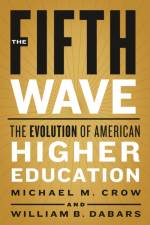
Drawing from a variety of disciplines, including design, economics, public policy, organizational theory, science and technology studies, sociology, and even cognitive psychology and epistemology, The Fifth Wave is a must-read for anyone concerned with the future of higher education in our society.
Read it, and you will come away ready to hit the ground running.
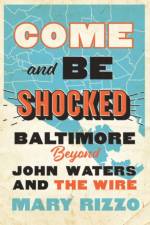
She investigates more mainstream art, from the teen dance sensation The Buddy Deane Show to the comedy-drama Roc to the crime show The Wire, from Anne Tyler's award-winning book The Accidental Tourist to Barry Levinson's movie classic Diner.
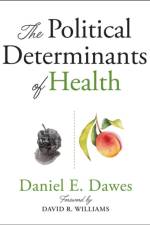
A thought-provoking and evocative account that considers both the policies we think of as "health policyand those that we don't, The Political Determinants of Health provides a novel, multidisciplinary framework for addressing the systemic barriers preventing the United States from becoming the healthiest nation in the world.
Abonner på vårt nyhetsbrev og få rabatter og inspirasjon til din neste leseopplevelse.
Ved å abonnere godtar du vår personvernerklæring.