

























Gjør som tusenvis av andre bokelskere
Abonner på vårt nyhetsbrev og få rabatter og inspirasjon til din neste leseopplevelse.
Ved å abonnere godtar du vår personvernerklæring.Du kan når som helst melde deg av våre nyhetsbrev.

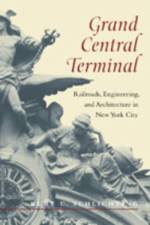
Winner, Professional/Scholarly Publishing Award in Architecture, Association of American PublishersGrand Central Terminal, one of New York City's preeminent buildings, stands as a magnificent Beaux-Arts monument to America's Railway Age, and it remains a vital part of city life today. Completed in 1913 after ten years of construction, the terminal became the city's most important transportation hub, linking long-distance and commuter trains to New York's network of subways, elevated trains, and streetcars.In Grand Central Terminal, Kurt C. Schlichting traces the history of this spectacular building, detailing the colorful personalities, bitter conflicts, and Herculean feats of engineering behind its construction. Completed in 1871, the first Grand Central was the largest rail facility in the world and yet--cramped and overburdened--soon proved thoroughly inadequate for the needs of this rapidly expanding city. William Wilgus, chief engineer of the New York Central Railroad, conceived a new Grand Central Terminal, one that would fully meet the needs of the New York Central line. Schlichting concludes with an account of the public outcry that prevented the proposed demolition of the terminal in 1969 and the meticulous 1990s restoration project that returned Grand Central Terminal to its original splendor. More than a history of a train station, this book is the story of a city and an age as reflected in a building aptly described as a secular cathedral."Grand Central Terminal is celebrated for its Beaux-Arts style, but Kurt C. Schlichting looks behind the facade to see the hidden engineering marvels . . . [His] book will deepen anyone's appreciation for New York's most magnificent interior space."--New York Times Book Review"Schlichting writes with deep understanding of Grand Central's engineering feats and artistic qualities."--Wilson Quarterly"Schlichting's history of New York's Grand Central Terminal gathers many actors and events into a clearly written and amply illustrated narrative of American commercial initiative."--Journal of the Society of Architectural Historians
From the awe and wonder of the first explorers to cries for conservation from contemporary writers, From Blue Ridge to Barrier Islands gathers examples of our changing views of the natural world and the values we place upon it.
In an epilogue he discusses his findings in terms of contemporary debates over high-resolution TV.
Based on formerly untapped archival sources as well as on interviews of participants, and building upon prior historical literature, Shaping Biology covers new ground and raises significant issues for further research on postwar biology and on federal funding of science in general.
Other topics include the new Basic Laws on Freedom, Dignity, and Occupation; the effects of massive immigration of secular Jews from the former Soviet Union; the greater emphasis on liberal "good government"; and the rise of an aggressive investigative press and electronic media.
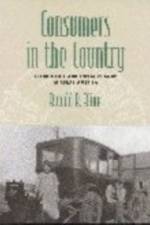
From 1900 to 1960, the introduction and development of four so-called urbanizing technologies-the telephone, automobile, radio, and electric light and power-transformed the rural United States. But did these new technologies revolutionize rural life in the ways modernizers predicted? And how exactly-and with what levels of resistance and acceptance-did this change take place? In "Consumers in the Country" Ronald R. Kline, avoiding the trap of technological determinism, explores the changing relationships among the Country Life professionals, government agencies, sales people, and others who promoted these technologies and the farm families who largely succeeded in adapting them to rural culture.
Consider the oddly juxtaposed eminence of those in attendance: Wartime New York was the city where French Symbolism, in the person of Maurice Maeterlinck, came to live out its last productive years; where French surrealism, in the person of Andr Breton, came to survive; and where French structuralism, in the person of Claude Lvi-Strauss, came to be born. From the largely forgotten prewar visit to the city of Ptain and Laval to the seizing, burning, and capsizing of the Normandie, France's floating museum, in the Hudson River, Jeffrey Mehlman evokes the writerly world of French Manhattan, its achievements and feuds, during one of the most vexed periods of French history.In Emigr New York, a series of surprising and expertly etched portraits emerge against the backdrop of an overriding irony: the United States, the world's principal hope in the battle against Hitler's barbarism, was for the most part more eager to deal with Ptain's collaborationist regime than with what Secretary of State Cordell Hull called de Gaulle's "so-called Free French" movement.
In a nostalgic tribute to the vanishing single-screen theaters of small-town America, photographer Putnam captures the once prominent cinemas in decline and transformation. The images are accompanied by an Introduction by Robert Skylar and essays by Peter Bogdanovich, Molly Haskell, and others. 58 duotones, 24 halftones.
"George Hilton's affectionate yet complete and accurate account of Ma & Pa is at once all that the short line's host of admirers could ask as well as a model of How To Write Railroad History." -- Trains
Abonner på vårt nyhetsbrev og få rabatter og inspirasjon til din neste leseopplevelse.
Ved å abonnere godtar du vår personvernerklæring.