
















Gjør som tusenvis av andre bokelskere
Abonner på vårt nyhetsbrev og få rabatter og inspirasjon til din neste leseopplevelse.
Ved å abonnere godtar du vår personvernerklæring.Du kan når som helst melde deg av våre nyhetsbrev.

This original account draws on key data and firsthand observations to tell the story of the small college in America. Defined as institutions that enroll between 500 and 3,000 full-time students, small colleges number about six hundred in the United States. Many are thriving, while some--whether through low enrollment, ballooning debt, or simple misfortune--face uncertain futures. Informed by his own experiences as a teacher and administrator, Samuel Schuman sketches the history and development of these institutions and then focuses on their current conditions and future possibilities."Schuman is an ardent proponent of small colleges, and his devotion and passion are apparent in every chapter of this work. The work is also brilliantly written and thoroughly convincing."--Education Review"An important book . . . Paints a rich picture of the exceptional things small colleges can do."--Academe"Researchers, faculty, and administrators interested in small colleges will find suggestions for further research and discussion about the many challenges that small colleges face today."--Review of Higher Education"Interesting reading. The extensive information Schuman provides gives us a picture of contemporary American small colleges."--Journal of Higher Education Samuel Schuman is Chancellor Emeritus of the University of Minnesota, Morris. He is the author of Cyril Tourneur: A Reference Guide, The Theatre of Fine Devices: Emblems and the Emblematic in the Plays of John Webster, and Vladimir Nabokov: A Reference Guide.
"Lang is a wonderfully engaging writer... he's obviously deeply committed to the craft of teaching and the craft of writing." -- Adjunct Advocate
"Superb... A useful addition to the literature about people of color in (New England)... The major strength of "Bodies Politic" is that it is based on extensive archival research and a wide reading of secondary literature on Africans and Native Americans." -- "History: Reviews of New Books"
In the first book to focus on civil-military tensions after American wars, Thomas Langston challenges conventional theory by arguing that neither civilian nor military elites deserve victory in this perennial struggle. What is needed instead, he concludes, is balance.In America's worst postwar episodes, those that followed the Civil War and the Vietnam War, balance was conspicuously absent. In the late 1860s and into the 1870s, the military became the tool of a divisive partisan program. As a result, when Reconstruction ended, so did popular support of the military. After the Vietnam War, military leaders were too successful in defending their institution against civilian commanders, leading some observers to declare a crisis in civil-military relations even before Bill Clinton became commander-in-chief.Is American military policy balanced today? No, but it may well be headed in that direction. At the end of the 1990s there was still no clear direction in military policy. The officer corps stubbornly clung to a Cold War force structure. A civilian-minded commander-in-chief, meanwhile, stretched a shrinking force across the globe. With the shocking events of September 11, 2001, clarifying the seriousness of the post-Cold War military policy, we may at last be moving toward a true realignment of civilian and military imperatives.
Building San Francisco's Parks, 1850-1930, traces the history of San Francisco's park system, from the earliest city plans, which made no provision for a public park, through the private garden movement of the 1850s and 1860s, Frederick Law Olmsted's early involvement in developing a comprehensive parks plan, the design and construction of Golden Gate Park, and finally to the expansion of green space in the first third of the twentieth century. Terence Young documents this history and maps the political, cultural, and social dimensions of landscape design in urban America, offering new insights into the transformation of San Francisco's physical environment and quality of life through its world-famous park system."An excellent study . . . If anything could possibly improve an outing to Golden Gate Park, a copy of Building San Francisco's Parks looks just the ticket."--San Francisco Chronicle"Mixes a nicely paced narrative with an effective analysis of the geology, climatology, botany, politics, and building of San Francisco."--Pacific Historical Review"Young does a splendid job detailing the political intricacies and the physical difficulties in the formation of San Francisco's park system . . . His distinction between the 'romantic' and the 'rationalist' approaches to the formation of the city's parks is illuminating."--Newsletter of the San Francisco Museum and Historical Society"Written in a clear and fluid style . . . the book contributes a cogent examination of how landscapes are altered, land use conflicts persist, and changing expectations of nature impact park management."--CRM: Journal of Heritage Stewardship Terence Young is an associate professor of geography at California State Polytechnic University, Pomona.
"Scientifically accurate, up-to-date, and highly accessible, Nature's Flyers will interest not only amateur and professional ornithologists, ecologists, evolutionary biologists, physiologists, and engineers, but also anyone who is curious about the effects of flight on the evolution and diversity of the natural world." -- Biology Digest"Alexander achieves the difficult feat of explaining intrinsically complex phenomena without using mathematical or entomological jargon. As a result, the book is clear, beautifully written, and suitable for people at all levels." -- Physics Today
During the early decades of the cold war, large-scale investments in American defense and aerospace research and development spawned a variety of problem-solving techniques, technologies, and institutions. From systems analysis to reconnaissance satellites to think tanks, these innovations did not remain exclusive accessories of the defense establishment. Instead, they readily found civilian applications in both the private and public sector. City planning and management were no exception. Jennifer Light argues that the technologies and values of the cold war fundamentally shaped the history of postwar urban America."
Appalachia may be the most mythologized and misunderstood place in America, its way of life and inhabitants both caricatured and celebrated in the mainstream media. Over generations, though, the families living in the mountainous region stretching from West Virginia to northeastern Alabama have forged one of the country's richest and most distinctive cultures, encompassing music, food, architecture, customs, and language.In Appalachian Folkways, geographer John Rehder offers an engaging and enlightening account of southern Appalachia and its cultural milieu that is at once sweeping and intimate. From architecture and traditional livelihoods to beliefs and art, Rehder, who has spent thirty years studying the region, offers a nuanced depiction of southern Appalachia's social and cultural identity. The book opens with an expert consideration of the southern Appalachian landscape, defined by mountains, rocky soil, thick forests, and plentiful streams. While these features have shaped the inhabitants of the region, Rehder notes, Appalachians have also shaped their environment, and he goes on to explore the human influence on the landscape.From physical geography, the book moves to settlement patterns, describing the Indian tribes that flourished before European settlement and the successive waves of migration that brought Melungeon, Scotch-Irish, English, and German settlers to the region, along with the cultural contributions each made to what became a distinct Appalachian culture. Next focusing on the folk culture of Appalachia, Rehder details such cultural expressions as architecture and landscape design; traditional and more recent ways of making a living, both legal andillegal; foodstuffs and cooking techniques; folk remedies and belief systems; music, art, and the folk festivals that today attract visitors from around the world; and the region's dialect. With its broad scope and deep research, Appalachian Folkways accurately and evocatively chroni
Alcoholism in America tells the story of physicians, politicians, court officials, and families struggling to address the problem of excessive alcohol consumption at the turn of the century. Beginning with the formation of the American Association for the Cure of Inebriates in 1870 and concluding with the enactment of Prohibition in 1920, historian Sarah Tracy examines the effect of the disease concept of alcoholism on individual drinkers and their families and friends, as well as the ongoing battle between policy makers and the professional medical community for jurisdiction over alcohol problems.
"Crucial Needs, Weak Incentives" studies the politics of efforts to reform education and health services in Latin America in the 1990s. Both sectors were common targets of reform--education because of its economic importance, health care because of needs to reduce great inequities of access and opportunities to increase domestic savings presented by reforms. Both sectors also have large numbers of unionized public employees, whose presence affects patronage as well as political power.The book presents case studies that offer a wealth of new information not previously accessible to the English-speaking academic and policy community. For health care, these cover Mexico, Argentina, Colombia, Brazil, Costa Rica, and Peru; for eductaion, Mexico, Argentina, Colombia, Brazil, Nicaragua, and Venezuela. Four chapters by the editors set out for each sector the goals, structure, and outcomes of reform efforts.Contributors are Marta Arretche, Josefina Bruni Celli, Mary A. Clark, Javier Corrales, Sonia M. Draibe, Christina Ewig, Alec Ian Gershberg, Alejandra Gonzalez Rossetti, Merilee S. Grindle, Peter Lloyd-Sherlock, Pamela S. Lowden, and Patricia Ramirez.
Sean Patrick Adams compares the political economies of coal in Virginia and Pennsylvania from the late 18th century through the Civil War, examining the divergent paths these two states took in developing their ample coal reserves during a critical period of American industrialization. In both cases, Adams finds, state economic policies played a major role. Old Dominion, Industrial Commonwealth addresses longstanding questions about North-South economic divergence and the role of state government in American industrial development. It provides new insights into both the political and economic history of 19th-century America."Adams's innovative study has opened up a new arena for investigation and judging from the richness of his analysis, one with great potential."--Journal of American History"As with any successful study, this one answers some questions and provokes others . . . One hopes that rather than this being the last word on the subject, it serves as a call for further investigation."--Pennsylvania Magazine of History and Biography"An engaging and persuasive work that addresses in a highly accessible manner the intricacies of state-level politics and economic decision-making."-- Journal of American Studies"An impressive exemplar of comparative history. Adams is a gifted writer with an excellent eye for detail."--Enterprise and Society"Profoundly powerful insights into the importance of political and economic institutions."--Journal of Interdisciplinary History"This is economic history as it should be written . . . Adams has created an important and highly readable interpretation of Virginia's and Pennsylvania's economic histories in the early and mid-1800s, and I commend him."--West Virginia History
In Imagining Inclusive Society in Nineteenth-Century Novels, Pam Morris traces a dramatic transformation of British public consciousness that occurred between the Reform Acts of 1832 and 1867. This brief period saw a shift from a naturalized acceptance of social hierarchy to a general imagining of a modern mass culture. Central to this collective revisioning of social relations was the pressure to restyle political leadership in terms of popular legitimacy, to develop a more inclusive mode of discourse within an increasingly heterogeneous public sphere and to find new ways of inscribing social distinctions and exclusions.Morris argues that in the transformed public sphere of mid-nineteenth-century Britain, the urbane code of civility collapsed under the strain of the conflicting interests that constitute mass society. It was replaced by a "code of sincerity," often manipulative and always ideological in that its inclusiveness was based upon a formally egalitarian assumption of mutual interiorities. The irresistible movement toward mass politics shifted the location of power into the public domain. Increasingly, national leaders sought to gain legitimacy by projecting a performance of charismatic "sincerity" as a flattering and insinuating mode of address to mass audiences. Yet, by the latter decades of the century, while the code of sincerity continued to dominate popular and political culture, traditional political and intellectual elites were reinscribing social distinctions and exclusions. They did so both culturally -- by articulating sensibility as skepticism, irony, and aestheticism -- and scientifically -- by introducing evolutionist notions of sensibility and attachingthese to a rigorous disciplinary code of bodily visuality.Through an intensive, intertextual reading of six key novels (Bronte's Shirley, Thackeray's Henry Esmond, Dickens's Bleak House and Our Mutual Friend, Gaskell's North and South, and Eliot's Romola) and an array of Victo
What are the basic concepts of executive organization and management? How does executive organization affect management? How can executive organization and management be improved? In Making Government Manageable, Thomas H. Stanton and Benjamin Ginsberg bring together a distinguished group of authorities from both the academic and political worlds to explore problems relating to the organization and management of government. The authors begin with a brief overview of the development of executive organization and management to the present day. They then offer examples of problems in federal department organization and management. They also raise the question of the effectiveness of third-party government -- cases in which the private sector under contract with the government performs services for which the government is responsible and, in the process, makes policy for which the government becomes responsible. The authors conclude with a discussion of cases in which agencies have enjoyed some measure of success through reforming and reorganizing their internal structures and processes.Contributors: Murray Comarow, National Academy of Public Administration; Matthew A. Crenson, the Johns Hopkins University; Alan L. Dean, National Academy of Public Administration; Dan Guttman, The Johns Hopkins University and the National Academy of Public Administration; Dwight Ink, Institute of Public Administration; Ronald C. Moe, the Johns Hopkins University and National Academy of Public Administration; Sallyanne Payton, University of Michigan Law School; Beryl A. Radin, University of Baltimore and National Academy of Public Administration; Harold Seidman, formerly U.S. Bureau of the Budget; Barbara S. Wamsley, National Academy of Public Administration and the Johns Hopkins University.
"Adds a new chapter to the history of American education and women." -- Journal of American History
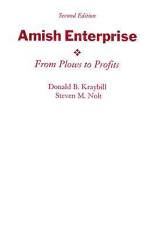
Amish culture has been rooted in the soil since its beginnings in 1693. But what happens when members of America's oldest Amish community enter non-farm work in one generation? How will hundreds of cottage industries and micro-enterprises reshape the heart of Amish life? Will traditional eighth grade education still prove adequate? What about gender roles, child-rearing practices, leisure activities, and growing ties with outsiders? "Amish Enterprise" was the first book to discuss these dramatic changes that are transforming Amish communities across North America. Based on interviews with more than 150 Amish entrepreneurs, the authors trace the rise and impact of businesses in Lancaster's Amish settlement in recent decades. In this new edition, the authors update demographic and technological changes, and also describe Amish enterprises outside of Pennsylvania in a new chapter.
Recent scholars of American religion have shown new interest in evangelicalism and pentecostalism. Of particular interest is the subject of revivalism--an enthusiastic or ecstatic form of religion that has affected American religious institutions, ideas, behavior, and adherents throughout the nation's history. In Embodying the Spirit Michael J. McClymond and his contributors offer a new look at this extensive and often puzzling phenomenon. Going beyond institutional history, they examine a wide range of cases, from colonial to contemporary America. The contributors explore the role of gender, church architecture, Latino revivalism, youth groups, radio evangelism, Catholic revivalism, and recent events such as the Toronto Blessing--an outbreak of laughter, crying, and dancing that began at Toronto's Airport Vineyard Church in 1994 and has since spread to other congregations throughout the world.
"An intelligent, well-researched, carefully nuanced book about the gradual displacement in U.S. liberalism of a producerist outlook by a consumerist perspective." -- "Business History Review"
Liette Gidlow shows that the Get-Out-the-Vote campaigns of the 1920s -- overlooked by historians until now -- helped to connect politics to a modern culture of consumption, define the place of newly enfranchised women in civic life, and remake the very meanings of citizenship.
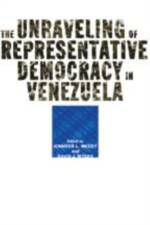
For four decades, Venezuela prided itself for having one of the most stable representative democracies in Latin America. Then, in 1992, Hugo Chvez Fras attempted an unsuccessful military coup. Six years later, he was elected president. Once in power, Chvez redrafted the 1961 constitution, dissolved the Congress, dismissed judges, and marginalized rival political parties. In a bid to create direct democracy, other Latin American democracies watched with mixed reactions: if representative democracy could break down so quickly in Venezuela, it could easily happen in countries with less-established traditions. On the other hand, would Chvez create a new form of democracy to redress the plight of the marginalized poor?In this volume of essays, leading scholars from Venezuela and the United States ask why representative democracy in Venezuela unraveled so swiftly and whether it can be restored. Its thirteen chapters examine the crisis in three periods: the unraveling of Punto Fijo democracy; Chvez's Bolivarian Revolution; and the course of "participatory democracy" under Chvez. The contributors analyze such factors as the vulnerability of Venezuelan democracy before Chvez; the role of political parties, organized labor, the urban poor, the military, and businessmen; and the impact of public and economic policy. This timely volume offers important lessons for comparative regime change within hybrid democracies. Contributors: Damarys Canache, Florida State University; Rafael de la Cruz, Inter-American Development Bank; Jos Antonio Gil, Yepes Datanalisis; Richard S. Hillman, St. John Fisher College; Janet Kelly, Graduate Institute of Business, Caracas; Jos E. Molina, University ofZulia; Moss Nam, Foreign Policy; Nelson Ortiz, Caracas Stock Exchange; Pedro A. Palma, Graduate Institute of Business, Caracas; Carlos A. Romero and Luis Salamanca, Central University of Venezuela; Harold Trinkunas, Naval Postgraduate School.
This exploration of an early phase of scientific language study provides readers with a unique perspective on Victorian intellectual life as well as on the transatlantic roots of modern linguistic theory.
"An excellent and creative integration of psychiatric theory and sleep medicine." -- Journal of Clinical Sleep Medicine
Abonner på vårt nyhetsbrev og få rabatter og inspirasjon til din neste leseopplevelse.
Ved å abonnere godtar du vår personvernerklæring.