











Gjør som tusenvis av andre bokelskere
Abonner på vårt nyhetsbrev og få rabatter og inspirasjon til din neste leseopplevelse.
Ved å abonnere godtar du vår personvernerklæring.Du kan når som helst melde deg av våre nyhetsbrev.

This text brings together experts from the fields of sociology, political science, geography, psychology and anthropology to examine the intersection of identity and territory in the new Europe. It explores how Europeans see themselves and the impact of globalization on national culture.
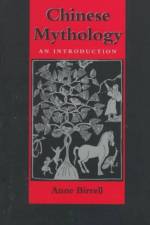
The result is an unprecedented guide to the study of Chinese myth for specialists and nonspecialists alike.
A valuable collection from an extraordinary writer, "The Convent of Pleasureand Other Plays raises important issues about women and gender.
Rich in anecdote and colorful detail, it now returns to print in paperback with a new preface by the author.
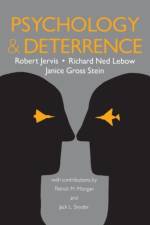
Now available in paperback, Psychology and Deterrence reveals deterrence strategy's hidden and generally simplistic assumptions about the nature of power and aggression, threat and response, and calculation and behavior in the international arena.
Anecdotal, eclectic, and always enthusiastic, The Origins of English Words is a diverting expedition beyond linguistics into literature, history, folklore, anthropology, philosophy, and science.
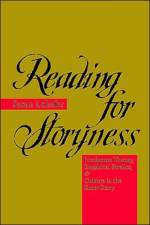
The short story has been a staple of American literature since the nineteenth century, taught in virtually every high school and consistently popular among adult readers. But what makes a short story unique? In Reading for Storyness, Susan Lohafer, former president of the Society for the Study of the Short Story, argues that there is much more than length separating short stories from novels and other works of fiction. With its close readings of stories by Kate Chopin, Julio Cortazar, Katherine Mansfield, and others, this book challenges assumptions about the short story and effectively redefines the genre in a fresh and original way.In her analysis, Lohafer combines traditional literary theory with a more unconventional mode of research, monitoring the reactions of readers as they progress through a story-to establish a new poetics of the genre. Singling out the phenomenon of "e;imminent closure"e; as the genre's defining trait, she then proceeds to identify "e;preclosure points,"e; or places where a given story could end, in order to access hidden layers of the reading experience. She expertly harnesses this theory of preclosure to explore interactions between pedagogy and theory, formalism and cultural studies, fiction and nonfiction. Returning to the roots of storyness, Lohafer illuminates the intricacies of classic short stories and experimental forms of surreal, postmodern, and minimalist fiction. She also discusses the impact of social constructions, such as gender, on the identification of preclosure points by individual readers. Reading for Storyness combines cognitive science with literary theory to present a compelling argument for the uniqueness of the short story.
Hankins brings together the many aspects of Hamilton's life and work-from his significant contributions to mathematics, optics, and mechanics to his passion for metaphysics, poetry, and politics-fully portraying the brilliant man whose faith and idealism guided him in everything he did.
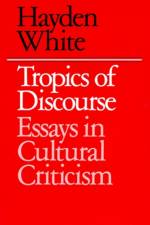
White's commentary ranges from a reappraisal of Enlightenment history to a reflective summary of the current state of literary criticism.
"Frederic Lane has achieved what is the often unfulfilled dream of every historian who has devoted his entire work to the exploration of partial aspects of a single broad subject: he has given us a comprehensive, thoughtful, readable, beautifully illustrated general history of Venice from the origins to the beginning of decline."--'Speculum.'
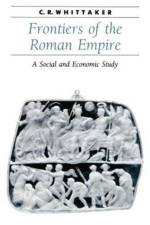
Yet the very permeability of the frontiers, Whittaker contends, permitted a transformation of Roman society, breathing new life into the empire rather than causing its complete extinction.
) Other topics include love and other aspects of the institution of marriage, the role of the children in the family, how families adjusted to new members, and how they dealt with aging and death.
A graceful writer and an expert biometrician, Bulmer details the eventual triumph of biometrical methods in the history of quantitative genetics based on Mendelian principles, which underpins our understanding of evolution today.
"-from the foreword by Stanley I. Kutler
; Ziya Onis; Koc University; Soli Ozel, Bilgi University, Istanbul; William Quandt, University of Virginia; Jillian Schwedler, University of Maryland, College Park; Jean-Francois Seznec, Columbia University and Georgetown University; Emmanuel Sivan, Hebrew University; Mohamed Talbi, independent scholar; Robin Wright, Los Angeles Times.
He argues that "religionis a construction of European modernity, a construction that authorizes-for Westerners and non-Westerners alike-particular forms of "history making."
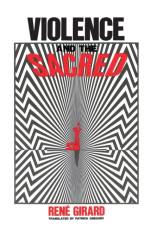
This brilliant study of good and evil examines the presence of ritual violence in sacred ceremony.
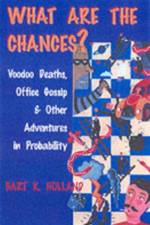
Whether you have only a distant recollection of high school algebra or use differential equations every day, this book offers examples of the impact of chance that will amuse and astonish.
In other words, East-Central European politics is transforming itself from simply a reaction against the politics of the preceding regime to a situation in which diverse groups in society will find their interests institutionalized in diverse political parties, not unlike the politics of Western Europe.
His new epilogue is partly a guide for new historians to tackle the complexities of Cold War studies.
Abonner på vårt nyhetsbrev og få rabatter og inspirasjon til din neste leseopplevelse.
Ved å abonnere godtar du vår personvernerklæring.