






Gjør som tusenvis av andre bokelskere
Abonner på vårt nyhetsbrev og få rabatter og inspirasjon til din neste leseopplevelse.
Ved å abonnere godtar du vår personvernerklæring.Du kan når som helst melde deg av våre nyhetsbrev.

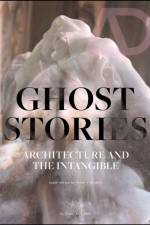
It is not without irony that in an age characterised by the dissolution of certainty - a consequence of digital dematerialisation and the catastrophic destabilisation of our social institutions and natural world - architecture, for so long the repository for our myths and the vessel for our intangible narratives and rituals, has been stripped bare. Increasingly preoccupied with the physical, material and measurable, architecture has forfeited its original purpose as a mediating link between the tacit and the tangible. Drawing on the current resurgence and our enduring cultural fascination with the ethereal and uncanny, this AD frames the spectral as a deconstructive gesture that undermines the fixedness and certainties of binary logics, a means to develop new practices and positions from which to address our contemporary uncertainties. Gathering a body of work that explores and speculates on architecture's long romance with the incorporeal, the issue is intended as a catalyst through which latency, contingency and indeterminacy, inherent characteristics of the architectural condition, can once more be valued, cultivated and nurtured. Contributors: Kirsty Badenoch; Michael Chapman;Nat Chard;Oliver G Goche and Peter P Goché; Perry Kulper; Ifigeneia Liangi and Daniel Wilkinson; Eva Menuhin; Mark Morris; Mike Phillips; Ian Ritchie; Chris Speed, and Cameron Stebbing Featured architects and designers: Captivate: Spatial Modelling Research Group, Daniel Libeskind, Night Kitchen Studio, Michael Sandle, and Ritchie Studio
A collection of recent research and real-life reports on trauma bonding in many contexts of interpersonal violence Trauma bonding, the emotional attachment victims develop toward their abusers or captors, has beenrepeatedlyobservedin victims of interpersonal crimes - yet little is known about its formation, persistence, and positive resolution in survivors. Trauma Bonding and Interpersonal Crimes provides a timely review of existing theoretical conceptualizations and research findings on trauma bonding in relation to various forms of interpersonal crimes, including human trafficking, intimate partner violence, child sexual abuse, cults, kidnapping, gang violence, and terrorism. With an accessible and reader-friendly style, lead author Joan A. Reid examines the concept of trauma bonding while offering insights into the consequences of how the phenomenonis framed in the public discourse and the professional sectors. Twelve chapters investigate key topics ranging from methodological issues and research limitations to current debates on victimology within academic disciplines such as criminology, psychology, social work, sociology, and public health. Providing a holistic approach to the subject, Trauma Bonding and Interpersonal Crimes Highlights the complexities of intervention and treatment for trauma survivors and clinicians Explores the implications for policy related to trauma bonding Recommends potential avenues for integrated theory and research Features case studies that combine individual examples and evidence-based research Includes definitions of terms, critical thinking questions, and further readings in each chapter Part of Wiley's Psycho-Criminology of Crime, Mental Health, and the Law series, Trauma Bonding and Interpersonal Crimes is an invaluable resource for upper-level undergraduate and graduate students, researchers, policy makers, and practitioners in areas related to victims of human trafficking, intimate partner violence, and child sexual abuse.
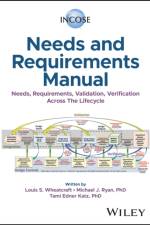
Complete and comprehensive manual for eliciting, defining, and managing needs and requirements, integration, verification, and validation across the lifecycle The INCOSE Needs and Requirements Manual presents product development and systems engineering practices, activities, and artifacts from the perspective of needs, requirements, verification, and validation across the system lifecycle. Composed of 16 chapters, this book provides practical guidance to help organizations understand the importance of lifecycle concepts, needs, requirements, verification, and validation activities, enabling them to successfully and effectively implement these activities during product development, systems engineering, and project management. The parent handbook published by Wiley, INCOSE Systems Engineering Handbook, divides the system lifecycle into a series of processes, with each process described in terms of a series of activities. This Manual provides more detail needed by practitioners to successfully implement these activities, with guidance and lessons learned from hundreds of years of collective experience of the authors, contributors, and reviewers. For example, while the Handbook mentions the need to define the problem statement, mission, goals, and objectives for a system, the Manual provides detailed guidance on doing so. Sample topics covered in the INCOSE Needs and Requirements Manual include: Defining the problem, opportunity, or threat and defining a mission statement, goals, objectives, and measures. Identifying external and internal stakeholders, eliciting stakeholder needs and requirements, defining drivers and constraints, and assessing risk. Performing lifecycle concept analysis and maturation and defining an integrated set of needs that represents the scope of the project. Transforming the integrated set of needs into well-formed design input requirements. Using attributes to manage needs and requirements across the lifecycle. Continuous integration, verification, and validation across the lifecycle. Moving between levels of the architecture, flow down and allocation of requirements, and budgeting performance, resource, and quality requirements. Defining the system verification and system validation success criteria, method, strategy, and responsible organizations. Planning and executing successful system verification and validation programs. Managing needs, requirements, verification, and validation across the lifecycle. Understanding the importance of an integrated, collaborative project team and effective communication between team members TheINCOSE Needs and Requirements Manual is an essential accompanying reference to the INCOSE Systems Engineering Handbook for novice and seasoned system engineers, software engineers, project managers, product developers, tool vendors, course developers, educators, trainers, customers, suppliers, non-SE stakeholders, as well as researchers and students studying systems engineering and systems design.
This book delves into the diverse prerequisites for grounding and earthing in contemporary ship power systems, addressing the evolving landscape of ship design influenced by power electronics The introduction of transformative technologies such as variable frequency drives and electric propulsion systems has heightened the complexity of shipboard grounding systems. This complexity necessitates accommodation for robust electronic systems, extending the focus beyond traditional grounding aspects to include common mode grounding and its profound design implications. Engineers now require a comprehensive guide to navigate the intricacies of shipboard electric power systems. To meet this imperative, Design of Shipboard Power System Grounding/Earthing provides an in-depth exploration of the subject. It offers a step-by-step initiation into the grounding process, supported by numerous case studies for enhanced comprehension. Aligned with both US and international standards, this book serves as an essential resource for engineers engaged in the design and implementation of shipboard power systems. Key highlights for readers encompass meticulous comparisons between terrestrial power system grounding and shipboard power grounding, as well as comprehensive discussions on high resistance grounding, shipboard AC system grounding requirements, DC system grounding, and more, including common mode grounding and earthing. The inclusion of abundant engineering drawings supports significant case studies, enhancing the practical application of the material. Designed to cater to a broad audience, Design of Shipboard Power System Grounding/Earthing is invaluable for readers involved with shipboard electrical systems, including shipbuilders, ship designers, ship operators, and those in regulatory bodies such as the Navy, USCG, ABS, among others. This resource is also well-suited for academicians, particularly final-year undergraduate and graduate students in marine electrical engineering programs
Comprehensive reference delivering basic principles and state-of-the-art parameter estimation techniques for permanent magnet synchronous machines (PMSMs) Parameter Estimation of Permanent Magnet Synchronous Machines reviews estimation techniques of the parameters of PMSMs, introducing basic models and techniques, as well as issues and solutions in parameter estimation challenges, including rank deficiency, inverter nonlinearity, and magnetic saturation. This book is supported by theories, experiments, and simulation examples for each technique covered. Topics explored in this book include: Electrical and mechanical parameter estimation techniques, including those based on current/voltage injection and position offset injection, under constant or variable speed and load for sensored or sensorless controlled PMSMs, accounting for magnetic saturation, cross-coupling, inverter nonlinearity, temperature effects, and more Recursive least squares, the Kalman filter, model reference adaptive systems, Adaline neural networks, gradient-based methods, particle swarm optimization, and genetic algorithms Applications of parameter estimation techniques for improvement of control performance, sensorless control, thermal condition monitoring, and fault diagnosis Parameter Estimation of Permanent Magnet Synchronous Machines, is an essential reference for professionals working on the control and design of electrical machines, researchers studying electric vehicles, wind power generators, aerospace, industrial drives, automation systems, robots, and domestic appliances, as well as advanced undergraduate and graduate students in related programs of study.
Provides a timely overview of the use of CRISPR and non-coding RNA technologies to develop climate-resilient crops With mounting challenges from climate change, expanding populations, and resource limitations, the need for resilient and sustainable agricultural systems has never been greater. Genome and Epigenome Editing for Stress-Tolerant Crops summarizes advanced techniques for creating crops that can withstand both biotic and abiotic stressors. Edited by renowned biologist Jen-Tsung Chen, this authoritative volume discusses the coordination of CRISPR/Cas technology with ncRNA-based epigenetics to enhance stress tolerance and improve crop quality. In addition to offering insights into genetic and molecular advances, contributions by experts in the field present key methodologies and applications that bridge multiple omics technologies with genome editing for impactful agricultural outcomes. Addressing emerging tools and strategies that could be instrumental in achieving the United Nations Sustainable Development Goals (SDGs) and advancing sustainable agriculture, Genome and Epigenome Editing for Stress-Tolerant Crops: Provides an in-depth overview of CRISPR/Cas and non-coding RNA strategies to develop stress-tolerant crops Integrates multiple omics approaches, including genomics, transcriptomics, and metabolomics for comprehensive crop improvement Discusses strategies for resilience against both abiotic and biotic stressors, such as drought, salinity, pests, and pathogens Offers practical applications of CRISPR and RNA technologies for high-yield, high-quality crop development. Presents recent research advancements in epigenetic regulation to fine-tune plant stress responses. Discusses future directions in plant science to inspire new research and experimental designs. Genome and Epigenome Editing for Stress-Tolerant Crops is essential reading for advanced undergraduate and graduate courses in plant biology, molecular genetics, and agricultural biotechnology. It is also a valuable reference for researchers, plant breeders, and scientists working on crop improvement and climate-resilient agriculture initiatives.
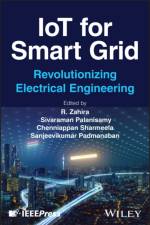
Expert guidance on technologies to build the Internet of Things (IoT) from electrical engineering and power industry perspectives IoT for Smart Grid presents advanced Internet of Things (IoT) technologies that are utilized in various aspects of smart electrical systems, especially monitoring, diagnosis, automation, and industrial evolution, from the point of view of both electrical engineering and power industry facilities and resources. The book describes how IoT has expanded the use of wireless sensor networks (WSN) to play a vital role in connecting power industry facilities and resources to reduce energy consumption and costs. It also explores concepts of e-mobility that include smart parking, vehicle monitoring, and charging, and considers future challenges such as security and privacy concerns in transactive systems and scalability and standardization issues. Later chapters describe communication protocols for transactive IoT, smart grid integration, cybersecurity challenges, smart energy management, and more. Relevant examples and practical case studies are included to enrich and reinforce learning. Edited by a team of highly qualified professionals in the field, IoT for Smart Grid explores additional topics such as: IoT/M2M systems and their role in connectivity-introduction to sensors and transducers in IoT-LoWPAN network management protocol (LNMP) MQTT, CoAP, and other protocols in transactive systems and WSN diagnostic tools for ensuring reliability and performance The role of sensors and actuators in transactive models and significance of transactive IoT in modern applications Remote control and automation in smart grids, utilizing IoT for demand response programs, load shifting strategies, and dynamic pricing models and IoT integration IoT for Smart Grid is a definitive reference for identifying and applying advanced technologies and concepts and a highly valuable learning resource for students, researchers, consultants, and utility engineers in the design, use, and maintenance of electrical power systems.
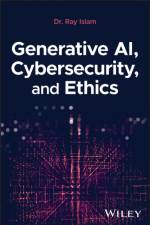
"Generative AI, Cyber Security, and Ethics' is an essential guide for students, providing clear explanations and practical insights into the integration of generative AI in cybersecurity. This book is a valuable resource for anyone looking to build a strong foundation in these interconnected fields." - Dr. Peter Sandborn, Professor, Department of Mechanical Engineering, University of Maryland, College Park "Unchecked cyber-warfare made exponentially more disruptive by Generative AI is nightmare fuel for this and future generations. Dr. Islam plumbs the depth of Generative AI and ethics through the lens of a technology practitioner and recognized AI academician, energized by the moral conscience of an ethical man and a caring humanitarian. This book is a timely primer and required reading for all those concerned about accountability and establishing guardrails for the rapidly developing field of AI." - David Pere, (Retired Colonel, United States Marine Corps) CEO & President, Blue Force Cyber Inc. Equips readers with the skills and insights necessary to succeed in the rapidly evolving landscape of Generative AI and cyber threats Generative AI (GenAI) is driving unprecedented advances in threat detection, risk analysis, and response strategies. However, GenAI technologies such as ChatGPT and advanced deepfake creation also pose unique challenges. As GenAI continues to evolve, governments and private organizations around the world need to implement ethical and regulatory policies tailored to AI and cybersecurity. Generative AI, Cyber Security, and Ethics provides concise yet thorough insights into the dual role artificial intelligence plays in both enabling and safeguarding against cyber threats. Presented in an engaging and approachable style, this timely book explores critical aspects of the intersection of AI and cyber security while emphasizing responsible development and application. Reader-friendly chapters explain the principles, advancements, and challenges of specific domains within AI, such as machine learning (ML), deep learning (DL), generative AI, data privacy and protection, the need for ethical and responsible human oversight in AI systems, and more. Incorporating numerous real-world examples and case studies that connect theoretical concepts with practical applications, Generative AI, Cyber Security, and Ethics: Explains the various types of cybersecurity and describes how GenAI concepts are implemented to safeguard data and systems Highlights the ethical challenges encountered in cybersecurity and the importance of human intervention and judgment in GenAI Describes key aspects of human-centric AI design, including purpose limitation, impact assessment, societal and cultural sensitivity, and interdisciplinary research Covers the financial, legal, and regulatory implications of maintaining robust security measures Discusses the future trajectory of GenAI and emerging challenges such as data privacy, consent, and accountability Blending theoretical explanations, practical illustrations, and industry perspectives, Generative AI, Cyber Security, and Ethics is a must-read guide for professionals and policymakers, advanced undergraduate and graduate students, and AI enthusiasts interested in the subject.
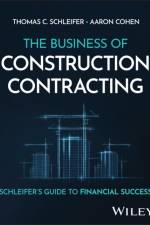
Explore this deep dive into the business side of construction, including how to structure, organize, and operate a construction organization to maximize profit The most visible work of construction contracting happens on the job site, but some of the most important aspects of running a construction business happen behind the scenes, on the financial and operations side. Construction is the second-most risk-intensive industry in the US, and both minimizing business failures and minimizing the damage that results from inevitable failures are critical. Structuring and managing a profitable construction business requires strategic sense and up-to-date knowledge. The Business of Construction Contracting describes and analyzes the business side of construction, with a detailed exploration of the major types of business failure and how to avoid them. It's designed for construction professionals who understand that in this industry everybody faces risk exposure, and the companies that survive and thrive are the ones who understand how to recognize the risks and respond accordingly. It offers documented research findings, rooted in years of construction business experience, that can help both new and veteran business owners find success. The Business of Construction Contracting readers will also find: Exploration of the concepts of flexible overhead, corporate, and financial self-analysis Detailed discussion of topics including cash flow thresholds, construction market cycles, and more The latest industry technologies and techniques to manage a construction business The Business of Construction Contracting is ideal for construction professionals-including general contractors, construction managers, and specialty contractors-as well as bonding and insurance professionals, construction attorneys, and vendors servicing the construction industry.
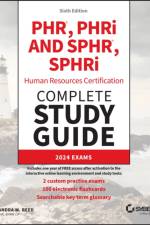
Prepare for the updated 2024 PHR, PHRi and SPHR, SPHRi certification exams smarter and faster with this Sybex Study Guide The newly revised sixth edition of the PHR, PHRi and SPHR, SPHRi Professional in Human Resources Certification Complete Study Guide: 2024 Exams is the ideal resource for HR professionals seeking to validate their skills and knowledge acquired through years of practical experience or for a relative newcomer to the HR field looking to strengthen their resume. The new edition of the bestselling PHR and SPHR Study Guide reflects the recently updated A Guide to the Human Resource Body of Knowledge--HRBoK--and is written to help you prepare for these challenging exams. The Study Guide walks you through the seven key functional areas of the PHR/PHRi and five key functional areas of the SPHR/SPHRi that are covered in the exams, including business management and strategy, leadership, workforce planning, talent acquisition and talent management, learning and development, total rewards, employee engagement, employee and labor relations, and the most recently added, HR information management. You'll also find: Up-to-date and incisive guidance on topics you'll use every day in your existing or next HR role Updates reflecting the latest additions to both the US and International versions of the exams, including the incorporation of DE&I concepts and cybersecurity needs Complimentary access to Sybex's outstanding online learning environment and test bank, including hundreds of practice test questions, electronic flashcards, and a glossary of key terms Perfect for aspiring and established human resources professionals preparing for the 2024 PHR, PHRi and SPHR, SPHRi certification exams, this Study Guide is also an essential volume for practicing HR professionals seeking to brush up on key, on-the-job skills they'll use each day.
The first textbook to fully integrate Green and Sustainable Chemistry and Engineering, now in its second edition Green and Sustainable Chemistry and Engineering addresses key concepts and processes from an industrial and manufacturing perspective. Using an integrated, systems-oriented approach, this invaluable single-volume resource bridges the divide between chemistry, process design, and engineering, as well as environment, health, safety, and life cycle considerations. This revised new edition discusses trends in chemical processing that can lead to more sustainable practices, explores new methods in the design of greener chemical synthesis, addresses sustainability challenges and implementation issues, and more. Up-to-date examples and new practical exercises based on the broad experience of the authors in applied and fundamental research, corporate consulting, and education are incorporated throughout the text. Designed to advance green chemistry and green engineering as disciplines in the broader context of sustainability, Green and Sustainable Chemistry and Engineering: Illustrates the role of green and sustainable chemistry and engineering in the adoption of sustainable practices Describes the components of chemistry supporting the design of sustainable chemical reactions and reaction pathways Presents an approach to materials selection promoting the sustainability of chemical synthesis without diminishing efficiency Highlights key concepts that support the design of more sustainable chemical processes Provides background and context for placing a particular chemical process in the broader chemical enterprise Includes access to a companion website with a solutions manual and supplementary resources Green and Sustainable Chemistry and Engineering: A Practical Design Approach, Second Edition, remains an ideal textbook for graduate and senior-level courses in Chemistry and Chemical Engineering, and an invaluable reference for chemists and engineers in manufacturing and R&D, especially those working in fine chemicals and pharmaceuticals.
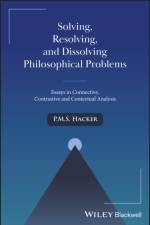
Equips readers with the intellectual tools required to tackle perennial philosophical problems Solving, Resolving, and Dissolving Philosophical Problems is addressed to all who are interested in philosophical questions. It presupposes little philosophical knowledge, only curiosity and an open mind. It demands a willingness to learn not doctrine but method, and the courage to suspend judgement and to challenge received ideas. Advocating the method of the 3 C-s: Connective, Contrastive, and Contextual Analysis, the book demonstrates the method by putting it to work -- examining fifteen salient philosophical questions that concern all thinking people. It is organized thematically into four parts. Part I introduces questions in philosophy of psychology (the nature of the mind; the mind/body problem; the nature of consciousness and its demystification; knowledge of other minds). Part II deals with epistemological questions (knowledge, belief; memory; imagination, thinking; dreaming). Part III deals with value (the roots of morality; the nature of good and evil; the need for a secular conception of the soul; happiness). The application of the method in the essays produces striking, original and unanticipated results that will give readers pause. The final part of the book articulates in detail the methodology of the 3 C-s exemplified by the fifteen essays and defends it against objections. Solving, Resolving, and Dissolving Philosophical Problems: On the Methodology of Connective, Contrastive, and Contextual Analysis is an excellent textbook for undergraduate students in introductory philosophy courses alongside more advanced scholars, as well as an invaluable resource for educated general readers with an interest in philosophical methodology.
Learn the venture capital process and industry from the inside-out In Building Value: The Business of Venture Capital, renowned professor and venture capital (VC) firm partner Simon Barnes delivers an easy-to-read guide to the often-mysterious world of venture capital and how entrepreneurs and venture capitalists should engage with each other to arrive at constructive start-up investment deals. In the book, you'll discover why successful entrepreneurial finance is more about behaviour than it is about numbers. You'll learn why VC is a people business, first and foremost, and why effectively aligning the interests of funders and entrepreneurs is so important. You'll also find: Insights drawn from the author's 25 years' experience backing and building start-ups in the UK, EU, and USA holistic view of the venture capital industry that focuses on building valueA comprehensive discussion of the entire VC process, from negotiating the deal to helping build a successful venture-backed business Perfect for students in MBA programs, Building Value is also a can't-miss resource for venture capitalists, entrepreneurs raising capital for the first time, professional fund managers, and professionals and entrepreneurs participating in incubator or accelerator programmes.
The bestselling graphic design reference, restructured by themes to represent motivations for visual communication over time Graphic designers must have a thorough understanding of the field's rich history in order to inspire and inform their work. Meggs' History of Graphic Design is the industry's original reference, serving as an essential resource for a generation of professionals, scholars, and students. With over 1,400 high-quality images throughout, this visually stunning text guides you through artistic innovators, breakthrough tools and technologies, and significant artifacts that have pushed the boundaries of graphic design throughout its history. The initial publication of this book was heralded as a landmark, and author Philip B. Meggs is credited with significantly shaping the academic field of graphic design. This new edition foregrounds cultural and social context and elevates diverse voices that are pivotal contributors to the history of graphic design. This seventh edition also covers: Artifacts, methods, designers, and events from pre-history to the twenty-first centuryTechnological advancements in media and design, from the earliest technologies to groundbreaking recent developmentsTimelines and maps for studying graphic history from multiple viewpoints and culturally diverse approachesUpdated ancillary materials, including an instructor's manual, expanded image identification banks, key terms, and quizzesYou can't master a field without knowing its history. Meggs' History of Graphic Design presents a diverse, visually spectacular history of graphic design for students and professionals. The updates to this edition solidify its continuing legacy as a must-have in any contemporary graphic design library.
Comprehensive resource presenting tunable evanescent-mode filters design principles, implementation technologies, and applications, with hardware demonstrations and illustrations to support concepts Covering all recent advancements in the field, Tunable Evanescent-Mode Filters discusses fundamentals and applications in tunable evanescent-mode filters with concepts supported by hardware demonstrations to help the reader design experiments, a variety of detailed illustrations to aid in reader comprehension, and worked-out examples to help connect theory to practice. The book is divided into three parts. The first part introduces associated physics, providing background information on topics such as filter anatomy, coupling matrix and routing diagrams, evanescent-mode resonators, and more. The second part covers implementation, describing topics like printed circuit boards, silicon microfabrication, and injection molding. The last part covers applications and discusses a broad range of topics including absorptive bandstop filters, bandwidth and passband control, high-order and fractional-order evanescent-mode filters, advanced evanescent-mode filter structures, and phase-locked loop and balanced-balanced tunable filtering. Written by two highly qualified academics with significant research experience in the field, Tunable Evanescent-Mode Filters also explores topics such as: Filter examples, including Chebyshev bandpass filters and Butterworth bandstop filters, and coupling techniques, including external and inter-resonator coupling The constant bandwidth coupling concept, covering BW variation versus T-line length and tuning range, as well as phase variation Bandpass-to-Bandstop reconfigurable filters, covering the switching coupling structure Single-ended (SE) and balanced (BAL) diplexers, covering the dual-mode diplexing concept and its architecture and resonant frequency misalignment Monitoring and control of silicone-based filters, covering spiral inductors and circuit optimization Tunable Evanescent-Mode Filters is a one-of-a-kind and completely up-to-date reference on the subject for both beginners in tunable RF systems looking for learning the fundamentals, as well as advanced researchers who are interested in the most effective techniques and latest developments in the field.
"This special issue of Parliamentary History is one product of 'Eighteenth-Century Political Participation and Electoral Culture' (ECPPEC) a research project funded from January 2020 to June 2023 by the UK's Arts and Humanities Research Council. ECPPEC was designed to shed new light on participation in parliamentary elections in England in the long 18th century, from about 1695 to the Reform Act of 1832. It was concerned with 'participation' interpreted broadly, both in the sense of voting, and also through other means: for instance, by attending - or being an active part of - the rituals of parliamentary elections, or by consuming - or creating - electoral print, song, dress, or other artefacts. ECPPEC thus had a dual focus on polling data and electoral culture, and an ambition to discover how these two aspects of elections worked together, with electoral culture potentially affecting election results"--
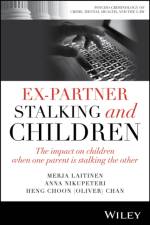
Provides anauthoritative overview of stalking behavior perpetrated by parents and its impacts onchildren Stalking targeted at one of the child's parents by the other poses a major psychosocial and physical threat to children's wellbeing and security. Although interdisciplinary research on stalking has expanded in recent decades, intimate partner/ex-partner stalking has been viewed as an "adults only" problem. Ex-Partner Stalking and Children brings together scholars and practitioners from different disciplines in the field to examine ex-partner stalking as a psychosocial and criminological issue in children's and young people's lives. Providingboth theoretical and practical perspectives, this comprehensive volume explores approaches for increasing awareness of parental stalking, addressing its impacts on children and young people, and advancing interventions and methods of support for them. Throughout the text, the authorschallenge existing conceptions of intimate partner/ex-partner stalking as a phenomenon that exists only between the partners, rather than a form of gendered violence that creates a victimizing environment for the children. A novel contribution to both scholarly and practical understandings of ex-partner stalking, this important book: Addresses a gap in knowledge on the socially, ethically, and legally challenging phenomenon of cases when one parent is stalking the other Offers insights and tools to help practitioner better recognize, support, and intervent i parental stalking situations involving children Examines research findings on stalking behavior, including psychological an trauma perspectives Discusses best practices and working methods, challenges in identifying the child's experiences, and factors preventing children from receiving help Recommends future directions in promoting children's and young people's rights in ex-partner talking Part of the acclaimed Psycho-Criminology of Crime, Mental Health, and the Law series, Ex-Partner Stalking and Children: The Impact on Children When One Parent is Stalking the Other is essential reading for undergraduate and graduate students in disciplines such as criminology, social work, healthcare, psychology, and education, and aninvaluable resource for law enforcement staff, nurses, psychologists, therapists, social workers, teachers, and other professionalswho work with victims of stalking.
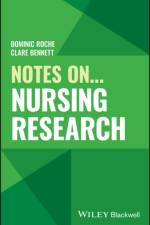
Generate and apply high-quality research in a nursing context with this accessible guide The production and application of rigorous, effective research can have a significant impact on nursing care. Notes On... Nursing Research offers an overview of nursing research, its relationship with clinical practice and patient outcomes, and its positive effects on the nursing professional. Beginning with an introduction to the fundamental principles of nursing research, it moves through the stages of designing and conducting research studies before concluding with specific applications of research to clinical practice and patient care. Part of the Notes On... Nursing series, it is a valuable resource for trainee and qualified nurses, as well as for nursing researchers. Notes On... Nursing Research readers will also find: A step-by-step guide to formulating and answering a research question Detailed discussion of research methodologies including data collection and analysis, inferential statistics, multivariate statistics, evidence synthesis, and much more Specific examples showing how research has improved patient care and outcomes Notes On... Nursing Research is ideal for undergraduate nurses, as well as a valuable resource for qualified and practicing nurses and other health professionals looking to develop their understanding of research.
Essential guide to analyzing nuclear energy systems, with focus on reactor physics, fuel cycle, system dynamics, thermal-hydraulics, and economics. Nuclear Reactor Physics and Engineering highlights efforts in utilizing low enrichment uranium fuel as a substitute for carbon-based fuels in energy generation and provides an overview of important aspects of nuclear reactor physics utilizing the neutron diffusion equation for major reactor designs and MATLAB software for system analysis, with exercises illustrating key points and design parameters as supplementary material. This revised and updated Second Edition reflects key findings of the 2023 National Academy of Sciences (NAS) report and discusses physical and engineering characteristics of advanced nuclear reactors, especially in the form of small modular reactors that have the potential to provide enhanced safety and economics, as well as effective long-term management of used nuclear fuel in geological repositories. Key topics explored in the updated edition of Nuclear Reactor Physics and Engineering include: Impact of the use of high-assay low enrichment uranium (HALEU) fuel as a new efficient nuclear fuel Advantages resulting from combined uses of light water reactor and sodium-cooled fast reactor with fuel reprocessing Fundamental nuclear reactor physics, nuclear reactor system analysis, and lattice physics analysis for reactor cores Nuclear fuel cycle analysis, nuclear plant simulation and control, and management of used nuclear fuel Economic analysis of nuclear electricity and thermal-hydraulic analysis of nuclear systems. With a wealth of all-new information detailing the state of the art in the field, Nuclear Reactor Physics and Engineering is an invaluable reference on the subject for undergraduate and graduate students in nuclear engineering, as well as practicing engineers involved with nuclear power plants.
Explore the modern Java development landscape with this expert guide In Real-World Java: Navigating the Java Ecosystem, a pair of seasoned Java developers delivers a concise handbook for mastering the essential tools and frameworks prevalent in today's commercial Java enterprises. Dive into a comprehensive exploration of Spring, logging, IDEs, build tools, testing tools, and other key concepts in the Java ecosystem. With just the right blend of explanation and practical examples, this book equips you with the expertise needed to thrive in enterprise Java development. Familiarize yourself with technologies like Spring, Open Telemetry, Git, and Project Lombok Access tested and downloadable code examples to reinforce your learning journey Discover how to tune your software's performance and automate your CI/CD builds Whether you're looking to enhance your proficiency or broaden your horizons in Java development, Real-World Java is your go-to companion. Perfect for developers already somewhat familiar with the language, this book offers insights and strategies to navigate the complexities of contemporary Java software development.
In-depth, authoritative overview of sustainability issues and how sustainability is integrated into management and marketing theory and practices Marketing and Sustainability equips readers in the fields of management and marketing with an in-depth understanding of sustainability issues and how sustainability is integrated into business. Examples from across the globe are included on topics such as how businesses use services, sharing practices, and sustainable business models in their operations to face increasing demands to reduce greenhouse gas emissions, limited resources, and increased global competition. This book is concerned with consumer and business markets, considering marketing practices as part of business administration. Up-to-date and topical areas of research such as the sharing economy, are thoroughly discussed and illustrated with supporting models, figures, and vignettes. A companion site for students hosts multiple-choice questions and tests for each chapter as well as additional assignments, and an instructor site features PowerPoint slides and exam Q&As. Videos introducing each chapter's content are also available via YouTube. Written by a team of highly qualified academics, Marketing and Sustainability includes information on: Factors influencing consumers and their choices, sustainable marketing practices and their effectiveness, and how to communicate sustainability initiatives through marketing campaignsStrategies to be heard in a crowded, branded world, and sustainability business models including product-service systems, social enterprises, and sharing and circular economy modelsSustainable marketing strategies including chapters on sustainable marketing channels, sustainable pricing, sustainability oriented marketing communication and brandingGreenwashing, the process of conveying a false impression or misleading information about how a company's products are environmentally sound, and why it's bound to backfire Marketing and Sustainability is an essential reference for undergraduate, graduate, and post-graduate students as well as managers in companies, the public sector, and civil society-all of whom are under increasing pressure to deal with marketing and sustainability for strategic purposes as well as in everyday practices.
Understand how Environment, Health & Safety (EHS) and Sustainability are interconnected and take meaningful action Global in scope, Connecting the Dots provides readers with a concise overview of how EHS and Sustainability intersect and offers immediately actionable activities to bring to their organizations in the context of worker safety, health, and wellbeing and environmental management, connecting the dots between the subject and the professional's role. Written with standalone chapters to allow readers to apply relevant topics in situ or in study as needed, each chapter follows a standard format with integrated case studies, examples, and implementation advice. Interviews with leaders in the field and real-world examples of success are included throughout the text to elucidate key concepts. This book is scalable to the size and nature of a company's operations, from a small, medium-sized enterprise to a global multinational company, it is applicable to all professionals in the field from the C-Suite to the front-line worker. The impact pathways in the Value: Creation, Assessment, Valuation and Impact Pathways chapter will be of interest to the finance department, the supply chain in the Stakeholder and Stakeholder mapping chapter will interest the procurement professional, and the sustainability strategy and decision-making roadmap chapter could be a focus for the enterprise risk team and applicable to procurement, as well as internal audit, corporate communications, investor relations and others. Written by two veteran industry EHS and sustainability leaders, coverage includes: Commonalities and differences in the international taxonomy within the EHS and sustainability disciplines, helping bridge reader understanding and communication across their company's stakeholder groups Integrated business and risk management models related to associated frameworks, standards, assessments, themes, issues, impacts, and materiality Discipline processes to operationalize concepts, and the better approach of a Future Fit, Sustainability and Business excellence mindset instead of a compliance mindset Implementation and change management, highlighting important cultural and business considerations Connecting the Dots is an essential guidance and reference resource for all professional readers, no matter where they sit in the value chain or industry sector. The text also serves as an excellent aid for advanced courses on topics such as sustainability and safety, environmental standards, and advanced safety, health and wellbeing management.
Abonner på vårt nyhetsbrev og få rabatter og inspirasjon til din neste leseopplevelse.
Ved å abonnere godtar du vår personvernerklæring.