







Gjør som tusenvis av andre bokelskere
Abonner på vårt nyhetsbrev og få rabatter og inspirasjon til din neste leseopplevelse.
Ved å abonnere godtar du vår personvernerklæring.Du kan når som helst melde deg av våre nyhetsbrev.

Transform your finances, by enhancing your relationships and your spiritual powers with this compelling new resource In the newly revised second edition of Business Secrets from the Bible: Spiritual Success Strategies for Financial Abundance, renowned keynote speaker, consultant, and advisor Rabbi Daniel Lapin delivers an inspiring and practical guide to achieving your financial goals by deploying timeless truths from the Bible. In the book, you'll explore the secrets of creating revenue using timeless spiritual strategies, as well as concrete guidance on developing your self-discipline, integrity, and moral strength. The author explains how to develop the right financial and spiritual mindsets, showing you effective, Bible-based strategies to improve your life and increase your bottom-line. You'll also find: Brand-new updates and revisions to the widely read original, demonstrating how a focus on service and the wellbeing of others will be reflected in your own prosperity Hands-on strategies for self-transformation in the face of fear and uncertainty How to seed and nurture new relationships that become part of the tapestry of your exciting financial reality A must-read resource for anyone interested in simultaneously getting closer to God and doing good by doing well. Escalating the financial destiny of readers around the world, Business Secrets from the Bible is the biblical, spiritual, and practical roadmap to prosperity that you have been waiting for.
A wise, heartfelt, and compelling guide to our quest for wholeness in a broken world A Hidden Wholeness--now in its 20th Anniversary Edition, with a new Introduction by bestselling author Parker J. Palmer--has helped people in every walk of life rise to the challenge of living "divided no more." What leads us to live divided lives that defy our own sense of identity and integrity? When we do, what price do we and the world pay? How can we recover the wholeness that is our birthright gift? Palmer examines the forces that deflect us from the soul's true north and gives us the tools we need to regain our bearings. Mapping an inner journey to be taken in solitude and community, Palmer explores perspectives and practices that can help us embody integrity in a world where it often feels risky to be who we are. As we learn how to be present to others in spaces where it's safe for the soul to speak (aka "circles of trust"), we find ways to rejoin soul and role in our personal, vocational, and public lives. Inspired by A Hidden Wholeness--and by the work of the Center for Courage & Renewal, a nonprofit Palmer founded in the late 1990s--tens of thousands of people have participated in circles of trust to deepen their sense of "true self" and contribute to the common good in the places where they live and work. To support readers in developing these practices, the book comes with an online "Study Guide for Readers and Group Leaders," including author videos, available free at the Center's website. In the midst of our broken world, the principles and practices in this book can ground us in the "hidden wholeness," giving us a place to stand as we seek to live with deeper integrity at every level of our lives.
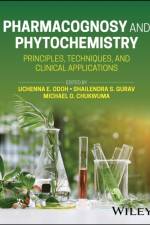
This book overviews the basics of pharmacognosy and phytochemistry from early principles through contemporary advances like molecular pharmacognosy. Following the overview, the contributors cover classification of crude drugs, complementary and alternative medical (CAM) systems, adulteration and evaluation of drugs, extraction methods of plant drugs, and ethnobotany and -pharmacology. Other key chapters include coverage of biotechnology, clinical pharmacognosy, analytical techniques for quality control, and molecular pharmacognosy.
Rise Above Bullying: Empower and Advocate for Your Child provides research-based and legally grounded guidance that will enable parents to gain greater insight into how to support their bullied child. This resource helps prepare parents on how to empower their child and advocate on how schools should take the necessary actions to get this harmful environment to stop. Professionals who are supporting young people through counseling or advocacy, as well as educators, will also benefit from the insight in this book. In Rise Above Bullying, Nancy E. Willard, M.S., J.D., a respected voice in the field of bullying and youth trauma, provides valuable insight on: Why bullying occurs, who is involved, the immediate and long-lasting harms it can cause, and why current anti-bullying approaches implemented by schools are not achieving effective results Strategies to empower young people with greater resilience and effective relationship skills How to document what is happening, report these concerns to the appropriate authorities, and insist on an effective intervention
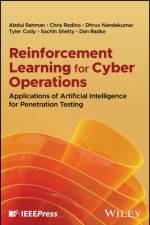
"Reinforcement learning (RL) is an area of machine learning concerned with how intelligent agents ought to take actions in an environment in order to maximize the notion of cumulative reward. Reinforcement learning is one of three basic machine learning paradigms, alongside supervised learning and unsupervised learning. Reinforcement learning differs from supervised learning in not needing labelled input/output pairs to be presented, and in not needing sub-optimal actions to be explicitly corrected. Instead the focus is on finding a balance between exploration (of uncharted territory) and exploitation (of current knowledge)."--
Transform your approach to learning and working in the 21st century In In The E Factor: The 21st Century Guide to Entrepreneurial Thinking, award-winning professor, entrepreneur, and accountant David Gibson delivers a singularly practical guide to critical thinking that will transform the way you think about learning and take action. The book explains all the key skills useful to teachers, students, and professionals in the contemporary classroom and marketplace, offering hands-on strategies and techniques for work and school that enhance productivity and effectiveness. You'll discover how to apply the author's one-of-a-kind model to everyday learning and working and become more successful. You'll also find: Practical case studies that demonstrate the power of the E Factor approach in the real world Strategies for teaching students to apply the E Factor to enhance their overall educational experience and get more out of each class and lesson they take Ways to apply critical thinking techniques to become more interactive as you learn in the classroom, the boardroom, the office, and anywhere else Perfect for students, educators, and aspiring and practicing professionals in any industry, The E Factor is a must-read guide to active learning, development, and working that will transform the way you interact with the world around you.
Autoimmune Disorders Comprehensive resource on the science of autoimmune disorders, covering causes, treatment, prevention, and the latest research in the field Autoimmune Disorders is an authoritative reference on the science of autoimmune disorders, covering their causes, including infections, vaccine adjuvants, environmental stimuli, and silicone implants, the latest research on the genetics, epigenetics, and immunology of autoimmunity, predictive markers, therapeutic approaches for treatment and prevention, and suggestions for future research directions. This book explores the intricate connections between adjuvants and autoimmune responses, focusing on the emergence of the Autoimmune/Inflammatory Syndrome Induced by Adjuvants (ASIA syndrome), as well as autoimmune connections in areas such as chronic fatigue syndrome, autoantibodies targeting the autonomic system, and small fiber neuropathy. The authors emphasize the profound impact of vaccines on public health, underscoring that their benefits far outweigh potential side effects and exploring the historical context of adjuvants in vaccine development. From tattoos to environmental factors, each chapter adds a unique thread to the tapestry of adjuvants, autoimmune responses, and their interactions. Sample topics covered in Autoimmune Disorders include: Food additives and dental implants as a trigger of autoimmunity and increased risk of ASIA syndrome as a result of the chemical and social factors Sustained immune activation in ASIA syndrome as a bridge to lymphomagenesis and how immune checkpoints, metals, and bisphenol connect to autoimmunity Postural Orthostatic Tachycardia syndrome (POTS), Sick Building syndrome, and Gulf War syndrome (GWS) as parts of ASIA syndrome Sarcoidosis and Sjögren's syndrome as a proof of concept of hyperstimulation syndrome Autoimmune Disorders is an essential reference on the subject for academics, specialized postgraduate students, and practicing professionals seeking to improve integrated research strategies and foster a deeper understanding of the complex relationship between immunology, public health, and individual well-being.
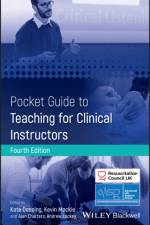
New edition of the popular guide to the practical aspects of teaching and fundamental learning principles in clinical practice Pocket Guide to Teaching for Clinical Instructors contains theoretical input on all the modalities of teaching and assessment required for life support training through the Advanced Life Support Group and Resuscitation Council UK blended learning approach. This guide does not attempt to provide a blueprint for teaching--rather, it gives advice about the basics, which can be adapted to your personality and creativity. This Fourth Edition has been thoroughly revised and updated to reflect the latest in the evolution of education methods applicable to provider courses. The text is relevant to a 21st century audience and graphics have been introduced to make the materials more readable, applicable, and accessible. Written by a team of highly experienced educators, Pocket Guide to Teaching for Clinical Instructors: Takes an evidence-based approach to how our brains manage and process information in order for learning to occur Provides a structured approach to teaching the different modalities used on the courses: lectures, skill stations, scenarios, workshops, debriefing as a learning conversation, Explores neurodiversity, psychological safety, cognitive load, non-technical skills, and inclusive teaching Discusses blended learning, the wider role of the instructor and the variety of approaches to assessment Pocket Guide to Teaching for Clinical Instructors is a concise, practical guide for anyone interested in teaching healthcare professionals in any context.
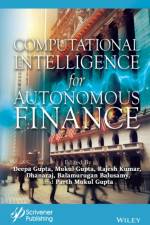
The book serves as an essential guide and a deep dive into the intersection of AI and finance, providing readers with a thorough understanding of the current state, challenges, and future possibilities of autonomous financial systems. In the rapidly evolving domain of autonomous finance, the convergence of computational intelligence techniques and financial technologies has paved the way for a new era of financial services. This transformation is driven by the integration of artificial intelligence (AI), machine learning (ML), blockchain, and big data analytics into financial systems, leading to the development of more responsive, efficient, and personalized financial products and services. Computational Intelligence for Autonomous Finance delves into the heart of this technological revolution, offering a comprehensive exploration of the theoretical foundations, practical applications, and future prospects of computational intelligence in the financial sector. The backbone of autonomous finance is a complex, interconnected ecosystem that leverages computational intelligence to automate decision-making processes, optimize financial operations, and enhance customer experiences. The book introduces the concept of an Intelligent Autonomous Financial Network (IAFN), which integrates various computational intelligence techniques with cutting-edge financial technologies to create a self-organizing, adaptive, and scalable financial system. The IAFN framework facilitates seamless interactions between diverse financial entities, enabling the provision of innovative financial services such as automated trading, real-time risk management, personalized financial planning, and fraud detection. The book meticulously analyzes the key challenges including data security and privacy concerns, algorithmic biases, regulatory compliance, and the need for interoperable standards. It also presents state-of-the-art solutions and best practices for overcoming these challenges, emphasizing the importance of ethical AI, robust data protection mechanisms, transparent algorithms, and collaborative regulatory frameworks. It discusses emerging trends such as quantum computing, edge computing, and decentralized finance (DeFi), highlighting their potential to further transform the financial landscape. The book also addresses the societal implications of autonomous finance, including its impact on employment, wealth distribution, and financial inclusion, advocating for a balanced approach that maximizes benefits while minimizing negative outcomes. Audience This book is aimed at researchers, industry professionals, policymakers, and graduate students in finance, computational intelligence, and related fields.
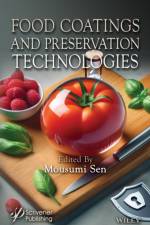
Food Coatings and Preservation Technologies presents the most recent studies about the application of edible coatings to a wide variety of foods. Edible coatings are globally utilized for preventing food product contamination from harmful microorganisms and pathogens. This book aims to highlight the developments made in designing new edible coatings. Herein, particular attention is given to the main components, manufacturing methods, and their application to specific products. This book also discusses the current state-of-the-art alternative to conventional package usage, providing the main features biodegradable packaging should meet for distinct uses for the conservation and improvement of various food products. This information will be helpful for processors to select the best coating material and its effective concentration for different fresh and minimal processed vegetables. Each chapter delves into edible-based coating research and critical developments to enhance food preservation standards. The first section focuses on biopolymer-based edible coatings, food packaging, and preservation. It provides a comprehensive understanding of the current state and critical developments in biodegradable polymer packaging systems for food applications. As technology advances, the next section highlights ongoing research focusing on optimizing coating effectiveness and the development of eco-friendly and sustainable materials. This section's objective is to identify edible materials and combine the most recent information available to provide a comprehensive understanding of formulation methods and approaches to enhancing the properties of the coatings applied to food products. The final section discusses encapsulation techniques and levels of retention to improve shelf-life. Functional foods play a significant role in the desire for better food quality.
A detailed exploration of both Paul the Apostle and his world, providing an understanding of how the Christian faith originated in the first centuries Paul the Apostle is often acclaimed as "the true founder of Christianity," but many Christians are unaware of Paul's teachings in their historical context. Paul: Apostle to the Gentiles explores both Paul and his world in the first century, investigating how he integrated his values, politics, and daily life through his teachings on the nature of God, how humans relate to God, and how to live God's commandments. With a multidisciplinary Religious Studies approach and methodology, Rebecca I. Denova sheds light on the origin and evolution of the creation of a Christian "systematic theology" that became the basis for the establishment of Orthodox Christianity, the Catholic Church, and the Protestant Reformation. Accessible chapters provide the background and history of Judaism, analyze the Pauline epistles, and explore Paul's background as a Jewish Pharisee who became a believer in Christ within the context of the cities of the Eastern Roman Empire. Throughout the text, Denova offers insights into how Paul's engagement with the ancient world can help us understand the ways today's Christians articulate their own systems of meaning. Helping readers fully understand the development of Paul's theology and its importance over the centuries, Paul: Apostle to the Gentiles: Offers analyses of the Pastoral Epistles, I and II Corinthians, I Thessalonians, the Apocryphal Acts of Paul, Romans, and other key textsExplores the ways Paul's letters established Christian hierarchy, set rules for Christian assemblies, and were used to both include and separate Christianity from JudaismDiscusses the shared concepts between Judaism and Greco-Roman religion, philosophy, and cultureIncludes "Excurses" between chapters, detailed examinations and summaries of important topics and different perspectivesContains numerous pedagogical tools, including historical timelines, maps and illustrations, definitions of concepts and terminology, references to traditional studies and recent scholarship, excerpts of ancient literature, and schematics of archaeological sites Covering both the world of ancient Christianity and the scholarly methods used in analyses of Paul's letters, Paul: Apostle to the Gentiles is an excellent textbook for undergraduate students taking courses on the origins and history of Christianity, as well as general readers interested in Paul's life and letters.
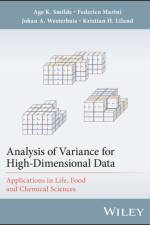
Overview of methods for analyzing high-dimensional experimental data, including theory, methodologies, and applications Analysis of Variance for High-Dimensional Data summarizes all the methods to analyze high-dimensional data that are obtained through applying an experimental design in the life, food and chemical sciences, especially those developed in recent years. Written by international experts who lead development in the field, Analysis of Variance for High-Dimensional Data includes information on: Basic and established theories on linear models from a mathematical and statistical perspective Available methods and their mutual relationships, including coverage of ASCA, APCA, PC-ANOVA, ASCA+, LiMM-PCA and RM-ASCA+, and PERMANOVA, as well as various alternative methods and extensions Applications in metabolomics, microbiome, gene expression, proteomics, food science, sensory science, and chemistry Commercially available and open-source software for application of these methods Analysis of Variance for High-Dimensional Data is an essential reference for practitioners involved in data analysis in the natural sciences, including professionals working in chemometrics, bioinformatics, data science, statistics, and machine learning. The book is valuable for developers of new methods in high dimensional data analysis.
Separate signals from noise with this valuable introduction to signal processing by applied decomposition The decomposition of complex signals into their sub-signals or individual components is a crucial tool in signal processing. It allows each component of a signal to be analyzed individually and enables the signal to be isolated from noise and processed in full. Decomposition processes have not always been widely adopted due to the difficult underlying mathematics and complex applications. This text simplifies these obstacles. Signal Processing: An Applied Decomposition Approach demystifies these tools with a model-based perspective. Addressing each major decomposition approach in turn, it offers a mathematically-informed step-by-step analysis of the process by which it breaks a composite signal/system down into its constituent parts. Introducing both fundamental concepts and advanced applications, it is an indispensable addition to any library regarding signal processing. Signal Processing readers will find: Signal decomposition techniques developed from the data-based, spectral-based and model-based perspectives incorporate: statistical approaches (PCA, ICA, Singular Spectrum); spectral approaches (MTM, PHD, MUSIC); and model-based approaches (EXP, LATTICE, SSP) In depth discussion of topics includes signal/system estimation and decomposition, time domain and frequency domain techniques, systems theory, modal decompositions, applications and many more Numerous figures, examples, and tables illustrating key concepts and algorithms are developed throughout the text Includes problem sets, case studies, real-world applications as well as MATLAB notes highlighting applicable commands Signal Processing is ideal for engineering and scientific professionals, as well as graduate students seeking a focused text on signal/system decomposition with performance metrics and real-world applications.
Expert guide to ecological restoration of post-industrial lands that explains how to re-introduce biodiversity and ecosystem services Biodiversity and Ecosystem Services on Post-Industrial Land shows how to harness natural processes for the rehabilitation of disturbed sites. It covers both the initial stages associated with the improvement of physicochemical and biological substrate characteristics as a precondition for continuous vegetation, as well as the subsequent re-establishment of rich communities of plant species, and how these communities may be optimized for their biodiversity and ecosystem services, such as pedogenesis, nutrient cycling, habitat for other organisms, food plants for herbivores, carbon sequestration, and aesthetic value. Case studies of successful restoration of industrial sites from different regions, including mining sites, oil drilling sites, fly ash deposits and dumpsites, and brownfield lands complement the conceptual part and demonstrate how to put the theory into practice. By providing solutions for carrying out ecorestoration that maximize socio-economic, ecological and environmental benefits, Biodiversity and Ecosystem Servieces on Post-Industrial Land will be essential for environmental managers and engineers tasked with restoring post-industrial sites.
Unlock the future of programming on the Ethereum blockchain with Solidity smart contracts Explore and learn smart contract development on the Ethereum blockchain with Beginning Solidity: Learning to Program with Solidity on the Ethereum Blockchain by Alexandros Dolgov. This book is a guide to taking your first steps and becoming comfortable with Solidity programming, providing accessible learning material for existing and aspiring programmers who wish to build decentralised applications on the Ethereum platform. This book provides insights into the creation, compilation and deployment of smart contracts and decentralised applications. Beginning Solidity demystifies the complexities of the Ethereum blockchain and the Solidity language. From understanding the origins and use of money to basic blockchain concepts such as accounts, transactions, block explorers, wallets and consensus mechanisms, to applications like understanding and creating fungible (ERC-20) and Non-fungible tokens (NFTs) or developing a decentralized auction platform, Alexandros Dolgov covers it all. Through practical examples and real-world scenarios, this book equips you with the knowledge to design, develop, and deploy smart contracts and decentralized apps, positioning you at the forefront of the blockchain revolution. You'll also: Learn Solidity programming through the Foundry framework making Solidity programming incredibly accessible for those with or without prior coding experience Become comfortable with the development of Ethereum smart contracts and the deployment of decentralized applications across various sectors Stay up to date in the rapidly evolving field of blockchain technology with cutting-edge practices and adaptable learning strategies For both practicing and aspiring programmers and developers eager to explore the possibilities of the Ethereum blockchain and Solidity programming, Beginning Solidity is an essential read. Embark on an exciting journey to become proficient in creating blockchain-based applications that can transform the digital world. Grab your copy today and take the first step towards mastering the future of decentralized technology.
Step into the world of Advances in Nano-Biosensor Technologies. In these exhilarating pages, learn how diagnostics and accuracy have improved systems. This multi-authored book collection invites worldwide experts to highlight recent innovations in biosensor technology for infectious disease diagnosis. Biosensor technology has advanced to identify diseases and meet conventional standards regarding price, accuracy, and turnaround time. Learn how new creative approaches have been applied to analytical chemistry since the COVID-19 pandemic. This book comprises 15 chapters focusing on the design and synthesis of novel, selective, and sustainable nanomaterials for developing nanobiosensor devices for infectious disease diagnosis. More information includes versatile tools and recent advancements in biosensor and nanosensor technology. Read up on trends in the development of immunosensors for the diagnosis of infectious diseases. In addition, this book also imparts information on the regulatory policies on the use of nanotechnology in the development of nanodiagnostic devices for infectious diseases, along with their commercialization.
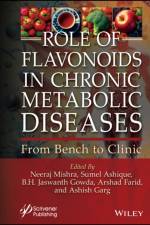
Do you want to learn how flavonoids have become an unsung hero in the health industry? Scientists have wavered unending commitment to proving the potential medical benefits of these plant-based substances, providing an overview of flavonoids and novel treatment methodologies. Flavonoids in Chronic Metabolic Diseases established the complex realm of flavonoids and their significant contribution to managing chronic metabolic disorders. This book explores concepts in laboratory research and therapeutic capabilities to enhance awareness of flavonoids in a medical context. The pages that follow present a comprehensive understanding developed by scientists, clinicians, and public health experts. Read a thorough examination of basic biochemical and molecular processes. Then, look at scientific research on bioactive substances, from their natural origins to the synthesis of innovative derivatives. However, the investigation of flavonoid medical studies does not end there. This book is just the beginning to understand the future direction of flavonoid-based therapeutics in therapeutic approaches.
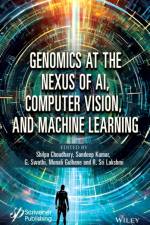
Genomics at the Nexus of AI, Computer Vision, and Machine Learning explores the in-depth process of how AI and machine learning algorithms extract genomic data. The main goal is to help readers understand the dynamic intersection between genomics and cutting-edge technologies. This book aims to provide a roadmap for navigating genomics with developments in artificial intelligence to open up new research ideas to detect and analyze genetic patterns using computer vision methods. This book encompasses a wide range of topics, starting with an introduction to genomics data and its unique characteristics. Each chapter unfolds a unique facet, delving into the collaborative potential and challenges that arise from advanced technologies. It explores image analysis techniques specifically tailored for genomic data. With this resourceful data, research enables the detection and analysis of genetic patterns using computer vision methods. Furthermore, the dedicated research from contributors offers insights and knowledge to genomic research that seeks to explore the mysteries of life through the lens of interdisciplinary collaboration.
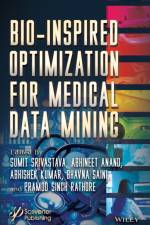
Bio-Inspired Optimization for Medical Data is a groundbreaking book that delves into the convergence of nature's ingenious algorithms and cutting-edge healthcare technology. Through a comprehensive exploration of state-of-the-art algorithms and practical case studies, readers gain unparalleled insights into optimizing medical data processing, enabling more precise diagnosis, optimizing treatment plans, and ultimately advancing the field of healthcare. Organized into 15 chapters, readers learn about the theoretical foundation of pragmatic implementation strategies and actionable advice. In addition, it addresses current developments in molecular subtyping and how they can enhance clinical care. By bridging the gap between cutting-edge technology and critical healthcare challenges, this book is a pivotal contribution, providing a roadmap for leveraging nature-inspired algorithms. This is an indispensable resource that will drive significant changes in the healthcare sector.
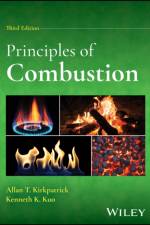
The new edition of a classic textbook on combustion principles and processes, covering the latest developments in fuels and applications in a student-friendly format Principles of Combustion provides clear and authoritative coverage of chemically reacting flow systems. Detailed and accessible chapters cover key combustion topics such as chemical kinetics, reaction mechanisms, laminar flames, droplet evaporation and burning, and turbulent reacting flows. Numerous figures, end-of-chapter problems, extensive reference materials, and examples of specific combustion applications are integrated throughout the text. Newly revised and expanded, Principles of Combustion makes it easier for students to absorb and master each concept covered by presenting content through smaller, bite-sized chapters. Two entirely new chapters on turbulent reacting flows and solid fuel combustion are accompanied by additional coverage of low carbon fuels such as hydrogen, natural gas, and renewable fuels. This new edition contains a wealth of new homework problems, new application examples, up-to-date references, and access to a new companion website with MATLAB files that students can use to run different combustion cases. Fully updated to meet the needs of today's students and instructors, Principles of Combustion Provides problem-solving techniques that draw from thermodynamics, fluid mechanics, and chemistryAddresses contemporary topics such as zero carbon combustion, turbulent combustion, and sustainable fuelsDiscusses the role of combustion emissions in climate change and the need for reducing reliance on carbon-based fossil fuelsCovers a wide range of combustion application areas, including internal combustion engines, industrial heating, and materials processing Containing both introductory and advanced material on various combustion topics, Principles of Combustion, Third Edition, is an essential textbook for upper-level undergraduate and graduate courses on combustion, combustion theory, and combustion processes. It is also a valuable reference for combustion engineers and scientists wanting to better understand a particular combustion problem.
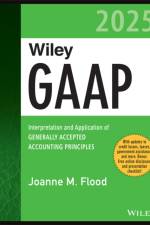
The gold standard in US GAAP resources--fully revised to reflect the latest pronouncements US GAAP undergoes constant revision and review, requiring accountants and other financial practitioners to keep a close eye on updates and changes. Wiley GAAP 2025 offers the most comprehensive coverage of all Financial Accounting Standards Board (FASB) Topics--including all the latest updates. Every chapter offers a discussion of relevant perspectives and issues, GAAP sources, practice-oriented examples, and clear definitions of terms, concepts, and rules. Every FASB Topic is clearly explained in a reader-friendly way and includes dynamic graphics to help the reader understand and retain the nuanced subject matter. Extensively updated to reflect all current US GAAP changes, this invaluable practice resource: - Reviews all the latest changes to accounting principles - Offers expert guidance on complex issues raised by specific pronouncements - For ease of research, includes topic-specific chapters and comprehensive cross-references - Illustrates how each standard applies to common, real-world scenarios - Clarifies how to implement each standard with numerous practical examples This 2025 edition includes the latest revisions to standards on credit losses, leases, derivatives, and more, plus guidance on a new FASB Codification topic on government assistance. Non-compliance with GAAP is not an option for effective accounting and financial professionals. Wiley GAAP 2025 is your one-stop resource for staying current with constantly evolving guidelines and delivers the insight and guidance you need.
Abonner på vårt nyhetsbrev og få rabatter og inspirasjon til din neste leseopplevelse.
Ved å abonnere godtar du vår personvernerklæring.