













Gjør som tusenvis av andre bokelskere
Abonner på vårt nyhetsbrev og få rabatter og inspirasjon til din neste leseopplevelse.
Ved å abonnere godtar du vår personvernerklæring.Du kan når som helst melde deg av våre nyhetsbrev.

From Boron Trifluoride to Zinc, the 52 most widely used reagents in organic synthesis are described in this unique desktop reference for every organic chemist.
A transformative framework to bring the PMO into the future The DNA of Strategy Execution provides clear guidance and a practical framework for moving forward amidst the dynamic changes in today s business environment.
Learn how to attack and defend the world s most popular web server platform Linux Server Security: Hack and Defend presents a detailed guide for experienced admins, aspiring hackers and other IT professionals seeking a more advanced understanding of Linux security.
Your comprehensive, practical guide to dadhood Your new baby is nothing short of a miracle and it's no wonder you want to keep your bundle of joy safe and sound through every stage of their first year.
This book stitches together a complete design journey from beginning to end in a way that you ve likely never seen before, guiding readers (you) step-by-step in a practical way from the initial spark of an idea all the way to scaling it into a better business.
Statistics is confusing, even for smart, technically competent people. And many students and professionals find that existing books and web resources don t give them an intuitive understanding of confusing statistical concepts. That is why this book is needed.
Learn the ins-and-outs of options trading with clear, practical guidance Essential Option Strategies is an introductory guide to options trading, designed to help new options traders better understand the market and the potential opportunities that exist.
Quickly acquire the knowledge and skills you need to administer, score, and interpret the MCMI (R)-IV Essentials of MCMI (R)-IV Assessment is the definitive source of up-to-date, practical information for clinicians and students using the MCMI(R)-IV inventory.
This unique multidisciplinary 8-volume set focuses on the emerging issues concerning synthesis, characterization, design, manufacturing and various other aspects of composite materials from renewable materials and provides a shared platform for both researcher and industry. The Handbook of Composites from Renewable Materials comprises a set of 8 individual volumes that brings an interdisciplinary perspective to accomplish a more detailed understanding of the interplay between the synthesis, structure, characterization, processing, applications and performance of these advanced materials. The Handbook comprises 169 chapters from world renowned experts covering a multitude of natural polymers/ reinforcement/ fillers and biodegradable materials. Volume 4 is solely focused on the Functionalization of renewable materials. Some of the important topics include but not limited to: Chitosan-based bio sorbents; oil spill clean-up by textiles; pyridine and bipyridine end-functionalized polylactide; functional separation membranes from chitin and chitosan derivatives; acrylated epoxidized flaxseed oil bio-resin and its biocomposites; encapsulation of inorganic renewable nanofiller; chitosan coating on textile fibers for functional properties; surface functionalization of cellulose whiskers for nonpolar composites; impact of chemical treatment and the manufacturing process on mechanical, thermal and rheological properties of natural fibers based composites; bio-polymers modification; review on fibers from natural resources; strategies to improve the functionality of starch based films; the effect of gamma-radiation on biodegradability of natural fibers; surface functionalization through vapor-phase assisted surface polymerization (VASP) on natural materials from agricultural by-products; okra bast fiber as potential reinforcement element of biocomposites; silane coupling agent used in natural fiber/plastic composites; composites of olefin polymer /natural fibers: the surface modifications on natural fibers; surface functionalization of biomaterials; thermal and mechanical behaviors of bio-renewable fibres based polymer composites; natural and artificial diversification of starch; role of radiation and surface modification on bio-fiber for reinforced polymer composites. AudienceThis valuable reference work will be read and consulted by researchers, engineers and students both in academia and industry who are working in the field of materials science especially polymer composites/technology. Composites from renewable materials have significant industrial applications especially in the automotive, marine, aerospace, construction, wind energy and consumer goods industries.
The Handbook of Composites From Renewable Materials comprises a set of 8 individual volumes that brings an interdisciplinary perspective to accomplish a more detailed understanding of the interplay between the synthesis, structure, characterization, processing, applications and performance of these advanced materials. The handbook covers a multitude of natural polymers/ reinforcement/ fillers and biodegradable materials. Together, the 8 volumes total at least 5000 pages and offers a unique publication. This 3rd volume of the Handbook is solely focused on the Physico-Chemical and Mechanical Characterization of renewable materials. Some of the important topics include but not limited to: structural and biodegradation characterization of supramolecular PCL/HAP nano-composites; different characterization of solid bio-fillers based agricultural waste material; poly (ethylene-terephthalate) reinforced with hemp fibers; poly (lactic acid) thermoplastic composites from renewable materials; chitosan -based composite materials: fabrication and characterization; the use of flax fiber reinforced polymer (FFRP) composites in the externally reinforced structures for seismic retrofitting monitored by transient thermography and optical techniques; recycling and reuse of fiber reinforced polymer wastes in concrete composite materials; analysis of damage in hybrid composites subjected to ballistic impacts; biofiber reinforced acrylated epoxidized soybean oil (AESO) biocomposites; biopolyamides and high performance natural fiber-reinforced biocomposites; impact of recycling on the mechanical and thermo-mechanical properties of wood fiber based HDPE and PLA composites; lignocellulosic fibers composites: an overview; biodiesel derived raw glycerol to value added products; thermo-mechanical characterization of sustainable structural composites; novel pH sensitive composite hydrogel based on functionalized starch/clay for the controlled release of amoxicillin; preparation and characterization of biobased thermoset polymers from renewable resources; influence of natural fillers size and shape into mechanical and barrier properties of biocomposites; composite of biodegradable polymer blends of PCL/PLLA and coconut fiber - the effects of ionizing radiation; packaging composite materials from renewable resources; physicochemical properties of ash based geopolymer concrete; a biopolymer derived from castor oil polyurethane; natural polymer based biomaterials; physical and mechanical properties of polymer membranes from renewable resources
Case studies and strategies for more effective multi-generational management Clash of the Generations explores this new and increasingly common workplace phenomenon, and provides strategies to help managers navigate this ever more complex maze.
This handbook provides an exhaustive description of polyethylene. The 50+ chapters are written by some of the most experienced and prominent authors in the field, providing a truly unique view of polyethylene. The book starts with a historical discussion on how low density polyethylene was discovered and how it provided unique opportunities in the early days. New catalysts are presented and show how they created an expansion in available products including linear low density polyethylene, high density polyethylene, copolymers, and polyethylene produced from metallocene catalysts. With these different catalysts systems a wide range of structures are possible with an equally wide range of physical properties. Numerous types of additives are presented that include additives for the protection of the resin from the environment and processing, fillers, processing aids, anti-fogging agents, pigments, and flame retardants. Common processing methods including extrusion, blown film, cast film, injection molding, and thermoforming are presented along with some of the more specialized processing techniques such as rotational molding, fiber processing, pipe extrusion, reactive extrusion, wire and cable, and foaming processes. The business of polyethylene including markets, world capacity, and future prospects are detailed. This handbook provides the most current and complete technology assessments and business practices for polyethylene resins.
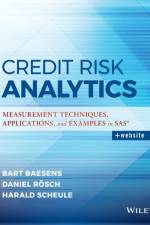
The long-awaited, comprehensive guide to practical credit risk modeling Credit Risk Analytics provides a targeted training guide for risk managers looking to efficiently build or validate in-house models for credit risk management.
A new edition of this classic work, comprehensively revised to present exciting new developments in this important subject The study of numerical methods for solving ordinary differential equations is constantly developing and regenerating, and this third edition of a popular classic volume, written by one of the world's leading experts in the field, presents an account of the subject which reflects both its historical and well-established place in computational science and its vital role as a cornerstone of modern applied mathematics. In addition to serving as a broad and comprehensive study of numerical methods for initial value problems, this book contains a special emphasis on Runge-Kutta methods by the mathematician who transformed the subject into its modern form dating from his classic 1963 and 1972 papers. A second feature is general linear methods which have now matured and grown from being a framework for a unified theory of a wide range of diverse numerical schemes to a source of new and practical algorithms in their own right. As the founder of general linear method research, John Butcher has been a leading contributor to its development; his special role is reflected in the text. The book is written in the lucid style characteristic of the author, and combines enlightening explanations with rigorous and precise analysis. In addition to these anticipated features, the book breaks new ground by including the latest results on the highly efficient G-symplectic methods which compete strongly with the well-known symplectic Runge-Kutta methods for long-term integration of conservative mechanical systems. Key features Presents a comprehensive and detailed study of the subject Covers both practical and theoretical aspects Includes widely accessible topics along with sophisticated and advanced details Offers a balance between traditional aspects and modern developments This third edition of Numerical Methods for Ordinary Differential Equations will serve as a key text for senior undergraduate and graduate courses in numerical analysis, and is an essential resource for research workers in applied mathematics, physics and engineering.
This book looks at the recent progress of research and development for 5G mobile wireless networks, covering related topics on fundamental 5G requirements and enabling technologies.
LINEAR and NONLINEAR INSTABILITIES in MECHANICAL SYSTEMSAn in-depth insight into nonlinear analysis and controlAs mechanical systems become lighter, faster, and more flexible, various nonlinear instability phenomena can occur in practical systems.The fundamental knowledge of nonlinear analysis and control is essential to engineers for analysing and controlling nonlinear instability phenomena. This book bridges the gap between the mathematical expressions of nonlinear dynamics and the corresponding practical phenomena. Linear and Nonlinear Instabilities in Mechanical Systems: Analysis, Control and Application provides a detailed and informed insight into the fundamental methods for analysis and control for nonlinear instabilities from the practical point of view.Key features:* Refers to the behaviours of practical mechanical systems such as aircraft, railway vehicle, robot manipulator, micro/nano sensor* Enhances the rigorous and practical understanding of mathematical methods from an engineering point of view* The theoretical results obtained by nonlinear analysis are interpreted by using accompanying videos on the real nonlinear behaviors of nonlinear mechanical systemsLinear and Nonlinear Instabilities in Mechanical Systems is an essential textbook for students on engineering courses, and can also be used for self-study or reference by engineers.
Provides comprehensive coverage of the research into and clinical uses of bioceramics and biocompositesDevelopments related to bioceramics and biocomposites appear to be one the most dynamic areas in the field of biomaterials, with multiple applications in tissue engineering and medical devices. This book covers the basic science and engineering of bioceramics and biocomposites for applications in dentistry and orthopedics, as well as the state-of-the-art aspects of biofabrication techniques, tissue engineering, remodeling, and regeneration of bone tissue. It also provides insight into the use of bionanomaterials to create new functionalities when interfaced with biological molecules or structures.Featuring contributions from leading experts in the field, Bioceramics and Biocomposites: From Research to Use in Clinical Practice offers complete coverage of everything from extending the concept of hemopoietic and stromal niches, to the evolution of bioceramic-based scaffolds. It looks at perspectives on and trends in bioceramics in endodontics, and discusses the influence of newer biomaterials use on the structuring of the clinician's attitude in dental practice or in orthopedic surgery. The book also covers such topics as biofabrication techniques for bioceramics and biocomposites; glass ceramics: calcium phosphate coatings; brain drug delivery bone substitutes; and much more.* Presents the biggest trends in bioceramics and biocomposites relating to medical devices and tissue engineering products* Systematically presents new information about bioceramics and biocomposites, developing diagnostics and improving treatments and their influence on the clinicians' approaches* Describes how to use these biomaterials to create new functionalities when interfaced with biological molecules or structures* Offers a range of applications in clinical practice, including bone tissue engineering, remodeling, and regeneration* Delineates essential requirements for resorbable bioceramics* Discusses clinical results obtained in dental and orthopedic applicationsBioceramics and Biocomposites: From Research to Use in Clinical Practice is an excellent resource for biomaterials scientists and engineers, bioengineers, materials scientists, and engineers. It will also benefit mechanical engineers and biochemists who work with biomaterials scientists.
This book encompasses topics from the fundamentals of disease related protein misfolding and mass spectrometry, to current research highlights in these areas. It is aimed to provide an overview of this rapidly developing field in order to present a good mixture of information that will encourage people to participate in, and further the use of mass spectrometry in studying protein misfolding with biologically relevant applications. Using examples from the current literature, the book focuses on details relating to understanding the fundamentals of disease related protein misfolding, conducting and optimising the mass spectrometry experiment, and also future prospects of methodologies within this rapidly evolving and topical research area.Using current examples and high-quality illustrations, this book covers topics including how to conduct and optimize experiments; the structural and atomic level information afforded by mass spectrometry in disease related protein systems, and incorporates future research prospects.
This textbook facilitates the independent learning of chemical flow process simulators and how they work. Specifically, this textbook focuses on ChemCAD and methods of design using ChemCAD. The purpose is not just to provide worked examples, but to teach how the software works, so that students can craft their own solutions to unique problems. Each chapter in the book acts as a self-enclosed educational unit. Students and instructors will be able to choose "distillation" or "heat exchangers" or whatever topic they would like to learn in greater details. The chapters take the reader step-by-step through the overall solution method and at the end of the chapter, students will find a review section with the overall solution algorithm, vocabulary terms, and problems for extra practice. Since each chapter forms an independent educational unit, topics can be selected by the professor or by the student for independent review, in any order. Chapters include: Introduction to Flowcharts in ChemCAD; Piping Design in ChemCAD; Heat Exchanger Design in ChemCAD; ChemCAD Reactor Design; ChemCAD Controllers and Controller Design; ChemCAD Distillation; BIP Regression in ChemCAD; ChemCAD Sensitivity Analysis; Customizing ChemCAD
Clear guidance with coverage of the new changes to the FASB standards How to Read Nonprofit Financial Statements clarifies FASB standards to help you quickly and easily understand the nonprofit's most important document.
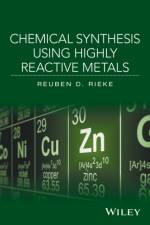
Written by the creator of Rieke metals, valuable for chemical reaction methods and efficiency, this groundbreaking book addresses a significant aspect of organic and inorganic chemistry. The author discusses synthetic methods, preparation procedures, chemical reactions, and applications for highly reactive metals and organometallic reagents.
Completely updated version this classic reference covers both physical hazards and biological agents* Provides updated information on protecting workers from proven and possible health risks from manual material handling, extremes of temperature and pressure, ionizing and non-ionizing (magnetic fields) radiation, shiftwork, and more* Details major changes in our understanding of biological hazards including Ebola, Chikungunya, Zika, HIV, Hepatitis C, Lyme disease, MERS-CoV, TB, and much more* All infectious diseases have been updated from an occupational health perspective* Includes practical guidance on to how to set up medical surveillance for hazards and suggests preventive measures that can be used to reduce occupational diseases
Sharpen advising expertise by exploring critical issues affecting the field Beyond Foundations, a core resource for experienced academic advisors, gives practitioners insight into important issues affecting academic advising.
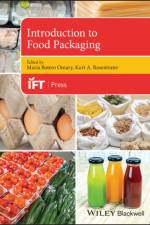
An overview of the history of packaging, its multiple functions, diverse packaging materials, and packaging machinery Well-managed food packaging can provide humankind with a dependable solution for sustenance. Packaging is a critical tool for food preservation and food protection and facilitates the safe distribution of food. Effective packaging can lead to longer shelf-lives and improved global supply chain issues, and sustainable packaging can reduce food and environmentally harmful waste. Recent innovation in food packaging has shown it to be a dynamic field capable of evolving to meet new market and consumer needs. Introduction to Food Packaging is an accessible overview, detailing its history, general principles, and its future in the industry. It introduces traditional and new materials alike and a diverse lineup of packaging technologies --which are continuously entering the market, along with other relevant topics. The result is a book which clearly demonstrates the potential of food packaging to meet the challenges of a sustainable, globalized world. Introduction to Food Packaging readers will also find: An interactive digital version and a printed version including a full-color presentation with images, figures, tables and videos (digital version) presenting relevant key terms for each chapter, key concepts, learning objectives, an exhaustive bibliography and pertinent websites along with useful questions on key concepts Detailed discussion of topics including functions, packaging materials, packaging technologies, worldwide packaging regulation and more A companion website for instructors with answers to the questions posed on each chapterIntroduction to Food Packaging is ideal for students and instructors involved in Food Science and Technology classes related to food packaging as well as Chemical Engineering, Agricultural Engineering and Bioengineering students interested in learning about the principles, applications, and relevant topics of food packaging.
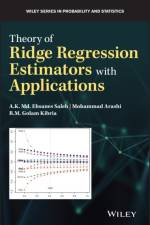
Theory of Ridge Regression Estimation with Applications A guide to the systematic analytical results for ridge, LASSO, preliminary test, and Stein-type estimators with applications Theory of Ridge Regression Estimation with Applications offers a comprehensive guide to the theory and methods of estimation. Ridge regression and LASSO are at the center of all penalty estimators in a range of standard models that are used in many applied statistical analyses. Written by noted experts in the field, the book contains a thorough introduction to penalty and shrinkage estimation and explores the role that ridge, LASSO, and logistic regression play in the computer intensive area of neural network and big data analysis. Designed to be accessible, the book presents detailed coverage of the basic terminology related to various models such as the location and simple linear models, normal and rank theory-based ridge, LASSO, preliminary test and Stein-type estimators. The authors also include problem sets to enhance learning. This book is a volume in the Wiley Series in Probability and Statistics series that provides essential and invaluable reading for all statisticians. This important resource: Offers theoretical coverage and computer-intensive applications of the procedures presented Contains solutions and alternate methods for prediction accuracy and selecting model procedures Presents the first book to focus on ridge regression and unifies past research with current methodology Written for graduate students, practitioners, and researchers in various fields of science, Theory of Ridge Regression Estimation with Applications is an authoritative guide to the theory and methodology of statistical estimation.
Venture capital demystified, for both investors and entrepreneurs Building Wealth Through Venture Capital is a practical how-to guide for both sides of the table investors and the entrepreneurs they fund.
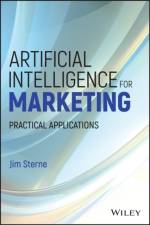
A straightforward, non-technical guide to the next major marketing tool Artificial Intelligence for Marketing presents a tightly-focused introduction to machine learning, written specifically for marketing professionals.
Advance Praise for Moving the Rock ΓÇ£The future comes at us fast ΓÇö which means school reformers donΓÇÖt have time to wait. They need real tools in real time. ThatΓÇÖs why Moving the Rock is so important. Grant Lichtman has guidance for anyone ΓÇö teachers, parents, administrators, government officials ΓÇö intent on helping young people succeed not ΓÇÿsomeday,ΓÇÖ but today.ΓÇ¥ ΓÇö Daniel H. Pink, bestΓÇôselling author of Drive and A Whole New Mind ΓÇ£Grant LichtmanΓÇÖs book is a clear and comprehensive guide to the ΓÇ£what" and the ΓÇ£howΓÇ¥ of educational transformation. Organized around essential levers for change, it is a mustΓÇôread for anyone who wants to make a difference in our schools.ΓÇ¥ ΓÇöTony Wagner, Harvard Ilab Expert in Residence, and bestΓÇôselling author of The Global Achievement Gap and Creating InnovatorsΓÇ¥ ΓÇ£This book gives me hope for a brighter future in education. Despite the dark clouds imposed by misguided policies, Grant Lichtman diligently tells stories of grassΓÇôroots innovations in the classrooms and schools all over the world. Moving the Rock is an inspiring call to action for all educators.ΓÇ¥ΓÇöYong Zhao, Ph.D., Foundation Distinguished Professor, School of Education, University of Kansas ΓÇ£If you have children, or teach children, or want our children to succeed, this is a mustΓÇôread book. Grant Lichtman throws down the challenge for all of us; that WE can change education, and he shows us just how successful schools everywhere are overcoming changeΓÇôkilling inertia in our schools.ΓÇ¥ ΓÇöTodd Rose, bestΓÇôselling author of The End of Average; Harvard University Moving the Rock: Seven Levers WE Can Press to Transform Educationgives educators, parents, administrators, students, and other stakeholders a clear paradigm for transforming our outmoded schools into schools that will help our children to meet the challenges of tomorrow. ItΓÇÖs no secret that our educational system is stuck. Moving the Rock shows the important roles all of us can play in unΓÇôsticking it by moving seven specific levers that will change the focus of education from what we teach to how we learn. Importantly, moving the levers is completely possible today, and in fact is already happening now in many schools. Drawing on research and extensive experience in the education community, Grant Lichtman outlines the seven essential levers that can profoundly change our schools so that we are teaching all our children how to learn, including ΓÇó Creating the Demand for Better Schools ΓÇó Building SchoolΓÇôCommunity Learning Laboratories ΓÇó Encouraging Open Access to Knowledge ΓÇó Fixing How We Measure Student Success ΓÇó Teaching the Teachers what They Really Need to Know ΓÇó and more At the end of each of each chapter there are one or more challenges, ways that all of us can collectively turn the pioneering work of others into transformation for all our schools.
An introductory course in summability theory for students, researchers, physicists, and engineers In creating this book, the authors intent was to provide graduate students, researchers, physicists, and engineers with a reasonable introduction to summability theory.
Cut through digital distraction to maximize performance Studies show the average person will experience 3 distractions before they reach the end of this page, and the majority of those distractions will be self-initiated.
Abonner på vårt nyhetsbrev og få rabatter og inspirasjon til din neste leseopplevelse.
Ved å abonnere godtar du vår personvernerklæring.