





















Gjør som tusenvis av andre bokelskere
Abonner på vårt nyhetsbrev og få rabatter og inspirasjon til din neste leseopplevelse.
Ved å abonnere godtar du vår personvernerklæring.Du kan når som helst melde deg av våre nyhetsbrev.

Advanced Topological Insulators provides researchers and graduate students with the physical understanding and mathematical tools needed to embark on research in this rapidly evolving field. Topological insulators is one of the most exciting areas of research in condensed matter physics. Topological insulators are materials with nontrivial symmetry-protected topological order that behaves as insulators in their interior but whose surface contains conducting states, meaning that electrons can only move along the surface of the material. During the past decade, myriad reliable theoretical and experimental data have been accumulated on topological insulators. The time is now right to gather together this information into a handbook to make it readily available for researchers and students preparing to work in this area of condensed matter physics, quantum information and materials science. Presenting the latest developments, this book covers most introductory experiments and applications in topological insulators and provides a foundation for understanding the field. Some of the topics covered in this groundbreaking book are: Shows how to use topological insulator materials for advanced optoelectronic devices. Explains what topological insulator thin films and artificial topological superconductors are. Discusses dimensional crossover of topological properties in thin films of topological insulators (TI) and Weyl semimetals, electronic properties on the surface of TI nanoparticles and TI nanowires as a constrained electronic system. The effects of disorder are also highlighted. Demonstrates that a purely local interaction can cause topological transitions by renormalizing kinetic energy terms alone, without phase transitions associated with order parameters. Disorder is also a means of changing the topology of Chern insulators as it localizes every state except for those carrying the topological invariant. Presents two Q-switched Erbium-doped fiber lasers utilizing topology insulators as a saturable absorber. Introduces several statistical aspects related to the critical phenomena of topological phase transitions. Audience The book is written for researchers from diverse backgrounds across chemistry, physics, materials science and surface engineering.
Expert tips for the last piece in the paperless puzzleThe Bluebeam Guidebook offers comprehensive coverage of the industry's leading PDF tool to help AEC professionals adopt a more efficient digital workflow. With desktop, mobile, and server-based products, Bluebeam makes collaboration and document coordination seamless, and provides a perfect complement to BIM software. This book shows you how to push the boundaries and discover the software's true capabilities.Written expressly for working AEC professionals, this book offers tips, tricks, and ideas that cater to industry-specific needs. Expert instruction and step-by-step guidance helps you get started quickly, and case studies feature users from firms such as Kiewit, Populus, Sundt Construction, and more to show you how Bluebeam is quickly becoming a critical component of design and construction.* Master the industry's leading PDF software and alternative to Adobe Acrobat* Create, edit, and markup documents in a way that suits the architecture and engineering workflow* Learn how major AEC firms have transitioned seamlessly to digital workflows* Integrate Bluebeam into estimating, quality control, field applications, and moreThe days of file boxes and paper reams are quickly coming to a close. The transition to paperless has been a boon for the AEC industry, in which collaboration and document sharing is central to getting the job done. BIM has revolutionized the design process, and Bluebeam offers that same level of functional innovation for the document side of every project. For AEC professionals seeking a better way to get things done, The Bluebeam Guidebook is your ultimate guide to everything Bluebeam can do for you.
A horizontal view of newly emerged technologies in the field of network function virtualization (NFV), introducing the open source implementation efforts that bring NFV from design to realityThis book explores the newly emerged technique of network function virtualization (NFV) through use cases, architecture, and challenges, as well as standardization and open source implementations. It is the first systematic source of information about cloud technologies' usage in the cellular network, covering the interplay of different technologies, the discussion of different design choices, and its impact on our future cellular network.Network Function Virtualization: Concepts and Applicability in 5G Networks reviews new technologies that enable NFV, such as Software Defined Networks (SDN), network virtualization, and cloud computing. It also provides an in-depth investigation of the most advanced open source initiatives in this area, including OPNFV, Openstack, and Opendaylight. Finally, this book goes beyond literature review and industry survey by describing advanced research topics such as service chaining, VNF orchestrations, and network verification of NFV systems. In addition, this resource:* Introduces network function virtualization (NFV) from both industrial and academic perspectives* Describes NFV's usage in mobile core networks, which is the essence of 5G implementation* Offers readers a deep dive on NFV's enabling techniques such as SDN, virtualization, and cloud computingNetwork Function Virtualization: Concepts and Applicability in 5G Networks is an ideal book for researchers and university students who want to keep up with the ever-changing world of network function virtualization.
Provides managers with actionable insight into a select set of innovation constraints and how to best deal with themThis PDMA Essentials Book, the third in this series, provides a framework of individual, organizational, and market and societal constraints that guides managers in identifying specific constraints related to their innovation activities and provides them with corresponding tools and practices to overcome and leverage those constraints.Written by a team of international innovation experts, Leveraging Constraints for Innovation: New Product Development Essentials from the PDMA is presented in three parts. The first part, Individual Constraints, provides insights into how to: simultaneously solve social and commercial needs for greater creativity; apply a multi-stage approach to overcome knowledge sharing in teams; and anticipate and account for psychographic differences among customers during product launch. In the second part, Organizational Constraints, insights emerge that provide guidance on how to: identify and solve for sources of innovation constraints within the company; implement and manage virtual NPD teams; and effectively organize new service development in professional services. The last part, Market Constraints, examines how to: adapt firm capabilities to overcome constraints preventing consumers in low-end and under-resourced markets from purchasing new products; implement inclusive innovation strategies to address markets constrained by underdeveloped infrastructures; develop solutions for women and other disadvantaged market traders in emerging markets.This book:* Is a single comprehensive volume that covers the full spectrum of constraint-related strategies and techniques in a coherent, integrated fashion* Provides a set of frameworks, techniques, and tools that can be immediately implemented by individuals across firms* Offers how-to knowledge on specific tools and methods as applied to innovating products and services when facing constraints as well as for the development of new business models* Integrates problem- and solution-based knowledge to enable companies to develop sustainable growth strategies by leveraging constraints and restrictions toward innovation strategies, processes and offeringsLeveraging Constraints for Innovation: New Product Development Essentials from the PDMA is an ideal book for all product development professionals, including marketers, engineers, project managers, and business managers in both startups and well-established firms, and from a broad range of industries from heavy manufacturing to the service sector.
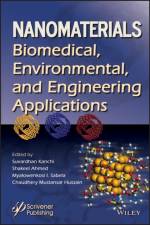
The evolution in the nanotechnology world clearly signifies a need for a broader understanding of the subject and this book will contribute to the effort. Nanostructure science and technology is a broad and interdisciplinary area of research and development that has been growing explosively in the past decades. The contents of this book include mainly the fundamentals of nanoparticles, state-of-the-art in synthesis and characterization of nanomaterials, as well the influence of nanomaterials on the analytical systems (macro to micro & lab-on-a-chip) for biomedical, environmental and engineering applications. This book seeks to broaden the understanding of modern developments in nanomaterials and comprises excellent contributions from subject matter experts working on most aspects of nanomaterials and nanotechnology. Audience The book will be valuable to all those working in materials science, nanotechnology, chemistry, biomedical engineering, textiles, food science, and other engineering areas.
The aim of this new book series (Diatoms: Biology and Applications) is to provide a comprehensive and reliable source of information on diatom biology and applications. The first book of the series, Diatoms Fundamentals & Applications, is wide ranging, starting with the contributions of amateurs and the beauty of diatoms, to details of how their shells are made, how they bend light to their advantage and ours, and major aspects of their biochemistry (photosynthesis and iron metabolism). The book then delves into the ecology of diatoms living in a wide range of habitats, and look at those few that can kill or harm us. The book concludes with a wide range of applications of diatoms, in forensics, manufacturing, medicine, biofuel and agriculture. The contributors are leading international experts on diatoms. This book is for a wide audience researchers, academics, students, and teachers of biology and related disciplines, written to both act as an introduction to diatoms and to present some of the most advanced research on them.
Architects are facing a crisis of agency. For decades, they have seen their traditional role diminish in scope as more and more of their responsibilities have been taken over by other disciplines within the building construction industry. Once upon a time, we might have seen the architect as the conductor of the orchestra; now he or she is but one cog in a vast and increasingly complex machine. In an attempt to find a way out of this crisis, there is growing debate about how architects might reassert the importance of their role and influence. On one side of this argument are those who believe that architects must refocus their attention on the internal demands of the discipline. On the other are those who argue that architects must, instead, reacquaint themselves with what many still believe to be the discipline's core mission of advancing social progress and promoting the public good, and at the same time the scope of their traditional disciplinary remit. At root, this question is fundamentally about freedom, about whether architects still possess it - if they have ever done - and whether it is possible to find the professional, disciplinary and individual autonomy to be able to define the spheres of their own practice. Presenting a variety of views and perspectives, this issue of AD takes us to the heart of what freedom means for architecture as it adapts and evolves in response to the changing contexts in which it is practised in the 21st century. Contributors include: Phillip Bernstein, Peggy Deamer, Adam Nathaniel Furman, Kate Goodwin, Charles Holland, Anna Minton, Patrik Schumacher, Alex Scott-Whitby, Ines Weizman, and Sarah Wigglesworth. Featured architects: Atelier Kite, C+S Architects, Anupama Kundoo, Noero Architects, Umbrellium, and Zaha Hadid Architects.
A major public health concern, despite regulatory vigilance, is untoward toxicity and other pharmaceutical side effects. This toxicity is often idiosyncratic, and usually not discovered until after a large population has been exposed and injured. Recent laboratory evaluations show that many of these drugs impact mitochondrial function. The realization that mitochondrial toxicity is a widespread and important issue in drug toxicity is increasingly appreciated, and most pharmaceutical companies now either have the technology to assess this risk themselves, or do so via contract research organizations. Developed as a one-stop reference source for drug safety and toxicology professionals, the second edition of Drug and Environmental Induced Mitochondrial Dysfunction explains why mitochondrial failure is a crucial step in drug toxicity and how it can be avoided. It allows readers to understand the basis of mitochondrial function and the preclinical assessments used and what they reveal about drug effects. The focus is on how the requisite technology continues to evolve and the recent emergence of clinical techniques capable of detecting drug-induced mitochondrial toxicity in patients. Added coverage in the 2nd edition includes how and why mitochondrial toxicity underlies organ injury, clinical reports on drug classes, and discussion of environmental toxicants that can affect mitochondria. With chapters contributed by leading specialists in their areas, Drug and Environmental Induced Mitochondrial Dysfunction, 2nd Edition continues to serve as a valuable resource for safety assessment professionals in the pharmaceutical industry - including bench scientists and managers - and for pharmacologists and toxicologists in both drug and environmental health sciences.Drug and Environmental Induced Mitochondrial Dysfunction provides ample reminders of the intimate connections between mitochondria, pharmacology, and toxicology. The book takes a rather systematic approach to mitochondrial pharmacology and toxicology and, for this reason, will be of use to even those outside of strict drug discovery.
Elektrische Ströme spielen für die Struktur und Dynamik von Plasmen im Weltraum, aber auch für den erdnahen Weltraum oder Geospace, eine wichtige Rolle. Dieser Band führt in einem integrierten Ansatz an das Thema elektrischer Ströme heran und bildet deren Phänomene und physikalische Eigenschaften für viele Regionen ab. In einem Werk werden eine Vielzahl von Themen behandelt, mit denen sich die Pioniere auf dem Gebiet der elektrischen Ströme im Weltraum beschäftigen, weiterhin Mess- und Analyseverfahren sowie unzählige Typen elektrischer Ströme.- Seit über einem Jahrzehnt erstmals wieder eine Publikation zu elektrischen Strömen, das einen fundierten und aktuellen Einblick in den derzeitigen Stand der Forschung bietet.- Präsentiert die jüngsten Fortschritte im Hinblick auf Beobachtungen, Simulationen und die Theorie elektrischer Ströme.- Bietet einen vergleichenden Überblick über elektrische Ströme im Weltraum bei verschiedenen Himmelskörpern.Electric Currents in Geospace and Beyond ist ein ausgezeichnetes Referenzwerk für Weltraumwissenschaftler, Astronomen und Astrophysiker, die Weltraumplasmen im Sonnensystem untersuchen.
A brand-new collection of 32 case studies that further demonstrate the retrofitting of suburbiaThis amply-illustrated book, second in a series, documents how defunct shopping malls, parking lots, and the past century's other obsolete suburban development patterns are being retrofitted to address current urgent challenges they weren't designed for: improving public health, increasing resilience in the face of climate change, leveraging social capital for equity, supporting an aging society, competing for jobs, and disrupting automobile dependence.Case Studies in Retrofitting Suburbia: Urban Design Strategies for Urgent Challenges provides summaries, data, and references on how these challenges manifest in suburbia and discussion of successful urban design strategies to address them in Part I. Part II documents how innovative design strategies are implemented in a range of northern American contexts and market conditions. From modest interventions with big ripple effects to ambitious do-overs, examples of redevelopment, reinhabitation, and regreening of changing suburban places from coast to coast are described in depth in 32 brand new case studies.* Written by the authors of the highly influential Retrofitting Suburbia: Urban Design Solutions for Redesigning Suburbs* Demonstrates changes that can and already have been realized in suburbia by focusing on case studies of retrofitted suburban places* Illustrated in full-color with photos, maps, plans, and diagramsFull of replicable lessons and creative responses to ongoing problems and potentials with conventional suburban form, Case Studies in Retrofitting Suburbia: Urban Design Strategies for Urgent Challenges is an important book for students and professionals involved in urban design, architecture, landscape architecture, urban planning, development, civil engineering, public health, public policy, and governance. Most of all, it is intended as a useful guide for anyone who seeks to inspire revitalization, justice, and shared prosperity in places they know and care about.
A review of contemporary actinide research that focuses on new advances in experiment and theory, and the interplay between these two realmsExperimental and Theoretical Approaches to Actinide Chemistry offers a comprehensive review of the key aspects of actinide research. Written by noted experts in the field, the text includes information on new advances in experiment and theory and reveals the interplay between these two realms. The authors offer a multidisciplinary and multimodal approach to the nature of actinide chemistry, and explore the interplay between multiple experiments and theory, as well as between basic and applied actinide chemistry.The text covers the basic science used in contemporary studies of the actinide systems, from basic synthesis to state-of-the-art spectroscopic and computational techniques. The authors provide contemporary overviews of each topic area presented and describe the current and anticipated experimental approaches for the field, as well as the current and future computational chemistry and materials techniques. In addition, the authors explore the combination of experiment and theory. This important resource:* Provides an essential resource the reviews the key aspects of contemporary actinide research* Includes information on new advances in experiment and theory, and the interplay between the two* Covers the basic science used in contemporary studies of the actinide systems, from basic synthesis to state-of-the-art spectroscopic and computational techniques* Focuses on the interplay between multiple experiments and theory, as well as between basic and applied actinide chemistryWritten for academics, students, professionals and researchers, this vital text contains a thorough review of the key aspects of actinide research and explores the most recent advances in experiment and theory.
A new, full-color, completely updated edition of the key practical guide to chemometrics This new edition of this practical guide on chemometrics, emphasizes the principles and applications behind the main ideas in the field using numerical and graphical examples, which can then be applied to a wide variety of problems in chemistry, biology, chemical engineering, and allied disciplines. Presented in full color, it features expansion of the principal component analysis, classification, multivariate evolutionary signal and statistical distributions sections, and new case studies in metabolomics, as well as extensive updates throughout. Aimed at the large number of users of chemometrics, it includes extensive worked problems and chapters explaining how to analyze datasets, in addition to updated descriptions of how to apply Excel and Matlab for chemometrics. Chemometrics: Data Driven Extraction for Science, Second Edition offers chapters covering: experimental design, signal processing, pattern recognition, calibration, and evolutionary data. The pattern recognition chapter from the first edition is divided into two separate ones: Principal Component Analysis/Cluster Analysis, and Classification. It also includes new descriptions of Alternating Least Squares (ALS) and Iterative Target Transformation Factor Analysis (ITTFA). Updated descriptions of wavelets and Bayesian methods are included. Includes updated chapters of the classic chemometric methods (e.g. experimental design, signal processing, etc.) Introduces metabolomics-type examples alongside those from analytical chemistry Features problems at the end of each chapter to illustrate the broad applicability of the methods in different fields Supplemented with data sets and solutions to the problems on a dedicated website Chemometrics: Data Driven Extraction for Science, Second Edition is recommended for post-graduate students of chemometrics as well as applied scientists (e.g. chemists, biochemists, engineers, statisticians) working in all areas of data analysis.
The newest volume in the authoritative Inorganic Syntheses book series provides users of inorganic substances with detailed and foolproof procedures for the preparation of important and timely inorganic and organometallic compounds that can be used in reactions to develop new materials, drug targets, and bio-inspired chemical entities.
Voet's Principles of Biochemistry, Global Edition addresses the enormous advances in biochemistry, particularly in the areas of structural biology and bioinformatics. It provides a solid biochemical foundation that is rooted in chemistry to prepare students for the scientific challenges of the future. New information related to advances in biochemistry and experimental approaches for studying complex systems are introduced. Notes on a variety of human diseases and pharmacological effectors have been expanded to reflect recent research findings. While continuing in its tradition of presenting complete and balanced coverage, this Global Edition includes new pedagogy and enhanced visuals that provide a clear pathway for student learning.
An authoritative introduction to the science and engineering of bioinspired materialsBioinspired Materials Science and Engineering offers a comprehensive view of the science and engineering of bioinspired materials and includes a discussion of biofabrication approaches and applications of bioinspired materials as they are fed back to nature in the guise of biomaterials. The authors also review some biological compounds and shows how they can be useful in the engineering of bioinspired materials.With contributions from noted experts in the field, this comprehensive resource considers biofabrication, biomacromolecules, and biomaterials. The authors illustrate the bioinspiration process from materials design and conception to application of bioinspired materials. In addition, the text presents the multidisciplinary aspect of the concept, and contains a typical example of how knowledge is acquired from nature, and how in turn this information contributes to biological sciences, with an accent on biomedical applications. This important resource:* Offers an introduction to the science and engineering principles for the development of bioinspired materials* Includes a summary of recent developments on biotemplated formation of inorganic materials using natural templates* Illustrates the fabrication of 3D-tumor invasion models and their potential application in drug assessments* Explores electroactive hydrogels based on natural polymers* Contains information on turning mechanical properties of protein hydrogels for biomedical applicationsWritten for chemists, biologists, physicists, and engineers, Bioinspired Materials Science and Engineering contains an indispensible resource for an understanding of bioinspired materials science and engineering.
Stickstoff besitzt unter Nichtkohlestoffatomen die einzigartige Fähigkeit, Ein-, Zwei- und Dreifachbindungen mit sich selbst zu bilden. Dadurch entsteht eine Vielzahl organo-chemischer Gruppen, die mehrere Stickstoffatome in verschiedenen Zuständen und Geometrien enthalten. Der vorliegende Band untersucht die Eigenschaften und das chemische Verhalten aller wichtigen kohlenstoffreichen organo-chemischen Gruppen wie Azide, Azimine, Aziridine, Diazoverbindungen, Nitramine, Nitrene, Nitrosamine, Polyazine-N-oxide, Tetrazole, Triazene und Triazole. Ein besonderer Fokus liegt auf ökonomisch wichtigen Verbindungen, die z. B. als hochwirksame Sprengstoffe zum Einsatz kommen.In der Reihe PATAI's Chemistry of Functional Groups erscheinen umfassende Untersuchungen zu allen Aspekten spezieller funktionaler Gruppen. Jeder Band bietet einen herausragenden Überblick über theoretische Aspekte und rechnergestützte Verfahren, NMR, MS und weitere spektroskopische Methoden sowie über die analytische Chemie, strukturelle Aspekte, Thermochemie, Fotochemie, synthetische Ansätze und Strategien, synthetische Anwendungsbereiche und Anwendungen in der chemischen und pharmazeutischen Industrie, biologische, biochemische und Umweltaspekte. Bis heute wurden in der Reihe nahezu 150 Bände veröffentlicht.
A comprehensive text that offers a review of the delivery of food active compounds through emulsion-based systemsEmulsion-based Systems for Delivery of Food Active Compounds is a comprehensive recourse that reviews the principles of emulsion-based systems formation, examines their characterization and explores their effective application as carriers for delivery of food active ingredients. The text also includes information on emulsion-based systems in regards to digestibility and health and safety challenges for use in food systems.Each chapter reviews specific emulsion-based systems (Pickering, multiple, multilayered, solid lipid nanoparticles, nanostructured lipid carriers and more) and explains their application for delivery of food active compounds used in food systems. In addition, the authors - noted experts in the field - review the biological fate, bioavailability and the health and safety challenges of using emulsion-based systems as carriers for delivery of food active compounds in food systems. This important resource:* Offers a comprehensive text that includes detailed coverage of emulsion-based systems for the delivery of food active compounds* Presents the most recent development in emulsion-based systems that are among the most widely-used delivery systems developed to control the release of food active compounds* Includes a guide for industrial applications for example food and drug delivery is a key concern for the food and pharmaceutical industriesEmulsion-based Systems for Delivery of Food Active Compounds is designed for food scientists as well as those working in the food, nutraceutical and pharmaceutical and beverage industries. The text offers a comprehensive review of the essential elements of emulsion-based systems for delivery of food active compounds.
Consolidates the many different chemistries being employed to provide environmentally acceptable products through the upstream oil and gas industry This book discusses the development and application of green chemistry in the oil and gas exploration and production industry over the last 25 years -- bringing together the various chemistries that are utilised for creating suitable environmental products. Written by a highly respected consultant to the oil and gas industry -- it introduces readers to the principles and development of green chemistry in general, and the regulatory framework specific to the oil and gas sector in the North Sea area and elsewhere in the world. It also explores economic drivers pertaining to the application of green chemistry in the sector. Topics covered in Oilfield Chemistry and its Environmental Impact include polymer chemistry, surfactants and amphiphiles, phosphorus chemistry, inorganic salts, low molecular weight organics, silicon chemistry and green solvents. It also looks at sustainability in an extractive industry, examining the approaches used and the other methodologies that could be applied in the development of better chemistries, along with discussions about where the application of green chemistry is leading in this industry sector. Provides the reader with a ready source of reference when considering what chemistries are appropriate for application to oilfield problems and looking for green chemistry solutions Brings together the pertinent regulations which workers in the field will find useful, alongside the chemistries which meet the regulatory requirements Written by a well-known specialist with a combined knowledge of chemistry, manufacturing procedures and environmental issues Oilfield Chemistry and its Environmental Impact is an excellent book for oil and gas industry professionals as well as scientists, academic researchers, students and policy makers.
Volume II provides an advanced approach to the extended gibonacci family, which includes Fibonacci, Lucas, Pell, Pell-Lucas, Jacobsthal, Jacobsthal-Lucas, Vieta, Vieta-Lucas, and Chebyshev polynomials of both kinds. This volume offers a uniquely unified, extensive, and historical approach that will appeal to both students and professional mathematicians. As in Volume I, Volume II focuses on problem-solving techniques such as pattern recognition; conjecturing; proof-techniques, and applications. It offers a wealth of delightful opportunities to explore and experiment, as well as plentiful material for group discussions, seminars, presentations, and collaboration. In addition, the material covered in this book promotes intellectual curiosity, creativity, and ingenuity. Volume II features: A wealth of examples, applications, and exercises of varying degrees of difficulty andsophistication. Numerous combinatorial and graph-theoretic proofs and techniques. A uniquely thorough discussion of gibonacci subfamilies, and the fascinating relationships that link them. Examples of the beauty, power, and ubiquity of the extended gibonacci family. An introduction to tribonacci polynomials and numbers, and their combinatorial andgraph-theoretic models. Abbreviated solutions provided for all odd-numbered exercises. Extensive references for further study. This volume will be a valuable resource for upper-level undergraduates and graduate students, as well as for independent study projects, undergraduate and graduate theses. It is the most comprehensive work available, a welcome addition for gibonacci enthusiasts in computer science, electrical engineering, and physics, as well as for creative and curious amateurs.
Valuable insights into the extraction, production, and properties of a large number of natural and synthetic oxides utilized in applications worldwide from ceramics, electronic components, and coatings This handbook describes each of the major oxides chronologicallyΓÇöstarting from the processes of extraction of ores containing oxides, their purification and transformations into pure alloyed powders, and their appropriate characterization up to the processes of formation of 2D films by such methods as PVD, CVD, and coatings by thermal spraying or complicated 3D objects by sintering and rapid prototyping. The selection of oxides has been guided by the current context of industrial applications. An important point that is considered in the book concerns the strategic aspects of oxides. Some oxides (e.g. rare earth ones) become more expensive due to the growing demand for them, others, because of the strategic importance of countries producing raw materials and the countries that are using them. Industrial Chemistry of Oxides for Emerging Applications provides readers with everything they need to know in 7 chapters that cover: technical and economical importance of oxides in present and future; fundamentals of oxides manufacturing; extraction, properties, and applications of Al2O3; extraction, properties, and applications of ZrO2; synthesis, properties, and applications of YBaCu2O7x; extraction, properties, and applications of TiO2; and synthesis, properties, and application of hydroxyapatite. Presents the extraction, production, and properties of a large fraction of oxides applications worldwide, both natural as well as synthetic multiΓÇÉoxides Covers a very important segment of many industrial processes, such as refractories and piezoelectric oxidesΓÇöboth applications constituting very large market segments Developed from a lecture course given by the authors for over a decade Industrial Chemistry of Oxides for Emerging Applications is an excellent text for university professors and teachers, and graduate and postgraduate students with a solid background in physics and chemistry.
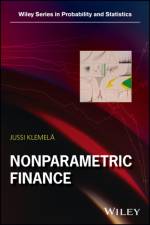
An Introduction to Machine Learning in Finance, With Mathematical Background, Data Visualization, and RNonparametric function estimation is an important part of machine learning, which is becoming increasingly important in quantitative finance. Nonparametric Finance provides graduate students and finance professionals with a foundation in nonparametric functionestimation and the underlying mathematics. Combining practical applications, mathematically rigorous presentation, and statistical data analysis into a single volume, this book presents detailed instruction in discrete chapters that allow readers to dip in as needed without reading from beginning to end.Coverage includes statistical finance, risk management, portfolio management, and securities pricing to provide a practical knowledge base, and the introductory chapter introduces basic finance concepts for readers with a strictly mathematical background. Economic significanceis emphasized over statistical significance throughout, and R code is provided to help readers reproduce the research, computations, and figures being discussed. Strong graphical content clarifies the methods and demonstrates essential visualization techniques, while deep mathematical and statistical insight backs up practical applications.Written for the leading edge of finance, Nonparametric Finance:* Introduces basic statistical finance concepts, including univariate and multivariate data analysis, time series analysis, and prediction* Provides risk management guidance through volatility prediction, quantiles, and value-at-risk* Examines portfolio theory, performance measurement, Markowitz portfolios, dynamic portfolio selection, and more* Discusses fundamental theorems of asset pricing, Black-Scholes pricing and hedging, quadratic pricing and hedging, option portfolios, interest rate derivatives, and other asset pricing principles* Provides supplementary R code and numerous graphics to reinforce complex contentNonparametric function estimation has received little attention in the context of risk management and option pricing, despite its useful applications and benefits. This book provides the essential background and practical knowledge needed to take full advantage of these little-used methods, and turn them into real-world advantage.Jussi Klemelä, PhD, is Adjunct Professor at the University of Oulu. His research interests include nonparametric function estimation, density estimation, and data visualization. He is the author of Smoothing of Multivariate Data: Density Estimation and Visualization and Multivariate Nonparametric Regression and Visualization: With R and Applications to Finance.
THE DEFINITIVE RESOURCE FOR PSYCHOLOGICAL DIAGNOSIS, UPDATED WITH THE LATEST RESEARCH Adult Psychopathology and Diagnosis offers comprehensive coverage of psychological disorders and presents a balanced integration of empirical data and diagnostic criteria to aid in understanding diagnosis and psychopathology. Designed to support students of clinical psychology, counseling, nursing, and social work, this invaluable resource merges overviews, case studies, and examination of individual disorders in an accessible format that facilitates easy reference. Broad-reaching issues such as interviewing and cross cultural considerations are discussed in detail for their effect on the clinical presentation of every disorder and case studies illustrate how diagnoses are reached and applied in real-world clinical settings. Updated to reflect the latest advances in research, this new 8th Edition includes new coverage of personality disorders, a new chapter on the Research Diagnostic Criteria (RDOC), new authors for a number of the chapters, and contributions by leaders in the field to provide students with exceptional insight into psychopathology and diagnosis. Get up to date on the latest research based on DSM-5 categorization Easily locate and retain information with a proven chapter structure Examine a new alternative DSM-5 model for personality disorders Include cross-cultural considerations throughout investigation and diagnosis In clarifying DSM-5 classification and diagnostic guidelines while integrating leading-edge research with a case study approach, this book provides the most complete, most up-to-date reference for graduate students and practitioners alike. Thorough coverage of essential topics such as neurological foundations, dual diagnoses, eating disorders, anxiety, gender issues and more provides both theoretical insight as well as practical understanding, making Adult Psychopathology and Diagnosis once again a top resource for the field.
An empowering journey that keeps great teachers in the classroomThe Onward Workbook is a collection of tools and strategies that help teachers banish the burnout and cultivate true resilience. Keyed to the framework presented in Onward, this companion piece augments the text with practical exercises, coaching, and step-by-step walkthroughs of beneficial practices. Deep introspection allows you to verbalize your feelings, name your challenges, and identify the tools you have and the tools you need--from there, you'll explore each of the 12 Key Habits and learn how to put them into practice every day.In cultivating resilience within yourself and your teaching practice, you improve your health, your outlook, and your relationships while building an environment in which every child succeeds. This workbook takes you on a journey of specific self-discovery that changes your perspective, renews your confidence, and empowers you to make the much-needed changes that allow you to continue inspiring young minds.* Dig deeper within to discover what you're truly made of* Decode complex emotions, body language, and nonverbal communications* Challenge your beliefs, build community, and navigate difficult interactions* Learn more, feel more, play more, and practice effective self-careResiliency is an underrated skill--one that can make all the difference in our schools. Challenges will always arise, but it is your response that dictates the outcome. Can you think of a more important lesson for your students? When some 70 percent of teachers quit within their first five years, it is clear that changes must be made. The Onward Workbook equips you to make the changes that you can, and flourish into the future.While this book can be used by individuals, it is also designed so that groups, teams, departments, or an entire staff can take up the learning together. There are specific suggestions in the workbook for using this with a group, and educators will reap even more reward from discussing the practices and experiences with colleagues.
A practical framework to avoid burnout and keep great teachers teachingOnward tackles the problem of educator stress, and provides a practical framework for taking the burnout out of teaching. Stress is part of the job, but when 70 percent of teachers quit within their first five years because the stress is making them physically and mentally ill, things have gone too far. Unsurprisingly, these effects are highest in difficult-to-fill positions such as math, science, and foreign languages, and in urban areas and secondary classrooms--places where we need our teachers to be especially motivated and engaged. This book offers a path to resiliency to help teachers weather the storms and bounce back--and work toward banishing the rain for good.This actionable framework gives you concrete steps toward rediscovering yourself, your energy, and your passion for teaching. You'll learn how a simple shift in mindset can affect your outlook, and how taking care of yourself physically, mentally, and emotionally is one of the most important things you can do. The companion workbook helps you put the framework into action, streamlining your way toward renewal and strength.* Cultivate resilience with a four-part framework based on 12 key habits* Uncover your true self, understand emotions, and use your energy where it counts* Adopt a mindful, story-telling approach to communication and community building* Keep learning, playing, and creating to create an environment of collective celebrationBy cultivating resilience in schools, we help ensure that we are working in, teaching in, and leading organizations where every child thrives, and where the potential of every child is recognized and nurtured. Onward provides a step-by-step plan for reigniting that spark.
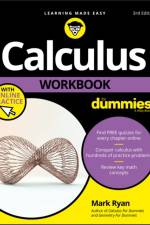
The easy way to conquer calculusCalculus is hard--no doubt about it--and students often need help understanding or retaining the key concepts covered in class. Calculus Workbook For Dummies serves up the concept review and practice problems with an easy-to-follow, practical approach. Plus, you'll get free access to a quiz for every chapter online.With a wide variety of problems on everything covered in calculus class, you'll find multiple examples of limits, vectors, continuity, differentiation, integration, curve-sketching, conic sections, natural logarithms, and infinite series. Plus, you'll get hundreds of practice opportunities with detailed solutions that will help you master the math that is critical for scoring your highest in calculus.* Review key concepts* Take hundreds of practice problems* Get access to free chapter quizzes online* Use as a classroom supplement or with a tutorGet ready to quickly and easily increase your confidence and improve your skills in calculus.
The first comprehensive guide to the design and implementation of security in 5G wireless networks and devices Security models for 3G and 4G networks based on Universal SIM cards worked very well. But they are not fully applicable to the unique security requirements of 5G networks. 5G will face additional challenges due to increased user privacy concerns, new trust and service models and requirements to support IoT and missionΓÇôcritical applications. While multiple books already exist on 5G, this is the first to focus exclusively on security for the emerging 5G ecosystem. 5G networks are not only expected to be faster, but provide a backbone for many new services, such as IoT and the Industrial Internet. Those services will provide connectivity for everything from autonomous cars and UAVs to remote health monitoring through bodyΓÇôattached sensors, smart logistics through item tracking to remote diagnostics and preventive maintenance of equipment. Most services will be integrated with Cloud computing and novel concepts, such as mobile edge computing, which will require smooth and transparent communications between user devices, data centers and operator networks. Featuring contributions from an international team of experts at the forefront of 5G system design and security, this book: Provides priceless insights into the current and future threats to mobile networks and mechanisms to protect it Covers critical lifecycle functions and stages of 5G security and how to build an effective security architecture for 5G based mobile networks Addresses mobile network security based on networkΓÇôcentricity, deviceΓÇôcentricity, informationΓÇôcentricity and peopleΓÇôcentricity views Explores security considerations for all relative stakeholders of mobile networks, including mobile network operators, mobile network virtual operators, mobile users, wireless users, InternetΓÇôof things, and cybersecurity experts Providing a comprehensive guide to stateΓÇôofΓÇôtheΓÇôart in 5G security theory and practice, A Comprehensive Guide to 5G Security is an important working resource for researchers, engineers and business professionals working on 5G development and deployment.
A practical how-to guide for more effective planningthrough multi-actor modellingCareful planning is the cornerstone of a successful initiative, and any plan, policy, or business strategy can only be successful if it has the support of different actors. These actors may beactively pursuing their own agendas, so the plan must not only offer an optimal solution to theproblem, but must also fit the needs and abilities of the actors involved. Actor and Strategy Models: Practical Applications and Step-wise Approaches provides a primer on multi-actormodelling, based on the fundamental premise that actor strategies are explained by investigatingwhat actors can do, think, and want to achieve.Covering a variety of models with detailed background and case examples, this book focuses on practical application. Step-by-step instructions for each approach provide immediately actionable insight, while a general framework for actor and strategy modelling allows the reader to tailor any approach as needed to optimize results in terms of situation-specific planning. Oriented toward real-world strategy, this helpful resource:* Provides models that shed light on the multi-actor dimensions of planning, using a variety of analytical approaches* Includes literature, theoretical underpinnings, and applications for each method covered* Clarifies the similarities, differences, and suitable applications between various actor modelling approaches* Provides a step-wise framework for actor and strategy modelling* Offers guidance for the identification, structuring, and measuring of values and perceptions* Examines the challenges involved in analyzing actors and strategiesEven before planning begins, an endeavor's success depends upon a clear understanding of the various actors involved in the planning and implementation stages. From game theory and argumentative analysis, through social network analysis, cognitive mapping, and beyond,Actor and Strategy Models provides valuable insight for more effective planning.
OFFERS A COMPREHENSIVE INTRODUCTION TO THE ISSUES OF CONTROL OF POWER SYSTEMS DURING CASCADING OUTAGES AND RESTORATION PROCESS Power System Control Under Cascading Failures offers comprehensive coverage of three major topics related to prevention of cascading power outages in a power transmission grid: modelling and analysis, system separation and power system restoration. The book examines modelling and analysis of cascading failures for reliable and efficient simulation and better understanding of important mechanisms, as well as root causes and propagation patterns of failures and power outages. It also covers controlled system separation to mitigate cascading failures addressing key questions such as where, when and how to separate. The text explores optimal system restoration from cascading power outages and blackouts by well-designed milestones, optimised procedures and emerging techniques. The authors -- noted experts in the field -- include state-of-the-art methods that are illustrated in detail as well as practical examples that show how to use them to address realistic problems and improve current practices. This important resource: Contains comprehensive coverage of a focused area of cascading power system outages, addressing modelling and analysis, system separation and power system restoration Offers a description of theoretical models to analyse outages, methods to identify control actions to prevent propagation of outages and restore the system Suggests state-of-the-art methods that are illustrated in detail with hands-on examples that address realistic problems to help improve current practices Includes companion website with samples, codes and examples to support the text Written for postgraduate students, researchers, specialists, planners and operation engineers from industry, Power System Control Under Cascading Failures contains a review of a focused area of cascading power system outages, addresses modelling and analysis, system separation, and power system restoration
A COMPREHENSIVE GUIDE TO DESIGNING HOUSING FOR THE WORLD'S AGING POPULATION The dilemma of helping older people maintain their independence through better housing with services is growing. This book presents innovative solutions for those who create and provide housing for the world's increasingly longer-living population. By focusing on three specific housing and service arrangements, it offers alternatives that provide greater freedom of choice than the current living arrangements that exist today. It presents selected examples of housing and service solutions from the US, Sweden, Denmark and the Netherlands to stimulate thinking about the possibilities of community-based service models. Housing Design for an Increasingly Older Population looks at a trio of options for housing the "oldest-old: " the Dutch Apartment/Condo for Life Model (AFL); decentralized Small/Green Houses; and the provision of enhanced personal and health care for people who want to stay in their own home. It offers unique and eye-opening chapters covering: what older people want; what age changes affect independence; demographics and living arrangements; how long-term care is defined; concepts and objectives for housing the frail; care giving and management practices that avoid an institutional lifestyle; innovative case studies; programs that encourage staying at home with service assistance; therapeutic use of outdoor spaces; how technology will help people stay independent; and more. Based on the author's numerous conversations with other experts, as well as his examinations of high quality settings from Northern Europe and the US Building case study examples showcase innovative and compassionate solutions In-depth coverage of three major systems that work Examines successful programs such as PACE, Friendly Cities, NORC, and the "Village to Village Network" to demonstrate the progress made in helping older, frail people stay in their own homes for as long as possible Housing Design for an Increasingly Older Population: Redefining Assisted Living for the Mentally and Physically Frail is an important book for those who create, design, and manage assisted living and skilled nursing facilities, as well as for those who set policies regarding health, and personal care for our world's aging society.
Limited-recourse and non-recourse lending has been a popular way to finance high-risk ventures since ancient times. It was used to finance everything from commercial sea voyages in ancient Greece and Rome to the construction of the Panama Canal and the development of the early oil and gas industries in the early twentieth century. But it wasn't until the 1970s and 80s, with the development of the North Sea oil fields, that it became a common substitute for government bond issuances and traditional corporate finance structures. Despite the long history of project finance, until now the literature on the subject has treated it, almost exclusively, as a stand-alone function rather than an integral part of new business development with strategic value for gaining and maintaining competitive advantage. The first book to address project finance from a much broader business development perspective, Project Finance for Business Development fills a gap in the literature on the subject by offering project sponsors and developers practical insights and guidance on how to more efficiently and effectively structure and implement projects by creating competitive advantage through project finance. John E. Triantis draws upon his more than forty years of experience to show how various elements of project finance, such as opportunity screening and evaluation, project development, risk management, and due diligence can be combined when structuring viable financeable projects. He dispels common misconceptions about what is really important for successful project financings, and he: Explains how to develop, structure, and implement projects successfully by creating competitive advantage in an increasingly globalized business environment Offers a roadmap for successful financing, participant roles and responsibilities, and assessing and testing project viability Provides a strategic decision-forecasting and financial modeling perspective on project finance Delves deeper than all other existing treatments of project finance into specific decisions needed to create and implement effective financing plans Uses numerous examples of project failures to illustrate common pitfalls to be avoided when structuring a project finance deal Helping readers develop, structure, and implement projects successfully by creating competitive advantage, this book is an indispensable tool for project sponsors and developers and important reading for all those with a stake in project finance, including CFOs, treasurers, comptrollers, corporate and strategic planning groups, and business development groups. Lessons learned from project failures and insights on project development, assessment, due diligence, and financing structuring processes will help government employees to structure financeable and viable infrastructure projects and get value for tax payer money spent.
Abonner på vårt nyhetsbrev og få rabatter og inspirasjon til din neste leseopplevelse.
Ved å abonnere godtar du vår personvernerklæring.