

















Gjør som tusenvis av andre bokelskere
Abonner på vårt nyhetsbrev og få rabatter og inspirasjon til din neste leseopplevelse.
Ved å abonnere godtar du vår personvernerklæring.Du kan når som helst melde deg av våre nyhetsbrev.

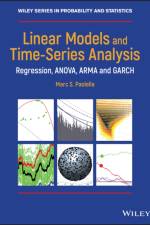
A comprehensive and timely edition on an emerging new trend in time seriesLinear Models and Time-Series Analysis: Regression, ANOVA, ARMA and GARCH sets a strong foundation, in terms of distribution theory, for the linear model (regression and ANOVA), univariate time series analysis (ARMAX and GARCH), and some multivariate models associated primarily with modeling financial asset returns (copula-based structures and the discrete mixed normal and Laplace). It builds on the author's previous book, Fundamental Statistical Inference: A Computational Approach, which introduced the major concepts of statistical inference. Attention is explicitly paid to application and numeric computation, with examples of Matlab code throughout. The code offers a framework for discussion and illustration of numerics, and shows the mapping from theory to computation.The topic of time series analysis is on firm footing, with numerous textbooks and research journals dedicated to it. With respect to the subject/technology, many chapters in Linear Models and Time-Series Analysis cover firmly entrenched topics (regression and ARMA). Several others are dedicated to very modern methods, as used in empirical finance, asset pricing, risk management, and portfolio optimization, in order to address the severe change in performance of many pension funds, and changes in how fund managers work.* Covers traditional time series analysis with new guidelines* Provides access to cutting edge topics that are at the forefront of financial econometrics and industry* Includes latest developments and topics such as financial returns data, notably also in a multivariate context* Written by a leading expert in time series analysis* Extensively classroom tested* Includes a tutorial on SAS* Supplemented with a companion website containing numerous Matlab programs* Solutions to most exercises are provided in the bookLinear Models and Time-Series Analysis: Regression, ANOVA, ARMA and GARCH is suitable for advanced masters students in statistics and quantitative finance, as well as doctoral students in economics and finance. It is also useful for quantitative financial practitioners in large financial institutions and smaller finance outlets.
This book provides researchers and scientists important background data on the environmental impacts of pharmaceuticals and personal care products (PPCPs). It highlights the biological effects of pharmaceutical compounds under clinical settings and discusses their pollution, fate, and transport.
An incisive and essential guide to building a complete system for derivative scriptingIn Volume 2 of Modern Computational Finance Scripting for Derivatives and xVA, quantitative finance experts and practitioners Drs. Antoine Savine and Jesper Andreasen deliver an indispensable and insightful roadmap to the interrogation, aggregation, and manipulation of cash-flows in a variety of ways. The book demonstrates how to facilitate portfolio-wide risk assessment and regulatory calculations (like xVA).Complete with a professional scripting library written in modern C++, this stand-alone volume walks readers through the construction of a comprehensive risk and valuation tool. This essential book also offers:* Effective strategies for improving scripting libraries, from basic examples--like support for dates and vectors--to advanced improvements, including American Monte Carlo techniques* Exploration of the concepts of fuzzy logic and risk sensitivities, including support for smoothing and condition domains* Discussion of the application of scripting to xVA, complete with a full treatment of branchingPerfect for quantitative analysts, risk professionals, system developers, derivatives traders, and financial analysts, Modern Computational Finance Scripting for Derivatives and xVA: Volume 2 is also a must-read resource for students and teachers in master's and PhD finance programs.
Take your Supernova practice to even greater heights of performance and profitabilityThe Supernova Multiplier provides expert guidance to the revolutionary wealth management model that has transformed the lives and businesses of financial professionals worldwide. The innovative Supernova method enables financial advisors to rapidly grow their business, efficiently manage time, and maximize client satisfaction. The Five Stars of the Supernova model--Segmentation, Organization, Planning, Acquisition, and Leadership--provide financial advisors with the tools and knowledge to propel their practices to new heights of performance.The acknowledged pioneer of the Supernova model, author Rob Knapp offers in-depth examination of every aspect of the Supernova model, from client experience to leadership development. This invaluable resource addresses significant issues facing disciples of the model, including areas of chronic underperformance, and delivers proven solutions that financial advisors can integrate into their practices. Detailed coverage of core elements, such as the Rule of Reciprocity, Gap Analysis and the Five Star Model, promotes critical analysis of advisor performance and builds the foundation for precise alignment to the essential Supernova principles.This indispensable book empowers current and prospective Supernova practitioners to:* Build and optimize an efficient and profitable Supernova advisory practice* Structure your practice around high-value activities that increase revenue and grow your business* Maintain a predictable schedule of meaningful client contact* Develop and implement proactive planning strategies with your team and client base.The Supernova model is not complex, but requires sustained and disciplined effort to achieve best results. The Supernova Multiplier: 7 Strategies for Financial Advisors to Grow Their Practices is the key to unlocking remarkable results and sustained achievement in advisory practices across the financial management industry that will differentiate you and your practice from the ordinary into the extraordinary.
Arguably the strongest addition to numerical finance of the past decade, Algorithmic Adjoint Differentiation (AAD) is the technology implemented in modern financial software to produce thousands of accurate risk sensitivities, within seconds, on light hardware.AAD recently became a centerpiece of modern financial systems and a key skill for all quantitative analysts, developers, risk professionals or anyone involved with derivatives. It is increasingly taught in Masters and PhD programs in finance.Danske Bank's wide scale implementation of AAD in its production and regulatory systems won the In-House System of the Year 2015 Risk award. The Modern Computational Finance books, written by three of the very people who designed Danske Bank's systems, offer a unique insight into the modern implementation of financial models. The volumes combine financial modelling, mathematics and programming to resolve real life financial problems and produce effective derivatives software.This volume is a complete, self-contained learning reference for AAD, and its application in finance. AAD is explained in deep detail throughout chapters that gently lead readers from the theoretical foundations to the most delicate areas of an efficient implementation, such as memory management, parallel implementation and acceleration with expression templates.The book comes with professional source code in C++, including an efficient, up to date implementation of AAD and a generic parallel simulation library. Modern C++, high performance parallel programming and interfacing C++ with Excel are also covered. The book builds the code step-by-step, while the code illustrates the concepts and notions developed in the book.
Proven tools to take your team and yourself to the next levelElite: High Performance Lessons and Habits from a Former Navy SEAL is a practical, no-nonsense guide to elevate your leadership skills and drive your team to their maximum potential. Before you can push your team to the max, you must push yourself--elite teams require elite leaders. This invaluable guide supplies the tools you need to develop effective strategies to motivate, adapt, and overcome. Author Nick Hays combines military training with Harvard education to present a comprehensive program that will unlock the potential in yourself and your team.The business environment has changed dramatically over the last several decades. Volatile market conditions, disruptive innovation, and digital transformations across entire sectors have rendered traditional business methods obsolete. To thrive, businesses must be adaptable, agile, and lean. Policies and procedures may change, but strong leadership and shared goals ensure a source of strength and continuity. Providing real-world methods and effective strategies, this essential resource will allow you to:* Embrace the Warrior Mindset to always be proactive, never a victim* Develop the trust of your team through strength and shared experience* Devise durable and sustainable business strategies and contingency plans that adapt to fluid situations* Promote a culture of innovation and authenticity to deliver a solid foundation for your teamElite: High Performance Lessons and Habits from a Former Navy SEAL is a must-read guide for everyone from aspiring entrepreneurs to established business leaders. No matter the stage of your business--development, exploitation, or disruption--Elite will change your approach to business and unlock the warrior within.
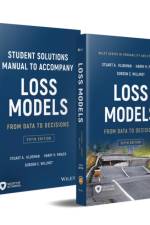
A modern practical guide to building and using actuarial models.Loss Models: From Data to Decisions is organized around the principle that actuaries build models in order to analyze risks and make decisions about managing the risks based on conclusions drawn from the analysis. In practice, one begins with data and ends with a business decision. The book flows logically from this principle. It begins with a framework for model building and a description of frequency and severity loss data typically available to actuaries. Parametric models are emphasized throughout. The frequency and severity models are used in building aggregate loss models, in credibility-based pricing models, and in loss analysis over multiple time periods. Designed as both an educational text as well as a professional reference, Loss Models: Assumes little prior knowledge of insurance systems Features many fascinating examples taken from insurance files Contains a major instructive case study continued through each chapter Covers the classical areas of risk theory and loss distributions Gives a practical but rigorous treatment of modern credibility theory Uses standard statistical concepts, methods, and notation Provides modern computational algorithms for implementing methods Includes free companion software available from an FTP site Deals with many topics on CAS 4B and SOA 151 and 152 actuarial exams Includes many exercises based on past CAS and SOA exams.
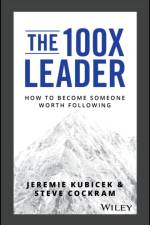
Become the leader others want to followForget everything you know about motivating others and building a harmonious workplace. If you want to get the best out of people, you must be willing to fight. But, that doesn't mean you become a dominator, nor does coddling others work.The best leader you've ever had in your life was a liberator--someone willing to fight for your highest good, even at a personal cost. Inside, global leadership experts Jeremie Kubicek and Steve Cockram explain what made that leader so unique, how to become that person yourself, and how to share the same gift with others.* Be one of the few that people actually want to follow* Learn the lost art of leadership--the intentional calibration of support and challenge for everyone you lead, your team and your family* Become a multiplication master as you learn to bring the best out of people for their highest good and that of the whole team* Overhaul entire cultures by focusing on the transformation and empowerment of sub-culture leadersThe 100x Leader will help you become--and build--leaders worth following.
Solve engineering and scientific partial differential equation applications using the PDE2D software developed by the author Solving Partial Differential Equation Applications with PDE2D derives and solves a range of ordinary and partial differential equation (PDE) applications. This book describes an easyΓÇôtoΓÇôuse, general purpose, and timeΓÇôtested PDE solver developed by the author that can be applied to a wide variety of science and engineering problems. The equations studied include many timeΓÇôdependent, steadyΓÇôstate and eigenvalue applications such as diffusion, heat conduction and convection, image processing, math finance, fluid flow, and elasticity and quantum mechanics, in one, two, and three space dimensions. The author begins with some simple "0D" problems that give the reader an opportunity to become familiar with PDE2D before proceeding to more difficult problems. The book ends with the solution of a very difficult nonlinear problem, which requires a moving adaptive grid because the solution has sharp, moving peaks. This important book: Describes a finiteΓÇôelement program, PDE2D, developed by the author over the course of 40 years Derives the ordinary and partial differential equations, with appropriate initial and boundary conditions, for a wide variety of applications Offers free access to the Windows version of the PDE2D software through the authorΓÇÖs website at www.pde2d.com Offers free access to the Linux and MacOSX versions of the PDE2D software also, for instructors who adopt the book for their course and contact the author at www.pde2d.com Written forgraduate applied mathematics or computational science classes, Solving Partial Differential Equation Applications with PDE2Doffers students the opportunity to actually solve interesting engineering and scientific applications using the accessible PDE2D.
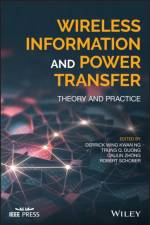
The development of wireless communication networks worldwide has triggered a massive growth in the number of wireless communication devices and sensors for applications such as logistics and transportation, environmental monitoring, energy management, and safety management, etc. It is expected that in the era of the Internet of Things (IoT) in 2020, there will be 50 billion wireless communication devices connected together worldwide with a connection density of 1 million devices per km2. However, batteryΓÇôpowered wireless communication devices have limited energy storage capacity and their frequent replacement can be costly, cumbersome, or even impossible, which creates a serious performance bottleneck in realizing reliable and ubiquitous wireless communication networks. Wireless power transfer (WPT), offers a viable solution to facilitate efficient and sustainable communication networks to serve energyΓÇôlimited communication devices. In this book, the authors discuss the circuit design, resource allocation algorithm design, and protocol design to tackle the above challenges by both theoretical and practical approaches which will bridge the gap between theory and practice, with longΓÇôterm contributions to the evolution of future sustainable WIPT networks.
A revolutionary book covering the most relevant concepts required for resiliency-focused advancements of the distribution power gridMost resiliency and security guidelines for the power industry are focused primarily on power transmission systems. As renewable energy and energy storage increasingly replace fossil-fuel-based power generation over the coming years, however, geospatially neighboring distributed energy resources will supply a majority of consumers and provide clean power through long transmission lines. These electric power distribution systems--the final stage in the delivery of electric power--carry electricity from the transmission system to individual consumers. New distributed devices will be essential to the grid to manage this variable power generation and enhance reliability and resilience while keeping electricity affordable as the world seeks solutions to climate change and threats from extreme events.In Resiliency of Power Distribution Systems, readers are provided with the tools to understand and enhance resiliency of distribution systems--and thereby, the entire power grid. In a shift from the present design and operation of the power system, the book is focused on improving the grid's ability to predict, adapt, and respond to all hazards and threats. This, then, acts as a guide to ensure that any incident can be mitigated and responded to promptly and adequately. It also highlights the most advanced and applicable methodologies and architecture frameworks that evaluate degradation, advance proactive action, and transform system behavior to maintain normal operation, under extreme operating conditions.Resiliency of Power Distribution Systems readers will also find:* Chapter organization that facilitates quick review of distribution fundamental and easy-but thorough understanding of the importance of resiliency* Real-world case studies where resilient power systems could have prevented massive financial and energy losses* Frameworks to help mitigate cyber-physical attacks, strategize response on multiple timescales, and optimize operational efficiencies and priorities for the power gridResiliency of Power Distribution Systems is a valuable reference for power system professionals including electrical engineers, utility operators, distribution system planners and engineers, and manufacturers, as well as members of the research community, energy market experts and policy makers, and graduate students on electrical engineering courses.
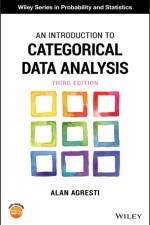
A valuable new edition of a standard reference The use of statistical methods for categorical data has increased dramatically, particularly for applications in the biomedical and social sciences. An Introduction to Categorical Data Analysis, Third Edition summarizes these methods and shows readers how to use them using software. Readers will find a unified generalized linear models approach that connects logistic regression and loglinear models for discrete data with normal regression for continuous data. Adding to the value in the new edition is: Illustrations of the use of R software to perform all the analyses in the book A new chapter on alternative methods for categorical data, including smoothing and regularization methods (such as the lasso), classification methods such as linear discriminant analysis and classification trees, and cluster analysis New sections in many chapters introducing the Bayesian approach for the methods of that chapter More than 70 analyses of data sets to illustrate application of the methods, and about 200 exercises, many containing other data sets An appendix showing how to use SAS, Stata, and SPSS, and an appendix with short solutions to most oddΓÇônumbered exercises Written in an applied, nontechnical style, this book illustrates the methods using a wide variety of real data, including medical clinical trials, environmental questions, drug use by teenagers, horseshoe crab mating, basketball shooting, correlates of happiness, and much more. An Introduction to Categorical Data Analysis, Third Edition is an invaluable tool for statisticians and biostatisticians as well as methodologists in the social and behavioral sciences, medicine and public health, marketing, education, and the biological and agricultural sciences.
Engage students in mathematics using growth mindset techniques The most challenging parts of teaching mathematics are engaging students and helping them understand the connections between mathematics concepts. In this volume, you′ll find a collection of low floor, high ceiling tasks that will help you do just that, by looking at the big ideas at the sixth–grade level through visualization, play, and investigation. During their work with tens of thousands of teachers, authors Jo Boaler, Jen Munson, and Cathy Williams heard the same message—that they want to incorporate more brain science into their math instruction, but they need guidance in the techniques that work best to get across the concepts they needed to teach. So the authors designed Mindset Mathematics around the principle of active student engagement, with tasks that reflect the latest brain science on learning. Open, creative, and visual math tasks have been shown to improve student test scores, and more importantly change their relationship with mathematics and start believing in their own potential. The tasks in Mindset Mathematics reflect the lessons from brain science that: There is no such thing as a math person – anyone can learn mathematics to high levels. Mistakes, struggle and challenge are the most important times for brain growth. Speed is unimportant in mathematics. Mathematics is a visual and beautiful subject, and our brains want to think visually about mathematics. With engaging questions, open–ended tasks, and four–color visuals that will help kids get excited about mathematics, Mindset Mathematics is organized around nine big ideas which emphasize the connections within the Common Core State Standards (CCSS) and can be used with any current curriculum.
Helps readers understand and appreciate what the history of wind power can teach us about technology innovation and provides the implications for both wind power today and its futureThis book takes readers on a journey through the history of wind power in order to show how the technology evolved over the course of the twentieth century and where it may be headed in the twenty-first century. It introduces and examines broad themes such as government funding of wind power, the role of fossil fuels in wind power development, and the importance of entrepreneurs in wind power development. It also discusses the lessons learned from wind power technology innovation and makes them relevant to the understanding of wind power today and in the future.Spanning the entire history of wind power (1888-2018), The Wind Power Story: A Century of Innovation that Reshaped the Global Energy Landscape provides balanced coverage of each decade as well as the important wind power technology innovations that occurred during that time. Compelling from the first page to the last, it offers chapters covering the pioneers of wind power; the age of small wind; wind power in the wake of war; wind power's use across Europe; government-funded research programs; how Denmark reinvented wind power in the 1970s; the California Wind Rush of the 1980s; wind power's rise in Spain; America's wind power starting in the 1990s; India's wind power path; the wind power surge in China; the globalization of wind power; and much more.In addition, this text:* Spans the entire global history of wind power, while weaving together both the historical context and the technical details of wind power innovation* Provides historical context for wind power developments and explains the evolution of wind turbine technology in an easy-to-understand manner* Discusses the policy, technology, and market evolution of wind power in commonly understood language* Offers a review of the surrounding power technology, policy, and market environment throughout the history of wind powerA book that both specialists and non-specialists can read in order to understand and appreciate the past, present, and future of wind power technology, The Wind Power Story: A Century of Innovation that Reshaped the Global Energy Landscape will be of great interest to any engineer and any interested readers looking to understand wind power technologies, markets, and policies in one book.
An important resource that provides an overview of mathematical modelling Mathematical Modelling offers a comprehensive guide to both analytical and computational aspects of mathematical modelling that encompasses a wide range of subjects. The authors provide an overview of the basic concepts of mathematical modelling and review the relevant topics from differential equations and linear algebra. The text explores the various types of mathematical models, and includes a range of examples that help to describe a variety of techniques from dynamical systems theory. The bookΓÇÖs analytical techniques examine compartmental modelling, stability, bifurcation, discretization, and fixedΓÇôpoint analysis. The theoretical analyses involve systems of ordinary differential equations for deterministic models. The text also contains information on concepts of probability and random variables as the requirements of stochastic processes. In addition, the authors describe algorithms for computer simulation of both deterministic and stochastic models, and review a number of wellΓÇôknown models that illustrate their application in different fields of study. This important resource: Includes a broad spectrum of models that fall under deterministic and stochastic classes and discusses them in both continuous and discrete forms Demonstrates the wide spectrum of problems that can be addressed through mathematical modelling based on fundamental tools and techniques in applied mathematics and statistics Contains an appendix that reveals the overall approach that can be taken to solve exercises in different chapters Offers many exercises to help better understand the modelling process Written for graduate students in applied mathematics, instructors, and professionals using mathematical modelling for research and training purposes, Mathematical Modelling: A Graduate Textbook covers a broad range of analytical and computational aspects of mathematical modelling.
Ein ausführlicher Praxisleitfaden zu Methoden für die Lösung komplexer Probleme in der Erdöltechnik.In der Erdöltechnik dominieren übergreifende wissenschaftliche und mathematische Prinzipien. Allerdings gibt es immer wieder Lücken zwischen Theorie und praktischer Anwendung. Petroleum Engineering: Principles, Calculations, and Workflows stellt Methoden für die Lösung einer Vielzahl praktischer Probleme in der Erdöltechnik vor. Jedes Kapitel beschäftigt sich mit einer spezifischen Problemstellung, beschreibt Formeln zur Erläuterung der primären Prinzipien dieses Problems und zeigt im Anschluss einfach nachvollziehbare Handreichungen für die praktische Anwendung. Hauptmerkmale dieses Bandes:- Fundierter und integrierter Ansatz für die Lösung inverser Probleme.- Ausführliche Untersuchung der Abläufe, einschließlich Modell- und Parametervalidierung.- Einfache Ansätze für die Lösung komplexer mathematischer Probleme.- Komplexe Berechnungen, die sich mit einfachen Methoden leicht implementieren lassen.- Überblick über wichtige Herangehensweisen, die für die Software- und Anwendungsentwicklung notwendig sind.- Formel- und Modellhandreichungen für die Diagnose, erstmalige Parametermodellierung, Simulation und Regression.Petroleum Engineering: Principles, Calculations, and Workflows ist ein wertvolles Referenzwerk für die Praxis und richtet sich an eine breite Zielgruppe: Geowissenschaftler, Explorationsgeologen und Ingenieure. Dieser zugängliche Leitfaden, ein fundiertes Nachschlagewerk für die Lösung alltäglicher Probleme in der Eröltechnik, eignet sich ebenfalls gut für Studenten im Hauptstudium, Postgraduierte, Berater, Softwareentwickler und Berufspraktiker.
A comprehensive and example oriented text for the study of chemical process design and simulationChemical Process Design and Simulation is an accessible guide that offers information on the most important principles of chemical engineering design and includes illustrative examples of their application that uses simulation software. A comprehensive and practical resource, the text uses both Aspen Plus and Aspen Hysys simulation software.The author describes the basic methodologies for computer aided design and offers a description of the basic steps of process simulation in Aspen Plus and Aspen Hysys. The text reviews the design and simulation of individual simple unit operations that includes a mathematical model of each unit operation such as reactors, separators, and heat exchangers. The author also explores the design of new plants and simulation of existing plants where conventional chemicals and material mixtures with measurable compositions are used. In addition, to aid in comprehension, solutions to examples of real problems are included. The final section covers plant design and simulation of processes using nonconventional components. This important resource:* Includes information on the application of both the Aspen Plus and Aspen Hysys software that enables a comparison of the two software systems* Combines the basic theoretical principles of chemical process and design with real-world examples* Covers both processes with conventional organic chemicals and processes with more complex materials such as solids, oil blends, polymers and electrolytes* Presents examples that are solved using a new version of Aspen software, ASPEN One 9Written for students and academics in the field of process design, Chemical Process Design and Simulation is a practical and accessible guide to the chemical process design and simulation using proven software.
The bestselling guide to getting the most out of your Android Samsung Galaxy S9 Samsung Galaxy S9 For Dummies documents all the features and capabilities of this popular smartphone, approaching them from the point of view of a user who is perhaps a bit baffled by the documentation and online support that comes with the phone. All aspects of the device are covered, from setup and configuration, to extensive use of the new features and capabilities. Whether you re looking for approachable guidance on the basics like texting, eΓÇômailing, and accessing the internet, or more advanced topics like downloading apps, synching with a PC, and expanding the phone s potential with new software releases, this trusted resource covers it all. Take pictures, watch movies, and record videos Use maps and navigation Stay connected on social networking sites Make sense of software updates You ll want to keep this book close by, referring to it often as you explore the features and functions of your new Samsung Galaxy S9 smartphone.
Determining the true value of a commercial property is essential in many circumstances, such as for investment or strategic purposes as well as for economic feasibility studies. Commercial Property Valuation offers a comprehensive guide that helps determine the Market Value of a property using logical, clear and mutually agreeable methods based on credible and objective data. Supported by a straightforward description of the economic characteristics of properties as well as of their risks, Commercial Property Valuation offers an approach to valuation that looks at each property as a company, whose value directly depends on the revenues deriving by the product offered to the marketplace - the use of space leased to tenants, and its related risk. Examples and case studies are also provided to support the theoretical base and to facilitate an immediate comprehension and application. Based on the authors combined professional and academic experience, Commercial Property Valuation is a real-world guide for distinguishing theory from what is effective in practice and is addressed to both professionals who operate in the real estate sector and the inexperienced who, for personal or professional reasons, need to estimate the value of a real estate asset.
An essential guide to two burgeoning topics in machine learning - classification trees and ensemble learningEnsemble Classification Methods with Applications in R introduces the concepts and principles of ensemble classifiers methods and includes a review of the most commonly used techniques. This important resource shows how ensemble classification has become an extension of the individual classifiers. The text puts the emphasis on two areas of machine learning: classification trees and ensemble learning. The authors explore ensemble classification methods' basic characteristics and explain the types of problems that can emerge in its application.Written by a team of noted experts in the field, the text is divided into two main sections. The first section outlines the theoretical underpinnings of the topic and the second section is designed to include examples of practical applications. The book contains a wealth of illustrative cases of business failure prediction, zoology, ecology and others. This vital guide:* Offers an important text that has been tested both in the classroom and at tutorials at conferences* Contains authoritative information written by leading experts in the field* Presents a comprehensive text that can be applied to courses in machine learning, data mining and artificial intelligence* Combines in one volume two of the most intriguing topics in machine learning: ensemble learning and classification treesWritten for researchers from many fields such as biostatistics, economics, environment, zoology, as well as students of data mining and machine learning, Ensemble Classification Methods with Applications in R puts the focus on two topics in machine learning: classification trees and ensemble learning.
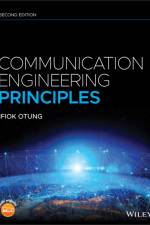
For those seeking a thorough grounding in modern communication engineering principles delivered with unrivaled clarity using an engineering-first approachCommunication Engineering Principles: 2nd Edition provides readers with comprehensive background information and instruction in the rapidly expanding and growing field of communication engineering.This book is well-suited as a textbook in any of the following courses of study:* Telecommunication* Mobile Communication* Satellite Communication* Optical Communication* Electronics* Computer SystemsPrimarily designed as a textbook for undergraduate programs, Communication Engineering Principles: 2nd Edition can also be highly valuable in a variety of MSc programs.Communication Engineering Principles grounds its readers in the core concepts and theory required for an in-depth understanding of the subject. It also covers many of the modern, practical techniques used in the field.Along with an overview of communication systems, the book covers topics like time and frequency domains analysis of signals and systems, transmission media, noise in communication systems, analogue and digital modulation, pulse shaping and detection, and many others.
Discover the ultimate success habits for a healthy and prosperous lifeWhether we like it or not, a big part of what we do in life is governed by habits. Even more importantly, habits can lead us to think and feel in certain patterns. Since habits are so powerful, it's worth paying attention to the ones that are most effective. Inside, bestselling author Dirk Zeller provides tried-and-true advice on creating, building, and cultivating winning habits to achieve success.Success Habits For Dummies is a gold mine of startling insights and practical pointers on achieving success. No matter what your station in life, it can quickly put you on the road to the success you want and deserve. With wit, warmth, and loads of practical wisdom, Dirk Zeller helps you:* Discover how habits determine 95% of a person's behavior* Get to know how the people who achieve most in life take deliberate steps to ensure their goals are met* Make a practical plan to perform at your maximum potential* Maintain a growth mindset that makes you capable of changeEverything that you are today, and everything that you will ever accomplish, is determined by the quality of the habits that you form. By creating good habits and adopting a positive behavior, you too can become successful and live a prosperous life.
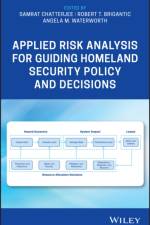
Presents various challenges faced by security policy makers and risk analysts, and mathematical approaches that inform homeland security policy development and decision supportCompiled by a group of highly qualified editors, this book provides a clear connection between risk science and homeland security policy making and includes top-notch contributions that uniquely highlight the role of risk analysis for informing homeland security policy decisions. Featuring discussions on various challenges faced in homeland security risk analysis, the book seamlessly divides the subject of risk analysis for homeland security into manageable chapters, which are organized by the concept of risk-informed decisions, methodology for applying risk analysis, and relevant examples and case studies.Applied Risk Analysis for Guiding Homeland Security Policy and Decisions offers an enlightening overview of risk analysis methods for homeland security. For instance, it presents readers with an exploration of radiological and nuclear risk assessment, along with analysis of uncertainties in radiological and nuclear pathways. It covers the advances in risk analysis for border security, as well as for cyber security. Other topics covered include: strengthening points of entry; systems modeling for rapid containment and casualty mitigation; and disaster preparedness and critical infrastructure resilience.* Highlights how risk analysis helps in the decision-making process for homeland security policy* Presents specific examples that detail how various risk analysis methods provide decision support for homeland security policy makers and risk analysts* Describes numerous case studies from academic, government, and industrial perspectives that apply risk analysis methods for addressing challenges within the U.S. Department of Homeland Security (DHS)* Offers detailed information regarding each of the five DHS missions: prevent terrorism and enhance security; secure and manage our borders; enforce and administer our immigration laws; safeguard and secure cyberspace; and strengthen national preparedness and resilience* Discusses the various approaches and challenges faced in homeland risk analysis and identifies improvements and methodological advances that influenced DHS to adopt an increasingly risk-informed basis for decision-making* Written by top educators and professionals who clearly illustrate the link between risk science and homeland security policy makingApplied Risk Analysis for Guiding Homeland Security Policy and Decisions is an excellent textbook and/or supplement for upper-undergraduate and graduate-level courses related to homeland security risk analysis. It will also be an extremely beneficial resource and reference for homeland security policy analysts, risk analysts, and policymakers from private and public sectors, as well as researchers, academics, and practitioners who utilize security risk analysis methods.
Professor WoodallΓÇÖs essay shows that this book represents a remarkable contribution, even by todayΓÇÖs standards, because of its contemporary thinking about the relationship between the specific topic of SQC and the broader company context of Quality Management. It also demonstrates the remarkable awareness of at least some young US engineers in the postΓÇôwar period about the vital role of Statistical Quality Control in establishing and maintaining a competitive position. The book reveals that there was unsuspected knowledge extant immediately postΓÇôwar, about the importance of Statistical Quality Control when appropriately applied in an industrial setting. It also helps to correct wideΓÇôspread historical misconceptions about who specifically was responsible for helping Japanese industry get back on its feet postΓÇôwar, a task assigned to General Douglas Macarthur by President Truman and how Macarthur was indebted to Sarasohn.
Organic Reaction Mechanisms 2016, the 52nd annual volume in this highly successful and unique series, surveys research on organic reaction mechanisms described in the available literature dated 2016. The following classes of organic reaction mechanisms are comprehensively reviewed:* Reaction of Aldehydes and Ketones and their Derivatives* Reactions of Carboxylic, Phosphoric, and Sulfonic Acids and their Derivatives* Oxidation and Reduction* Carbenes and Nitrenes* Nucleophilic Aromatic Substitution* Electrophilic Aromatic Substitution* Carbocations* Nucleophilic Aliphatic Substitution* Carbanions and Electrophilic Aliphatic Substitution* Elimination Reactions* Polar Addition Reactions* Cycloaddition Reactions* Molecular Rearrangements
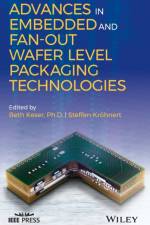
Examines the advantages of Embedded and FO-WLP technologies, potential application spaces, package structures available in the industry, process flows, and material challengesEmbedded and fan-out wafer level packaging (FO-WLP) technologies have been developed across the industry over the past 15 years and have been in high volume manufacturing for nearly a decade. This book covers the advances that have been made in this new packaging technology and discusses the many benefits it provides to the electronic packaging industry and supply chain. It provides a compact overview of the major types of technologies offered in this field, on what is available, how it is processed, what is driving its development, and the pros and cons.Filled with contributions from some of the field's leading experts,Advances in Embedded and Fan-Out Wafer Level Packaging Technologies begins with a look at the history of the technology. It then goes on to examine the biggest technology and marketing trends. Other sections are dedicated to chip-first FO-WLP, chip-last FO-WLP, embedded die packaging, materials challenges, equipment challenges, and resulting technology fusions.* Discusses specific company standards and their development results* Content relates to practice as well as to contemporary and future challenges in electronics system integration and packagingAdvances in Embedded and Fan-Out Wafer Level Packaging Technologies will appeal to microelectronic packaging engineers, managers, and decision makers working in OEMs, IDMs, IFMs, OSATs, silicon foundries, materials suppliers, equipment suppliers, and CAD tool suppliers. It is also an excellent book for professors and graduate students working in microelectronic packaging research.
The most comprehensive reference on fluorescent nanodiamond physical and chemical properties and contemporary applicationsFluorescent nanodiamonds (FNDs) have drawn a great deal of attention over the past several years, and their applications and development potential are proving to be manifold and vast. The first and only book of its kind, Fluorescent Nanodiamonds is a comprehensive guide to the basic science and technical information needed to fully understand the fundamentals of FNDs and their potential applications across an array of domains. In demonstrating the importance of FNDs in biological applications, the authors bring together all relevant chemistry, physics, materials science and biology.Nanodiamonds are produced by powerful cataclysmic events such as explosions, volcanic eruptions and meteorite impacts. They also can be created in the lab by high-pressure high-temperature treatment of graphite or detonating an explosive in a reactor vessel. A single imperfection can give a nanodiamond a specific, isolated color center which allows it to function as a single, trapped atom. Much smaller than the thickness of a human hair, a nanodiamond can have a huge surface area that allows it to bond with a variety of other materials. Because of their non-toxicity, nanodiamonds may be useful in biomedical applications, such as drug delivery and gene therapy.* The most comprehensive reference on a topic of rapidly increasing interest among academic and industrial researchers across an array of fields* Includes numerous case studies and practical examples from many areas of research and industrial applications, as well as fascinating and instructive historical perspectives* Each chapter addresses, in-depth, a single integral topic including the fundamental properties, synthesis, mechanisms and functionalisation of FNDs* The first book published by the key patent holder with his research group in the field of FNDsFluorescent Nanodiamonds is an important working resource for a broad range of scientists and engineers in industry and academia. It will also be a welcome reference for instructors in chemistry, physics, materials science, biology and related fields.
Highlights from one of the most successful international psychology conferences since the beginning of this centuryDiversity in Harmony distills the Proceedings of the 31st International Congress of Psychology into selected readings that highlight the Congress's theme. The text includes research that offers recent insights gained from multidisciplinary perspectives and methodologies. The volume also contains chapters that put psychology at the center of our understanding and ability to address the many problems facing groups and individuals in modern society. As the contributors clearly show, the social problems often require multidisciplinary approaches.With contributions from experts from around the globe, the book explores a wealth of topics that examine new synergies such as artificial empathy, prosocial primates and understanding about others' actions in chimpanzees and humans. The volume also contains readings on psychology confronting societal challenges with topics including: Culturally relevant personality assessment; Emotion-related self-regulation and Children's social, psychological and academic functioning. This vital resource:* Presents readings from presentations that were highlighted at the 31st International Congress of Psychology* Includes contributions from an international panel of renowned experts* Offers information that compares the minds of primates and contemporary humans, and examines human cognitive capability* Contains 24 chapters that explore a wide range of topics presented at the CongressWritten for professionals and students in the field, Diversity in Harmony is filled with contributions from noted experts and offers a reflection of the state of psychology in the second decade of the 21st century.
Combines clear and concise discussions of key NMR concepts with succinct and illustrative examplesDesigned to cover a full course in Nuclear Magnetic Resonance (NMR) Spectroscopy, this text offers complete coverage of classic (one-dimensional) NMR as well as up-to-date coverage of two-dimensional NMR and other modern methods. It contains practical advice, theory, illustrated applications, and classroom-tested problems; looks at such important ideas as relaxation, NOEs, phase cycling, and processing parameters; and provides brief, yet fully comprehensible, examples. It also uniquely lists all of the general parameters for many experiments including mixing times, number of scans, relaxation times, and more.Nuclear Magnetic Resonance Spectroscopy: An Introduction to Principles, Applications, and Experimental Methods, 2nd Edition begins by introducing readers to NMR spectroscopy - an analytical technique used in modern chemistry, biochemistry, and biology that allows identification and characterization of organic, and some inorganic, compounds. It offers chapters covering: Experimental Methods; The Chemical Shift; The Coupling Constant; Further Topics in One-Dimensional NMR Spectroscopy; Two-Dimensional NMR Spectroscopy; Advanced Experimental Methods; and Structural Elucidation.* Features classical analysis of chemical shifts and coupling constants for both protons and other nuclei, as well as modern multi-pulse and multi-dimensional methods* Contains experimental procedures and practical advice relative to the execution of NMR experiments* Includes a chapter-long, worked-out problem that illustrates the application of nearly all current methods* Offers appendices containing the theoretical basis of NMR, including the most modern approach that uses product operators and coherence-level diagramsBy offering a balance between volumes aimed at NMR specialists and the structure-determination-only books that focus on synthetic organic chemists, Nuclear Magnetic Resonance Spectroscopy: An Introduction to Principles, Applications, and Experimental Methods, 2nd Edition is an excellent text for students and post-graduate students working in analytical and bio-sciences, as well as scientists who use NMR spectroscopy as a primary tool in their work.
Abonner på vårt nyhetsbrev og få rabatter og inspirasjon til din neste leseopplevelse.
Ved å abonnere godtar du vår personvernerklæring.