

















Gjør som tusenvis av andre bokelskere
Abonner på vårt nyhetsbrev og få rabatter og inspirasjon til din neste leseopplevelse.
Ved å abonnere godtar du vår personvernerklæring.Du kan når som helst melde deg av våre nyhetsbrev.

A strategic and operational guide to using 3D printing to drive value in the supply chain--featuring case studies and illustrated examples from across industries After many years as a tool for designers, 3D printing today promises to revolutionize supply chains. Cut through the hype and hyperbole, and it becomes clear that it offers unprecedented potential to redesign supply chain models, simplifying and shrinking them, enabling previously unimaginable designs to be produced where they are most needed. However, adopting it is a strategic endeavor, one that involves the consideration of several wider implications. This book goes beyond touting the latest technological advances or listing the many wonderful things that 3D printing is being used to make. It teaches readers what is important about 3D printing, why they need to prepare for its emergence today, and how they can go about adopting it. Supercharg3d: How 3D Printing Will Drive Your Supply Chain shows readers how to drive value in their supply chain by supercharging it--giving it more power--with 3D printing. Aimed at being a first reference for those in businesses who make strategic decisions on operations and supply chain matters, it takes a pragmatic position, balancing the opportunities that 3D printing presents with the reality of the limitations that it continues to have, so that readers can make the best decisions possible. Strategic guide that covers 3D printing and its implications in the supply chain Operational guidance and best practices for how and when 3D printing can be adopted Identification of 3D printing's impacts on the individual SCOR(R) supply chain elements Features new, transformative supply chain models that are enabled by 3D printing Includes case studies and illustrated examples from diverse industries including aerospace (Airbus), energy (Shell), consumer goods (Nike), medical (Align Technology), and transportation (Deutsche Bahn) Supercharg3d: How 3D Printing Will Drive Your Supply Chain is the go-to book for operations and supply chain decision makers in manufacturing, engineering and technology companies looking to incorporate the technology into their business operations.
Harness the seven key elements of successful organisational changeLeading for Organisational Change is an intelligent and practical guide to the human side of merger integration and other organisational change. Building a clear sense of common purpose and then reinforcing it through storytelling can underpin the success of an integration or significant change programme. Pulling together the best thinking from neuroscience, psychology and business, and her rich personal experience in twenty years of leading change projects in professional services organisations and other people-centred businesses, author Jennifer Emery presents a framework for change rooted in seven key themes that help organisations establish their BECAUSE: belonging, evolution, confidence, agility, understanding, simplicity and energy. Exploring the role each theme plays in the context of change, this insightful and warm book shares real-world examples and provides advice on building purpose and culture and strengthening motivation through listening, empowering and collaborating.Clear understanding of purpose, powerful communication techniques and carefully planned implementation strategies assist in navigating an often stressful and uncertain period of change, and can even enable organisations to thrive throughout this period. This book encourages you to apply important lessons to your own context, allowing you to:* Focus on the human, cultural and practical elements of organisational change* Apply central concepts of communication and motivation to a wide array of situations in your personal and business life* Understand perspectives on change from a broad range of professional sectors* Build and strengthen communication skills to promote a sense of shared purposeLeading for Organisational Change offers a warm and intelligent perspective on the personal and inter-personal factors that contribute to successful integration. An invaluable resource for professional services and people-focused organisations, this book provides advice that can cross sectors and lend insight to any major change programme.
A guide to a multi-disciplinary approach that includes perspectives from noted experts in the energy and utilities fieldsAdvances in Energy Systems offers a stellar collection of articles selected from the acclaimed journal Wiley Interdisciplinary Review: Energy and Environment. The journalcovers all aspects of energy policy, science and technology, environmental and climate change. The book covers a wide range of relevant issues related to the systemic changes for large-scale integration of renewable energy as part of the on-going energy transition.The book addresses smart energy systems technologies, flexibility measures, recent changes in the marketplace and current policies. With contributions from a list of internationally renowned experts, the book deals with the hot topic of systems integration for future energy systems and energy transition. This important resource:* Contains contributions from noted experts in the field* Covers a broad range of topics on the topic of renewable energy* Explores the technical impacts of high shares of wind and solar power* Offers a review of international smart-grid policies* Includes information on wireless power transmission* Presents an authoritative view of micro-grids* Contains a wealth of other relevant topicsWritten forenergy planners, energy market professionals and technology developers, Advances in Energy Systems is an essential guide with contributions from an international panel of experts that addresses the most recent smart energy technologies.
A GUIDE TO THE LATEST DEVELOPMENTS IN GRID DYNAMICS AND CONTROL, HIGHLIGHTING THE ROLE OF TRANSMISSION AND DISTRIBUTION GRIDS Dynamics and Control of Electric Transmission and Microgrids offers a concise and comprehensive review of the most recent developments and research in grid dynamics and control. In addition, the authors use a new style of presentation that highlights the role of transmission and distribution grids that ensures the reliability and quality of electric power supply. The authors--noted experts in the field--offer an introduction to the topic and explore the basic characteristics and operations of the grid. The text also reviews a wealth of vital topics such as FACTS and HVDC Converter controllers, the stability and security issues of the bulk power system, loads which can be viewed as negative generation, the power limits and energy availability when distributed storage is used, and much more. This important resource: Puts the focus on the role of transmission and distribution grids that ensures the reliability and quality of electric power supply Includes modeling and control of wind and solar energy generation for secure energy transfer Presents timely coverage of on-line detection of loss of synchronism, wide area measurements and applications, wide-area feedback control systems for power swing damping and microgrids-operation and control Written for students of power system dynamics and control/electrical power industry professionals, Dynamics and Control of Electric Transmission and Microgrids is a comprehensive guide to the recent developments in grid dynamics and control and highlights the role of transmission and distribution grids that ensures the reliability and quality of electric power supply.
The Tokens tells the fascinating story of Eric, a skilled craftsman and builder. During the course of his business journey, Eric struggles to take his burgeoning company to the next level. A chance encounter introduces him to Carl, a retired multimillionaire. Carl offers Eric the opportunity to take any material and supplies from his log cabin in exchange for demolishing the building. While working on the cabin, Eric discovers an unexpected and mystifying gift from Carl, a note and a wooden token.As his relationship with Carl evolves, Eric is faced with countless business challenges and growth. Carl becomes a close friend and indispensable mentor offering his wisdom, knowledge, and business tips (tokens). Eric applies these valuable lessons and discovers the importance of the core concepts that created success for the members of Carl's mastermind group. Along the way, Eric also learns to appreciate the insights and advice from his own grandfather.The Tokens is centered on the building and construction industry and each business lesson helps to build a foundation of success that is so vital for sustaining growth and overcoming challenges. Written by successful entrepreneurs and devout instructors of personal and professional development, The Tokens outlines the eleven points for developing and maintaining a successful building or construction business with many of the lessons applicable to any business. The authors explain how to build confidence, become a person of integrity and optimism, create successful relationships, learn to overcome obstacles, and much more.The Tokens is an informative, entertaining, and heartwarming parable that motivates, inspires, and teaches.
Master the online tools available to grow your business and conquer the competitionBusiness Hack is your essential roadmap to business growth and online marketing success. Author and successful entrepreneur John Lee shares his proven methods to harness the power of online tools, including using social media--offering practical steps to create and implement highly effective cyber-marketing campaigns. Thanks to the digital revolution, you no longer need teams of marketing experts and other expensive overheads to build and promote your business. This unique and valuable resource covers everything you need to consider when building your marketing strategy, from established principles of sales to cutting-edge digital techniques.In today's dynamic business environment, strong and ongoing engagement in social media marketing is no longer an option-it is a necessity. From local craft-based businesses to new tech start-ups and even global multinational corporations, effective cyber-marketing can be instrumental in determining success. A comprehensive digital strategy enables you to compete across all platforms and maintain viability and relevance in the face of intense competition. Following the proven techniques in this essential guide allows you to:* Implement powerful social media marketing campaigns to increase revenue and rise above the competition* Integrate traditional sales and advertising methods with modern technology to create a comprehensive business marketing strategy* Identify future trends to stay ahead of the technology curve and capitalize on new opportunities.* Learn the skills used by successful entrepreneurs and respected experts in online marketingThe Internet and rise of digital media have changed the rules of business and marketing. It is now possible for small and new businesses to compete and thrive in the global marketplace through intelligent use of digital and social media marketing. Business Hack provides the tools and knowledge necessary to succeed in the 21st century.
This is the most comprehensive and in-depth study of the theory and practical applications of a new and groundbreaking method for the energy industry to "go green" with renewable and alternative energy sources. The global warming phenomenon as a significant sustainability issue is gaining worldwide support for development of renewable energy technologies. The term "polygeneration" is referred to as "an energy supply system, which delivers more than one form of energy to the final user." For example, electricity, cooling and desalination can be delivered from a polygeneration process. The polygeneration process in a hybrid solar thermal power plant can deliver electricity with less impact on the environment compared to a conventional fossil fuel-based power generating system. It is also THE next generation energy production technique with the potential to overcome the undesirable intermittence of renewable energy systems. In this study, the polygeneration process simultaneous production of power, vapor absorption refrigeration (VAR) cooling and multi-effect humidification and dehumidification (MEHD) desalination system from different heat sources in hybrid solar-biomass (HSB) system with higher energy efficiencies (energy and exergy), primary energy savings (PES) and payback period are investigated, focusing on several aspects associated with hybrid solar-biomass power generation installations, such as wide availability of biomass resources and solar direct normal irradiance (DNI), and other technologies. Thermodynamic evaluation (energy and exergy) of HSB power has also been investigated, along with the VAR cooling system, the modelling, simulation, optimization and cost analysis of the polygeneration hybrid solar biomass system, all accompanied by multiple case studies and examples for practical applications. This volume provides the researcher, student and engineer with the intellectual tool needed for understanding new ideas in this rapidly emerging field. The book is also intended to serve as a general source and reference book for the professional (consultant, designer, contractor etc.) who is working in the field of solar thermal, biomass, power plant, polygeneration, cooling and process heat. It is a must-have for anyone working in this field. This outstanding new volume: Is the only in-depth study of polygneration processes in relation to hybrid solar and biomass energy systems that is available in book form Is of interest to engineers, scientists, managers, consultants, and anyone else working in the fields of solar thermal, biomass, power plant, polygeneration, cooling and process heat Covers practical applications of cutting-edge technologies, covering the state-of-the-art and offering a valuable, groundbreaking method for the scientific community Is a valuable textbook for students and professors, not only as a textbook, but as a general reference guide for veteran engineers and scientists working in the field
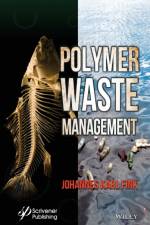
The world is literally awash with plastics and this book practically provides a broad overview of plastic recycling procedures and waste management. With the huge amount of plastics floating in the oceans, fish and other sea creatures are directly suffering the consequences. On land, city leaders and planners are banning one-use plastics as well as plastic bags from grocery stores in an effort to stem the use. Many countries have made official announcements and warnings concerning the pollution caused from plastic wastes. These urgent developments have stimulated the author to study the problem and write Polymer Waste Management. Plastic recycling refers to a method that retrieves the original plastic material. However, there are many sophisticated methods available for the treatment and management of waste plastics such as basic primary recycling, where the materials are sorted and collected individually. In chemical recycling, the monomers and related compounds are processed by special chemical treatments. Other methods, such as pyrolysis, can produce fuels from waste plastics. These methods and others are treated comprehensively in the book. This groundbreaking book also discusses: General aspects, such as amount of plastics production, types of waste plastics, analysis procedures for identification of waste plastic types, standards for waste treatment, contaminants in recycled plastics. Environmental aspects, such as pollution in the marine environment and landfills. The advantages of the use of bio-based plastics. Recycling methods for individual plastic types and special catalysts. Audience This text will be important to scientists (polymer and materials scientists, environmental and sustainability engineers) as well as policy managers and civic leaders, engaged in the problems of plastics waste management. The book is an ideal course book for students who are interested in the current problems of plastics recycling.
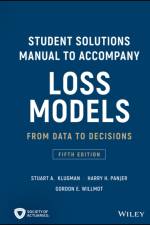
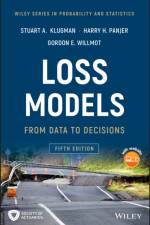
A guide that provides in-depth coverage of modeling techniques used throughout many branches of actuarial science, revised and updatedNow in its fifth edition, Loss Models: From Data to Decisions puts the focus on material tested in the Society of Actuaries (SOA) newly revised Exams STAM (Short-Term Actuarial Mathematics) and LTAM (Long-Term Actuarial Mathematics). Updated to reflect these exam changes, this vital resource offers actuaries, and those aspiring to the profession, a practical approach to the concepts and techniques needed to succeed in the profession. The techniques are also valuable for anyone who uses loss data to build models for assessing risks of any kind.Loss Models contains a wealth of examples that highlight the real-world applications of the concepts presented, and puts the emphasis on calculations and spreadsheet implementation. With a focus on the loss process, the book reviews the essential quantitative techniques such as random variables, basic distributional quantities, and the recursive method, and discusses techniques for classifying and creating distributions. Parametric, non-parametric, and Bayesian estimation methods are thoroughly covered. In addition, the authors offer practical advice for choosing an appropriate model. This important text:* Presents a revised and updated edition of the classic guide for actuaries that aligns with newly introduced Exams STAM and LTAM* Contains a wealth of exercises taken from previous exams* Includes fresh and additional content related to the material required by the Society of Actuaries (SOA) and the Canadian Institute of Actuaries (CIA)* Offers a solutions manual available for further insight, and all the data sets and supplemental material are posted on a companion siteWritten for students and aspiring actuaries who are preparing to take the SOA examinations, Loss Models offers an essential guide to the concepts and techniques of actuarial science.
Written and edited by some of the most well-respected authors in the area of the adaptation of plants and animals to climate change, this groundbreaking new work is an extremely important scientific contribution to the study of global warming. Global climate change is one of the most serious and pressing issues facing our planet. Rather than a "silver bullet" or a single study that solves it, the study of global climate change is like a beach, with each contribution a grain of sand, gathered together as a whole to create a big picture, moving the science forward. This new groundbreaking study focuses on the adaptation and tolerance of plants and animal life to the harsh conditions brought on by climate change or global warming. Using the papers collected here, scientists can better understand global climate change, its causes, results, and, ultimately, the future of life on our planet. The first section lays out a methodology and conceptual direction of the work as a whole, covering the modeling, approaches, and the impacts studied throughout the book. The second section focuses on certain hypotheses laid out by the authors regarding how plants and animal life can adapt and survive in extreme environments. The third section compiles a series of ecological experiments and their conclusions, and a final section is dedicated to previous scientific breakthroughs in this field and the scientists who made them. Whether for the scientist in the field, the student, or as a reference, this groundbreaking new work is a must-have. Focusing on a small part of the global climate change "beach," this "grain of sand" is an extremely important contribution to the scientific literature and a step forward in understanding the problems and potentialities of the issue. This breakthrough new volume: Introduces a novel and unique approach for understanding critical problems of closed and semi-closed biological systems Explores adaptation to normal and extreme conditions by plants and the role of photosynthesis and other physiological processes in the activities of the plant itself, in communities, through ecosystems and in agriculture Contains a special section on previous scientific breakthroughs and their impact on the scientific community Provides cutting-edge research not available anywhere else in book format
AN AUTHORITATIVE GUIDE THAT EXPLAINS THE EFFECTIVENESS AND IMPLEMENTATION OF BOW TIE ANALYSIS, A QUALITATIVE RISK ASSESSMENT AND BARRIER MANAGEMENT METHODOLOGY From a collaborative effort of the Center for Chemical Process Safety (CCPS) and the Energy Institute (EI) comes an invaluable book that puts the focus on a specific qualitative risk management methodology - bow tie barrier analysis. The book contains practical advice for conducting an effective bow tie analysis and offers guidance for creating bow tie diagrams for process safety and risk management. Bow Ties in Risk Management clearly shows how bow tie analysis and diagrams fit into an overall process safety and risk management framework. Implementing the methods outlined in this book will improve the quality of bow tie analysis and bow tie diagrams across an organization and the industry. This important guide: Explains the proven concept of bow tie barrier analysis for the preventing and mitigation of incident pathways, especially related to major accidents Shows how to avoid common pitfalls and is filled with real-world examples Explains the practical application of the bow tie method throughout an organization Reveals how to treat human and organizational factors in a sound and practical manner Includes additional material available online Although this book is written primarily for anyone involved with or responsible for managing process safety risks, this book is applicable to anyone using bow tie risk management practices in other safety and environmental or Enterprise Risk Management applications. It is designed for a wide audience, from beginners with little to no background in barrier management, to experienced professionals who may already be familiar with bow ties, their elements, the methodology, and their relation to risk management. The missions of both the CCPS and EI include developing and disseminating knowledge, skills, and good practices to protect people, property and the environment by bringing the best knowledge and practices to industry, academia, governments and the public around the world through collective wisdom, tools, training and expertise. The CCPS has been at the forefront of documenting and sharing important process safety risk assessment methodologies for more than 30 years. The EI's Technical Work Program addresses the depth and breadth of the energy sector, from fuels and fuels distribution to health and safety, sustainability and the environment. The EI program provides cost-effective, value-adding knowledge on key current and future international issues affecting those in the energy sector.
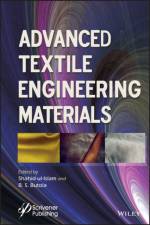
A groundbreaking book on the recent advances in chemical finishing, innovative fabrication strategies frequently adopted for the mechanical finishing of textiles, as well as the environmental issues in textile sectors Advanced materials are undoubtedly becoming very popular as substitutes for traditional materials in the textile engineering field. Advanced textile engineering materials are giving way to innovative textile materials with novel functions and are widely perceived as offering huge potential in a wide range of applications such as healthcare, defense, personal protective equipment, textile antennas, garments for motion capture, and sensors, etc. Advanced Engineering Textile Materials contains 13 chapters written by high profile contributors with many years of experience in textile technology, and cover fundamental and advanced approaches associated with the design and development of textile implants, conductive textiles, 3D textiles, smart-stimuli textiles, antiballistic textiles and fabric structures designed for a medical application intrabody/extra-body, implantable/non-implantable) and various modification and processing techniques. Audience The book is intended to be of interest and useful to a wide group of people: researchers, post and undergraduates in the fields of textile engineering, functional finishing, chemical processing and material sciences.
Dedicated to the unique developments of hydroacoustical equipment to monitor the sea coastal shelf environment, this groundbreaking unique study presents a survey of modern methods and technical monitoring facilities, including the diagnostics of underwater engineering when monitoring offshore. There is still so much about the oceans that scientists do not know, and exploring the continental shelves of the world is a huge part of finding out more about these underwater environments. Further to that, it is extremely important that, while scientists and engineers explore and monitor the continental shelf, no damage is done to these precious environments. That is the needle that this study intends to thread, giving scientists and engineers a better method and processes for exploring these underwater mysteries, while protecting the environment and wildlife thriving beneath. Written by a proven scientist in this area, this book is dedicated to the unique developments of hydroacoustical equipment to monitor the coastal shelf. The results of the original experimental sonar studies with application of the parametric antenna are presented. The book presents a survey of the modern methods and technical monitoring facilities of the coastal aqueous environment. The basic characteristics of the parametric antennas are given considering propagation of the acoustic waves in the environments with dispersion and acoustical absorption. The author and his colleagues consider the questions of formation of the parametric antenna field in layered-heterogeneous media and the peculiarities of sounding of the interfaces and bottom sediments. Ecological monitoring methods of the basic parameters of quality and condition of the aqueous environment are analyzed. The peculiarities of diagnostics of the underwater engineering constructions when monitoring the offshore strips are described. For both veteran engineers and students in the field alike, this breakthrough study is a must-have for any scientific library concerned with studying the oceans and especially the continental shelf. This breakthrough new volume: Presents the results of original experimental sonar studies with application of parametric antenna Gives a survey of modern hydroacoustical systems using autonomous underwater vehicles, including their specific features and development prospects Is the only study dedicated to the questions of experimental development of the shelf zone for the purpose of the conservation of the ecology of the marine environment Presents original experimental data of bottom structures, with the purpose of searching for mineral products, constructing hydraulic structures, and evaluating sludge contaminations for ecological control Contains many important illustrations and diagrams of various engineering systems for monitoring the aquatic environment
The groundbreaking book that details the fundamentals of reliability modeling and evaluation and introduces new and future technologies Electric Power Grid Reliability Evaluation deals with the effective evaluation of the electric power grid and explores the role that this process plays in the planning and designing of the expansion of the power grid. The book is a guide to the theoretical approaches and processes that underpin the electric power grid and reviews the most current and emerging technologies designed to ensure reliability. The authors--noted experts in the field--also present the algorithms that have been developed for analyzing the soundness of the power grid. A comprehensive resource, the book covers probability theory, stochastic processes, and a frequency-based approach in order to provide a theoretical foundation for reliability analysis. Throughout the book, the concepts presented are explained with illustrative examples that connect with power systems. The authors cover generation adequacy methods, and multi-node analysis which includes both multi-area as well as composite power system reliable evaluation. This important book: Provides a guide to the basic methods of reliability modeling and evaluation Contains a helpful review of the background of power system reliability evaluation Includes information on new technology sources that have the potential to create a more reliable power grid Addresses renewable energy sources and shows how they affect power outages and blackouts that pose new challenges to the power grid system Written for engineering students and professionals, Electric Power Grid Reliability Evaluation is an essential book that explores the processes and algorithms for creating a sound and reliable power grid.
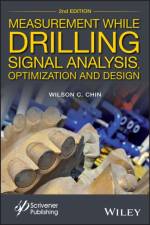
The only book explaining modern measurement while drilling (MWD) technology, including hardware design, signal processing and telemetry and offering unique approaches to high-data-rate well logging, novel methods, experiments, and prototype tools. Trade magazines and review articles describe MWD in casual terms, e.g., positive versus negative pulsers, continuous wave systems, drilling channel noise and attenuation, in very simple terms absent of technical rigor. However, few truly scientific discussions are available on existing methods, let alone the advances necessary for high-data-rate telemetry. Without a strong foundation building on solid acoustic principles, rigorous mathematics, and of course, fast, inexpensive and efficient testing of mechanical designs, low data rates will impose unacceptable quality issues to real-time formation evaluation for years to come. This all-new revised second edition of an instant classic promises to change all of this. The lead author and M.I.T.-educated scientist, Wilson Chin, has written the only book available that develops mud pulse telemetry from first principles, adapting sound acoustic principles to rigorous signal processing and efficient wind tunnel testing. In fact, the methods and telemetry principles developed in the book were recently adopted by one of the world's largest industrial corporations in its mission to redefine the face of MWD. The entire engineering history for continuous wave telemetry is covered: anecdotal stories and their fallacies, original hardware problems and their solutions, different noise mechanisms and their signal processing solutions, apparent paradoxes encountered in field tests and simple explanations to complicated questions, and so on, are discussed in complete "tell all" detail for students, research professors and professional engineers alike. These include signal processing algorithms, signal enhancement methods, and highly efficient "short" and "long wind tunnel" test methods, whose results can be dynamically re-scaled to real muds flowing at any speed. A must read for all petroleum engineering professionals! This all-new revised edition: Is the first and only publication that explains MWD mud pulse technology clearly using scientific principles Includes ideas showing limitations of present systems and how they can be overcome Explains innovative methods for signal enhancements needed for very deep wells, such as constructive wave interference, "sirens in series," special adaptations of frequency-shift-keying, and others Gives a blueprint for high-data-rate mud pulse telemetry adopted by several of world's top energy corporations, explained in simple-to-understand terms, from first principles and rigorous physics to advanced mathematical concepts for signal processing, noise removal and echo cancellation And finally, offers, from Wilson Chin, the originator of wind tunnel modeling for downhole applications, new wind "short" and "long" tunnel designs and test methodologies for mud sirens and turbines are offered - all the technology you'll ever need between two covers!
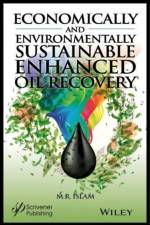
The only book available that leads the petroleum industry toward sustainable Enhanced Oil Recovery (EOR) practices There have been many books on the topic of Enhanced Oil Recovery (EOR) over the last 100 years. They all, however, focus on how to recover more oil faster, taking a rather myopic approach. The solutions presented all work fantastically in theory and even in the laboratory, but each fails to produce results in the field with long-term success. The petroleum industry is almost resigned to the belief that for an EOR technique to be successful, it must be propped up with public funds or must compromise environmental integrity. In line with modern engineering practices, previous books discuss how existing technologies can be tweaked to accommodate for any shortcomings that just came to light. This book is unlike any other book on the topic of recovery in particular and engineering in general. This groundbreaking volume is a continuation of the author's and his research group's work that started publishing on the subject of global sustainability involving energy and the environment, dating back to early 2000s. Starting with a paradigm shift in engineering that involves a long-term focus, rather than looking for short-term solutions, the methods and theories presented here delve into applying green engineering and zero waste principles to EOR. The book reveals how previous practices in EOR can be replaced with their sustainable versions while saving in material costs. A number of innovative technologies are introduced that can render well known technologies, such as steam flood, in situ combustion, chemical flooding, and microbial EOR environmentally sustainable and economically attractive. A triple dividend is received once these technologies are applied in otherwise marginal reservoirs, unconventional plays and even abandoned formations. The overall reserve, which reflects recoverable oil with new technologies, goes up drastically. Further benefits are drawn when processes such as value addition of waste material is performed. Overall, this book shows how EOR can be rendered green while increasing profitability. This is in stark contrast to the past practices that considered environmental integrity as a drain on profitability. This book proves that a paradigm shift can turn a "technological disaster" into a technological marvel. This breakthrough new volume: Breaks from centuries of engineering practices of deciding on a technology based on economics, then justifying its environmental impact Introduces an array of technologies that are simultaneously environment-friendly and economically attractive Critically reviews existing practices and identifies the pivotal departure points in the recent history of engineering from environmental and economic sustainability Shows how existing know-how in EOR can be properly utilized to initiate practices that are most beneficial to the corporate bottom line while conforming to environmental constraints and regulations, thus changing environmental conformance from a liability to an asset and strength of the corporation Deconstructs myths that are prevalent and deeply rooted in the industry and reconstructs logical solutions
The book covers all aspects of fermentation technology such as principles, reaction kinetics, scaling up of processes, and applications. The 20 chapters written by subject matter experts are divided into two parts: Principles and Applications. In the first part subjects covered include: Modelling and kinetics of fermentation technology Sterilization techniques used in fermentation processes Design and types of bioreactors used in fermentation technology Recent advances and future prospect of fermentation technology The second part subjects covered include: Lactic acid and ethanol production using fermentation technology Various industrial value-added product biosynthesis using fermentation technology Microbial cyp450 production and its industrial application Polyunsaturated fatty acid production through solid state fermentation Application of oleaginous yeast for lignocellulosic biomass based single cell oil production Utilization of micro-algal biomass for bioethanol production Poly-lactide production from lactic acid through fermentation technology Bacterial cellulose and its potential impact on industrial applications Audience The book will be useful for researchers and students in chemical engineering, bioprocess engineering, enzymology, environmental biotechnology, agricultural biotechnology, process engineering, polymer and environmental sciences.
The diversity of the topics, as well as the expert subject-matter contributors from all over the world representing various disciplines, ensures the book is comprehensive and provides a broad understanding of smart nanotextiles. Smart wearables should be capable of recognizing the state of the wearer's surroundings and responding to them. Based on the received stimulus, the smart system processes the input and consequently adjusts its state/functionality of current predetermined properties. Smart textiles should also cater to requirements concerning wearability. Through the incorporation of nanotechnology, the clothing itself becomes the sensor, while maintaining a reasonable cost, durability, fashionability, and comfort. Smart Textiles: Wearable Nanotechnology provides a comprehensive presentation of recent advancements in the area of smart nanotextiles giving specific importance to materials and production processes. It shows the different materials, production routes, performance characteristics, application areas and functionalization mechanisms. It also provides a guideline to researchers and technologists who seek novel solutions in the related areas by including groundbreaking advancements in different aspects of the diverse smart nanotextiles fields such as nanofibers, nanosols, responsive polymers, nanowires, nanogenerators, and nanocomposites, and nanocoatings. Audience Researchers, technologists, and students in the fields of textiles, intelligent materials, electronics, sensors, actuators, biomedicine, materials science who have interest in smart materials, nanotechnology, and wearables.
Biofuels production is one of the most extensively studied fields in the energy sector that can provide an alternative energy source and bring the energy industry closer to sustainability. Biomass-based fuel production, or renewable fuels, are becoming increasingly important as a potential solution for man-made climate change, depleted oil reserves, and the dangers involved with hydraulic fracturing (or "fracking"). The price of oil will always be volatile and changeable, and, so long as industry and private citizens around the world need energy, there will be a need for alternative energy sources. The area known as "biofuels and biofeedstocks" is one of the most important and quickly growing pieces of the "energy pie." Biofuels and biofeedstocks are constantly changing, and new processes are constantly being created, changed, and improved upon. The area is rapidly changing and always innovative. It is important, therefore, that books like the volumes in this series are published and the information widely disseminated to keep the industry informed of the state-of-the-art. This third volume in the Advances in Biofeedstocks and Biofuels series focuses on the production of liquid biofuel, covering all of the major biofuels, such as biodiesel, biobutanol, bioethanol, and others. This engaging text touches on all of the most important new processes and technologies, providing the most up-to-date coverage of the science available to industry. It is a must-have for any engineer or scientist working with biofuel technology.
The purpose of this unique handbook is to provide reference material that includes basic principles and current developments in the field of natural coloration and finishing. A sustainable world requires the utilization of renewable materials or resources that can be produced in huge quantities for a wide range of applications. To adopt the use of active materials for textile coloration and finishing, they should reach the technical demands of the modern world such as eco-preservation, economic and ecological requirements by which, equity and sustainability might be considered. Therefore, there is a need to discuss and understand the challenges and solutions of textile coloration and functional finishing methodologies. The 20 chapters comprising the Handbook of Renewable Materials for Coloration and Finishing are divided into four segments: Substrates for Coloration and Finishing; Renewable Colorants and their Applications; Advanced Materials and Technologies for Coloration; and Finishing and Sustainability. Part I contains three chapters that overview the systematic discussion on the suitability, physical, chemical and processing aspects of substrates for coloration and finishing. Part II includes nine chapters and covers in-depth arguments on renewable colorants and their various applications including a chapter on bio-colorant's application as photosensitizers for dye sensitized solar cells. Part III contains five chapters in which modern advancements and processing methods/technologies for coloration and functional finishing are presented comprehensively. Part IV contains two chapters that provide sustainable aspects of coloration and finishing. Audience The book will be used by textile chemists and engineers, green chemists, materials scientists working with renewable materials. The book will also be used by those in industry and clothing manufacturing working with textiles, dyes and pigments.
The use of biological sources such as microbes and plants can help in synthesizing nanoparticles in a reliable and eco-friendly way. The synthesis of nanoparticles by these natural sources is characterized by processes that take place near to ambient temperature and pressures and also near neutral pH. This edited volume authored by subject specialists, provides all the latest research and builds a database of bioreduction agents to various metal nanoparticles using different precursor systems. The book also highlights the different strategies such as simplicity, cost-effectiveness, environment-friendly and easily scalable, and includes parameters for controlling the size and shape of the materials developed from the various greener methods. In order to exploit the utmost potential metal nanoparticles synthesis from the different sources such as agricultural waste, flora and fauna, food waste, microbes and biopolymer systems, it is also crucial to recognize the biochemical and molecular mechanisms of production of nanoparticles and their characterization.
This book provides a strategic framework for cost efficient engineering of market moving patent portfolios by organizing patent engineering efforts around the problems that innovators solve for their customers and not the technologies developed to solve these problems. Patents are a vital asset in the modern business world. They allow patent holders to introduce new products in to a market while deterring other market players from simply copying innovative features without making comparable investments in research and development. In years past, a few patents may have provided adequate protection. That is no longer the case. In today's world, it is critical that innovative companies protect the features of their products that give them a competitive advantage with a family or portfolio of patents that are strategically generated to protect the market position of the patent holder. A patent portfolio that deters competitors from introducing competitive products in a timely manner can be worth billions of dollars. Anything less than this is an expensive and possibly fatal distraction. This book provides a strategic framework for cost efficient engineering of patent portfolios that protect your investments in research and development and that extend the market advantages that these investments provide. The book illustrates the use of the problem centric framework to enable the efficient creation of individual patents and patent portfolios that have significant value in and by themselves and allow a company to control its product market. It also introduces the concept of a patent engineer whose role it is to organize input from legal, business and technical communities and organize portfolios and patents using the problem centric framework. Audience This book is primarily aimed at entrepreneurs, industrial engineers, scientists, and company managers. This book is especially valuable for start-up high tech businesses that need to protect their intellectual property, as well as more established companies seeking to enhance the value of their patent portfolios and be able to more effectively compete in the marketplace. It will also be of value to patent law firms, investment companies and not-for-profit organizations such as universities as this book shows how to extract profits from the intellectual property.
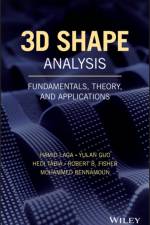
AN IN-DEPTH DESCRIPTION OF THE STATE-OF-THE-ART OF 3D SHAPE ANALYSIS TECHNIQUES AND THEIR APPLICATIONS This book discusses the different topics that come under the title of "3D shape analysis". It covers the theoretical foundations and the major solutions that have been presented in the literature. It also establishes links between solutions proposed by different communities that studied 3D shape, such as mathematics and statistics, medical imaging, computer vision, and computer graphics. The first part of 3D Shape Analysis: Fundamentals, Theory, and Applications provides a review of the background concepts such as methods for the acquisition and representation of 3D geometries, and the fundamentals of geometry and topology. It specifically covers stereo matching, structured light, and intrinsic vs. extrinsic properties of shape. Parts 2 and 3 present a range of mathematical and algorithmic tools (which are used for e.g., global descriptors, keypoint detectors, local feature descriptors, and algorithms) that are commonly used for the detection, registration, recognition, classification, and retrieval of 3D objects. Both also place strong emphasis on recent techniques motivated by the spread of commodity devices for 3D acquisition. Part 4 demonstrates the use of these techniques in a selection of 3D shape analysis applications. It covers 3D face recognition, object recognition in 3D scenes, and 3D shape retrieval. It also discusses examples of semantic applications and cross domain 3D retrieval, i.e. how to retrieve 3D models using various types of modalities, e.g. sketches and/or images. The book concludes with a summary of the main ideas and discussions of the future trends. 3D Shape Analysis: Fundamentals, Theory, and Applications is an excellent reference for graduate students, researchers, and professionals in different fields of mathematics, computer science, and engineering. It is also ideal for courses in computer vision and computer graphics, as well as for those seeking 3D industrial/commercial solutions.
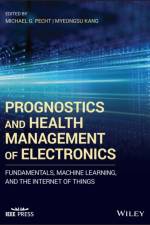
AN INDISPENSABLE GUIDE FOR ENGINEERS AND DATA SCIENTISTS IN DESIGN, TESTING, OPERATION, MANUFACTURING, AND MAINTENANCE A road map to the current challenges and available opportunities for the research and development of Prognostics and Health Management (PHM), this important work covers all areas of electronics and explains how to: assess methods for damage estimation of components and systems due to field loading conditions assess the cost and benefits of prognostic implementations develop novel methods for in situ monitoring of products and systems in actual life-cycle conditions enable condition-based (predictive) maintenance increase system availability through an extension of maintenance cycles and/or timely repair actions obtain knowledge of load history for future design, qualification, and root cause analysis reduce the occurrence of no fault found (NFF) subtract life-cycle costs of equipment from reduction in inspection costs, downtime, and inventory Prognostics and Health Management of Electronics also explains how to understand statistical techniques and machine learning methods used for diagnostics and prognostics. Using this valuable resource, electrical engineers, data scientists, and design engineers will be able to fully grasp the synergy between IoT, machine learning, and risk assessment.
Ein umfassendes Referenzwerk für Chemiker und Industriefachleute zum Thema Nanopartikel Nanopartikel aus Metalloxid sind ein wesentlicher Bestandteil zahlreicher natürlicher und technologischer Prozesse ? von der Mineralumwandlung bis zur Elektronik. Darüber hinaus kommen Metalloxid-Nanopartikel in Pulverform im Maschinenbau, in der Elektronik und der Energietechnik zum Einsatz. Das Werk Metal Oxide Nanoparticles: Formation, Functional Properties and Interfaces stellt die wichtigsten Synthese- und Formulierungsansätze bei der Nutzung von Metalloxid-Nanopartikeln als Funktionsmaterialien vor. Es werden die üblichen Verarbeitungswege erklärt und die physikalischen und chemischen Eigenschaften der Partikel mithilfe von umfassenden und ergänzenden Charakterisierungsmethoden bewertet.Dieses Werk kann als Einführung in die Formulierung von Nanopartikeln, ihre Grenzflächenchemie und ihre funktionellen Eigenschaften im Nanobereich genutzt werden. Darüber hinaus dient es zum vertiefenden Verständnis, denn das Buch enthält detaillierte Angaben zu fortschrittlichen Methoden bei der physikalischen, chemischen, Oberflächen- und Grenzflächencharakterisierung von Metalloxid-Nanopartikeln in Pulvern und Dispersionen.*Erläuterung der Anwendung von Metalloxid-Nanopartikeln und der wirtschaftlichen Auswirkungen*Betrachtung der Partikelsynthese, einschließlich der Grundsätze ausgewählter Bottom-up-Strategien*Untersuchung der Formulierung von Nanopartikeln mit einer Auswahl von Verarbeitungs- und Anwendungswegen*Diskussion der Bedeutung von Partikeloberflächen und -grenzflächen für Strukturbildung, Stabilität und funktionelle Materialeigenschaften*Betrachtung der Charakterisierung von Metalloxid-Nanopartikeln auf verschiedenen LängenskalenIn diesem Buch finden Forscher im akademischen Bereich, Chemiker in der Industrie und Doktoranden wichtige Erkenntnisse über die Synthese, Eigenschaften und Anwendungen von Metalloxid-Nanopartikeln.
Chemostratigraphy Across Major Chronological Boundaries Chemostratigraphy is the study of the chemical characteristics of different rock layers. Decoding this geochemical record across chronostratigraphic boundaries can provide insights into geological history, past climates, and sedimentary processes. Chemostratigraphy Across Major Chronological Boundaries presents state-of-the-art applications of chemostratigraphic methods and demonstrates how chemical signatures can decipher past environmental conditions. Volume highlights include: Presents a global perspective on chronostratigraphic boundaries Describes how different proxies can reveal distinct elemental and isotopic events in the geologic past Examines the Archaean-Paleoproterozoic, Proterozoic-Paleozoic, Paleozoic-Mesozoic, and Mesozoic-Cenozoic boundaries Explores cause-and-effect through major, trace, PGE, and REE elemental, stable, and radiogenic isotopes Offers solutions to persistent chemostratigraphic problems on a micro to global scale Geared toward academic and research geoscientists, particularly in the fields of sedimentary petrology, stratigraphy, isotope geology, geochemistry, petroleum geology, atmospheric science, oceanography, climate change and environmental science, Chemostratigraphy Across Major Chronological Boundaries offers invaluable insights into environmental evolution and climatic change.
Abonner på vårt nyhetsbrev og få rabatter og inspirasjon til din neste leseopplevelse.
Ved å abonnere godtar du vår personvernerklæring.