

















Gjør som tusenvis av andre bokelskere
Abonner på vårt nyhetsbrev og få rabatter og inspirasjon til din neste leseopplevelse.
Ved å abonnere godtar du vår personvernerklæring.Du kan når som helst melde deg av våre nyhetsbrev.

Basic Gas Chromatography, Third Edition provides a brief introduction to GC following the objectives for titles in this series. It should appeal to readers with varying levels of education and emphasizes a practical, applied approach to the subject. : This book provides a quick need-to-know introduction to gas chromatography; still the most widely used instrumental analysis technique, and is intended to assist new users in gaining understanding quickly and as a quick reference for experienced users. The new edition provides updated chapters that reflect changes in technology and methodology, especially sample preparation, detectors and multidimensional chromatography. The book also covers new detectors recently introduced and sample preparation methods that have become much more easily accessible since the previous edition.
A concise yet comprehensive reference guide on HPLC/UHPLC that focuses on its fundamentals, latest developments, and best practices in the pharmaceutical and biotechnology industriesWritten for practitioners by an expert practitioner, this new edition of HPLC and UHPLC for Practicing Scientists adds numerous updates to its coverage of high-performance liquid chromatography, including comprehensive information on UHPLC (ultra-high-pressure liquid chromatography) and the continuing migration of HPLC to UHPLC, the modern standard platform. In addition to introducing readers to HPLC's fundamentals, applications, and developments, the book describes basic theory and terminology for the novice, and reviews relevant concepts, best practices, and modern trends for the experienced practitioner.HPLC and UHPLC for Practicing Scientists, Second Edition offers three new chapters. One is a standalone chapter on UHPLC, covering concepts, benefits, practices, and potential issues. Another examines liquid chromatography/mass spectrometry (LC/MS). The third reviews at the analysis of recombinant biologics, particularly monoclonal antibodies (mAbs), used as therapeutics. While all chapters are revised in the new edition, five chapters are essentially rewritten (HPLC columns, instrumentation, pharmaceutical analysis, method development, and regulatory aspects). The book also includes problem and answer sections at the end of each chapter.* Overviews fundamentals of HPLC to UHPLC, including theories, columns, and instruments with an abundance of tables, figures, and key references* Features brand new chapters on UHPLC, LC/MS, and analysis of recombinant biologics* Presents updated information on the best practices in method development, validation, operation, troubleshooting, and maintaining regulatory compliance for both HPLC and UHPLC* Contains major revisions to all chapters of the first edition and substantial rewrites of chapters on HPLC columns, instrumentation, pharmaceutical analysis, method development, and regulatory aspects* Includes end-of-chapter quizzes as assessment and learning aids* Offers a reference guide to graduate students and practicing scientists in pharmaceutical, biotechnology, and other industriesFilled with intuitive explanations, case studies, and clear figures, HPLC and UHPLC for Practicing Scientists, Second Edition is an essential resource for practitioners of all levels who need to understand and utilize this versatile analytical technology. It will be a great benefit to every busy laboratory analyst and researcher.
A comprehensive treatment for implementing Statistical Process Control (SPC) in the food industryThis book provides managers, engineers, and practitioners with an overview of necessary and relevant tools of Statistical Process Control, a roadmap for their implementation, the importance of engagement and teamwork, SPC leadership, success factors of the readiness and implementation, and some of the key lessons learned from a number of food companies. Illustrated with numerous examples from global real-world case studies, this book demonstrates the power of various SPC tools in a comprehensive manner. The final part of the book highlights the critical challenges encountered while implementing SPC in the food industry globally.Statistical Process Control for the Food Industry: A Guide for Practitioners and Managers explores the opportunities to deliver customized SPC training programs for local food companies. It offers insightful chapter covering everything from the philosophy and fundamentals of quality control in the food industry all the way up to case studies of SPC application in the food industry on both the quality and safety aspect, making it an excellent "cookbook" for the managers in the food industry to assess and initiating the SPC application in their respective companies.* Covers concise and clear guidelines for the application of SPC tools in any food companies' environment* Provides appropriate guidelines showing the organizational readiness level before the food companies adopt SPC* Explicitly comments on success factors, motivations, and challenges in the food industry* Addresses quality and safety issues in the food industry* Presents numerous, global, real-world case studies of SPC in the food industryStatistical Process Control for the Food Industry: A Guide for Practitioners and Managers can be used to train upper middle and senior managers in improving food quality and reducing food waste using SPC as one of the core techniques. It's also an excellent book for graduate students of food engineering, food quality management and/or food technology, and process management.
Cut Through the Noise and Make Better College and Career Choices > --RICHARD LEVIN, President Emeritus, Yale University "Choosing College is a great guide for families and students to navigate the very complicated river of life at the college selection stage. Like a seasoned set of river pilots, Horn and Moesta guide you through the twists and turns and help keep you off the sand bars of stress. This book helps you to find 'your' way as there is no 'the' way. It is a great personal guide to a very complex process." --MICHAEL M. CROW, President, Arizona State University "Choosing College resonates with me as a parent of three college-aged daughters, an education executive, a former college instructor, and a public policy wonk. Horn and Moesta bring a new and timely framework to this vital decision-making process and families, like mine, as well as education leaders across many disciplines and sectors will find their insights applicable to the critically important life-long learning sector." --JANE SWIFT, Former Governor of Massachusetts > --BEV PERDUE, Former Governor of North Carolina "Choosing College tackles one of the most complex and foundational decisions facing society today. Michael Horn and Bob Moesta go beyond dissecting the decision and formulating a return-on-investment. They frame a systemic approach to assist the reader in making a customized decision that is best for every individual. The break-through approach is the application of the popular 'Jobs to Be Done' innovation methodology as a means of providing the reader with a pragmatic step-by-step model to make the most informed choices for their unique situation." --BRAD D. SMITH, Executive Chairman, Intuit, Inc.
An essential guide to biomolecular and bioanalytical techniques and their applicationsBiomolecular and Bioanalytical Techniques offers an introduction to, and a basic understanding of, a wide range of biophysical techniques. The text takes an interdisciplinary approach with contributions from a panel of distinguished experts. With a focus on research, the text comprehensively covers a broad selection of topics drawn from contemporary research in the fields of chemistry and biology. Each of the internationally reputed authors has contributed a single chapter on a specific technique. The chapters cover the specific technique's background, theory, principles, technique, methodology, protocol and applications.The text explores the use of a variety of analytical tools to characterise biological samples. The contributors explain how to identify and quantify biochemically important molecules, including small molecules as well as biological macromolecules such as enzymes, antibodies, proteins, peptides and nucleic acids. This book is filled with essential knowledge and explores the skills needed to carry out the research and development roles in academic and industrial laboratories.* A technique-focused book that bridges the gap between an introductory text and a book on advanced research methods* Provides the necessary background and skills needed to advance the research methods* Features a structured approach within each chapter* Demonstrates an interdisciplinary approach that serves to develop independent thinkingWritten for students in chemistry, biological, medical, pharmaceutical, forensic and biophysical sciences, Biomolecular and Bioanalytical Techniques is an in-depth review of the most current biomolecular and bioanalytical techniques in the field.
The 99th volume in this series for organic chemists in academia and industry presents critical discussions of widely used organic reactions or particular phases of a reaction. The material is treated from a preparative viewpoint, with emphasis on limitations, interfering influences, effects of structure and the selection of experimental techniques. The work includes tables that contain all possible examples of the reaction under consideration. Detailed procedures illustrate the significant modifications of each method.
APPLICATIONS OF POLYMER NANOFIBERSExplore a comprehensive review of the practical experimental and technological details of polymer nanofibers with a leading new resourceApplications of Polymer Nanofibers delivers a complete introduction to the basic science of polymer nanofibers as well as a review of their diverse applications. The book assesses their potential for commercialization and presents contributions from leading experts emphasizing their practical and technological details. New and up to date research findings are presented throughout the book in areas including filters, fabric, energy, fuel cells, batteries, sensors, biomedicine, drug delivery, tissue engineering, and wound dressings.The book also presents a fulsome analysis of the technology of electrospinning, the most convenient and scalable technique for nanofiber production. It also provides readers with practical information on relevant surface modification techniques. Applications of Polymer Nanofibers effectively balances theoretical background with practical applications of the technology, including insights into polymer nanofiber materials that will be useful for advanced students and researchers. Students, researchers, and industry professionals will also enjoy the inclusion of:* A thorough introduction to electrospinning parameters and resulting nanofiber characteristics, including theoretical and practical considerations* An exploration of textile applications of nanofibers, like protective clothing, filter fabrics, wearable devices, functional fabrics, and biomedical textiles* A review of nanofiber mats as high-efficiency filters, including filtration developments, filters made with nanofibers, and the future outlook for nanofiber filters* A treatment of nanofiber-based chemical sensors, including sensor materials, approaches to nanofiber sensor design, and gravimetric nanofiber sensorsPerfect for researchers and graduate students studying polymer science and engineering, chemical engineering, materials science, and nanotechnology. Applications of Polymer Nanofibers will also earn a place in the libraries of industrial researchers concerned with electrospinning, air filtration, fabrics, drug delivery, catalysis, and biomedicine.
An up-to-date overview of the dynamic field of whey protein utilization Whey Protein Production, Chemistry, Functionality, and Applications explores the science and technology behind the rapidly increasing popularity of this most versatile of dairy by-products. With its richly nutritious qualities, whey protein has been widely used in the food industry for many years. The last decade has, however, seen manufacturers develop many innovative and exciting new applications for it, both in food and other areas. Taking account of these advances, this insightful work offers a full explanation of the technological and chemical breakthroughs that have made whey protein more in-demand than ever before. Topics covered include manufacturing technologies, thermal and chemical modifications, non-food uses, denaturation and interactions, and more. In its broad scope, the book encompasses: An up-to-date overview of recent developments and new applications Breakdowns of the chemical, nutritional, and functional properties of whey protein Commentary on the current and future outlooks of the whey protein market Examinations of the methods and manufacturing technologies that enable whey protein recovery A full guide to the numerous applications of whey protein in food production and other industries Whey Protein Production, Chemistry, Functionality, and Applications is an unparalleled source of information on this highly adaptable and much sought-after commodity, and is essential reading for food and dairy scientists, researchers and graduate students, and professionals working in the food formulation and dairy processing industries.
Gas compressors tend to be the largest, most costly, and most critical machines employed in chemical and gas transfer processes. Since they tend to have the greatest effect on the reliability of processes they power, compressors typically receive the most scrutiny of all the machinery among the general population of processing equipment. To prevent unwanted compressor failures from occurring, operators must be taught how their equipment should operate and how each installation is different from one another. The ultimate purpose of this book is to teach those who work in process settings more about gas compressors, so they can start up and operate them correctly and monitor their condition with more confidence. Some may regard compressor technology as too broad and complex a topic for operating personnel to fully understand, but the author has distilled this vast body of knowledge into some key, easy to understand lessons for the reader to study at his or her own pace.The main goals of this book are to: Explain important theories and concepts about gases and compression processes with a minimum of mathematics Identify key compressor components and explain how they affect reliability Explain how centrifugal compressors, reciprocating compressors, and screw compressors function. Explain key operating factors that affect reliability Introduce the reader to basic troubleshooting methodologies Introduce operators to proven field inspection techniques
Is Innovation just an overused buzzword? A waste of time? A mere marketing ploy?Author Alex Goryachev has a simple, resounding response to such questions: No!The Fourth Industrial Revolution is driving change at an unprecedented pace, level, and intensity that is impacting businesses across industries, not to mention our everyday lives. We are rapidly blurring the physical and the digital, transforming the way we live and, in some sense, what it even means to be human. Whether we run a startup or multinational, a nonprofit or academic institution, a city or a whole country, we need to embrace this change to not just survive but thrive under these new realities.In Fearless Innovation, Cisco's Managing Director of Innovation Strategy and Programs explores how, no matter their function, leaders and managers can cut through the noise to understand change and deliver real results.Goryachev's actionable, consistent, and timeless innovation principles offer a blueprint to driving growth, enacting change, increasing the bottom line, and creating clear measurable value. Featuring diverse case studies of some of today's most innovative organizations, historical observations, first-hand experience, and a look at where innovation is thriving, and why, this down-to-earth guide provides advice and clear steps on how to:* Get teams to embrace innovation beyond empty slogans* Focus on execution of innovation through leadership and strategy* Measure the real effects of innovation to showcase ROI and attract investment* Break down org silos by empowering effective, diverse, and inclusive teams* Drive co-innovation through win-win ecosystem-wide partnerships* Organize innovation teams and orchestrate outcomes by leveraging organizational DNA* Communicate the value of innovation to differentiate ourselves from competitionWritten for any organization that wants to stay relevant in the 21st Century, and even beyond, Fearless Innovation offers a step-by-step guide for getting past the confusion, overcoming fear, and getting down to business to create an environment of true innovation.
Target, test, analyze, and report on security vulnerabilities with pen testingPen Testing is necessary for companies looking to target, test, analyze, and patch the security vulnerabilities from hackers attempting to break into and compromise their organizations data. It takes a person with hacking skills to look for the weaknesses that make an organization susceptible to hacking.Pen Testing For Dummies aims to equip IT enthusiasts at various levels with the basic knowledge of pen testing. It is the go-to book for those who have some IT experience but desire more knowledge of how to gather intelligence on a target, learn the steps for mapping out a test, and discover best practices for analyzing, solving, and reporting on vulnerabilities.* The different phases of a pen test from pre-engagement to completion* Threat modeling and understanding risk* When to apply vulnerability management vs penetration testing* Ways to keep your pen testing skills sharp, relevant, and at the top of the gameGet ready to gather intelligence, discover the steps for mapping out tests, and analyze and report results!
Grow Your Leadership Skills. Enrich Your Life. Leave a Lasting Legacy. Acclaimed leadership coach John Mattone has worked with many of our brightest business minds, including Apple's Steve Jobs, Pepsi's Roger Enrico, and Nielsen's Armando Uriegas. In this book, he draws on his research and experience to identify the seven key qualities that comprise the mindset of great leadership, providing practical advice for leaders at all levels to achieve their potential. "John understands that truly great leadership always starts on the inside. More than that, he is a master of helping people discover and cultivate their innate leadership potential through advice that is both practical and profound. His new book beautifully illuminates the heart of great leadership through seven secrets that can have the biggest and brightest impact on the world." --DEEPAK CHOPRA, author, You Are the Universe "Mattone shares wisdom from his years of executive coaching in a practical and thought-provoking guide for leaders at all levels. His framework is both elegant in its simplicity and profound in its depth. If you have a genuine desire to dive deep, ask hard questions, and do what it takes to achieve your potential as a leader, the insights in this book will equip you for the journey." --KATHY MAZZARELLA, chairman, President and CEO, Graybar "Great leadership is rare. The reason is simple--most people don't have a methodology for developing their leadership skills. John Mattone skillfully and succinctly fills that void. It is a must-read for those in any walk of life who want to enhance their leadership skills and have fun doing so." --HAP KLOPP, founder, The North Face; author, Almost: 12 Electric Months Chasing A Silicon Valley Dream "John has composed the go-to guide for leaders, new and experienced. His wisdom is distilled into easy-to-follow modules, covering everything from influencing others to daily skills development. This book should sit on every leader's desk." --DR. MARCIA REYNOLDS, author, The Discomfort Zone "It's rare to come across wisdom so clear that it shocks you out of your day-to-day mindset and shows you the possibility of doing something truly remarkable with your life. John Mattone does just that with his new book, which stands out among the many leadership titles as a rare gem of deep and practical guidance on the path to becoming a better leader--and human being." --RAÜL IBAÑEZ, ESPN analyst and former MLB All-Star
An important guide to the standards of internal control and the risks they mitigate "The concept of internal control is one of the trademarks of effective governance and good business operations. Without a strong system of internal control, organizations cannot ensure that the interests of company stakeholders are being protected. Strong internal controls support organizational goals and objectives, while helping safeguard against the risks of financial loss, operational waste, environmental irresponsibility, corporate fraud, and even reputational damage that can be irreparable. Internal control over financial reporting continues to be a major area of importance in the governance of an organization." --From the Introduction Internal Controls Toolkit is an essential guide for implementing the standards of internal controls that are necessary for any organization that wishes to provide the safeguards necessary to mitigate risk. At once comprehensive and practical, the book offers suggestions for identifying roles and responsibilities within a company, highlights process improvements, ideas for creating process documentation, and analyzing root cause of potential risk.
A practical guide to the majority of pumps and compressors used in engineering applicationsPumps and compressors are ubiquitous in industry, used in manufacturing, processing and chemical plant, HVAC installations, aerospace propulsion systems, medical applications, and everywhere else where there is a need to pump liquids, or circulate or compress gasses. This well-illustrated handbook covers the basic function, performance, and applications for the most widely used pump and compressor types available on the market today. It explains how each device operates and includes the governing mathematics needed to calculate device performance such as flow rates and compression. Additionally, real-world issues such as cavitation, and priming are covered.Pumps & Compressors is divided into two sections, each of which offers a notation of variables and an introduction. The Pumps section covers piston pumps, radial turbopumps, axial turbopumps, rotating pumps, hydraulic pumps, and pumps with driving flow. The Compressors section covers piston compressors, rotating compressors, turbo compressors, ejectors, vacuum pumps, and compressors for cooling purposes.* A virtual encyclopedia of all pumps and compressors that describes the mechanics of all devices and the theory, mathematics, and formulas governing their function* Allows the reader to develop the skills needed to confidently select the appropriate pump or compressor type and specification for their applicationsPumps & Compressors is an excellent text for courses on pumps and compressors, as well as a valuable reference for professional engineers and laymen seeking knowledge on the topic.
An up-to-date guide to an overview of authentication in the Internet of Things (IoT)The Internet of things (IoT) is the network of the countless physical devices that have the possibility to connect and exchange data. Among the various security requirements, authentication to the IoT is the first step to prevent the impact of attackers. IoT Security offers an important guide into the development of the many authentication mechanisms that provide IoT authentication at various levels such as user level, device level and network level.The book covers a wide range of topics including an overview of IoT and addresses in detail the security challenges at every layer by considering both the technologies and the architecture used. The authors--noted experts on the topic--provide solutions for remediation of compromised security, as well as methods for risk mitigation, and offer suggestions for prevention and improvement. In addition, IoT Security offers a variety of illustrative use cases. This important book:* Offers an authoritative reference designed for use by all IoT stakeholders* Includes information for securing devices at the user, device, and network levels* Contains a classification of existing vulnerabilities* Written by an international group of experts on the topic* Provides a guide to the most current information available on IoT securityWritten for network operators, cloud operators, IoT device manufacturers, IoT device users, wireless users, IoT standardization organizations, and security solution developers, IoT Security is an essential guide that contains information on security features, including underlying networks, architectures, and security requirements.
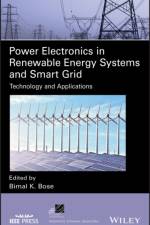
The comprehensive and authoritative guide to power electronics in renewable energy systemsPower electronics plays a significant role in modern industrial automation and high- efficiency energy systems. With contributions from an international group of noted experts, Power Electronics in Renewable Energy Systems and Smart Grid: Technology and Applications offers a comprehensive review of the technology and applications of power electronics in renewable energy systems and smart grids. The authors cover information on a variety of energy systems including wind, solar, ocean, and geothermal energy systems as well as fuel cell systems and bulk energy storage systems. They also examine smart grid elements, modeling, simulation, control, and AI applications.The book's twelve chapters offer an application-oriented and tutorial viewpoint and also contain technology status review. In addition, the book contains illustrative examples of applications and discussions of future perspectives. This important resource:* Includes descriptions of power semiconductor devices, two level and multilevel converters, HVDC systems, FACTS, and more* Offers discussions on various energy systems such as wind, solar, ocean, and geothermal energy systems, and also fuel cell systems and bulk energy storage systems* Explores smart grid elements, modeling, simulation, control, and AI applications* Contains state-of-the-art technologies and future perspectives* Provides the expertise of international authorities in the fieldWritten for graduate students, professors in power electronics, and industry engineers, Power Electronics in Renewable Energy Systems and Smart Grid: Technology and Applications offers an up-to-date guide to technology and applications of a wide-range of power electronics in energy systems and smart grids.
A close examination of current research on abiotic stresses in various plant species The unpredictable environmental stress conditions associated with climate change are significant challenges to global food security, crop productivity, and agricultural sustainability. Rapid population growth and diminishing resources necessitate the development of crops that can adapt to environmental extremities. Although significant advancements have been made in developing plants through improved crop breeding practices and genetic manipulation, further research is necessary to understand how genes and metabolites for stress tolerance are modulated, and how cross-talk and regulators can be tuned to achieve stress tolerance. Molecular Plant Abiotic Stress: Biology and Biotechnology is an extensive investigation of the various forms of abiotic stresses encountered in plants, and susceptibility or tolerance mechanisms found in different plant species. In-depth examination of morphological, anatomical, biochemical, molecular, and gene expression levels enables plant scientists to identify the different pathways and signaling cascades involved in stress response. This timely book: Covers a wide range of abiotic stresses in multiple plant species Provides researchers and scientists with transgenic strategies to overcome stress tolerances in several plant species Compiles the most recent research and up-to-date data on stress tolerance Examines both selective breeding and genetic engineering approaches to improving plant stress tolerances Written and edited by prominent scientists and researchers from across the globe Molecular Plant Abiotic Stress: Biology and Biotechnology is a valuable source of information for students, academics, scientists, researchers, and industry professionals in fields including agriculture, botany, molecular biology, biochemistry and biotechnology, and plant physiology.
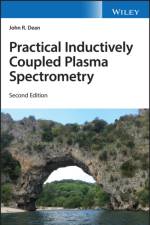
A new edition of this practical approach to sampling, experimentation, and applications in the field of inductively coupled plasma spectrometry The second edition of Practical Inductively Coupled Plasma Spectrometry discusses many of the significant developments in the field which have expanded inductively coupled plasma (ICP) spectrometry from a useful optical emission spectroscopic technique for trace element analysis into a source for both atomic emission spectrometry and mass spectrometry, capable of detecting elements at sub-ppb (ng mL-1) levels with good accuracy and precision. Comprising nine chapters, this new edition has been fully revised and updated in each chapter. It contains information on everything you need to practically know about the different types of instrumentation as well as pre- and post-experimental aspects. Designed to be easily accessible, with a 'start-to-finish' approach, each chapter outlines the key practical aspects of a specific aspect of the topic. The author, a noted expert in the field, details specific applications of the techniques presented, including uses in environmental, food and industrial analysis. This edition: Emphasizes the importance of health and safety; Provides advanced information on sample preparation techniques; Presents an updated chapter on inductively coupled plasma mass spectrometry; Features a new chapter on current and future development in ICP technology and one on practical trouble shooting and routine maintenance. Practical Inductively Coupled Plasma Spectrometry offers a practical guide that can be used for undergraduate and graduate students in the broad discipline of analytical chemistry, which includes biomedical science, environmental science, food science and forensic science, in both distance and open-learning situations. It also provides an excellent reference for those in postgraduate training in these fields.
The first comprehensive textbook on the timely and rapidly developing topic of inorganic porous materialsThis is the first textbook to completely cover a broad range of inorganic porous materials. It introduces the reader to the development of functional porous inorganic materials, from the synthetic zeolites in the 50's, to today's hybrid materials such as metal-organic frameworks (MOFs), covalent organic frameworks (COFs) and related networks. It also provides the necessary background to understand how porous materials are organized, characterized, and applied in adsorption, catalysis, and many other domains. Additionally, the book explains characterization and application from the materials scientist viewpoint, giving the reader a practical approach on the characterization and application of the respective materials.Introduction to Inorganic Porous Materials begins by describing the basic concepts of porosity and the different types of pores, surfaces, and amorphous versus crystalline materials, before introducing readers to nature's porous materials. It then goes on to cover everything from adsorption and catalysis to amorphous materials such as silica to inorganic carbons and Periodic Mesoporous Organosilicas (PMOs). It discusses the synthesis and applications of MOFs and the broad family of COFs. It concludes with a look at future prospects and emerging trends in the field.* The only complete book of its kind to cover the wide variety of inorganic and hybrid porous materials* A comprehensive reference and outstanding tool for any course on inorganic porous materials, heterogeneous catalysis, and adsorption* Gives students and investigators the opportunity to learn about porous materials, how to characterize them, and understand how they can be applied in different fieldsIntroduction to Inorganic Porous Materials is an excellent book for students and professionals of inorganic chemistry and materials science with an interest in porous materials, functional inorganic materials, heterogeneous catalysis and adsorption, and solid state characterization techniques.
Provides a comprehensive and updated account of WDM optical network systemsOptical networking has advanced considerably since 2010. A host of new technologies and applications has brought a significant change in optical networks, migrating it towards an all-optical network. This book places great emphasis on the network concepts, technology, and methodologies that will stand the test of time and also help in understanding and developing advanced optical network systems.The first part of Optical WDM Networks: From Static to Elastic Networks provides a qualitative foundation for what follows--presenting an overview of optical networking, the different network architectures, basic concepts, and a high-level view of the different network structures considered in subsequent chapters. It offers a survey of enabling technologies and the hardware devices in the physical layer, followed by a more detailed picture of the network in the remaining chapters. The next sections give an in-depth study of the three basic network structures: the static broadcast networks, wavelength routed networks, and the electronic/optical logically routed networks, covering the characteristics of the optical networks in the access, metropolitan area, and long-haul reach. It discusses the networking picture; network control and management, impairment management and survivability. The last section of the book covers the upcoming technologies of flex-grid and software defined optical networking.* Provides concise, updated, and comprehensive coverage of WDM optical networks* Features numerous examples and exercise problems for the student to practice* Covers, in detail, important topics, such as, access, local area, metropolitan, wide area all-optical and elastic networks* Includes protocols, design, and analysis along with the control and management of the networks* Offers exclusive chapters on advance topics to cover the present and future technological trends, such as, software defined optical networking and the flexible grid optical networksOptical WDM Networks: From Static to Elastic Networks is an excellent book for under and post graduate students in electrical/communication engineering. It will also be very useful to practicing professionals in communications, networking, and optical systems.
Optimize your dynamic spectrum access approach using the latest applications and techniquesDynamic Spectrum Access Decisions: Local, Distributed, Centralized and Hybrid Designs prepares engineers to build optimum communications systems by describing at the outset what type of spectrum sensing capabilities are needed. Meant for anyone who has a basic understanding of wireless communications and networks and an interest in the physical and MAC layers of communication systems, this book has a tremendous range of civilian and military applications.Dynamic Spectrum Access Decisions provides fulsome discussions of cognitive radios and networks, but also DSA technologies that operate outside the context of cognitive radios. DSA has applications in:* Licensed spectrum bands* Unlicensed spectrum bands* Civilian communications* Military communicationsConsisting of a set of techniques derived from network information theory and game theory, DSA improves the performance of communications networks. This book addresses advanced topics in this area and assumes basic knowledge of wireless communications.
The definitive guide on fund and asset managers worldwideFund Managers: The Complete Guide is an all-encompassing overview of fund and asset managers around the globe. The only comprehensive guide on the subject, this book covers both the fund manager and the market as a whole while providing insights from current and future fund managers and leaders in the technology industry from the UK, EU and US. Focused examination of the fund managers and their investors - the categories of manager, the asset classes they participate in, how they are using technology and their views on the market - complements a wider survey of the market that includes upcoming changes to regulation, taxation and political shifts in the Western world.The asset management industry continues to undergo significant changes that rise from the Global Financial Crisis and its recovery, the recent technology boom and political fluctuations that have altered the way business is conducted in financial markets around the world. Questions concerning China and Asia's rise, Trumpian influence in America and post-Brexit UK-EU relations underscore the contemporary relevance of Fund Managers: The Complete Guide to current and future discourse within the industry. This important volume:* Explains worldwide roles, purposes and operations of asset managers including how local culture influences their strategies* Examines different types of assets and asset-management strategies* Investigates the influence of macroeconomic and political factors such as governance and regulation, international taxation, anti-globalisation and populism* Illustrates the impact of technology and its disruptive products and players* Describes the different types of investor investing in the managers' funds and how they view the industry* Future-gazes over the ten years and beyond for the industryFund Managers: The Complete Guide is the authoritative resource for anyone who requires an overview of the asset management industry and up-to-date insights on current and future trends and practices. The book also complements the author's earlier work Funds: Private Equity, Hedge and All Core Structures.
THE FUTURE OF FORENSIC SCIENCE Offers a diverse, interdisciplinary, and eye-opening view of the future direction of forensic science This one-of-a-kind book is a collection of content from the Past and Current Presidents of the American Academy of Forensic Sciences--providing readers with all of their forensic science experience, knowledge, insight, and wisdom. It envisions where forensic science will be a decade from now and the impact of these emerging advances on the law (along with our place in it), emphasizing theoretical advances, innovative leads from the laboratory, and emerging technologies. Filled with information from some of the greatest forensic minds of their generation, The Future of Forensic Science covers all of the eleven sections that comprise the AAFS. It discusses new directions in forensic anthropology, and looks at the future of such disciplines as criminalistics, forensic engineering science, forensic psychiatry and behavioral science, forensic toxicology, and forensic document examination. It also touches on the current and future state of digital and multimedia sciences. Contains contributions from an eminent group of forensic science experts Presents a valuable repository of forensic science experience, knowledge, insight, and wisdom Offers an insightful interdisciplinary look at the future of forensic science and how it is changing forensic science for the better Timed to coincide with the NIST forensic science initiative and the OSAC process The Future of Forensic Science is a must-have book for practicing forensic science professionals, academics, and advanced undergraduate and graduate students in forensic science. This book is published as part of the AAFS series 'Forensic Science in Focus'.
How to design for optimum maintenance capabilities and minimize the repair timeDesign for Maintainability offers engineers a wide range of tools and techniques for incorporating maintainability into the design process for complex systems. With contributions from noted experts on the topic, the book explains how to design for optimum maintenance capabilities while simultaneously minimizing the time to repair equipment.The book contains a wealth of examples and the most up-to-date maintainability design practices that have proven to result in better system readiness, shorter downtimes, and substantial cost savings over the entire system life cycle, thereby, decreasing the Total Cost of Ownership. Design for Maintainability offers a wealth of design practices not covered in typical engineering books, thus allowing readers to think outside the box when developing maintainability design requirements. The book?s principles and practices can help engineers to dramatically improve their ability to compete in global markets and gain widespread customer satisfaction. This important book:* Offers a complete overview of maintainability engineering as a system engineering discipline* Includes contributions from authors who are recognized leaders in the field* Contains real-life design examples, both good and bad, from various industries* Presents realistic illustrations of good maintainability design principles* Provides discussion of the interrelationships between maintainability with other related disciplines* Explores trending topics in technologiesWritten for design and logistics engineers and managers, Design for Maintainability is a comprehensive resource containing the most reliable and innovative techniques for improving maintainability when designing a system or product.
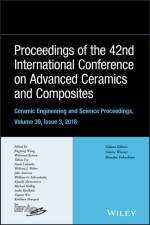
Proceeding of the 42nd International Conference on Advanced Ceramics and Composites, Ceramic Engineering and Science Proceedings Volume 39, Issue 3, 2018 Jingyang Wang, Waltraud Kriven, Tobias Fey, Paolo Colombo, William J. Weber, Jake Amoroso, William G. Fahrenholtz, Kiyoshi Shimamura, Michael Halbig, Soshu Kirihara, Yiquan Wu, and Kathleen Shurgart, Editors Valerie Wiesner and Manabu Fukushima, Volume Editors This proceedings contains a collection of 22 papers from The American Ceramic Society's 42nd International Conference on Advanced Ceramics and Composites, held in Daytona Beach, Florida, January 21-26, 2018. This issue includes papers presented in the following symposia: - Advancing Frontiers of Ceramics for Sustainable Societal Development - International Symposium in Honor of Dr. Mrityunjay Singh - Symposium 9: Porous Ceramics: Novel Developments and Applications - Symposium 10: Virtual Materials (Computational) Design and Ceramic Genome - Symposium 12 Materials for Extreme Environments: Ultrahigh Temperature Ceramics (UHTCs) and Nano-laminated Ternary Carbides and Nitrides (MAX Phases) - Symposium 13 Advanced Ceramics and Composites for Nuclear Fission and Fusion Energy - Symposium 14 Crystalline Materials for Electrical, Optical and Medical Applications - Symposium 15 Additive Manufacturing and 3D Printing Technologies - Symposium 16: Geopolymers, Inorganic Polymers and Sustainable Materials - Focused Session 1: Bio-inspired Processing of Advanced Materials - 7th Global Young Investigator Forum
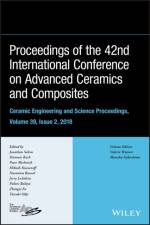
Proceeding of the 42nd International Conference on Advanced Ceramics and Composites, Ceramic Engineering and Science Proceedings Volume 39, Issue 2, 2018 Jonathan Salem, Dietmar Koch, Peter Mechnich, Mihails Kusnezoff, Narottam Bansal, Jerry LaSalvia, Palani Balaya, Zhengyi Fu, and Tatsuki Ohji, Editors Valerie Wiesner and Manabu Fukushima, Volume Editors This proceedings contains a collection of 25 papers from The American Ceramic Society's 41st International Conference on Advanced Ceramics and Composites, held in Daytona Beach, Florida, January 21-26, 2018. This issue includes papers presented in the following symposia: - Symposium 1: Mechanical Behavior and Performance of Ceramics and Composites - Symposium 2: Advanced Ceramic Coatings for Structural, Environmental, and Functional Applications - Symposium 3: 15th International Symposium on Solid Oxide Fuel Cells (SOFC) - Symposium 4: Armor Ceramics: Challenges and New Developments - Symposium 6: Advanced Materials and Technologies for Direct Thermal Energy Conversion and Rechargeable Energy Storage - Symposium 8: 12th International Symposium on Advanced Processing & Manufacturing
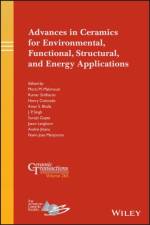
This volume contains 20 manuscripts presented during the Materials Science & Technology 2017 Conference (MS&T'17), held October 8-12, 2017 at the David L. Lawrence Convention Center, Pittsburgh, PA. Papers from the following symposia are included in this volume: 9th International Symposium on Green and Sustainable Technologies for Materials Manufacturing and Processing Advances in Dielectric Materials and Electronic Devices Construction and Building Materials for a Better Environment Innovative Processing and Synthesis of Ceramics, Glasses and Composites Materials Issues in Nuclear Waste Management in the 21st Century Materials Development for Nuclear Applications and Extreme Environments Materials for Nuclear Energy Applications Nanotechnology for Energy, Healthcare and Industry Processing and Performance of Materials Using Microwaves, Electric and Magnetic Fields, Ultrasound, Lasers, and Mechanical Work - Rustum Roy Symposium These symposia provided a forum for scientists, engineers, and technologists to discuss and exchange state-of-the-art ideas, information, and technology on advanced methods and approaches for processing, synthesis, characterization, and applications of ceramics, glasses, and composites. Each manuscript was peer-reviewed using The American Ceramic Society's review process. The editors wish to extend their gratitude and appreciation to their symposium co-organizers, to all of the authors for their valuable submissions, to all the participants and session chairs for their time and effort, and to all the reviewers for their comments and suggestions. We hope that this volume will serve as a useful reference for the professionals working in the field of materials science.
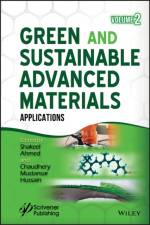
This book is industry-oriented and shows current challenges for scaling up green and sustainable advanced materials design and manufacturing technology. Green and sustainable advanced materials are the newly synthesized material having superior and special properties. These fulfil today's growing demand for equipment, machines and devices with better quality for an extensive range of applications in various sectors such as paper, biomedical, food, construction, textile, and many more. The objective of this two-volume set is to provide an overview of new developments and state-of-the-art for a variety of green and sustainable advanced materials. It incorporates in-depth technical information without compromising the delicate link between factual data and fundamental concepts or between theory and practice. In the second volume, the first chapter presents a critical review of green sustainability, nanotechnology and advanced materials and provides a vision for the future. Valorization of green and sustainable advanced materials from a biomedical perspective and their potential applications are detailed in the next chapters. Applications of green and sustainable advanced materials in textile technology and environmental protection are described in a very comprehensive manner in the next batch of chapters. Synthesized nanostructures alloys for optoelectronic, biochar-supercapacitors, biomedical from synthetic and natural green and sustainable advanced materials are then covered. Efficiency of transition metals at the nanoscale as heterogeneous catalysts and emerging applications of green and sustainable advanced materials in agriculture and food industry take center stage in final two of chapters. Audience The 2-volume set will be of significant interest to materials scientists, chemists, pharmacists, biologists, biotechnologists and chemical engineers who are involved in the future frontiers of advanced materials, polymer and ceramic sciences & technology. The books will also appeal to advanced undergraduate and graduate students who will find a useful source of knowledge for their studies
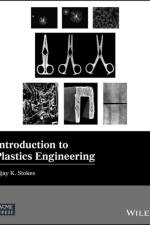
The authoritative introduction to all aspects of plastics engineering -- offering both academic and industry perspectives in one complete volume.Introduction to Plastics Engineering provides a self-contained introduction to plastics engineering. A unique synergistic approach explores all aspects of material use -- concepts, mechanics, materials, part design, part fabrication, and assembly -- required for converting plastic materials, mainly in the form of small pellets, into useful products. Thermoplastics, thermosets, elastomers, and advanced composites, the four disparate application areas of polymers normally treated as separate subjects, are covered together.Divided into five parts -- Concepts, Mechanics, Materials, Part Processing and Assembly, and Material Systems -- this inclusive volume enables readers to gain a well-rounded, foundational knowledge of plastics engineering. Chapters cover topics including the structure of polymers, how concepts from polymer physics explain the macro behavior of plastics, evolving concepts for plastics use, simple mechanics principles and their role in plastics engineering, models for the behavior of solids and fluids, and the mechanisms underlying the stiffening of plastics by embedded fibers. Drawing from his over fifty years in both academia and industry, Author Vijay Stokes uses the synergy between fundamentals and applications to provide a more meaningful introduction to plastics.* Examines every facet of plastics engineering from materials and fabrication methods to advanced composites* Provides accurate, up-to-date information for students and engineers both new to plastics and highly experienced with them* Offers a practical guide to large number of materials and their applications* Addresses current issues for mechanical design, part performance, and part fabricationIntroduction to Plastics Engineering is an ideal text for practicing engineers, researchers, and students in mechanical and plastics engineering and related industries.
Abonner på vårt nyhetsbrev og få rabatter og inspirasjon til din neste leseopplevelse.
Ved å abonnere godtar du vår personvernerklæring.