














Gjør som tusenvis av andre bokelskere
Abonner på vårt nyhetsbrev og få rabatter og inspirasjon til din neste leseopplevelse.
Ved å abonnere godtar du vår personvernerklæring.Du kan når som helst melde deg av våre nyhetsbrev.

A comprehensive introduction to the multidisciplinary applications of mathematical methods, revised and updatedThe second edition of Essentials of Mathematical Methods in Science and Engineering offers an introduction to the key mathematical concepts of advanced calculus, differential equations, complex analysis, and introductory mathematical physics for students in engineering and physics research. The book's approachable style is designed in a modular format with each chapter covering a subject thoroughly and thus can be read independently.This updated second edition includes two new and extensive chapters that cover practical linear algebra and applications of linear algebra as well as a computer file that includes Matlab codes. To enhance understanding of the material presented, the text contains a collection of exercises at the end of each chapter. The author offers a coherent treatment of the topics with a style that makes the essential mathematical skills easily accessible to a multidisciplinary audience. This important text:* Includes derivations with sufficient detail so that the reader can follow them without searching for results in other parts of the book* Puts the emphasis on the analytic techniques* Contains two new chapters that explore linear algebra and its applications* Includes Matlab codes that the readers can use to practice with the methods introduced in the bookWritten for students in science and engineering, this new edition of Essentials of Mathematical Methods in Science and Engineering maintains all the successful features of the first edition and includes new information.
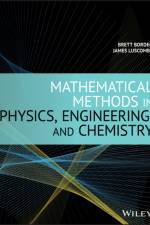
A CONCISE AND UP-TO-DATE INTRODUCTION TO MATHEMATICAL METHODS FOR STUDENTS IN THE PHYSICAL SCIENCES Mathematical Methods in Physics, Engineering, and Chemistry offers an introduction to the most important methods of theoretical physics. Written by two physics professors with years of experience, the text puts the focus on the essential math topics that the majority of physical science students require in the course of their studies. This concise text also contains worked examples that clearly illustrate the mathematical concepts presented and shows how they apply to physical problems. This targeted text covers a range of topics including linear algebra, partial differential equations, power series, Sturm-Liouville theory, Fourier series, special functions, complex analysis, the Green's function method, integral equations, and tensor analysis. This important text: Provides a streamlined approach to the subject by putting the focus on the mathematical topics that physical science students really need Offers a text that is different from the often-found definition-theorem-proof scheme Includes more than 150 worked examples that help with an understanding of the problems presented Presents a guide with more than 200 exercises with different degrees of difficulty Written for advanced undergraduate and graduate students of physics, materials science, chemistry, and engineering, Mathematical Methods in Physics, Engineering, and Chemistry includes the essential methods of theoretical physics. The text is streamlined to provide only the most important mathematical concepts that apply to physical problems.
This is the fourth edition of a book that has been widely acknowledged as the higher-level ecology text of choice throughout the world for almost twenty years. The latest revision has been the most extensive so far.
Your Guide to Creating Equitable SchoolsIf we hope to interrupt educational inequities and create schools in which every child thrives, we must open our hearts to purposeful conversation and hone our skills to make those conversations effective. With characteristic honesty and wisdom, Elena Aguilar inspires us to commit to transforming our classrooms, lays bare the hidden obstacles to equity, and helps us see how to overcome these obstacles, one conversation at a time.Coaching for Equity is packed with the resources necessary to implement Transformational Coaching in any organization. In addition to an updated coaching framework and corresponding rubrics, a comprehensive set of coaching tools puts success in every coach's hands. Extensive personal narratives demonstrate what coaching for equity looks like and help us see how we can make every conversation count towards building a more just and equitable world.Coaching for Equity covers critical topics in the larger conversation about racial equity, and helps readers develop the knowledge, dispositions and skills to be able to:* Talk productively about race,* Build trust to support vulnerability,* Unpack mental models and change someone's mind,* Observe classrooms and collect data to support equitable outcomes,* Inspire others and deepen commitment,* Evaluate and celebrate growth.Perfect for teachers, teacher leaders, coaches and administrators, Coaching for Equity offers extensive strategies for talking about race, power, and systems of oppression. In framing the rationale for transformational conversations, Coaching for Equity gives us the context we need to enter into this work. In laying out the strategies, tools and models for critical conversations, it gives us the way forward.Comprehensive, concrete, and deeply human, Coaching for Equity is the guide for those who choose to accept responsibility for interrupting inequities in schools. It is for all educators who know there is a better way.
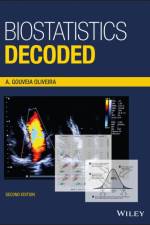
Biostatistics Decoded presents statistical theory and biostatistical methods and applications. This book looks at sampling methods, study design and statistical methods and relates statistical methods with the corresponding study designs.
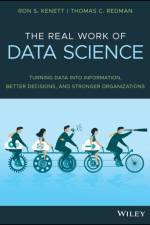
The essential guide for data scientists and for leaders who must get more from their data science teamsThe Economist boldly claims that data are now "the world's most valuable resource." But, as Kenett and Redman so richly describe, unlocking that value requires far more than technical excellence. The Real Work of Data Science explores understanding the problems, dealing with quality issues, building trust with decision makers, putting data science teams in the right organizational spots, and helping companies become data-driven. This is the work that spells the difference between a good data scientist and a great one, between a team that makes marginal contributions and one that drives the business, between a company that gains some value from its data and one in which data truly is "the most valuable resource.""These two authors are world-class experts on analytics, data management, and data quality; they've forgotten more about these topics than most of us will ever know. Their book is pragmatic, understandable, and focused on what really counts. If you want to do data science in any capacity, you need to read it."--Thomas H. Davenport, Distinguished Professor, Babson College and Fellow, MIT Initiative on the Digital Economy"I like your book. The chapters address problems that have faced statisticians for generations, updated to reflect today's issues, such as computational Big Data."--Sir David Cox, Warden of Nuffield College and Professor of Statistics, Oxford University"Data science is critical for competitiveness, for good government, for correct decisions. But what is data science? Kenett and Redman give, by far, the best introduction to the subject I have seen anywhere. They address the critical questions of formulating the right problem, collecting the right data, doing the right analyses, making the right decisions, and measuring the actual impact of the decisions. This book should become required reading in statistics and computer science departments, business schools, analytics institutes and, most importantly, by all business managers."--A. Blanton Godfrey, Joseph D. Moore Distinguished University Professor, Wilson College of Textiles, North Carolina State University
Contents Contributors ix 1. Mark E. Sorrells: Plant Breeder, Geneticist, Innovator, Mentor 1 2. Onion Breeding 39 3. Alternative Field Layouts of Experimental Designs for Plant Breeding 87 4. Advances in DNA Markers and Breeding for Warm and Cool Season Turfgrasses 119 5. Sugar Beet Breeding 167 6. The Importance of Cosmetic Stay Green in Specialty Crops 219 7. Quinoa Breeding and Genomics 257 8. Experimental and Bioinformatics Advances in Crop Genomics 321
Advanced, recent developments in biochips and medical imagingBiochips and Medical Imaging is designed as a professional resource, covering recent biochip and medical imaging developments. Within the text, the authors encourage uniting aspects of engineering, biology, and medicine to facilitate advancements in the field of molecular diagnostics and imaging.Biochips are microchips for efficiently screening biological analytes. This book aims at presenting information on the state-of-the-art and emerging biosensors, biochips, and imaging devices of the body's systems, including the endocrine, circulatory, and immune systems.Medical diagnostics includes biochips (in-vitro diagnostics) and medical and molecular imaging (in-vivo imaging). Biochips and Medical Imaging explores the role of in-vitro and in-vivo diagnostics. It enables an instructor to share in-depth examples of the use of biochips in diagnosing cancer and cardiovascular diseases.* Provides real-life knowledge on biochips and medical imaging, written by leading researchers* Serves as a resource for professionals working in the biochip or imaging fields* Features an accessible approach for anyone interested in biochips and their applicationsReaders of Biochips and Medical Imaging can expand their knowledge of medical technology, even if they have no biological knowledge and a limited math background. With its focus on important developments, this book is sure to also capture the interest of bioengineering and biomaterials scientists, structural biologists, electrical engineers, and nanotechnologists.
Explains the mathematics, theory, and methods of Big Data as applied to finance and investingData science has fundamentally changed Wall Street--applied mathematics and software code are increasingly driving finance and investment-decision tools. Big Data Science in Finance examines the mathematics, theory, and practical use of the revolutionary techniques that are transforming the industry. Designed for mathematically-advanced students and discerning financial practitioners alike, this energizing book presents new, cutting-edge content based on world-class research taught in the leading Financial Mathematics and Engineering programs in the world. Marco Avellaneda, a leader in quantitative finance, and quantitative methodology author Irene Aldridge help readers harness the power of Big Data.Comprehensive in scope, this book offers in-depth instruction on how to separate signal from noise, how to deal with missing data values, and how to utilize Big Data techniques in decision-making. Key topics include data clustering, data storage optimization, Big Data dynamics, Monte Carlo methods and their applications in Big Data analysis, and more. This valuable book:* Provides a complete account of Big Data that includes proofs, step-by-step applications, and code samples* Explains the difference between Principal Component Analysis (PCA) and Singular Value Decomposition (SVD)* Covers vital topics in the field in a clear, straightforward manner* Compares, contrasts, and discusses Big Data and Small Data* Includes Cornell University-tested educational materials such as lesson plans, end-of-chapter questions, and downloadable lecture slidesBig Data Science in Finance: Mathematics and Applications is an important, up-to-date resource for students in economics, econometrics, finance, applied mathematics, industrial engineering, and business courses, and for investment managers, quantitative traders, risk and portfolio managers, and other financial practitioners.
This book provides the latest research & developments and future trends in photoenergy and thin film materials--two important areas that have the potential to spearhead the future of the industry. Photoenergy materials are expected to be a next generation class of materials to provide secure, safe, sustainable and affordable energy. Photoenergy devices are known to convert the sunlight into electricity. These types of devices are simple in design with a major advantage as they are stand-alone systems able to provide megawatts of power. They have been applied as a power source for solar home systems, remote buildings, water pumping, megawatt scale power plants, satellites, communications, and space vehicles. With such a list of enormous applications, the demand for photoenergy devices is growing every year. On the other hand, thin films coating, which can be defined as the barriers of surface science, the fields of materials science and applied physics are progressing as a unified discipline of scientific industry. A thin film can be termed as a very fine, or thin layer of material coated on a particular surface, that can be in the range of a nanometer in thickness to several micrometers in size. Thin films are applied in numerous areas ranging from protection purposes to electronic semiconductor devices. The 16 chapters in this volume, all written by subject matter experts, demonstrate the claim that both photoenergy and thin film materials have the potential to be the future of industry. Audience The book will appeal to material scientists, chemists, physicists and engineers working on applications in energy systems, surface science, thin films and coatings.
This book covers the design, implementation and automatic tuning of PID control systems with operational constraints. It provides students, researchers, and industrial practitioners with everything they need to know about PID control systems--from classical tuning rules and model-based design to constraints, automatic tuning, cascade control, and gain scheduled control. PID Control System Design and Automatic Tuning using MATLAB/Simulink introduces PID control system structures, sensitivity analysis, PID control design, implementation with constraints, disturbance observer-based PID control, gain scheduled PID control systems, cascade PID control systems, PID control design for complex systems, and automatic tuning and applications of PID control to unmanned aerial vehicles. It also presents resonant control systems relevant to many engineering applications. The implementation of PID control and resonant control highlights how to deal with operational constraints. Provides unique coverage of PID control of unmanned aerial vehicles (UAVs), including mathematical models of multi-rotor UAVs, control strategies of UAVs, and automatic tuning of PID controllers for UAVs Provides detailed descriptions of automatic tuning of PID control systems, including relay feedback control systems, frequency response estimation, Monte-Carlo simulation studies, PID controller design using frequency domain information, and MATLAB/Simulink simulation and implementation programs for automatic tuning Includes 15 MATLAB/Simulink tutorials, in a step-by-step manner, to illustrate the design, simulation, implementation and automatic tuning of PID control systems Assists lecturers, teaching assistants, students, and other readers to learn PID control with constraints and apply the control theory to various areas Accompanying website to include lecture slides and MATLAB/Simulink programs PID Control System Design and Automatic Tuning using MATLAB/Simulink is intended for undergraduate electrical, chemical, mechanical, and aerospace engineering students, and will greatly benefit postgraduate students, researchers, and industrial personnel who work with control systems and their applications.
ENABLES READERS TO UNDERSTAND THE METHODS OF EXPERIMENTAL DESIGN TO SUCCESSFULLY CONDUCT LIFE TESTING TO IMPROVE PRODUCT RELIABILITYThis book illustrates how experimental design and life testing can be used to understand product reliability in order to enable reliability improvements. The book is divided into four sections. The first section focuses on statistical distributions and methods for modeling reliability data. The second section provides an overview of design of experiments including response surface methodology and optimal designs. The third section describes regression models for reliability analysis focused on lifetime data. This section provides the methods for how data collected in a designed experiment can be properly analyzed. The final section of the book pulls together all of the prior sections with customized experiments that are uniquely suited for reliability testing. Throughout the text, there is a focus on reliability applications and methods. It addresses both optimal and robust design with censored data.To aid in reader comprehension, examples and case studies are included throughout the text to illustrate the key factors in designing experiments and emphasize how experiments involving life testing are inherently different. The book provides numerous state-of-the-art exercises and solutions to help readers better understand the real-world applications of experimental design and reliability. The authors utilize R and JMP(r) software throughout as appropriate, and a supplemental website contains the related data sets.Written by internationally known experts in the fields of experimental design methodology and reliability data analysis, sample topics covered in the book include:* An introduction to reliability, lifetime distributions, censoring, and inference for parameter of lifetime distributions* Design of experiments, optimal design, and robust design* Lifetime regression, parametric regression models, and the Cox Proportional Hazard Model* Design strategies for reliability achievement* Accelerated testing, models for acceleration, and design of experiments for accelerated testingThe text features an accessible approach to reliability for readers with various levels of technical expertise. This book is a key reference for statistical researchers, reliability engineers, quality engineers, and professionals in applied statistics and engineering. It is a comprehensive textbook for upper-undergraduate and graduate-level courses in statistics and engineering.
A BRAND NEW, FULLY UPDATED EDITION OF A POPULAR CLASSIC ON MATRIX DIFFERENTIAL CALCULUS WITH APPLICATIONS IN STATISTICS AND ECONOMETRICS This exhaustive, self-contained book on matrix theory and matrix differential calculus provides a treatment of matrix calculus based on differentials and shows how easy it is to use this theory once you have mastered the technique. Jan Magnus, who, along with the late Heinz Neudecker, pioneered the theory, develops it further in this new edition and provides many examples along the way to support it. Matrix calculus has become an essential tool for quantitative methods in a large number of applications, ranging from social and behavioral sciences to econometrics. It is still relevant and used today in a wide range of subjects such as the biosciences and psychology. Matrix Differential Calculus with Applications in Statistics and Econometrics, Third Edition contains all of the essentials of multivariable calculus with an emphasis on the use of differentials. It starts by presenting a concise, yet thorough overview of matrix algebra, then goes on to develop the theory of differentials. The rest of the text combines the theory and application of matrix differential calculus, providing the practitioner and researcher with both a quick review and a detailed reference. Fulfills the need for an updated and unified treatment of matrix differential calculus Contains many new examples and exercises based on questions asked of the author over the years Covers new developments in field and features new applications Written by a leading expert and pioneer of the theory Part of the Wiley Series in Probability and Statistics Matrix Differential Calculus With Applications in Statistics and Econometrics, Third Edition is an ideal text for graduate students and academics studying the subject, as well as for postgraduates and specialists working in biosciences and psychology.
The definitive leadership guide on safe practices The release of chemicals and other hazardous materials pose significant, potentially catastrophic threats worldwide. An alarming number of such events, all of which are preventable, occur too often. Reducing the frequency of serious incidents is a fundamental responsibility of leadership at all levels, from frontline managers and supervisors to C-suite executives and the board of directors as well. Process Safety Leadership from the Boardroom to the Frontline is a practical, authoritative guide that clearly demonstrates how to create a viable culture of safety within an organization, implement and maintain disciplined management systems, and address the risks of process safety deficiencies. The most important factor in any management system is leadership. For chemical process safety management, effective and informed leadership provides direction, reinforces commitment, and drives responsibility. Written by experts from the Center for Chemical Process Safety, the world's largest provider of engineering curriculum materials for process safety, this pragmatic book contains the critical information and guidelines required to lead and manage process safety. Detailed yet accessible chapters examine topics such as strengthening management system accountability, driving operation within constraints, ensuring corporate memory, verifying execution, and more. Designed to be frequently used, shared, and discussed by leadership teams throughout an organization, this indispensable resource: Demonstrates the many ways process safety benefits an organization, based on benchmarking and broad industrial experience Develops skills and expands knowledge needed to drive consistent, reliable process safety performance Describes essential behaviors and actions for leaders to drive excellence in process safety cultures and disciplined management systems Helps establish risk criteria and safeguards for companies Presents new and previously unpublished experiences, approaches, and thinking Written for executives, plant leaders, functional managers, frontline supervisors and also individual contributors, Process Safety Leadership from the Boardroom to the Frontline provides a much-needed guide for instituting safe practices within a company.
Kittens For Dummies (9781119609117) was previously published as Kittens For Dummies (9780764541506). While this version features a new Dummies cover and design, the content is the same as the prior release and should not be considered a new or updated product.Who can resist the charm of a kitten, those energetic, curious creatures whose cuteness factors fall somewhere between adorable and irresistible? But as animal shelters across the country can attest, those enchanting balls of fluff quickly mature into full-grown cats with their own requirements for healthy, happy lives.Kittens For Dummies is your source for understanding what you can expect if you decide to welcome a high energy and high maintenance four-legged friend into your home. You'll not only figure out if you're ready to fit a kitty into your lifestyle, but also how to go about* Adopting or buying the right kitten for you* Making sure your home is kitten-proof* Introducing your new pet to children and other pets* Preventing and treating feline illnesses* Dealing with behavioral issues* Rescuing an orphaned kittenBooks abound about kitten care. Unlike many of them--those that seem to require a veterinary medicine degree to figure out--Kittens For Dummies explains everything in plain, everyday English. And like the subject itself, this handy reference is full of fun. In entertaining, informative language, the friendly guide gives you the real deal on* Doling out plenty of love, attention, and patience* Deciding whether kitty will be allowed to explore the outdoors* Making your kitten comfy with the right supplies and accessories* Knowing how often to ring the dinner bell* Recognizing emergencies that call for quick trips to the veterinarian* Locating qualified caretakers when you travel* Nurturing kitty into adulthoodBefore you take the giant leap into kitten ownership--a wonderful and sometimes chaotic world--check out the expert advice in a resource that's bound to become as constant a companion as your purr-fect pet.
A practical and accessible guide that demystifies ForEx risk for managers in all areas of businessVirtually any organisation active in the global economy is impacted by fluctuations in foreign exchange (FX or ForEx) markets. Managers need to understand this increasingly complex issue and measure their firm's exposure to risk. Corporate Foreign Exchange Risk Management is an in-depth yet accessible guide on effective ForEx exposure management. Designed for professionals responsible for managing a profit & loss or balance sheet influenced by ForEx fluctuations, it enables risk managers to navigate the interconnected worlds of financial management and economics.This innovative guide integrates academic discussion of the economics of risk management decisions and pragmatic advice for various situations in which performance measures affected by accounting standards are paid considerable attention. Readers are provided with the tools and knowledge required to handle a broad range of issues related to ForEx risk management. Clear, non-technical chapters demystify concepts that often appear complicated and confusing to managers. Written by globally-recognised experts in corporate finance, risk management and international business, this book:* Employs a reader-friendly narrative style to explain complex concepts* Provides a clear, actionable risk management strategy which can be used in a variety of businesses* Places all concepts in relatable, real-world contexts* Explains important academic research to practitioners in plain English* Includes effective pedagogical tools and explanations, straightforward examples and end-of-chapter summaries which highlight key pointsCorporate Foreign Exchange Risk Management is a must-read for any manager who deals with corporate exposure to ForEx risk, as well as analysts wishing to better understand the relation between corporate performance and ForEx fluctuations and students of corporate risk management.
High Performance Control of AC Drives with Matlab(r)/SimulinkExplore this indispensable update to a popular graduate text on electric drive techniques and the latest converters used in industryThe Second Edition of High Performance Control of AC Drives with Matlab(r)/Simulink delivers an updated and thorough overview of topics central to the understanding of AC motor drive systems. The book includes new material on medium voltage drives, covering state-of-the-art technologies and challenges in the industrial drive system, as well as their components, and control, current source inverter-based drives, PWM techniques for multilevel inverters, and low switching frequency modulation for voltage source inverters.This book covers three-phase and multiphase (more than three-phase) motor drives including their control and practical problems faced in the field (e.g., adding LC filters in the output of a feeding converter), are considered.The new edition contains links to Matlab(r)/Simulink models and PowerPoint slides ideal for teaching and understanding the material contained within the book. Readers will also benefit from the inclusion of:* A thorough introduction to high performance drives, including the challenges and requirements for electric drives and medium voltage industrial applications* An exploration of mathematical and simulation models of AC machines, including DC motors and squirrel cage induction motors* A treatment of pulse width modulation of power electronic DC-AC converter, including the classification of PWM schemes for voltage source and current source inverters* Examinations of harmonic injection PWM and field-oriented control of AC machines* Voltage source and current source inverter-fed drives and their control* Modelling and control of multiphase motor drive system* Supported with a companion website hosting online resources.Perfect for senior undergraduate, MSc and PhD students in power electronics and electric drives, High Performance Control of AC Drives with Matlab(r)/Simulink will also earn a place in the libraries of researchers working in the field of AC motor drives and power electronics engineers in industry.
Kidwell's Financial Institutions, 12th Edition presents a balanced introduction to the operation, mechanics, and structure of the U.S. financial system, emphasizing its institutions, markets, and financial instruments. The text discusses complex topics in a clear and concise fashion with an emphasis on "Real World" data, and people and event boxes, as well as personal finance examples to help retain topical interest.
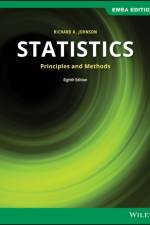
Statistics: Principles and Methods, 8th Edition provides students and business professionals with a comprehensive introduction to statistics concepts, terminology, and methods with a wide array of practical applications. Real-world data provides an easily relatable frame of reference, while numerous examples reinforce key ideas and demonstrate critical concepts to help ease student comprehension. Designed for those seeking a highly practical introduction to statistical measurement, reasoning, and analysis, this book requires no specific mathematical background and leaves derivations behind in favor of logic, reasoning, and modern statistics software. Concepts are introduced first in a real-life setting to illustrate immediate relevancy, and are subsequently expanded to relate underlying mechanisms, limitations, and further applications. An emphasis on the relationship between validity and assumptions underscores the importance of critical thinking and the use of appropriate models while instilling thoughtful habits that lead to accuracy in interpretation. Going beyond the typical introductory text to keep the focus on application, this book gives students a deeper understanding of statistics as it is used every day across disciplines and industries.
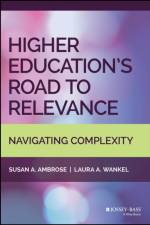
Explores the current context, role, and challenges of post-secondary education and presents options for promising pathways forward.The post-secondary educational system has undergone dramatic changes and experienced immense stress in the past two decades. Once regarded as the logical next step toward career opportunities and financial security, higher education is a subject of growing uncertainty for millions of people across the United States. It is more common than ever to question the return on investment, skyrocketing cost, and student debt burden of going to college. Prospective students, and many employers, increasingly view attending institutions of higher learning as inadequate preparation for entering the 21st century workforce. High-profile scandals--financial impropriety, sexual abuse, restrictions of free speech, among others--have further eroded public trust. In response to these and other challenges, leading voices are demanding strengthened accountability and measurable change.Higher Education's Road to Relevance illustrates why change is needed in post-secondary education and offers practical solutions to pressing concerns. The authors, internationally recognized experts in college-level teaching and learning innovation, draw heavily from contemporary research to provide an integrative approach for post-secondary faculty, staff, and administrators of all levels. This timely book helps readers identify the need for leadership in developing new networks and ecosystems of learning and workforce development. This valuable book will help readers:* Understand the forces driving change in higher education* Develop multiple pathways to create and credential self-directed learners* Promote access to flexible, cost-effective, and relevant learning* Adapt structures and pedagogies to address issues and overcome challenges* Use an inclusive approach that extends to employers, K-12 educators, post-secondary educators, and policy-makers, among othersHigher Education's Road to Relevance is a much-needed resource for college and university administrators, academic researchers, instructors and other faculty, and staff who support and interact with students.
Covers experiment planning, execution, analysis, and reportingThis single-source resource guides readers in planning and conducting credible experiments for engineering, science, industrial processes, agriculture, and business. The text takes experimenters all the way through conducting a high-impact experiment, from initial conception, through execution of the experiment, to a defensible final report. It prepares the reader to anticipate the choices faced during each stage.Filled with real-world examples from engineering science and industry, Planning and Executing Credible Experiments: A Guidebook for Engineering, Science, Industrial Processes, Agriculture, and Business offers chapters that challenge experimenters at each stage of planning and execution and emphasizes uncertainty analysis as a design tool in addition to its role for reporting results. Tested over decades at Stanford University and internationally, the text employs two powerful, free, open-source software tools: GOSSET to optimize experiment design, and R for statistical computing and graphics. A website accompanies the text, providing additional resources and software downloads.* A comprehensive guide to experiment planning, execution, and analysis* Leads from initial conception, through the experiment's launch, to final report* Prepares the reader to anticipate the choices faced throughout an experiment* Hones the motivating question* Employs principles and techniques from Design of Experiments (DoE)* Selects experiment designs to obtain the most information from fewer experimental runs* Offers chapters that propose questions that an experimenter will need to ask and answer during each stage of planning and execution* Demonstrates how uncertainty analysis guides and strengthens each stage* Includes examples from real-life industrial experiments* Accompanied by a website hosting open-source softwarePlanning and Executing Credible Experiments is an excellent resource for graduates and senior undergraduates--as well as professionals--across a wide variety of engineering disciplines.
Correctly understanding and using medical statistics is a key skill for all medical students and health professionals.In an informal and friendly style, Medical Statistics from Scratch provides a practical foundation for everyone whose first interest is probably not medical statistics. Keeping the level of mathematics to a minimum, it clearly illustrates statistical concepts and practice with numerous real-world examples and cases drawn from current medical literature.Medical Statistics from Scratch is an ideal learning partner for all medical students and health professionals needing an accessible introduction, or a friendly refresher, to the fundamentals of medical statistics.
Design of Unmanned Aerial Systems Provides a comprehensive introduction to the design and analysis of unmanned aircraft systems with a systems perspective Written for students and engineers who are new to the field of unmanned aerial vehicle design, this book teaches the many UAV design techniques being used today and demonstrates how to apply aeronautical science concepts to their design. Design of Unmanned Aerial Systems covers the design of UAVs in three sections--vehicle design, autopilot design, and ground systems design--in a way that allows readers to fully comprehend the science behind the subject so that they can then demonstrate creativity in the application of these concepts on their own. It teaches students and engineers all about: UAV classifications, design groups, design requirements, mission planning, conceptual design, detail design, and design procedures. It provides them with in-depth knowledge of ground stations, power systems, propulsion systems, automatic flight control systems, guidance systems, navigation systems, and launch and recovery systems. Students will also learn about payloads, manufacturing considerations, design challenges, flight software, microcontroller, and design examples. In addition, the book places major emphasis on the automatic flight control systems and autopilots. Provides design steps and procedures for each major component Presents several fully solved, step-by-step examples at component level Includes numerous UAV figures/images to emphasize the application of the concepts Describes real stories that stress the significance of safety in UAV design Offers various UAV configurations, geometries, and weight data to demonstrate the real-world applications and examples Covers a variety of design techniques/processes such that the designer has freedom and flexibility to satisfy the design requirements in several ways Features many end-of-chapter problems for readers to practice Design of Unmanned Aerial Systems is an excellent text for courses in the design of unmanned aerial vehicles at both the upper division undergraduate and beginning graduate levels.
Extensive revision of the best-selling text on satellite communications -- includes new chapters on cubesats, NGSO satellite systems, and Internet access by satelliteThere have been many changes in the thirty three years since the first edition of Satellite Communications was published. There has been a complete transition from analog to digital communication systems, withanalog techniques replaced by digital modulation and digital signal processing. While distribution of television programming remains the largest sector of commercial satellite communications, low earth orbit constellations of satellites for Internet access are set to challenge that dominance.In the third edition, chapters one through three cover topics that are specific to satellites, including orbits, launchers, and spacecraft. Chapters four through seven cover the principles of digital communication systems, radio frequency communications, digital modulation and multiple access techniques, and propagation in the earth's atmosphere, topics that are common to all radio communication systems. Chapters eight through twelve cover applications that include non-geostationary satellite systems, low throughput systems, direct broadcast satellite television, Internet access by satellite, and global navigation satellite systems. The chapter on Internet access by satellite is new to the third edition, and each of the chapters has been extensively revised to include the many changes in the field since the publication of the second edition in 2003. Two appendices have been added that cover digital transmission of analog signals, and antennas.An invaluable resource for students and professionals alike, this book:* Focuses on the fundamental theory of satellite communications* Explains the underlying principles and essential mathematics required to understand the physics and engineering of satellite communications* Discusses the expansion of satellite communication systems in areas such as direct-broadcast satellite TV, GPS, and internet access* Introduces the rapidly advancing field of small satellites, referred to as SmallSats or CubeSats* Provides relevant practice problems based on real-world satellite systemsSatellite Communications is required reading for undergraduate and postgraduate students in satellite communications courses and an authoritative reference for engineers working in communications, systems and networks, and satellite operations and management.
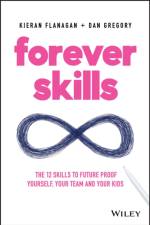
What skills will matter most for work, business and life in the future? Where should you focus your energy and effort when the world is changing at an extraordinary rate? How can you future proof yourself, your organisation and your kids? In this ground-breaking book Kieran Flanagan and Dan Gregory have interviewed hundreds of successful business people, educators, futurists, economists and historians to uncover the key skills that will always be critical to success in business and in life. Where most futurists increase your sense of panic and anxiety with dystopian images of the not-too-distant future characterised by Artificial Intelligence (AI) taking our jobs, algorithms hacking our most private moments and Austrian-accented cyborgs raising our children, Kieran and Dan remind us that we need to look beyond the things changing around us and focus on the things that won't change within us. These 12 FOREVER SKILLS are designed to set you up for whatever the future may throw at you plus help you get more success in your work and life, today.
Perform genome analysis and sequencing of data with Amazon Web ServicesGenomics in the AWS Cloud: Analyzing Genetic Code Using Amazon Web Services enables a person who has moderate familiarity with AWS Cloud to perform full genome analysis and research. Using the information in this book, you'll be able to take a FASTQ file containing raw data from a lab or a BAM file from a service provider and perform genome analysis on it. You'll also be able to identify potentially pathogenic gene sequences.* Get an introduction to Whole Genome Sequencing (WGS)* Make sense of WGS on AWS* Master AWS services for genome analysisSome key advantages of using AWS for genomic analysis is to help researchers utilize a wide choice of compute services that can process diverse datasets in analysis pipelines. Genomic sequencers that generate raw data files are located in labs on premises and AWS provides solutions to make it easy for customers to transfer these files to AWS reliably and securely. Storing Genomics and Medical (e.g., imaging) data at different stages requires enormous storage in a cost-effective manner. Amazon Simple Storage Service (Amazon S3), Amazon Glacier, and Amazon Elastics Block Store (Amazon EBS) provide the necessary solutions to securely store, manage, and scale genomic file storage. Moreover, the storage services can interface with various compute services from AWS to process these files.Whether you're just getting started or have already been analyzing genomics data using the AWS Cloud, this book provides you with the information you need in order to use AWS services and features in the ways that will make the most sense for your genomic research.
Understand the dynamics of all different types of teamsBeyond Team Building: How to Build High Performing Teams and the Culture to Support Them represents the latest in thinking about creating effective teams. The authors present a new "Five C" framework that focuses on the core aspects of team building. The book helps the reader assess how his/her team is performing on each of the 5Cs--context, composition, competencies, change, and collaborative leadership, and discusses options concerning how to improve team performance along each of these dimensions. The book includes:* A wealth of examples of effective (and ineffective) teams from such companies as Cisco Systems, Bain & Company, and Amazon* New material concerning how to develop effective entrepreneurial and family teams* How to manage cross-cultural, virtual, and alliance teams* How to create a "team building organization"This book provides the next generation of team leaders, team members, and team consultants with the knowledge and skills they need to create effective and high functioning teams.
Abonner på vårt nyhetsbrev og få rabatter og inspirasjon til din neste leseopplevelse.
Ved å abonnere godtar du vår personvernerklæring.