















Gjør som tusenvis av andre bokelskere
Abonner på vårt nyhetsbrev og få rabatter og inspirasjon til din neste leseopplevelse.
Ved å abonnere godtar du vår personvernerklæring.Du kan når som helst melde deg av våre nyhetsbrev.

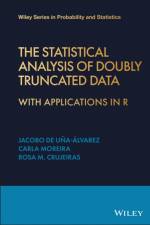
A thorough treatment of the statistical methods used to analyze doubly truncated dataIn The Statistical Analysis of Doubly Truncated Data, an expert team of statisticians delivers an up-to-date review of existing methods used to deal with randomly truncated data, with a focus on the challenging problem of random double truncation. The authors comprehensively introduce doubly truncated data before moving on to discussions of the latest developments in the field.The book offers readers examples with R code along with real data from astronomy, engineering, and the biomedical sciences to illustrate and highlight the methods described within. Linear regression models for doubly truncated responses are provided and the influence of the bandwidth in the performance of kernel-type estimators, as well as guidelines for the selection of the smoothing parameter, are explored.Fully nonparametric and semiparametric estimators are explored and illustrated with real data. R code for reproducing the data examples is also provided. The book also offers:* A thorough introduction to the existing methods that deal with randomly truncated data* Comprehensive explorations of linear regression models for doubly truncated responses* Practical discussions of the influence of bandwidth in the performance of kernel-type estimators and guidelines for the selection of the smoothing parameter* In-depth examinations of nonparametric and semiparametric estimatorsPerfect for statistical professionals with some background in mathematical statistics, biostatisticians, and mathematicians with an interest in survival analysis and epidemiology, The Statistical Analysis of Doubly Truncated Data is also an invaluable addition to the libraries of biomedical scientists and practitioners, as well as postgraduate students studying survival analysis.
This book is Open Access. A digital copy can be downloaded for free from Wiley Online Library.Exploring the links between Large Igneous Provinces and dramatic environmental impactAn emerging consensus suggests that Large Igneous Provinces (LIPs) and Silicic LIPs (SLIPs) are a significant driver of dramatic global environmental and biological changes, including mass extinctions. Environmental changes caused by LIPs and SLIPs include rapid global warming, global cooling ('Snowball Earth'), oceanic anoxia events, mercury poisoning, atmospheric and oceanic acidification, and sea level changes.Continued research to characterize the effects of these extremely large and typically short duration igneous events on atmospheric and oceanic chemistry through Earth history can provide lessons for understanding and mitigating modern climate change.Large Igneous Provinces: A Driver of Global Environmental and Biotic Changes describes the interactions between the effects of LIPs and other drivers of climatic change, the limits of the LIP effect, and the atmospheric and oceanic consequences of LIPs in significant environmental events.Volume highlights include:* Temporal record of large igneous provinces (LIPs)* Environmental impacts of LIP emplacement* Precambrian, Proterozoic, and Phanerozoic case histories* Links between geochemical proxies and the LIP record* Alternative causes for environmental change* Key parameters related to LIPs and SLIPs for use in environmental change modelling* Role of LIPs in Permo-Triassic, Triassic-Jurassic, and other mass extinction eventsThe American Geophysical Union promotes discovery in Earth and space science for the benefit of humanity. Its publications disseminate scientific knowledge and provide resources for researchers, students, and professionals.
A guide to the role of static state estimation in the mitigation of potential system failuresWith contributions from a noted panel of experts on the topic, Advances in Electric Power and Energy: Static State Estimation addresses the wide-range of issues concerning static state estimation as a main energy control function and major tool for evaluating prevailing operating conditions in electric power systems worldwide.This book is an essential guide for system operators who must be fully aware of potential threats to the integrity of their own and neighboring systems. The contributors provide an overview of the topic and review common threats such as cascading black-outs to model-based anomaly detection to the operation of micro-grids and much more. The book also includes a discussion of an effective mathematical programming approach to state estimation in power systems. Advances in Electric Power and Energy reviews the most recent developments in the field and:* Offers an introduction to the topic to help non-experts (and professionals) get up-to-date on static state estimation* Covers the essential information needed to understand power system state estimation written by experts on the subject* Discusses a mathematical programming approachWritten for electric power system planners, operators, consultants, power system software developers, and academics, Advances in Electric Power and Energy is the authoritative guide to the topic with contributions from experts who review the most recent developments.
Battery technology is constantly changing, and the concepts and applications of these changes are rapidly becoming increasingly more important as more and more industries and individuals continue to make "greener" choices in their energy sources. As global dependence on fossil fuels slowly wanes, there is a heavier and heavier importance placed on cleaner power sources and methods for storing and transporting that power. Battery technology is a huge part of this global energy revolution.Rechargeable battery technologies have been a milestone for moving toward a fossil-fuel-free society. They include groundbreaking changes in energy storage, transportation, and electronics. Improvements in battery electrodes and electrolytes have been a remarkable development, and, in the last few years, rechargeable batteries have attracted significant interest from scientists as they are a boon for electric vehicles, laptops and computers, mobile phones, portable electronics, and grid-level electricity storage devices.Rechargeable Batteries: History, Progress, and Applicationsoutlines the history, development, future, and applications for rechargeable batteries for energy storage applications. It also provides an in-depth description of various energy storage materials and is an invaluable reference guide for electrochemists, chemical engineers, students, faculty, and R&D professionals in energy storage science, material science, and renewable energy. This is a must-have for any engineer's library who works with batteries and energy storage.
Dieses Werk hat zum Ziel, die Physik von Dünnschichtsystemen umfassend und tiefgreifend zu erläutern, so dass sie für Forschende und Studierende verständlich ist. Behandelt werden zahlreiche Aspekte der Physik von Dünnschicht-Photovoltaik, insbesondere die Funktionsweise der Bauelemente, Materialstruktur und -parameter, Bildung von Dünnschichtkontakten, analytische und numerische Modellierung, Ansätze für großflächige Effekte und laterale Inhomogenität, die Physik von Shunts (Zunahme und Auswirkungen) sowie die Alterung der Bauelemente. Außerdem werden verschiedene physikalische Diagnoseverfahren vorgestellt, die sich bei Dünnschicht-Photovoltaik bewährt haben. Sowohl für erfahrene Ingenieure als auch für Studenten ist dieses Werk in jeder Bibliothek unverzichtbar.
Photocatalysts in Advanced Oxidation Processes for Wastewater Treatment comprehensively covers a range of topics aiming to promote the implementation of photocatalysis at large scale through provision of facile and green methods for catalysts synthesis and elucidation of pollutants degradation mechanisms. This book is divided into two main parts namely "Synthesis of effective photocatalysts" (Part I) and "Mechanisms of the photocatalytic degradation of various pollutants" (Part II). The first part focuses on the exploration of various strategies to synthesize sustainable and effective photocatalysts. The second part of the book provides an insights into the photocatalytic degradation mechanisms and pathways under ultraviolet and visible light irradiation, as well as the challenges faced by this technology and its future prospects.
Start or grow your architectural firm with this masterful guide to international practice, featuring country-specific information for over 185 countriesThe Architect's Guide to Developing and Managing an International Practice is the definitive resource for architects considering or already engaged in projects outside the United States. Offering expert guidance on every essential aspect of international expansion and management success, this comprehensive volume covers recruiting, licensing, strategic planning, current trends, emerging technologies, and more. Author L. Bradford Perkins clarifies and expands upon the major issues that architects face when they begin to explore how to enter a new international market for their services.This real-world guide is designed for young architects and architectural students thinking about working overseas, for firm leaders pursuing international projects for the first time, and for established global firms seeking to expand or refine their ongoing international practices. It includes advice drawn from dozens of conversations with leading architects who have worked in dozens of countries around the world. A must-read for architecture and design professionals wanting to successfully win and carry out work abroad, this book will help you:* Plan an entry into international practice* Pick the best initial or next international market for your services* Sell and contract for your services* Manage the financial aspects of international practice* Invoice and collect what is owed to you* Enhance your domestic practice with international work* Understand the telecommunication, software, and technology platforms required* Identify and avoid the common problems of international practice* Understand how experienced global firms effectively deal with risks and issuesWritten by the co-founder of Perkins Eastman Architects, an international architectural firm with more than 1000 employees and work experience in over 60 countries, The Architect's Guide to Developing and Managing an International Practice is an indispensable reference and guide for any architect planning to seek work outside the United States.
Polyvinyl Alcohol-Based Biocomposites and BionanocompositesServes as a one-stop reference resource for important research accomplishments in the area of polyvinyl alcohol-based biocomposites and bionanocomposites.Many recent research accomplishments in the area of polyvinyl alcohol (PVA)-based biocomposites and bionanocomposites are summarized in this book. In it, the editors discuss as many topics as possible on the most recent state-of-the-art developments regarding these biocomposites and bionanocomposites, the challenges faced when using them, and their future prospects. In addition to providing a biodegradation study of them, their significance and applications are also discussed, along with practical steps toward their commercialization. Moreover, PVA/cellulose-based and PVA/starch-based biocomposites and bionanocomposites are discussed, along with the biomedical applications of PVA-based composites and nanocomposites, and PVA-based hybrid interpolymeric complexes and their applications.AudienceThis book will be a very valuable reference source for polymer researchers, materials scientists, biochemists, engineers, graduate and postgraduate students working on polymers, composites, and nanocomposites, especially in the area of polyvinyl alcohol-based bionanocomposites.
An Introduction to the Fundamentals and History of Control Charts, Applications, and Guidelines for ImplementationIntroduction to Statistical Process Control examines various types of control charts that are typically used by engineering students and practitioners. This book helps readers develop a better understanding of the history, implementation, and use-cases. Students are presented with varying control chart techniques, information, and roadmaps to ensure their control charts are operating efficiently and producing specification-confirming products. This is the essential text on the theories and applications behind statistical methods and control procedures.This eight-chapter reference breaks information down into digestible sections and covers topics including:* An introduction to the basics as well as a background of control charts* Widely used and newly researched attributes of control charts, including guidelines for implementation* The process capability index for both normal and non-normal distribution via the sampling of multiple dependent states* An overview of attribute control charts based on memory statistics* The development of control charts using EQMA statisticsFor a solid understanding of control methodologies and the basics of quality assurance, Introduction to Statistical Process Control is a definitive reference designed to be read by practitioners and students alike. It is an essential textbook for those who want to explore quality control and systems design.
An authoritative volume focusing on multidisciplinary methods to estimate the impacts of climate-related extreme events to societyAs the intensity and frequency of extreme events related to climate change continue to increase, there is an urgent need for clear and cohesive analysis that integrates both climatological and socioeconomic impacts. Extreme Events and Climate Change provides a timely, multidisciplinary examination of the impacts of extreme weather under a warming climate. Offering wide-ranging coverage of the methods and analysis that relate changes in extreme events to their societal impacts, this volume helps readers understand and overcome the methodological challenges associated with extreme event analysis.Contributions from leading experts from across disciplines describe the theoretical requirements for analyzing the complex interactions between meteorological phenomena and the resulting outcomes, discuss new approaches for analyzing the impacts of extreme events on society, and illustrate how empirical and theoretical concepts merge to form a unified plan that enables informed decision making. Throughout the text, innovative frameworks allow readers to find solutions to the modeling and statistical challenges encountered when analyzing extreme events. Designed for researchers and policy makers alike, this important resource:* Discusses topics central to understanding how extreme weather changes as the climate warms* Provides coverage of analysis methods that relate changes in extreme events to their societal impacts* Reviews significant theoretical and modeling advances in the physical aspects of climate science* Presents a comprehensive view of state of the science, including new ways of using data from different sourcesExtreme Events and Climate Change: A Multidisciplinary Approach is an indispensable volume for students, researchers, scientists, and practitioners in fields such as hazard and risk analysis, climate change, atmospheric and ocean sciences, hydrology, geography, agricultural science, and environmental and space science.
Jump-start your career as a data scientist--learn to develop datasets for exploration, analysis, and machine learningSQL for Data Scientists: A Beginner's Guide for Building Datasets for Analysis is a resource that's dedicated to the Structured Query Language (SQL) and dataset design skills that data scientists use most. Aspiring data scientists will learn how to how to construct datasets for exploration, analysis, and machine learning. You can also discover how to approach query design and develop SQL code to extract data insights while avoiding common pitfalls.You may be one of many people who are entering the field of Data Science from a range of professions and educational backgrounds, such as business analytics, social science, physics, economics, and computer science. Like many of them, you may have conducted analyses using spreadsheets as data sources, but never retrieved and engineered datasets from a relational database using SQL, which is a programming language designed for managing databases and extracting data.This guide for data scientists differs from other instructional guides on the subject. It doesn't cover SQL broadly. Instead, you'll learn the subset of SQL skills that data analysts and data scientists use frequently. You'll also gain practical advice and direction on "how to think about constructing your dataset."* Gain an understanding of relational database structure, query design, and SQL syntax* Develop queries to construct datasets for use in applications like interactive reports and machine learning algorithms* Review strategies and approaches so you can design analytical datasets* Practice your techniques with the provided database and SQL codeIn this book, author Renee Teate shares knowledge gained during a 15-year career working with data, in roles ranging from database developer to data analyst to data scientist. She guides you through SQL code and dataset design concepts from an industry practitioner's perspective, moving your data scientist career forward!
Become empowered to build and maintain smarter citiesAt its core, a smart city is a collection of technological responses to the growing demands, challenges, and complexities of improving the quality of life for billions of people now living in urban centers across the world.The movement to create smarter cities is still in its infancy, but ambitious and creative projects in all types of cities--big and small--around the globe are beginning to make a big difference. New ideas, powered by technology, are positively changing how we move humans and products from one place to another; create and distribute energy; manage waste; combat the climate crisis; build more energy efficient buildings; and improve basic city services through digitalization and the smart use of data.Inside this book you'll find out:* What it really means to create smarter cities* How our urban environments are being transformed* Big ideas for improving the quality of life for communities* Guidance on how to create a smart city strategy* The essential role of data in building better cities* The major new technologies ready to make a difference in every communitySmart Cities For Dummies will give you the knowledge to understand this important topic in depth and be ready to be an agent of change in your community.
Dramatically grow your client base following pragmatic and insightful advice by bestselling author Doug FletcherHow to Win Client Business When You Don't Know Where to Start: A Rainmaking Guide for Consulting and Professional Services serves as an invaluable and indispensable guide for everyone in the business of selling professional and consulting services. Author Doug Fletcher dives deeply into the five skills required to "make it rain":* Create Your Personal Brand Identity* Demonstrate Your Professional Expertise* Build Your Professional Ecosystem* Develop Trust-Based Relationships* Practice Everyday Success HabitsHow to Win Client Business When You Don't Know Where to Start provides a masterclass in teaching the practical techniques and concrete strategies that professional services providers were never taught in school or on the job. Pragmatic lessons take the place of the vaguely defined principles found in competing books to turn readers from sales novices into rainmakers.Written by the same celebrated author who brought readers the best-selling book How Clients Buy, How to Win Client Business When You Don't Know Where to Start is perfect for any professional services provider or consultant who seeks to dramatically increase their book of business.
The only globally-crowdsourced book on the future of payments ("PayTech"), offering comprehensive understanding of a rapidly evolving industry at the centre of global commerceThe movement of money between individuals, organisations and governments is crucial to the world economy. The payments industry has undergone immense transformation -- new regulations, technologies and consumer demands have prompted significant changes to the tools, products and use cases in payments, as well as presented lucrative opportunities for entrepreneurs and FinTech professionals. As payment technologies become faster and more efficient, companies and investors are increasingly favouring PayTech innovation due to better customer experience, increased revenues and manageable risks. The PAYTECH Book brings together a diverse collection of industry experts to provide entrepreneurs, financial services professionals and investors with the answers they need to capitalise on the highly profitable PayTech market.Written by leaders in the global FinTech and payment sectors, this informative volume explains key industry developments and presents valuable first-hand insights from prominent industry practitioners. Contributors include advisors and consultants to the payments and financial services industry, entrepreneurs and business owners utilising cutting-edge PayTech capabilities, academic researchers exploring the social-political-economic impact of PayTech and many others. Detailed chapters cover essential topics such as cybersecurity, regulation and compliance, wholesale payments and how payment systems currently work and how PayTech can improve them. This book:* Defines PayTech and identifies its key players* Discusses how PayTech can transform developed markets and accelerate growth in emerging economies* Describes how PayTech fits into the larger FinTech ecosystem* Explores the future of PayTech and its potential as an agent of social change and financial inclusion* Provides diverse perspectives on investment in PayTech and what consolidation and expansion will look likeThe PAYTECH Book: The Payment Technology Handbook for Investors, Entrepreneurs and FinTech Visionaries is an indispensable source of information for FinTech investors and entrepreneurs, managers from payments companies and financial services firms and executives responsible for payments in government, corporations, public sector organisations, retailers and users of payments.
Provides a comprehensive guide to the use of gas chromatography-mass spectrometry (GC-MS) on environmentally significant organic compoundsThis book presents a library of mass spectra of 1,725 biologically and environmentally important organic compounds, in the form of their trimethylsilyl derivatives (TMS), as well as their linear temperature programmed chromatographic retention indices, RI, whose values are in the range of 700-4700 index units. Of the compounds presented, more than 60% of compounds have not previously been characterized by their mass spectra, and more than 70% not previously been characterized by their RI values. Some of these compounds, never before analysed via MS and GC, were detected by the author's team in plant tissues.The first chapters of the book are devoted to the methodology and practice of sample preparation, as well as to mass spectrometry considerations. They contain the discussion of possible complications and limitations of the method. The book includes lists of chemical compounds in alphabetical order, as well as in the order of their retention indices which facilitates the search for parameters of interest. Every compound in the book includes a RI value, mass spectrum, CAS number (if available), molecular and structural formula, formula weight, chemical name and list of synonyms, as well the source of compounds used for registration of spectrum and RI value.* Features mass spectra and chromatographic retention indices of 1,725 organic substances in the form of their trimethylsilyl derivatives (TMS)* Includes the CAS number, molecular and structural formula, formula weight, mass spectrum, chemical name and list of synonyms, and more for every compound covered within* The first publication containing analytical parameters of high-boiling compounds such as glycosides, lignans, and phenylpropenoid glycerides with RI values >4000GC-MS of Biologically and Environmentally Significant Organic Compounds will appeal to specialists in phytochemical analysis, food, and environmental chemistry, as well as other investigators dealing with GC or GC/MS analysis complex mixtures of organic compounds.The accompanying electronic database, "Biologically and Environmentally Important Organic Compounds - GCMS Library", will be published in mid-2020, ISBN: 978-1-119-60170-8.
Written by prominent thought leaders in the global fintech investment space, The AI Book aggregates diverse expertise into a single, informative volume. Key industry developments are explained in detail, and critical insights from cutting-edge practitioners offer first-hand information and lessons learned. Coverage includes:* Understanding the AI Portfolio: from machine learning to chatbots, from neurotrophic computing to natural language processing (NLP); a deep dive into the Machine Intelligence Landscape; essentials on core technologies, rethinking enterprise, rethinking industries, rethinking humans; quantum computing and next-generation AI* AI experimentation and embedded usage, and the change in business model, value proposition, organisation, customer and co-worker experiences in today's Financial Services Industry* The future state of financial services and markets - what's next for the real-world implementation of AITech?* The innovating customer - users are not waiting for the financial services industry to work out how #AI can re-shape their sector, profitability and competitiveness* Boardroom issues created and magnified by AI trends, including conduct, regulation & oversight in an algo-driven world, cybersecurity, diversity & inclusion, data privacy, the 'unbundled corporation' & the future of work, social responsibility, sustainability, and the new leadership imperatives
Provides an extensive, up-to-date treatment of techniques used for machine condition monitoring Clear and concise throughout, this accessible book is the first to be wholly devoted to the field of condition monitoring for rotating machines using vibration signals. It covers various feature extraction, feature selection, and classification methods as well as their applications to machine vibration datasets. It also presents new methods, including machine learning and compressive sampling, which help to improve safety, reliability, and performance. Condition Monitoring with Vibration Signals: Compressive Sampling and Learning Algorithms for Rotating Machines starts by introducing readers to Vibration Analysis Techniques and Machine Condition Monitoring (MCM). It then offers readers sections covering: Rotating Machine Condition Monitoring using Learning Algorithms; Classification Algorithms; and New Fault Diagnosis Frameworks designed for MCM. Readers will learn signal processing in the time-frequency domain, methods for linear subspace learning, and the basic principles of the learning method Artificial Neural Network (ANN). They will also discover recent trends of deep learning in the field of machine condition monitoring, new feature learning frameworks based on compressive sampling, subspace learning techniques for machine condition monitoring, and much more. Covers the fundamental as well as the state-of-the-art approaches to machine condition monitoring--guiding readers from the basics of rotating machines to the generation of knowledge using vibration signals Provides new methods, including machine learning and compressive sampling, which offer significant improvements in accuracy with reduced computational costs Features learning algorithms that can be used for fault diagnosis and prognosis Includes previously and recently developed dimensionality reduction techniques and classification algorithms Condition Monitoring with Vibration Signals: Compressive Sampling and Learning Algorithms for Rotating Machines is an excellent book for research students, postgraduate students, industrial practitioners, and researchers.
Advances in Longitudinal Survey MethodologyExplore an up-to-date overview of best practices in the implementation of longitudinal surveys from leading experts in the field of survey methodologyAdvances in Longitudinal Survey Methodology delivers a thorough review of the most current knowledge in the implementation of longitudinal surveys. The book provides a comprehensive overview of the many advances that have been made in the field of longitudinal survey methodology over the past fifteen years, as well as extending the topic coverage of the earlier volume, "Methodology of Longitudinal Surveys", published in 2009. This new edited volume covers subjects like dependent interviewing, interviewer effects, panel conditioning, rotation group bias, measurement of cognition, and weighting.New chapters discussing the recent shift to mixed-mode data collection and obtaining respondents' consent to data linkage add to the book's relevance to students and social scientists seeking to understand modern challenges facing data collectors today. Readers will also benefit from the inclusion of:* A thorough introduction to refreshment sampling for longitudinal surveys, including consideration of principles, sampling frame, sample design, questionnaire design, and frequency* An exploration of the collection of biomarker data in longitudinal surveys, including detailed measurements of ill health, biological pathways, and genetics in longitudinal studies* An examination of innovations in participant engagement and tracking in longitudinal surveys, including current practices and new evidence on internet and social media for participant engagement.An invaluable source for post-graduate students, professors, and researchers in the field of survey methodology, Advances in Longitudinal Survey Methodology will also earn a place in the libraries of anyone who regularly works with or conducts longitudinal surveys and requires a one-stop reference for the latest developments and findings in the field.
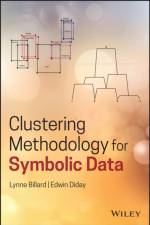
Symbolic data analysis is a relatively new field that provides a range of methods for analyzing complex datasets. Standard statistical methods do not have the power or flexibility to make sense of very large datasets, and symbolic data analysis techniques have been developed in order to extract knowledge from such a data.
Develop an understanding of FDA and global regulatory agency requirements for Laboratory Control System (LCS) operationsIn Laboratory Control System Operations in a GMP Environment, readers are given the guidance they need to implement a CGMP compliant Laboratory Control System (LCS) that fits within Global Regulatory guidelines. Using the Quality Systems Approach, regulatory agencies like the FDA and the European Medicine Agency have developed a scheme of systems for auditing pharmaceutical manufacturing facilities which includes evaluating the LCS. In this guide, readers learn the fundamental rules for operating a CGMP compliant Laboratory Control System.Designed to help leaders meet regulatory standards and operate more efficiently, the text includes chapters that cover Laboratory Equipment Qualification and Calibration, Laboratory Facilities, Method Validation and Method Transfer, Laboratory Computer Systems, Laboratory Investigations as well as Data Governance and Data Integrity. The text also includes chapters related to Laboratory Managerial and Administrative Systems, Laboratory Documentation Practices and Standard Operating Procedures and General Laboratory Compliance Practices. Additionally, a chapter outlining Stability Program operations is included in the text.In addition to these topics, it includes LCS information and tools such as:* End of chapter templates, checklists, and LCS guidance to help you follow the required standards* Electronic versions of each tool so users can use them outside of the text* An In-depth understanding of what is required by the FDA and other globally significant regulatory authorities for GMP compliant systemsFor quality assurance professionals working within the pharmaceutical or biopharma industries, this text provides the insight and tools necessary to implement government-defined regulations.
Analysis of ASME Boiler, Pressure Vessel, and Nuclear Components in the Creep RangeSecond EditionThe latest edition of the leading resource on elevated temperature designIn the newly revised Second Edition of Analysis of ASME Boiler, Pressure Vessel, and Nuclear Components in the Creep Range, a team of distinguished engineers delivers an authoritative introduction to the principles of design at elevated temperatures. The authors draw on over 50 years of experience, explaining the methodology for accomplishing a safe and economical design for boiler and pressure vessel components operating at high temperatures. The text includes extensive references, offering the reader the opportunity to further their understanding of the subject.In this latest edition, each chapter has been updated and two brand-new chapters added--the first is Creep Analysis Using the Remaining Life Method, and the second is Requirements for Nuclear Components. Numerous examples are included to illustrate the practical application of the presented design and analysis methods. It also offers:* A thorough introduction to creep-fatigue analysis of pressure vessel components using the concept of load-controlled and strain-deformation controlled limits* An introduction to the creep requirements in API 579/ASME FFS-1 "Remaining Life Method"* A summary of creep-fatigue analysis requirements in nuclear components* Detailed procedure for designing cylindrical and spherical components of boilers and pressure vessels due to axial and external pressure in the creep regime* A section on using finite element analysis to approximate fatigue in structural members in tension and bendingPerfect for mechanical engineers and researchers working in mechanical engineering, Analysis of ASME Boiler, Pressure Vessel, and Nuclear Components in the Creep Range will also earn a place in the libraries of graduate students studying mechanical engineering, technical staff in industry, and industry analysts and researchers.
An informative, easy-to-understand resource that unveils the mysteries of CBDCBD has emerged as a popular health product, but what's all the fuss about? CBD For Dummies reveals the reasons for the surge in interest about cannabidiol (CBD) and explains how to buy and use this remarkable product safely and responsibly. In an accessible, no-nonsense manner, author Blair Lauren Brown lays out the facts about CBD and outlines the many health conditions that may be helped by using CBD oil.This book covers topics that people new to CBD have questions about. Highlights include:* What CBD oil is and how it works in the body* How to buy CBD from a reputable source and understanding a product's potency* Knowing what conditions can be eased with CBD, including muscle pain, inflammation, autoimmune conditions, eating disorders, mental health disorders, and neurological conditions* Preparing your own CBD ediblesPerfect for anyone interested in understanding the therapeutic potential of CBD, CBD For Dummies introduces you to everything you need to know about this cool compound.
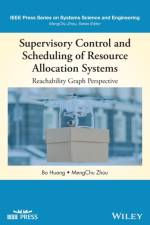
Presents strategies with reachability graph analysis for optimizing resource allocation systemsSupervisory Control and Scheduling of Resource Allocation Systems offers an important guide to Petri net (PN) models and methods for supervisory control and system scheduling of resource allocation systems (RASs). Resource allocation systems are common in automated manufacturing systems, project management systems, cloud data centers, and software engineering systems. The authors--two experts on the topic--present a definition, techniques, models, and state-of-the art applications of supervisory control and scheduling problems.The book introduces the basic concepts and research background on resource allocation systems and Petri nets. The authors then focus on the deadlock-free supervisor synthesis for RASs using Petri nets. The book also investigates the heuristic scheduling of RASs based on timed Petri nets. Conclusions and open problems are provided in the last section of the book.This important book:* Includes multiple methods for supervisory control and scheduling with reachability graphs, and provides illustrative examples* Reveals how to accelerate the supervisory controller design and system scheduling of RASs based on PN reachability graphs, with optimal or near-optimal results* Highlights both solution quality and computational speed in RAS deadlock handling and system schedulingWritten for researchers, engineers, scientists, and professionals in system planning and control, engineering, operation, and management, Supervisory Control and Scheduling of Resource Allocation Systems provides an essential guide to the supervisory control and scheduling of resource allocation systems (RASs) using Petri net reachability graphs, which allow for multiple resource acquisitions and flexible routings.
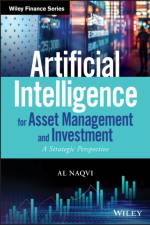
Make AI technology the backbone of your organization to compete in the Fintech eraThe rise of artificial intelligence is nothing short of a technological revolution. AI is poised to completely transform asset management and investment banking, yet its current application within the financial sector is limited and fragmented. Existing AI implementations tend to solve very narrow business issues, rather than serving as a powerful tech framework for next-generation finance. Artificial Intelligence for Asset Management and Investment provides a strategic viewpoint on how AI can be comprehensively integrated within investment finance, leading to evolved performance in compliance, management, customer service, and beyond.No other book on the market takes such a wide-ranging approach to using AI in asset management. With this guide, you'll be able to build an asset management firm from the ground up--or revolutionize your existing firm--using artificial intelligence as the cornerstone and foundation. This is a must, because AI is quickly growing to be the single competitive factor for financial firms. With better AI comes better results. If you aren't integrating AI in the strategic DNA of your firm, you're at risk of being left behind.* See how artificial intelligence can form the cornerstone of an integrated, strategic asset management framework* Learn how to build AI into your organization to remain competitive in the world of Fintech* Go beyond siloed AI implementations to reap even greater benefits* Understand and overcome the governance and leadership challenges inherent in AI strategyUntil now, it has been prohibitively difficult to map the high-tech world of AI onto complex and ever-changing financial markets. Artificial Intelligence for Asset Management and Investment makes this difficulty a thing of the past, providing you with a professional and accessible framework for setting up and running artificial intelligence in your financial operations.
Start and grow a durable business in the rapidly growing wellness industry!As we emerge from COVID-19 the world sits on the cusp of a massive wave of wellness industry growth. This "Fourth Wave of Wellness" will bring hundreds of millions more people into healthier, happier lifestyles, creating millions of jobs and producing massive entrepreneurial opportunities. Whether your goal is to work from home, open a neighborhood wellness studio or launch the next global wellness brand, Building a Wellness Business That Lasts is your definitive guide.Wellness has become one of the largest and most important business opportunities of our age, fueled by massive societal trends, rapid technology innovations, and hundreds of thousands of wellness business entrepreneurs. Independent teachers, trainers, and therapists and studio, gym, spa, and salon owners across the globe are transforming shopping malls and downtown districts with wellness experiences that help hundreds of millions of people live healthier, happier lives.Author Rick Stollmeyer is the co-founder and CEO of Mindbody, Inc., the leading technology platform for the wellness industry. Over more than two decades, Rick built Mindbody from a garage startup into a multi-billion-dollar technology platform for the wellness industry, helping thousands of wellness business owners achieve their visions in the process. This experience has given Rick a front row seat to the explosive growth of the wellness industry. He brings that unique experience and his passion for entrepreneurship to Building a Wellness Business That Lasts. This book will inspire and inform you at the same time and will serve as a powerful guide you can refer to on your path to success.
Abonner på vårt nyhetsbrev og få rabatter og inspirasjon til din neste leseopplevelse.
Ved å abonnere godtar du vår personvernerklæring.