















Gjør som tusenvis av andre bokelskere
Abonner på vårt nyhetsbrev og få rabatter og inspirasjon til din neste leseopplevelse.
Ved å abonnere godtar du vår personvernerklæring.Du kan når som helst melde deg av våre nyhetsbrev.

An introduction to the urgent global question of how to feed the hungry Global food production has never been more abundant, yet nearly a billion people worldwide suffer from malnutrition, virtually all of them in the developed world. Food security in these countries is a global humanitarian issue which becomes more urgent with every passing year. There is a vital need to understand the nature and causes of food scarcity in developing countries in order to see to it that our global bounty reaches the hungry people who need it. Food Security in the Developing World offers a comprehensive single-volume introduction to the subject. It focuses on three core issues--food availability, food accessibility, and food utilization--in order to produce a rounded picture of the causes and possible solutions for food scarcity. Thorough and accessible, it promises to help researchers and policymakers address this growing humanitarian crisis in a reasoned and targeted way. Food Security in the Developing World readers will also find: Future-oriented approach which continuously highlights paths forward Detailed discussion of topics including climate change and agricultural productivity, price volatility, diet and nutrition, and many more Examples and case studies drawn from across the developing world, including Sudan, Uganda, Nepal, and Afghanistan Food Security in the Developing World is ideal for food scientists and technologists, students in programs related to food science, development studies, geography, and related subjects, and policymakers working in food production and distribution.
There is no escaping the fact that the island biogeography of the North Atlantic Region is singularly peculiar. Sitting in the north of the Atlantic Ocean, these islands have been subjected to largescale shifts in climate over the last few million years, unlike the other island groups further south which were likely more buffered from the vicissitudes of Quaternary climate changes. Uniquely for a group of islands there is only one documented extinction in the North Atlantic (the Great Auk), and those in the insects are local events relating to species that are distributed throughout the Palaearctic region. Over half the insect species in Iceland and Greenland are introduced. The faunas, excluding Greenland, are predominantly of Palaearctic origin and have close affinities with the faunas of Scandinavia and the British Isles and. These unique physical and biological characteristics have interested biologists and biogeographers for centuries. The key debates concerning the biogeography of the North Atlantic islands still rumble on: Do the biota reflect cryptic refugia or otherwise, or tabula rasa and recolonization? How important were human communities in shaping the existing biota and biogeographical patterns? Throw into this mix current concerns over global warming, and we can now ask, how resilient is the biota to change, either natural or anthropogenic? This volume draws together a range of researchers with longstanding research interests in the region, from diverse academic backgrounds, to evaluate some of these questions.
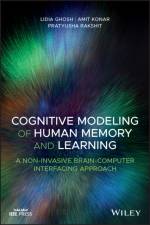
Proposes computational models of human memory and learning using a brain-computer interfacing (BCI) approachHuman memory modeling is important from two perspectives. First, the precise fitting of the model to an individual's short-term or working memory may help in predicting memory performance of the subject in future. Second, memory models provide a biological insight to the encoding and recall mechanisms undertaken by the neurons present in active brain lobes, participating in the memorization process. This book models human memory from a cognitive standpoint by utilizing brain activations acquired from the cortex by electroencephalographic (EEG) and functional near-infrared-spectroscopic (f-NIRs) means.Cognitive Modeling of Human Memory and Learning A Non-invasive Brain-Computer Interfacing Approach begins with an overview of the early models of memory. The authors then propose a simplistic model of Working Memory (WM) built with fuzzy Hebbian learning. A second perspective of memory models is concerned with Short-Term Memory (STM)-modeling in the context of 2-dimensional object-shape reconstruction from visually examined memorized instances. A third model assesses the subjective motor learning skill in driving from erroneous motor actions. Other models introduce a novel strategy of designing a two-layered deep Long Short-Term Memory (LSTM) classifier network and also deal with cognitive load assessment in motor learning tasks associated with driving. The book ends with concluding remarks based on principles and experimental results acquired in previous chapters.* Examines the scope of computational models of memory and learning with special emphasis on classification of memory tasks by deep learning-based models* Proposes two algorithms of type-2 fuzzy reasoning: Interval Type-2 fuzzy reasoning (IT2FR) and General Type-2 Fuzzy Sets (GT2FS)* Considers three classes of cognitive loads in the motor learning tasks for driving learnersCognitive Modeling of Human Memory and Learning A Non-invasive Brain-Computer Interfacing Approach will appeal to researchers in cognitive neuro-science and human/brain-computer interfaces. It is also beneficial to graduate students of computer science/electrical/electronic engineering.
"In their 'deliberately short book' IT analysts, management consultants and technology practitioners Roehrig and Pring explore how big a beast technology has become, and how we can tame it to maintain our freedom and privacy while still realising its benefits. The pandemic has shown just how much we rely on technology and how addictive it has become...The authors address the important questions...[and] urge us not to slay the monster but rather to leverage its power and reorient technology as a tool for good."--Financial TimesMonster explains how we can responsibly engage with technology, and avoid its darker tendencies, while accepting its necessary gifts. The authors, insiders at one of the world's largest tech consulting firms, give a unique take on:* The addictive nature of tech and how to fight it* The growing backlash against big tech--where it's right and what it misses* Crucial steps for taming technology's role in your life and in your organization--without becoming a modern LudditeWritten for managers, leaders, and employees at companies of all sizes and in all industries, Monster will help you understand and take control of technology's powerful role in your life and your organization."You must read this book."--Michael Schrage, Research Fellow, MIT Sloan School Initiative on the Digital Economy"Pithy insights and recommendations on helping tech fulfill its potential as a force for good."--Erik Brynjolfsson, Director of the Stanford Digital Economy Lab and co-author of The Second Machine Age"Making technology serve--not subvert--the public interest requires better leaders, not more engineers and coders. Monster explains how to become one of those leaders."--Rosabeth Moss Kanter, Harvard Business School Professor and author of Think Outside the Building"A bracing new book about some of the most pressing questions of our time."--Carl Benedikt Frey, Oxford Martin Citi Fellow at Oxford University and author of The Technology Trap"Provocative and concise, Monster is an important book on rescuing ourselves from technology that now feels corrosive and overwhelming."--Daniel H. Pink, author of WHEN, DRIVE, and TO SELL IS HUMAN"Clarifies a complex web of issues and provides bold steps for a healthier economy, society, and future."--Francisco D'Souza, former CEO and Vice Chairman of Cognizant"Sheds light on how we can collectively use technology for the good of all."--Soumitra Dutta, Founding Dean, SC Johnson College of Business, Cornell University"A cornucopia of pragmatic, actionable, and bold ideas."--Gary J. Beach, Publisher Emeritus, CIO magazine and author of U.S. Technology Skills Gap
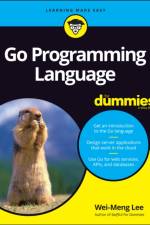
Ready, set, program with Go!Now is the perfect time to learn the Go Programming Language. It's one of the most in-demand languages among tech recruiters and developers love its simplicity and power. Go Programming Language For Dummies is an easy way to add this top job skill to your toolkit. Written for novice and experienced coders alike, this book traverses basic syntax, writing functions, organizing data, building packages, and interfacing with APIs.Go--or GoLang, as it's also known--has proven to be a strong choice for developers creating applications for the cloud-based world we live in. This book will put you on the path to using the language that's created some of today's leading web applications, so you can steer your career where you want to Go!* Learn how Go works and start writing programs and modules* Install and implement the most powerful third-party Go packages* Use Go in conjunction with web services and MySQL databases* Keep your codebase organized and use Go to structure dataWith this book, you can join the growing numbers of developers using Go to create 21st century solutions. Step inside to take start writing code that puts data in users' hands.
Medical imaging is one of the most important diagnostic tools in healthcare. More than 50% of the clinical market depends on diagnostic imaging to identify different pathological conditions in subjects. It is, therefore, essential for healthcare personnel and paramedical staff as well as the technicians and the supporting engineers to understand the basics of medical imaging. This subject is of utmost importance to every individual involved in the healthcare industry, right from research and development until application and service.Medical Imaging presents the salient aspects of diagnostic imaging modalities. The subjects that are covered are the basic functional principles, the concepts involved, the instrumentation-based aspects, applications, and the latest trends in imaging modalities. This book concentrates on X-rays imaging, computer tomography-based imaging, ultrasound techniques, radionuclide imaging, MRI techniques, and other important diagnostic modalities which are commonly used for medical diagnosis of various pathologies in human beings.Covering all of the latest advances, innovations, and developments in practical applications for medical imaging, this volume represents the most comprehensive, up-to-date coverage of the issues of the day and state of the art. Whether for the veteran engineer or scientist or a student, this volume is a must-have for any library.
Powerful ideas to transform hiring into a massive competitive advantage for your businessTalent Makers: How the Best Organizations Win through Structured and Inclusive Hiring is essential reading for every leader who knows that hiring is crucial to their organization and wants to compete for top talent, diversify their organization, and build winning teams. Daniel Chait and Jon Stross, co-founders of Greenhouse Software, Inc, provide readers with a comprehensive and proven framework to improve hiring quickly, substantially, and measurably.Talent Makers will provide a step-by-step plan and actionable advice to help leaders assess their talent practice (or lack thereof) and transform hiring into a measurable competitive advantage. Readers will understand and employ:* A proven system and principles for hiring used by the world's best companies* Hiring practices that remove bias and result in more diverse teams* An assessment of their hiring practice using the Hiring Maturity model* Measurement of employee lifetime value in quantifiable terms, and how to increase that value through hiringThe Talent Makers methodology is the result of the authors' experience and the ideas and stories from their community of more than 4,000 organizations. This is the book that CEOs, hiring managers, talent practitioners, and human resources leaders must read to transform their hiring and propel their organization to new heights.
Get in on the ground level of the next artisan food obsession--honey!Just like wine, cheese, beer or coffee, honey is an artisan food with much to be discovered. Whether you're interested in tasting the various varietals, using it as a cure, or harvesting your own, Honey For Dummies is the guide for you. This book reveals the deep and complex world of honey, its diverse floral sources, and its surprising range of colors, smells, and flavors. You will learn about over 50 single-origin honeys, their sensory profiles, where they are produced and where to buy them. Discover how to taste and evaluate honey using the same methods as professional honey sensory expert. Understand how honey is produced by honeybees, and how beekeepers harvest, and bottle this liquid gold. You'll also discover the historical role honey has played around the world in folklore, religions, and economies. From its health benefits, to recipes, to food pairings, this complete guide covers all things honey!Honey is the latest food trend that can be found at farmers' markets, specialty food shops and on the menu of restaurants. It is produced from bees in every state and just about every country on the planet. Let Honey For Dummies accompany you on your sweet adventure!* Discover the rich and complex world of single-origin honey* Learn about honey's composition and its myriad health benefits* Acquire the skills to taste honey like a pro then how to perfectly pair honeys with all foods* Try the book's many wonderful recipes that incorporate honeyHoney For Dummies is the perfect companion for every chef, brewer, homesteader, beekeeper or honey lover.
In diesem Buch werden die derzeit verfügbaren Produktionstechnologien von Bioenergie vorgestellt und bewertet, und zwar für Bioethanol, Biobutanol, Biomethanol, Bioöl, Biowasserstoff, Biogas und Biomethan. Die neuesten Technologieentwicklungen und ihre kommerzielle Umsetzbarkeit werden analysiert. Darüber hinaus beschreiben die Autoren die derzeitigen Rückschritte, diesbezügliche Korrekturmöglichkeiten, die Zeitspanne für Verbesserungen und die maximal anzunehmenden Auswirkungen auf die Markteinführung verschiedener Bioenergie-Optionen. In jedem Kapitel werden vergleichende Strategien für verschiedene Biokraftstofftechnologien vorgestellt, aktuelle Herausforderungen und nachhaltige Lösungen diskutiert, und am Ende des Buches präsentieren die Herausgeber eine vergleichende Bewertung.
Learn how you can help combat micro and macroaggressions against socially devalued groups with this authoritative new resourceMicrointervention Strategies: What You Can Do to Disarm and Dismantle Indivdiual and Systemic Racism and Bias, delivers a cutting-edge exploration and extension of the concept of microinterventions to combat micro and macroaggressions targeted at marginalized groups in our society. While racial bias is the primary example used throughout the book, the author's approach is applicable to virtually all forms of bias and discrimination, including that directed at those with disabilities, LGBTQ people, women, and others.The book calls out unfair and biased institutional policies and practices and presents strategies to help reduce the impact of sexism, heterosexism, ableism, and classism. It provides a new conceptual framework for distinguishing between the different categories of microinterventions, or individual anti-bias actions, and offers specific, concrete, and practical advice for taking a stand against micro and macroaggressions.Microintervention Strategies delivers the knowledge and skills necessary to confront individual and institutional manifestations of oppression. Readers will also enjoy:- A thorough introduction to the major conceptual distictions between micro and macroaggressions and an explanation of the manifestations, dynamics, and impact of bias on marginalized groups.- An exploration of the meaning and definition of micorinterventions, including a categorization into three types: microaffirmations, micorprotections, and microchallenges.- A review of literature that discusses the positive benefits that accrue to targets, allies, bystanders, and others when microinterventions take place.- A discussion of major barriers to acting against prejudice and discrimination.Perfect for undergraduate and graduate students taking courses in psychology, education, social work, and political science, Microintervention Strategies will also earn a place in the libraries of psychologists, educators, parents, and teachers, who hope to do their part to combat microaggressions and other forms of bias and discrimination.
High-Density and De-Densified Smart Campus CommunicationsDesign, deliver, and implement high-density communications solutionsHigh-density campus communications are critical in the operation of densely populated airports, stadiums, convention centers, shopping malls, classrooms, hospitals, dense smart cities, and more. They also drive Smart City and Smart Building use cases as High-Density Communications (HDC) become recognized as an essential fourth utility. However, the unique requirements and designs demanded by HDC make implementation challenging.In High-Density and De-Densified Smart Campus Communications: Technologies, Integration, Implementation and Applications, a team of experienced technology strategists delivers a one-of-a-kind treatment of the requirements, technologies, designs, solutions, and trends associated with HDC. From the functional requirements for HDC and emerging data/Wi-Fi 6/internet access/5G cellular/OTT video, and IoT automation--including pandemic-related de-densification--to the economics of broad deployment of HDC, this book includes coverage of every major issue faced by the professionals responsible for the design, installation, and maintenance of high-density communication networks. It also includes:* A thorough introduction to traditional and emerging voice/cellular design for campus applications, including the Distributed Antenna System (DAS)* Comprehensive explorations of traditional sensor networks and Internet of Things services approaches* Practical discussions of high-density Wi-Fi hotspot connectivity and related technologies, like Wi-Fi 5, Wi-Fi 6, spectrum, IoT, VoWiFi, DASs, microcells issues, and 5G versus Wi-Fi issues* In-depth examinations of de-densification, office social distancing, and Ultra-Wideband (UWB) technologiesPerfect for telecommunication researchers and engineers, networking professionals, technology planners, campus administrators, and equipment vendors, High-Density Smart Campus Communications will also earn a place in the libraries of senior undergraduate and graduate students in applied communications technologies.
Discover an innovative and fresh approach to teaching classical electromagnetics at a foundational levelIntroduction to Electromagnetic Waves with Maxwell's Equations delivers an accessible and practical approach to teaching the wellknown topics all electromagnetics instructors must include in their syllabus. Based on the author's decades of experience teaching the subject, the book is carefully tuned to be relevant to an audience of engineering students who have already been exposed to the basic curricula of linear algebra and multivariate calculus.Forming the backbone of the book, Maxwell's equations are developed step-by-step in consecutive chapters, while related electromagnetic phenomena are discussed simultaneously. The author presents accompanying mathematical tools alongside the material provided in the book to assist students with retention and comprehension. The book contains over 100 solved problems and examples with stepwise solutions offered alongside them. An accompanying website provides readers with additional problems and solutions.Readers will also benefit from the inclusion of:* A thorough introduction to preliminary concepts in the field, including scalar and vector fields, cartesian coordinate systems, basic* vector operations, orthogonal coordinate systems, and electrostatics, magnetostatics, and electromagnetics* An exploration of Gauss' Law, including integral forms, differential forms, and boundary conditions* A discussion of Ampere's Law, including integral and differential forms and Stoke's Theorem* An examination of Faraday's Law, including integral and differential forms and the Lorentz Force LawPerfect for third-and fourth-year undergraduate students in electrical engineering, mechanical engineering, applied maths, physics, and computer science, Introduction to Electromagnetic Waves with Maxwell's Equations will also earn a place in the libraries of graduate and postgraduate students in any STEM program with applications in electromagnetics.
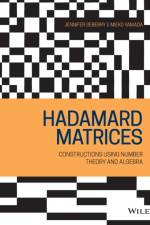
Up-to-date resource on Hadamard matricesHadamard Matrices: Constructions using Number Theory and Algebra provides students with a discussion of the basic definitions used for Hadamard Matrices as well as more advanced topics in the subject, including:* Gauss sums, Jacobi sums and relative Gauss sums* Cyclotomic numbers* Plug-in matrices, arrays, sequences and M-structure* Galois rings and Menon Hadamard differences sets* Paley difference sets and Paley type partial difference sets* Symmetric Hadamard matrices, skew Hadamard matrices and amicable Hadamard matrices* A discussion of asymptotic existence of Hadamard matrices* Maximal determinant matrices, embeddability of Hadamard matrices and growth problem for Hadamard matricesThe book can be used as a textbook for graduate courses in combinatorics, or as a reference for researchers studying Hadamard matrices.Utilized in the fields of signal processing and design experiments, Hadamard matrices have been used for 150 years, and remain practical today. Hadamard Matrices combines a thorough discussion of the basic concepts underlying the subject matter with more advanced applications that will be of interest to experts in the area.
Praise for THE GREAT FORMULA "This book reminds me of Isaac Newton's discovery of gravity-a stunningly simple idea that changed the course of history. I've seen The Great Formula create millionaires with surprising speed. It's an exact recipe to turn a marginal business into a successful one.
Pioneering growth strategist Cliff Farrah reveals how to grow revenue like a Fortune 500 giantGrowing the Top Line: Four Key Questions and the Proven Process to Scaling Your Business delivers the step-by-step approach to topline growth used by some of the word's most successful companies. In this book, leading growth strategy consultant and author, Cliff Farrah, reveals the copyrighted growth strategy that he has developed over the last twenty years through 1,400 successful client engagements and input from leaders at Fortune 500 organizations.Featuring interviews from current and prior leaders at major corporations like Intel, Nike, Chase, Oracle, Raytheon, and the WHO, Growing the Top Line demonstrates that regular business growth isn't a mystery to be "hacked." Instead, Farrah distills revenue growth into a simple methodology that readers can use to successfully plan growth at their own companies. Readers will discover:* The four questions each business leader must ask him or herself when formulating a growth strategy* The sixteen different pathways to growth that those four questions unlock, and how to follow themInterviews with key leaders and executives who bring the author's framework to life Perfect for executives, managers, and entrepreneurs tasked with growing revenue, Growing the Top Line also belongs on the bookshelves of business enthusiasts and employees who hope to make a quantifiable impact in their work.
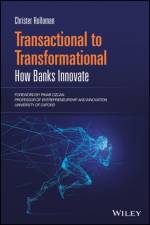
Through a series of case studies you are invited to meet, and learn firsthand from, the people and teams that have delivered a number of very different innovations successfully across a diverse group of banks; big and small, long established and brand new, from the east and west!Banks featured include: Bank of America, BBVA, Citi, Crédit Agricole, Danske Bank, Deutsche Bank, ING, J.P. Morgan, Lloyds Bank, Metro Bank, N26, National Australia Bank, Royal Bank of Canada, Santander, Standard Chartered and Swedbank.This book will equip you with ideas, tools and actionable hands-on advice. You will discover the untold stories about how these banks delivered new solutions to consumers and businesses, products as well as services, across the spectrum of buy, build and partner.Here are some of the innovation challenges you can overcome by learning from those that already did:* Working around legacy systems* Limited tech resources and budget* Secure budget and buy-in from the exec team* Creating a culture that embrace innovation* Compete with fintechs and big tech for new talent* Validating actual customer demand* Increasing speed to market whilst satisfying risk and compliance* Retain control when partnering with third parties* Making the right priorities* When to shut something downOnce you have bought this book you can register on www.howbanksinnovate.com to access more in-depth material from all of the banks featured, full-length interviews and videos.
Build a stronger team with this illustrated fableFrom bestselling author Jon Gordon and coauthor Kate Leavell, Stick Together delivers a crucial message about the power of belief, ownership, connection, love, inclusion, consistency, and hope. The authors guide individuals and teams on an inspiring journey to show them how to persevere through challenges, overcome obstacles, and create success together.Stick Together follows Coach David, a high school basketball coach looking to motivate his team for the new season. The team members are given sticks with words written on them and tasked with a number of missions:* To find another player with the same word written on their stick* To explain why that word is important for a team to be their best* To render their sticks unbreakableAs the players work together to complete their tasks, they discover how to make their team stronger and create an unbreakable bond. Perfect for student athletes and teams in all industries including business, education, healthcare, and nonprofit, and for readers of all ages, Stick Together will resonate with anyone looking to improve their team performance and excel in a group environment.
Help students and educators cope with fear in the classroom with this up-to-date new resourceIn The Courageous Classroom: Creating a Culture of Safety for Students to Learn and Thrive, community psychiatrist Dr. Janet Taylor and nationally acclaimed educator, Jed Dearybury deliver a concise and insightful take on the culture of fear in schools around the country. You'll learn about the various ways fear is present in students and educators, practical tools and strategies for educators to cope with fear and anxiety in the classroom, the reality of racism, homophobia and microaggressions and their impact on learning, and how to create a landscape of calm in your classroom.This important book will show you:* The difference between fear and anxiety and how to respond to both* How to create social-emotional learning environments where students feel mentally and physically safe* Why, despite schools being safer than ever, students and educators fear for their personal safety* How to manage educator stress, fear, and anxiety in a time of increasing coverage of school shootingsPerfect for K-12 public school educators, Courageous Classrooms will also earn a place in the libraries of educators in training and parents with school-age children who wish to better help children cope with fear.
HUMAN MOTION CAPTURE AND IDENTIFICATION FOR ASSISTIVE SYSTEMS DESIGN IN REHABILITATIONA guide to the core ideas of human motion capture in a rapidly changing technological landscapeHuman Motion Capture and Identification for Assistive Systems Design in Rehabilitation aims to fill a gap in the literature by providing a link between sensing, data analytics, and signal processing through the characterisation of movements of clinical significance. As noted experts on the topic, the authors apply an application-focused approach in offering an essential guide that explores various affordable and readily available technologies for sensing human motion.The book attempts to offer a fundamental approach to the capture of human bio-kinematic motions for the purpose of uncovering diagnostic and severity assessment parameters of movement disorders. This is achieved through an analysis of the physiological reasoning behind such motions. Comprehensive in scope, the text also covers sensors and data capture and details their translation to different features of movement with clinical significance, thereby linking them in a seamless and cohesive form and introducing a new form of assistive device design literature. This important book:* Offers a fundamental approach to bio-kinematic motions and the physiological reasoning behind such motions* Includes information on sensors and data capture and explores their clinical significance* Links sensors and data capture to parameters of interest to therapists and clinicians* Addresses the need for a comprehensive coverage of human motion capture and identification for the purpose of diagnosis and severity assessment of movement disordersWritten for academics, technologists, therapists, and clinicians focusing on human motion, Human Motion Capture and Identification for Assistive Systems Design in Rehabilitation provides a holistic view for assistive device design, optimizing various parameters of interest to relevant audiences.
The data in this book are new or updated, and will serve also as Origin of Life and evolutionary studies. Endospores of bacteria have a long history of use as model organisms in astrobiology, including survival in extreme environments and interplanetary transfer of life. Numerous other bacteria as well as archaea, lichens, fungi, algae and tiny animals (tardigrades, or water bears) are now being investigated for their tolerance to extreme conditions in simulated or real space environments. Experimental results from exposure studies on the International Space Station and space probes for up to 1.5 years are presented and discussed. Suggestions for extaterrestrial energy sources are also indicated.AudienceResearchers and graduate students in microbiology, biochemistry, molecular biology and astrobiology, as well as anyone interested in the search for extraterrestrial life and its technical preparations.
Machine Vision Inspection Systems (MVIS) is a multidisciplinary research field that emphasizes image processing, machine vision and, pattern recognition for industrial applications. Inspection techniques are generally used in destructive and non-destructive evaluation industry. Now a day's the current research on machine inspection gained more popularity among various researchers, because the manual assessment of the inspection may fail and turn into false assessment due to a large number of examining while inspection process.This volume 2 covers machine learning-based approaches in MVIS applications and it can be employed to a wide diversity of problems particularly in Non-Destructive testing (NDT), presence/absence detection, defect/fault detection (weld, textile, tiles, wood, etc.), automated vision test & measurement, pattern matching, optical character recognition & verification (OCR/OCV), natural language processing, medical diagnosis, etc. This edited book is designed to address various aspects of recent methodologies, concepts, and research plan out to the readers for giving more depth insights for perusing research on machine vision using machine learning-based approaches.
This issue of AD posits that this re-examination and redeployment of postmodernist approaches is the architectural attempt to reflect, grapple with and make sense of the current political and economic situation. The term 'ad hoc' is used to describe a resistance to stylistic conformity and predictability that embraces individuality, and which conceives architecture in a broader cultural space. As a mode of practice marked by stylistic divergence, the links, shared interest and continuities that exist among a range of architects are often overlooked. It will explore and provide a critical analysis of the design tactics and the strategies that inform them, and will investigate some key questions: What is it that has led architects to adopt tactics that have long been vilified within architectural culture? What connections exist between our present moment and the postmodern one, architecturally and in terms of the broader political shifts, in particular our present moment's return of the grand narrative - whether of populist nationalism, identity or climate change? What do these tactics represent, how do they reflect this situation, and what do they offer in articulating a position for architects and the public role of their profession?This issue brings together a range of architects and critical voices to reflect on these questions and offer some answers. Essays by historians and critics situate practice in relation to postmodernism and its legacies. Following these will be essays by architects situating their work in relation to the ideas posited by the thematic introduction, and the broader contexts in which it operates and proceeds. The issue will be completed by interviews with early career architects, reflecting on their work thus far, its influences, pressures and future directions.
BUILDING SECURE CARSExplores how the automotive industry can address the increased risks of cyberattacks and incorporate security into the software development lifecycleWhile increased connectivity and advanced software-based automotive systems provide tremendous benefits and improved user experiences, they also make the modern vehicle highly susceptible to cybersecurity attacks. In response, the automotive industry is investing heavily in establishing cybersecurity engineering processes.Written by a seasoned automotive security expert with abundant international industry expertise, Building Secure Cars: Assuring the Automotive Software Development Lifecycle introduces readers to various types of cybersecurity activities, measures, and solutions that can be applied at each stage in the typical automotive development process.This book aims to assist auto industry insiders build more secure cars by incorporating key security measures into their software development lifecycle. Readers will learn to better understand common problems and pitfalls in the development process that lead to security vulnerabilities. To overcome such challenges, this book details how to apply and optimize various automated solutions, which allow software development and test teams to identify and fix vulnerabilities in their products quickly and efficiently. This book balances technical solutions with automotive technologies, making implementation practical. Building Secure Cars is:* One of the first books to explain how the automotive industry can address the increased risks of cyberattacks, and how to incorporate security into the software development lifecycle* An optimal resource to help improve software security with relevant organizational workflows and technical solutions* A complete guide that covers introductory information to more advanced and practical topics* Written by an established professional working at the heart of the automotive industry* Fully illustrated with tables and visuals, plus real-life problems and suggested solutions to enhance the learning experienceThis book is written for software development process owners, security policy owners, software developers and engineers, and cybersecurity teams in the automotive industry. All readers will be empowered to improve their organizations' security postures by understanding and applying the practical technologies and solutions inside.
This exciting new volume will provide a comprehensive overview of the applications of geoinformatics technology for engineers, scientists, and students to become more productive, more aware, and more responsive to global climate change issues and how to manage sustainable development of Earth's resources.Over the last few years, the stress on natural resources has increased enormously due to anthropogenic activities especially through urbanization and industrialization processes. Sustainable development while protecting the Earth's environment involves the best possible management of natural resources, subject to the availability of reliable, accurate and timely information on regional and global scales. There is an increasing demand for an interdisciplinary approach and sound knowledge on each specific resource, as well as on the ecological and socio-economic perspectives related to their use.Geoinformatics, including Remote Sensing (RS), Geographical Information System (GIS), and Global Positioning System (GPS), is a groundbreaking and advanced technology for acquiring information required for natural resource management and addressing the concerns related to sustainable development. It offers a powerful and proficient tool for mapping, monitoring, modeling, and management of natural resources. There is, however, a lack of studies in understanding the core science and research elements of geoinformatics, as well as larger issues of scaling to use geoinformatics in sustainable development and management practices of natural resources. There is also a fundamental gap between the theoretical concepts and the operational use of these advance techniques.Sustainable Development Practices Using Geoinformatics, written by well-known academicians, experts and researchers provides answers to these problems, offering the engineer, scientist, or student the most thorough, comprehensive, and practical coverage of this subject available today, a must-have for any library.
System Safety for the 21st CenturyExplore an authoritative and complete exploration of basic and advanced concepts in system safety engineeringThe Second Edition of System Safety for the 21st Century delivers an authoritative primer on the identification, evaluation, analysis, and control of hazards to people, components, sub-systems, systems, processes, and facilities. The book offers readers a complete discussion on techniques within system safety, the discipline on process safety, as well as a comprehensive treatment on professionalism within the safety industry.This new edition applies the concepts of system safety to medical disciplines and medical devices, offering readers the potential to have a significantly positive impact on the standing of American medical safety in the world. The latest edition also includes:* A brand-new chapter on the risk management with current international and U.S. government standards* New material on process safety including EPA and OSHA implementation and external reviews* An Instructor Solutions Manual that includes course content and 30 chapters of review questions and answers* Further clarifications on difficult concepts from the First Edition with updated appendices and referencesRelevant to academia, industry, and government, System Safety for the 21st Century is an essential resource for anyone studying or implementing and managing proactive hazard identification and risk control techniques and procedures.
Discover the power of machine learning in the physical sciences with this one-stop resource from a leading voice in the fieldDeep Learning for Physical Scientists: Accelerating Research with Machine Learning delivers an insightful analysis of the transformative techniques being used in deep learning within the physical sciences. The book offers readers the ability to understand, select, and apply the best deep learning techniques for their individual research problem and interpret the outcome.Designed to teach researchers to think in useful new ways about how to achieve results in their research, the book provides scientists with new avenues to attack problems and avoid common pitfalls and problems. Practical case studies and problems are presented, giving readers an opportunity to put what they have learned into practice, with exemplar coding approaches provided to assist the reader.From modelling basics to feed-forward networks, the book offers a broad cross-section of machine learning techniques to improve physical science research. Readers will also enjoy:* A thorough introduction to the basic classification and regression with perceptrons* An exploration of training algorithms, including back propagation and stochastic gradient descent and the parallelization of training* An examination of multi-layer perceptrons for learning from descriptors and de-noising data* Discussions of recurrent neural networks for learning from sequences and convolutional neural networks for learning from images* A treatment of Bayesian optimization for tuning deep learning architecturesPerfect for academic and industrial research professionals in the physical sciences, Deep Learning for Physical Scientists: Accelerating Research with Machine Learning will also earn a place in the libraries of industrial researchers who have access to large amounts of data but have yet to learn the techniques to fully exploit that access. Perfect for academic and industrial research professionals in the physical sciences, Deep Learning for Physical Scientists: Accelerating Research with Machine Learning will also earn a place in the libraries of industrial researchers who have access to large amounts of data but have yet to learn the techniques to fully exploit that access. This book introduces the reader to the transformative techniques involved in deep learning. A range of methodologies are addressed including: *Basic classification and regression with perceptrons *Training algorithms, such as back propagation and stochastic gradient descent and the parallelization of training *Multi-Layer Perceptrons for learning from descriptors, and de-noising data *Recurrent neural networks for learning from sequences *Convolutional neural networks for learning from images *Bayesian optimization for tuning deep learning architectures Each of these areas has direct application to physical science research, and by the end of the book, the reader should feel comfortable enough to select the methodology which is best for their situation, and be able to implement and interpret outcome of the deep learning model. The book is designed to teach researchers to think in new ways, providing them with new avenues to attack problems, and avoid roadblocks within their research. This is achieved through the inclusion of case-study like problems at the end of each chapter, which will give the reader a chance to practice what they have just learnt in a close-to-real-world setting, with example 'solutions' provided through an online resource. Market Description This book introduces the reader to the transformative techniques involved in deep learning. A range of methodologies are addressed including: * Basic classification and regression with perceptrons * Training algorithms, such as back propagation and stochastic gradient descent and the parallelization of training * Multi-Layer Perceptrons for learning from descriptors, and de-noising data * Recurrent neural networks for learning from sequences * Convolutional neural networks for learning from images * Bayesian optimization for tuning deep learning architectures Each of these areas has direct application to physical science research, and by the end of the book, the reader should feel comfortable enough to select the methodology which is best for their situation, and be able to implement and interpret outcome of the deep learning model. The book is designed to teach researchers to think in new ways, providing them with new avenues to attack problems, and avoid roadblocks within their research. This is achieved through the inclusion of case-study like problems at the end of each chapter, which will give the reader a chance to practice what they have just learnt in a close-to-real-world setting, with example 'solutions' provided through an online resource.
Abonner på vårt nyhetsbrev og få rabatter og inspirasjon til din neste leseopplevelse.
Ved å abonnere godtar du vår personvernerklæring.