




Gjør som tusenvis av andre bokelskere
Abonner på vårt nyhetsbrev og få rabatter og inspirasjon til din neste leseopplevelse.
Ved å abonnere godtar du vår personvernerklæring.Du kan når som helst melde deg av våre nyhetsbrev.

This book will describe from fundamental, first principles modern methods of optical spectroscopy. In particular, detailed descriptions of spectroscopic techniques will be developed and organized within the framework of the Perturbative Polarization Expansion approach. This unifying viewpoint allows linear and nonlinear, resonant and nonresonant, spontaneous and stimulated, frequency and time domain spectroscopies to be developed in a semi-classical framework from first principles, i.e. from Schrodinger and Maxwell equations starting points. In particular, descriptions of absorption (electronic and vibrational), Raman scattering and Raman based interactions, CD, near-field effects and nonlinear spectroscopies such as second harmonic generation, sum frequency generation, pump-probe, CARS, photon echoes will be developed and the relationship between these various optical techniques will be highlighted. Nonperturbative and purely quantum matter radiation interactions will also be explicitly considered. Applications to both molecular, condensed phase and materials systems will be cited as examples.This book will describe from fundamental, first principles modern methods of optical spectroscopy. In particular, detailed descriptions of spectroscopic techniques will be developed and organized within the framework of the Perturbative Polarization Expansion approach. This unifying viewpoint allows linear and nonlinear, resonant and nonresonant, spontaneous and stimulated, frequency and time domain spectroscopies to be developed in a semi-classical framework from first principles, i.e. from Schrodinger and Maxwell equations starting points. In particular, descriptions of absorption (electronic and vibrational), Raman scattering and Raman based interactions, CD, near-field effects and nonlinear spectroscopies such as second harmonic generation, sum frequency generation, pump-probe, CARS, photon echoes will be developed and the relationship between these various optical techniques will be highlighted. Nonperturbative and purely quantum matter radiation interactions will also be explicitly considered. Applications to both molecular, condensed phase and materials systems will be cited as examples.This book will describe from fundamental, first principles modern methods of optical spectroscopy. In particular, detailed descriptions of spectroscopic techniques will be developed and organized within the framework of the Perturbative Polarization Expansion approach. This unifying viewpoint allows linear and nonlinear, resonant and nonresonant, spontaneous and stimulated, frequency and time domain spectroscopies to be developed in a semi-classical framework from first principles, i.e. from Schrodinger and Maxwell equations starting points. In particular, descriptions of absorption (electronic and vibrational), Raman scattering and Raman based interactions, CD, near-field effects and nonlinear spectroscopies such as second harmonic generation, sum frequency generation, pump-probe, CARS, photon echoes will be developed and the relationship between these various optical techniques will be highlighted. Nonperturbative and purely quantum matter radiation interactions will also be explicitly considered. Applications to both molecular, condensed phase and materials systems will be cited as examples.
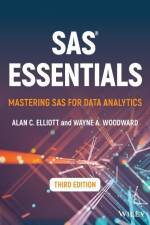
SAS ESSENTIALSValuable step-by-step introduction to using SAS(r) statistical software as a foundational approach to data analysis and interpretationPresenting a straightforward introduction from the ground up, SAS(r) Essentials illustrates SAS using hands-on learning techniques and numerous real-world examples; keeping different experience levels in mind, the highly qualified author team has developed the book over 25 years of teaching introductory SAS courses.This book introduces data manipulation, statistical techniques, and the SAS programming language, including SAS macros, reporting results in tables, and factor analysis, as well as sections on character functions, variable manipulation, and merging, appending, and updating files. It features self-contained chapters to enhance the learning process and includes programming approaches for the latest version of the SAS platform.The Third Edition has been updated with expanded examples, a new chapter introducing PROC SQL as well as new end-of-chapter exercises. The Third Edition also includes a companion website with data sets, additional code, notes on SAS programming, functions, ODS, PROC SQL, and SAS Arrays, along with solutions for instructors.Specific sample topics covered in SAS(r) Essentials include:* Getting data into SAS, reading, writing, and importing data, preparing data for analysis, preparing to use SAS procedures, and controlling output using ODS* Techniques for creating, editing, and debugging SAS programs, cleaning up messy data sets, and manipulating data using character, time, and numeric functions* Other essential computational skills that are utilized by business, government, and organizations alike, and DATA step for data management* Using PROC to analyze data, including evaluating quantitative data, analyzing counts and tables, comparing means using T-Tests, correlation and regression, and analysis of variance, nonparametric analysis, logistic regression, factor analysis, and creating custom graphs and reports.SAS(r) Essentials is a fundamental study resource for professionals preparing for the SAS Base Certification Exam, as well as an ideal textbook for courses in statistics, data analytics, applied SAS programming, and statistical computer applications.
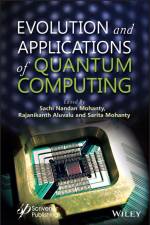
EVOLUTION and APPLICATIONS of QUANTUM COMPUTINGThe book is about the Quantum Model replacing traditional computing's classical model and gives a state-of-the-art technical overview of the current efforts to develop quantum computing and applications for Industry 4.0.A holistic approach to the revolutionary world of quantum computing is presented in this book, which reveals valuable insights into this rapidly emerging technology. The book reflects the dependence of quantum computing on the physical phenomenon of superposition, entanglement, teleportation, and interference to simplify difficult mathematical problems which would have otherwise taken years to derive a definite solution for. An amalgamation of the information provided in the multiple chapters will elucidate the revolutionary and riveting research being carried out in the brand-new domain encompassing quantum computation, quantum information and quantum mechanics. Each chapter gives a concise introduction to the topic.The book comprises 18 chapters and describes the pioneering work on the interaction between artificial intelligence, machine learning, and quantum computing along with their applications and potential role in the world of big data. Subjects include:* Combinational circuits called the quantum multiplexer with secured quantum gate (CSWAP);* Detecting malicious emails and URLs by using quantum text mining algorithms to distinguish between phishing and benign sites;* Quantum data traffic analysis for intrusion detection systems;* Applications of quantum computation in banking, netnomy and vehicular ad-hoc networks, virtual reality in the education of autistic children, identifying bacterial diseases and accelerating drug discovery;* The critical domain of traditional classical cryptography and quantum cryptography.AudienceThe book will be very useful for researchers in computer science, artificial intelligence and quantum physics as well as students who want to understand the history of quantum computing along with its applications and have a technical state-of-the-art overview.
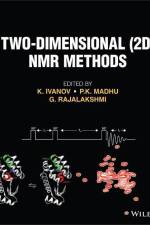
TWO-DIMENSIONAL (2D) NMR METHODSPractical guide explaining the fundamentals of 2D-NMR for experienced scientists as well as relevant for advanced studentsTwo-Dimensional (2D) NMR Methods is a focused work presenting an overview of 2D-NMR concepts and techniques, including basic principles, practical applications, and how NMR pulse sequences work.Contributed to by global experts with extensive experience in the field, Two-Dimensional (2D) NMR Methods provides in-depth coverage of sample topics such as:* Basics of 2D-NMR, data processing methods (Fourier and beyond), product operator formalism, basics of spin relaxation, and coherence transfer pathways* Multidimensional methods (single- and multiple-quantum spectroscopy), NOESY (principles and applications), and DOSY methods* Multiple acquisition strategies, anisotropic NMR in molecular analysis, ultrafast 2D methods, and multidimensional methods in bio-NMR* TROSY (principles and applications), field-cycling and 2D NMR, multidimensional methods and paramagnetic NMR, and relaxation dispersion experimentsThis text is a highly useful resource for NMR specialists and advanced students studying NMR, along with users in research, academic and commercial laboratories that study or conduct experiments in NMR.
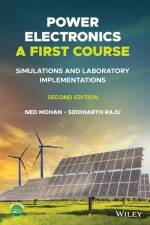
POWER ELECTRONICS A FIRST COURSE Enables students to understand power electronics systems, as one course, in an integrated electric energy systems curriculum Power Electronics A First Course provides instruction on fundamental concepts related to power electronics to undergraduate electrical engineering students, beginning with an introductory chapter and moving on to discussing topics such as switching power-poles, switch-mode dc-dc converters, and feedback controllers. The authors also cover diode rectifiers, power-factor-correction (PFC) circuits, and switch-mode dc power supplies. Later chapters touch on soft-switching in dc-dc power converters, voltage and current requirements imposed by various power applications, dc and low-frequency sinusoidal ac voltages, thyristor converters, and the utility applications of harnessing energy from renewable sources. Power Electronics A First Course is the only textbook that is integrated with hardware experiments and simulation results. The simulation files are available on a website associated with this textbook. The hardware experiments will be available through a University of Minnesota startup at a low cost. In Power Electronics A First Course, readers can expect to find detailed information on: Availability of various power semiconductor devices that are essential in power electronic systems, plus their switching characteristics and various tradeoffs Common foundational unit of various converters and their operation, plus fundamental concepts for feedback control, illustrated by means of regulated dc-dc converters Basic concepts associated with magnetic circuits, to develop an understanding of inductors and transformers needed in power electronics Problems associated with hard switching, and some of the practical circuits where this problem can be minimized with soft-switching Power Electronics A First Course is an ideal textbook for Junior/Senior-Undergraduate students in Electrical and Computer Engineering (ECE). It is also valuable to students outside of ECE, such as those in more general engineering fields. Basic understanding of electrical engineering concepts and control systems is a prerequisite.
A concise and practical guide to financial modeling in ExcelIn The Essentials of Financial Modeling in Excel: A Concise Guide to Concepts and Methods, veteran quantitative modeling and business analysis expert Dr. Michael Rees delivers a practical and hands-on introduction to financial modeling in Excel. The author offers readers a well-structured and strategic toolkit to learn modeling from scratch, focusing on the core economic concepts and the structures commonly required within Excel models.Divided into six parts, the book discusses the use of models and the factors to consider when designing and building models so that they can be as powerful as possible, yet simple. . Readers will also find:* The foundational structures and calculations most frequently used in modeling, including growth- and ratio-based methods, corkscrews, and waterfall analysis* Walkthroughs of economic modeling, measurement, and evaluation, and the linking of these to the decision criteria. These include breakeven and payback analysis, compounding, discounting, calculation of returns, loan calculations, and others* Structured approaches for modeling in corporate finance, including financial statement modeling, cash flow valuation, cost of capital, and ratio analysis* Techniques to implement sensitivity and scenario analysis* Core aspects of statistical analysis, including data preparation, manipulation, and integration* The use of approximately 100 Excel functions within example modeling contexts* Further Topics Sections, which introduce advanced aspects of many areas, in order to provide further benefit to more advance readers, whilst presenting the truly essential topics separately. Examples of these include introductions to PowerQuery and PowerPivot, as well as advanced waterfall structuresAn invaluable, all-in-one blueprint for learning financial modeling in Excel, this book is ideal for beginning and intermediate financial professionals and students seeking to build and reinforce essential topics in financial modeling.
ARTIFICIAL INTELLIGENCE (AI) IN FORENSIC SCIENCESFoundational text for teaching and learning within the field of Artificial Intelligence (AI) as it applies to forensic scienceArtificial Intelligence (AI) in Forensic Sciences presents an overview of the state-of-the-art applications of Artificial Intelligence within Forensic Science, covering issues with validation and new crimes that use AI; issues with triage, preselection, identification, argumentation and explain ability; demonstrating uses of AI in forensic science; and providing discussions on bias when using AI.The text discusses the challenges for the legal presentation of AI data and interpretation and offers solutions to this problem while addressing broader practical and emerging issues in a growing area of interest in forensics. It builds on key developing areas of focus in academic and government research, providing an authoritative and well-researched perspective.Compiled by two highly qualified editors with significant experience in the field, and part of the Wiley -- AAFS series 'Forensic Science in Focus', Artificial Intelligence (AI) in Forensic Sciences includes information on:* Cyber IoT, fundamentals on AI in forensic science, speaker and facial comparison, and deepfake detection* Digital-based evidence creation, 3D and AI, interoperability of standards, and forensic audio and speech analysis* Text analysis, video and multimedia analytics, reliability, privacy, network forensics, intelligence operations, argumentation support in court, and case applications* Identification of genetic markers, current state and federal legislation with regards to AI, and forensics and fingerprint analysisProviding comprehensive coverage of the subject, Artificial Intelligence (AI) in Forensic Sciences is an essential advanced text for final year undergraduates and master's students in forensic science, as well as universities teaching forensics (police, IT security, digital science and engineering), forensic product vendors and governmental and cyber security agencies.
An incisive and original collection of the most engaging issues in contemporary comparative theologyIn The Wiley Blackwell Companion to Comparative Theology, a team of distinguished scholars delivers a one-of-a-kind collection of essays on comparative theology. Honoring the groundbreaking work of Francis X. Clooney, S.J.--whose contributions to theology and religion will endure for generations--the included works explore seven key subjects in comparative theology, including its theory, method, history, influential contemporary developments, and potentially fruitful avenues for future discussion.The editors provide essays that reflect on the critical, theoretical, and methodological aspects of comparative theology, as well as constructive and critical appraisals of Francis Clooney's scholarship. Over forty original contributions from internationally recognized scholars and insightful newcomers to the field are included within. Readers will also find:* Insightful discussions of the larger implications of comparative theology beyond the discipline itself, especially as it relates to educational programs, institutions, and post-carceral life* Robust promotion of the research methods and critical thinking present in Francis Clooney's work* Practical discussions of the most pressing challenges and opportunities facing theological researchers today* Papers from leading contributors located around the globe, including emerging voices from the global southPerfect for advanced undergraduate and graduate students of theology and religious studies, The Wiley Blackwell Companion to Comparative Theology will also benefit scholars with an interest in comparative religion, interreligious studies, and interreligious theology.
Don't let money get in the way of your kids' best education529 & Education Savings Plans For Dummies helps you sort through the vast amount of information about education savings accounts and choose the plans that are best for you and your family. A college or private K-12 education is generally parents' single largest expense for their children. 529 plans and 530 plans (Coverdell accounts) are relatively solid investment vehicles that can make saving for college much easier, providing tax advantages that other types of investments can't match. Education savings can be part of your overall wealth accumulation strategy, and this book can show you which plans are right for you, help you decide when to start saving, and guide you through determining how much to save per year in order to meet your goals--and help your kids meet theirs.* Learn about the different types of tax-sheltered and tax-advantaged ways to save for education* Create a saving and investment strategy that makes sense for your family* Demystify the 529 and 530 plan rules and maximize your tax advantage* Help set your kids on the path to success and to their college of choiceThis is the perfect Dummies guide for parents or family members who want to begin saving for a college or K-12 education and who may want to supplement their current savings with tax-sheltered, education-specific accounts, or tax-advantaged investment accounts that may be used for education funding.
Stretch your knitting skills Ready to take your knitting beyond scarves and blankets? Knitting Patterns For Dummies is chock full of knitting patterns - and the skills you need to complete them with confidence. These easy-to-follow instructions will have you crafting cozy sweaters, accessories, and home decor that you'll be proud of. If you haven't been knitting long, this friendly book will show you how to read patterns and walk you through the process from start to finish. Plus, you get full-color photos and creative tips for avoiding common knitting problems. Inside... Choosing needles and yarn Reading knitting patterns Working with common stitches Creating color and texture motifs Understanding gauge Making knits that fit Caring for completed knits Personalizing your projects
An extraordinary tale of an American firm's astounding success in ChinaIn Money Machine: A Trailblazing American Venture in China, Weijian Shan delivers a compelling account of one of the most significant deals in private equity history: the first and only foreign acquisition of control of a Chinese national bank. Money Machine is the fascinating inside story of the transaction as told by the man who led it, from the intrigues of dealmaking to the complex and uncharted process of securing control by a foreign investor of a Chinese nationwide financial institution, a feat that had never before been attempted, nor has it been repeated.Shan also describes the astonishingly successful turnaround of the institution under the control of the American firm: the clash of cultures, the growth to strength and profitability, and ultimately, the extraordinarily profitable exit from the investment. In the process, he reveals new insights into how finance operates in China's capital system and how private equity firms can add real value to companies. Readers will also find:* A peek behind the curtain of a process usually shrouded in secrecy: private equity dealmaking and moneymaking* The complex negotiations between American private equity executives and Chinese regulators to implement a series of unprecedented changes* The riveting details of the challenges that had to be overcome to return the bank to growth and profitabilityAn exceptional firsthand account of truly singular deal-making and money-making, Money Machine will be of interest to investment bankers, investors, financial analysts and anyone who appreciates a suspenseful, true-life story.
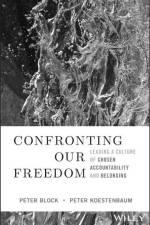
Explore the nature of modern leadershipIn Confronting Our Freedom, a team of dedicated leadership coaches delivers an exciting and engaging new take on management and leadership. Drawing on recent events in the market and in the world, including the Great Resignation, the COVID-19 pandemic, and widespread digital transformation, the authors invite you to reimagine ideas of freedom and accountability in the context of work. You'll explore how freedom of action--for managers and employees--is what gives rise to true accountability, both in the community and in the workplace.In the book, you'll also find:* Discussions of the power and structure of freedom, including its implications for our own choices and lives* Ways to shift the focus of your leadership and management to accountability and freedom* Strategies for shifting the illusion of clear roles and expectations to one compatible with fully human organizationsA groundbreaking and incisive approach to managing and leading others in virtual, hybrid, and in-person settings, Confronting Our Freedom will be an eye opener for managers, executives, and other business leaders seeking to improve their ability to inspire others to their fullest potential.
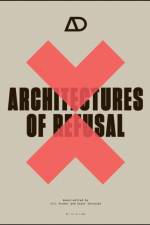
Guest-edited by Jill Stoner and Ozayr SaloojeeOver the past decade, and in a more concentrated form over the past two years, there has been increasing recognition of architecture's systemic complicity in constructing and upholding hierarchies of race and class, and privileging colonial paradigms that perpetuate spatial and economic inequity. This AD issue reveals how designers, practitioners, scholars and architects are participating in dismantling the major canons of Western architecture. The work is both literal and figural: taking buildings apart and reconstituting them, and challenging mythologies that include drawing-as-analogue, building-as object, architect-as-hero and nature-as-other.Architecture has both potential and responsibility for political agency in the public realm. The contributions to this issue foreground emancipatory spatial ideas and practices from around the world, demonstrating that refusal is no longer just absence and denial, but a constructive mode of resistance and action that needs to be approached through subversive urban works, design pedagogy and alliances across multiple disciplines.Contributors: Piper Bernbaum, Carwil Bjork-James, Thiresh Govender, Lucia Jalón Oyarzun, Jennifer Newsom and Tom Carruthers, Cong Chi Nguyen, Quilian Riano, Hannah Le Roux, Alberto de Salvatierra, Cathy Smith, Chat Travieso, and Ilze Wolff.
Hazardous Materials MedicineComplete background on chemical exposures that create illnesses, including assessment, diagnosis, and treatment protocolsWritten on a level that can be understood by field practitioners and/or first responders, Hazardous Materials Medicine: Treating the Chemically Injured Patient provides an in-depth understanding of how to diagnose and treat toxic chemical exposures in a prehospital or emergency department setting.The protocols used in this book conform to the guidelines set forth in the NFPA 470 standard, and the medical guidance developed by FEMA for Type I, II & III Deployable Hazmat Response Teams. The hazardous materials medical protocols in this book have been fully vetted by three poison control toxicologists, multiple emergency physicians, and paramedics.Hazardous Materials Medicine: Treating the Chemically Injured Patient covers sample topics such as:* Scene assessment, to help determine the cause of the exposure, and exposure assessment, to determine what physiologic systems are affected* Toxic syndromes/toxidromes to appropriately treat the exposed patient, including corrosive and irritant, asphyxiant, cholinergic, and hydrocarbon and derivative toxidromes* Science behind a chemical exposure, to allow for a complete understanding of both the chemistry and physiology of what is occurring because of the exposure* Interfacing between the on-scene response team and the hospital, to ensure consistency and continuity of care from the field into the hospitalEnabling public safety and health professionals to administer effective care while retaining their own personal safety, Hazardous Materials Medicine: Treating the Chemically Injured Patient is a must-have resource for emergency medical technicians, paramedics, hazmat technicians, and emergency physicians and nurses working in high-risk field situations with chemically injured patients.
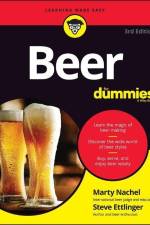
Here's to beer! These days, the term "beer snob" isn't an oxymoron. Beer For Dummies introduces you to the rich and complex world of beer, so you can tell your ales from your lagers and beyond. Starting with the basic ingredients, you'll build up your beer knowledge until you're fluent in craft beer styles, international beers, beer pairings, and even ways of using beer in your cooking. You'll also find guides to the top beer festivals and competitions and even dive into the history of beer. Any hops enthusiast can brew up some fun with this Dummies guide. Inside... Basic beer styles and regions History & production of beer Organic, gluten-free, and kosher beer Buying and tasting quality beer Intro to home beer brewing Beer rating sites and apps The world's top beer brands Beer-oriented travel inspiration
Empower and Inspire Human PotentialIn the decade before the Covid-19 pandemic, change was coming so quickly and across so many vectors that most business leaders - so busy tackling one new challenge after another - missed the trendlines that would collide in the early months of 2020 and forever change their workforce and how they lead it for generations to come.In The Empathy Advantage: Leading the Empowered Workforce, Heather E. McGowan and Chris Shipley team up again to deliver a guidebook for leaders navigating the uncertainty of a post pandemic world in a sequel to their successful book The Adaptation Advantage. Leaders today must acknowledge and respond to the fundamental shifts that lay the foundation for effective leadership: From managing people to enabling success, from viewing peers as competitors to seeing them as collaborators, from applying extrinsic pressure on workers to unlocking intrinsic motivation, and from driving productivity with unquestioned authority to inspiring value creation by leading with empathy.In this book, you will learn about the five interlocking trends that brought us the empowered workforce: The Great Resignation, the Great Refusal, the Great Reshuffle, the Great Retirement, and the Great Relocation collectively delivered the Great Reset. These trends, building for a decade prior to the pandemic, saw employees leading jobs; restructuring where and how they work, accelerating retirement, and reordering the role of work in their lives.The Empathy Advantage offers advice on how to lead a complex, diverse, and multi-generational workforce to out-perform your competition. This book will inspire you to:* Rethink Your Workforce: You'll gain new insights into today's empowered workforce and how best to tap their intrinsic motivations.* Rethink Your Organization: You'll learn how to reorganize work to become resilient in continuous change.* Rethink Your Leadership: You'll discover superpowers and unleash your Empath Advantage.Whether you are a seasoned executive or an emerging leader, The Empathy Advantage: Leading the Empowered Workforce speaks to those who are ready to embrace a more influential and engaging form of leadership, and will earn a place in the libraries of anyone with responsibility for recruiting, engaging, leading and retaining the next generation of workers.
With an increasing demand for biometric systems in various industries, this book on multimodal biometric systems, answers the call for increased resources to help researchers, developers, and practitioners. Multimodal biometric and machine learning technologies have revolutionized the field of security and authentication. These technologies utilize multiple sources of information, such as facial recognition, voice recognition, and fingerprint scanning, to verify an individual???s identity. The need for enhanced security and authentication has become increasingly important, and with the rise of digital technologies, cyber-attacks and identity theft have increased exponentially. Traditional authentication methods, such as passwords and PINs, have become less secure as hackers devise new ways to bypass them. In this context, multimodal biometric and machine learning technologies offer a more secure and reliable approach to authentication. This book provides relevant information on multimodal biometric and machine learning technologies and focuses on how humans and computers interact to ever-increasing levels of complexity and simplicity. The book provides content on the theory of multimodal biometric design, evaluation, and user diversity, and explains the underlying causes of the social and organizational problems that are typically devoted to descriptions of rehabilitation methods for specific processes. Furthermore, the book describes new algorithms for modeling accessible to scientists of all varieties. Audience Researchers in computer science and biometrics, developers who are designing and implementing biometric systems, and practitioners who are using biometric systems in their work, such as law enforcement personnel or healthcare professionals.
NEXT-GENERATION ALGAEThe book comprehensively details the novel and biologically active compounds derived from algae for sustainable healthcare delivery that could be used for the treatment of an ever-increasing population, prevention of high rate of morbidity rates, as well as in the treatment of numerous diseases, and serve as an alternative drug for the prevention of high level of resistance to synthetic drugs.This second volume places a special emphasis on the discovery of novel and biologically active compounds from algae. It covers a wide range of applications, including the use of astaxanthin and carotenoids derived from algae for the production of nutraceuticals, pharmaceuticals, additives, food supplements, and feed. The book also discusses the production of polyunsaturated fatty acids (PUFAs) and their biomedical applications, recent advancements in the research of sulfated polysaccharides from algal origin, and their antiulcer bioactivities. Other topics include the application of algae in wound healing, the use of nanotechnology for the bioengineering of useful metabolites derived from algae and their multifaceted applications, and the production of single-cell proteins and pigments with high relevance in the industry.AudienceResearchers in industry and academia as well as clinicians in the fields of microbiology, biotechnology, and food science will find this book very pertinent.
This book brings together experts in relevant fields to describe the successful application of algae and their derivatives in agriculture, improving agricultural sustainability, harvesting and processing, food security, fishery, aquafarming, agriculture pollution, and state-of-the-art developments of algae in commercial and agriculture utilization. This book provides up-to-date and cutting-edge information on the application of algae in producing sustainable solutions to various challenges that arise from an increase in agricultural production, as well as its utilization in the bioremediation of industrial wastewater. Moreover, the book provides detailed information about the recent advancements in smart microalgae wastewater treatment using Internet of Things (IoT) and edge computing applications. Other topics covered include the use of microalgae in various applications; the use of algae to remove arsenic; algae's role in plastic biodegradation, heavy metal bioremediation, and toxicity removal from industrial wastewater; the application of DNA transfer techniques in algae; the use of algae as food and in the production of food, ascorbic acid, health food, supplements, and food surrogates; relevant biostimulants and biofertilizers that could be derived from cyanobacterials and their role in sustainable agriculture; and algae's application in the effective production of biofuels and bioenergy. Audience This book is aimed at a diverse audience including professionals, scientists, environmentalists, industrialists, researchers, innovators, and policymakers who have an interest in bioremediation technologies for extremely polluted environments, especially in water, air, and soil.
Written and edited by one of the most prolific and well-known experts in the field and his team, this exciting new volume is the "one-stop shop" for the concepts and applications of data science and engineering for data scientists across many industries. The field of data science is incredibly broad, encompassing everything from cleaning data to deploying predictive models. However, it is rare for any single data scientist to be working across the spectrum day to day. Data scientists usually focus on a few areas and are complemented by a team of other scientists and analysts. Data engineering is also a broad field, but any individual data engineer doesn't need to know the whole spectrum of skills. Data engineering is the aspect of data science that focuses on practical applications of data collection and analysis. For all the work that data scientists do to answer questions using large sets of information, there have to be mechanisms for collecting and validating that information. In this exciting new volume, the team of editors and contributors sketch the broad outlines of data engineering, then walk through more specific descriptions that illustrate specific data engineering roles. Data-driven discovery is revolutionizing the modeling, prediction, and control of complex systems. This book brings together machine learning, engineering mathematics, and mathematical physics to integrate modeling and control of dynamical systems with modern methods in data science. It highlights many of the recent advances in scientific computing that enable data-driven methods to be applied to a diverse range of complex systems, such as turbulence, the brain, climate, epidemiology, finance, robotics, and autonomy. Whether for the veteran engineer or scientist working in the field or laboratory, or the student or academic, this is a must-have for any library.
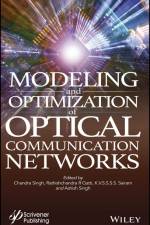
Optical networks are an integral part of many of the technologies that we use every day. It is a constantly changing and evolving area, with new materials, processes, and applications coming online almost daily. This book provides a basis for discussing open principles, methods and research problems in the modeling of optical communication networks. It also provides a systematic overview of the state-of-the-art research efforts and potential research directions dealing with optical communication metworks. It also simultaneously focuses on extending the limits of currently used systems encompassing optical and wireless domains and explores novel research on wireless and optical techniques and systems, describing practical implementation activities, results and issues. A handbook on applications for both academia and industry, this exciting new volume includes detailed discussions on real-world case studies on trends and emerging technologies associated with modeling of optical communication networks. This book also describes several numerical models and algorithms for simulation and optimization of optical communication networks. Modeling and optimization presents several opportunities for automating operations and introducing intelligent decision making in network planning and in dynamic control and management of network resources, including issues like connection establishment, self-configuration, and self-optimization, through prediction and estimation by utilizing present network state and historical data. It focuses on extending the limits of currently used systems encompassing optical and wireless domains, and explores the latest developments in applications like photonics, high speed communication systems and networks, visible light communication, nano-photonics, wireless, and MIMO systems.
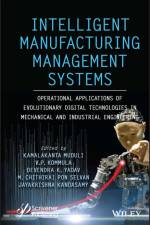
INTRELLIGENT MANUFACTURING MANAGEMENT SYSTEMSThe book explores the latest manufacturing techniques in relation to AI and evolutionary algorithms that can monitor and control the manufacturing environment.The concepts that pertain to the application of digital evolutionary technologies in the sphere of industrial engineering and manufacturing are presented in this book. A few chapters demonstrate stepwise discussion, case studies, structured literature review, rigorous experimentation results, and applications. Further chapters address the challenges encountered by industries in integrating these digital technologies into their operational activities, as well as the opportunities for this integration.In addition, the reader will find:* Systemic explanations of the unique characteristics of big data, cloud computing, and AI used for decision-making in intelligent production systems;* Highlights of the current and highly relevant topics in manufacturing management;* Structured presentations resolving the issues being faced by many real-world applications in a broad range of areas such as smart supply chains, knowledge management, intelligent inventory management, IoT adoption in manufacturing management, and more;* Intelligent techniques for sustainable practices in industrial waste management.AudienceThe book will be used by researchers, industry engineers, and data scientists/AI specialists working in industrial engineering, mechanical engineering, production engineering, manufacturing engineering, and operations and supply chain management. The book will also be valuable to the service sector industry, such as logistics and those implementing smart cities.
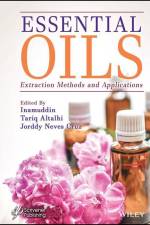
This exciting new volume, written and edited by some of the world's foremost experts in the field, provides up-to-date information about the chemical structure of essential oils, as well as their therapeutic and biological actions. It defines their functional uses while evaluating the advantages and disadvantages of their application in various sectors. Essential oils have been used by global communities for centuries, for different purposes such as medicinal, flavoring, preservatives, perfumery, aromatherapy, dentistry, cosmetics, insecticide, fungicide, and bactericide, among others. Essential oils are natural and biodegradable substances, usually non-toxic or with low toxicity to humans. Essential oils are botanical products that have volatile nature, known for their special odor, and found to be effective in the treatment of oxidative stress, cancer, epilepsy, skin allergies, indigestion, headache, insomnia, muscular pain, respiratory problems, etc. Essential oils principally enhance resistance to abiotic stress and protection against aquatic herbivores. They possess antimicrobial, antifungal, antitumor, and antioxidant properties. Essential oils are known to be volatile and susceptible to degradation from various ambient conditions, including temperature, air, light, and humidity, which limits their applications. Encapsulation is a proven technique that can protect essential oils and enable their use in various applications. This book aims to provide current knowledge on the chemical structure, therapeutic, and biological activities of essential oils, as well as to describe their functional uses and assess the benefits and drawbacks of their usage in various fields. By exploring the latest research on essential oils and their encapsulation, this book offers valuable insights and practical guidance for anyone interested in the science and application of these fascinating compounds.
Over the last 50 years we have seen the rapid growth in classical fluorescence spectroscopy, i.e. far-field fluorescence, where fluorescence today is now entrenched throughout the entire life sciences. In addition, the last decade has seen the significant use of noble metal nanoparticles and nanoparticulate surfaces to enhance near-field fluorescence signatures, i.e. the fluorescence of fluorophore molecules less than one wavelength of light away from a plasmonic nanoparticle or structure. This book provides the very first comprehensive overview of the subject matter in a text book style format. The book is focused to readers wanting an in depth discussion about Metal-Enhanced Fluorescence, relevant theory and applications, yet at the same time, general enough to attract students and new comers to the field.Topics Covered include: Introduction to Surface Plasmons, Historical observations of Metal-Enhanced Fluorescence, Plasmonic engineering of surfaces for the visible spectrum, Plasmonic engineering in the UV and Near-Infrared, Distance dependence of MEF, Spectral Modifications/Wavelength Dependence of MEF, MEF Excitation Volumetric effects, Metal-Enhanced Phosphorescence, Metal-Enhanced (Plasmonic) Generation of Reactive Singlet Oxygen Species, Metal-Enhanced alpha-Fluorescence, P and E-type Fluorescence, Multi-photon Excited Metal-Enhanced Fluorescence, Single Molecule Studies near-to MEF substrates, Fluorescence Correlation Spectroscopy near-to MEF substrates, Enhancing Fluorescence with sub wavelength metallic Apertures, Applications of Metal-Enhanced Fluorescence in sensing / BioSensing, Future of Metal-Enhanced Fluorescence
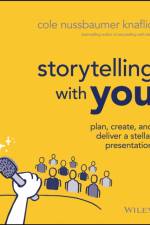
Be heard. Change minds. Get people to act. (Inspire them to clap.)Whether presenting in a meeting, delivering a keynote on stage, or simply talking with your colleagues about your latest project, you play a critical role in how information is shared. You determine whether people engage, understand, and take action.In storytelling with you, best-selling author and world-renowned speaker Cole Nussbaumer Knaflic prepares you to develop your story and deliver it with prowess. She unlocks the secrets that have propelled her from self-described introvert to sought-after presenter, distilling lessons learned into this immensely powerful and practical guide.The journey starts by building the foundation for effective communication: gaining an understanding of your audience and message. You'll then learn to transform your ideas into compelling stories and illustrative content. Once the materials are set, you'll turn your attention inward and explore strategies to hone your delivery and communicate with confidence, preparing you for exceptional meetings and knockout presentations.Give your hard work a voice and amplify your impact by communicating in a way that makes people want to listen and respond--storytelling with you will help you do it.
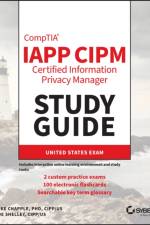
An essential resource for anyone preparing for the CIPM certification exam and a career in information privacyAs cybersecurity and privacy become ever more important to the long-term viability and sustainability of enterprises in all sectors, employers and professionals are increasingly turning to IAPP's trusted and recognized Certified Information Privacy Manager qualification as a tried-and-tested indicator of information privacy management expertise.In IAPP CIPM Certified Information Privacy Manager Study Guide, a team of dedicated IT and privacy management professionals delivers an intuitive roadmap to preparing for the CIPM certification exam and for a new career in the field of information privacy. Make use of pre-assessments, the Exam Essentials feature, and chapter review questions with detailed explanations to gauge your progress and determine where you're proficient and where you need more practice.In the book, you'll find coverage of every domain tested on the CIPM exam and those required to succeed in your first--or your next--role in a privacy-related position. You'll learn to develop a privacy program and framework, as well as manage the full privacy program operational lifecycle, from assessing your organization's needs to responding to threats and queries.The book also includes:* A head-start to obtaining an in-demand certification used across the information privacy industry* Access to essential information required to qualify for exciting new career opportunities for those with a CIPM credential* Access to the online Sybex learning environment, complete with two additional practice tests, chapter review questions, an online glossary, and hundreds of electronic flashcards for efficient studyingAn essential blueprint for success on the CIPM certification exam, IAPP CIPM Certified Information Privacy Manager Study Guide will also ensure you hit the ground running on your first day at a new information privacy-related job.
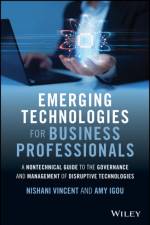
Embrace emerging technology in your own organization with jargon-free and practical guidanceIn Emerging Technologies for Business Professionals: A Nontechnical Guide to the Governance and Management of Disruptive Technologies, a team of accomplished accounting systems experts and educators delivers a straightforward and jargon-free management and governance blueprint of emerging technologies ideal for business professionals. In this book you will learn how to use cutting-edge technologies, including AI, analytics, robotic process automation, blockchain, and more to maintain competitive advantage while managing risks.The authors provide real-world examples and case studies of each of the discussed technologies, allowing readers to place the technical details in the context of identifiable business environments. Each chapter offers simple and useful insights in new technology that can be immediately applied by business professionals. Readers will also find:* Discussions of a host of new computing technologies, including edge, cloud, and quantum computing* Exploration of how the disruptive technologies such as metaverse and non-fungible tokens will impact business operations* Easy-to-understand explanations of the latest, most relevant technologies with applications in accounting, marketing, and operationsAn essential resource for Certified Public Accountants, CPA candidates, and students of accounting and business, Emerging Technologies for Business Professionals will also earn a place in the libraries of anyone interested in adopting emerging technologies in their own organizations.
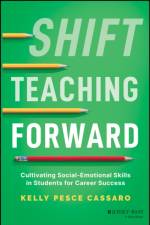
"Over the last two decades of observing and implementing education-to-employment programs across the world, I can attest to the transformative impact skills-driven education provides to employment success. This book gives educators and trainers real-life tactics and inspiration to bring these strategies to life and to fundamentally change the trajectory of their students lives." --MONA MOURSHED, CEO, Generation You Employed "With remarkable clarity, Kelly delves into the critical intersection of education and the ever-shifting landscape of work." --GIDEON MURENGA, Senior TVET and Labor Markets Advisor, Kenya The world of work is changing fast. All students need essential employability skills--now. Educators know that the job market is changing, and equipping all students for future success can feel daunting. Too often, traditional curricula omit the essential employability skills that all learners need, regardless of their future goals. Shift Teaching Forward offers a practical, concrete framework to help educators implement employability strategies with ease and prepare career-ready students. Learn how to develop training programs and courses--from needs assessment to design, delivery, and feedback--that incorporate the full range of capacities students will need to succeed in today's labor market. Author Kelly Cassaro explains how we can redesign our training programs to better meet the needs of industry and job seekers alike.
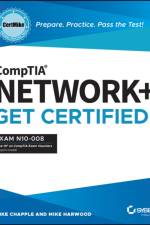
A laser-focused and job-ready blueprint for success on the CompTIA Network+ exam and a running start on your first (or next) job in techCompTIA Network+ CertMike: Prepare. Practice. Pass the Test! Get Certified! Exam N10-008 delivers a no-nonsense, straight-to-business guide to acing the CompTIA Network+ test on your first attempt. Veteran tech experts and educators Mike Chapple and Craig Zacker walk you through every step you'll need to take on the N10-008 exam, from networking fundamentals, implementations, and operations to network security and troubleshooting. Ace the test using the proven CertMike approach:* Prepare -- CertMike is your personal study coach, guiding you through all the exam objectives and helping you gain an understanding of how they apply to on-the-job tasks!* Practice -- Each chapter includes two multiple choice practice questions. Work through the detailed explanations to evaluate each answer option and understand the reason for the best answer!* Pass -- On exam day, use the critical knowledge you've learned when you're ready to take the test. You'll feel ready and confident to pass the exam and earn your certification!The book skips the fluff and gets right to the point of getting you familiar with network basics and on the road to an in-demand certification and a new career as a network technician or admin. You'll also get complimentary access to additional Sybex online study tools, including a bonus practice exam and audio recordings of the book's CertMike Exam Essentials.A can't-miss roadmap to success on the Network+ exam, CompTIA Network+ CertMike: Prepare. Practice. Pass the Test! Get Certified! Exam N10-008 is the job-focused and practical guide you've been looking for to help you hone your networking skills.
Abonner på vårt nyhetsbrev og få rabatter og inspirasjon til din neste leseopplevelse.
Ved å abonnere godtar du vår personvernerklæring.