












Gjør som tusenvis av andre bokelskere
Abonner på vårt nyhetsbrev og få rabatter og inspirasjon til din neste leseopplevelse.
Ved å abonnere godtar du vår personvernerklæring.Du kan når som helst melde deg av våre nyhetsbrev.

The Electrocardiogram in Emergency and Acute CareClear, practical guidance in mastering ECG interpretation in the critically ill patientThe Electrocardiogram in Emergency and Acute Care contains clear, practical guidance on mastering both single-lead and 12 lead ECGs, covering the full range of complexities and including a section on differential diagnosis of more common ECGs, with over 200 tracings from which to learn and self-test.The editors place an emphasis on readability and accessibility, with clearly written chapters and excellent illustrations that serve as a primary source of information for students, trainees, and practicing emergency physicians in all areas.In The Electrocardiogram in Emergency and Acute Care, readers can expect to find detailed information on topics such as:* Clinical applications, impact, and interpretation of the electrocardiogram, plus variants of the normal, lead misplacement, and electrocardiographic artifact encountered in clinical practice* Cardiac rhythms and cardiac dysrhythmias, covering cardiac rhythms with normal rates, narrow QRS complex tachycardia, wide QRS complex tachycardia, and bradycardia* Anatomic and physiologic considerations of ischemic heart disease, historical development of the prehospital electrocardiogram, and electrocardiographic findings in acute coronary syndrome* Special populations, high-risk presentation scenarios, and advanced electrocardiographic techniques, covering electrocardiograms in pediatric and poisoned patientsThe Electrocardiogram in Emergency and Acute Care is ideally suited to medical students, residents, and physicians in training, but is also a useful reference for established physicians as a review and reference text, along with all other health professionals working in this field.
Offers readers an understanding of the origins and histories of early agricultural populations in various parts of the world. This book focuses on agricultural origins in and dispersals out of the Middle East, central Africa, China, New Guinea, and the northern Andes. It examines the reasons for the multiple primary origins of agriculture.
Pain, while known to almost everyone, is not universal. The evidence of our own pain, and our own experience, does not provide us with automatic insight into the pains of others, past or present. No matter how self-evident and ubiquitous the sting of a paper cut or the desolation of heartbreak might seem, pain is situated and historically specific.In a work that is sometimes personal, always political, Rob Boddice reveals a history of pain that juggles many disciplinary approaches and disparate languages to tackle the thorniest challenges in pain research. He explores the shifting meaning-making processes that produce painful experiences, expanding the world of pain to take seriously the relationship between pain's physicality and social and emotional suffering. Ranging from antiquity to the present and taking in pain knowledge and pain experiences from around the world, his tale encompasses not only injury, but also grief, exclusion, chronic pain, and trauma, and reveals how knowledge claims about pain occupy what pain is like.Innovative and compassionate in equal measure, Knowing Pain puts forward an original pain agenda that is essential reading for those interested in the history of emotions, senses, and experience, for medical researchers and practitioners, and for anyone who has known pain.
Diabetes Care at a GlanceThe market-leading at a Glance series is popular among healthcare students and newly qualified practitioners for its concise, simple approach and excellent illustrations.Each bite-sized chapter is covered in a double-page spread with clear, easy-to-follow diagrams, supported by succinct explanatory text.Covering a wide range of topics, books in the at a Glance series are ideal as introductory texts for teaching, learning and revision, and are useful throughout university and beyond.Everything you need to know about Diabetes Care ... at a Glance!Diabetes affects a large proportion of the population and it is essential that student nurses, dietitians, podiatrists and other health practitioners and allied healthcare professionals be up to date with the support and treatment that people with diabetes need. Diabetes Care at a Glance contains the latest evidence-based and practical information underpinning diabetes care, illustrating the essential principles of partnership, individualised, and informed care in an easily accessible format.Edited by an expert in the field, with contributions from academics, practitioners and specialist nurses, Diabetes Care at a Glance covers topics such as:* Diabetes prevention, diagnosis of type 1 and type 2 diabetes, and consultation approaches and language matters* Promotion of healthy eating, physical activity promotion, promoting weight loss, and structured education in type 1 and type 2 diabetes* Prescriptions, emotional and psychological support, person-centred goal setting and assessing risk, and partnership working and adjustment* Anti-diabetes oral hypoglycaemics and GLP-1s, insulin options, administration and injection technique, pumps, and self-blood glucose monitoringWritten for student nurses, allied healthcare professionals and newly qualified practitioners, Diabetes Care at a Glance is a highly valuable quick reference text, ideal for those looking for an introduction to the topic of diabetes, revision, or for those in need of a refresher.For more information on the complete range of Wiley nursing and health publishing, please visit: www.wiley.comTo receive automatic updates on Wiley books and journals, join our email list. Sign up today at www.wiley.com/emailAll content reviewed by students for studentsWiley nursing books are designed exactly for their intended audience. All of our books are developed in collaboration with students. This means that our books are always published with you, the student, in mind.If you would like to be one of our student reviewers, go to www.reviewnursingbooks.com to find out more.This new edition is also available as an e-book. For more details, please see www.wiley.com/buy/9781119841265
ABC of Clinical HaematologyAn essential guide and introduction to the diagnosis, treatment and management of disorders across the breadth of clinical haematologyExtensively revised, this 5th edition of ABC of Clinical Haematology covers all aspects of contemporary haematology, providing the basic science behind the disease and diagnostic aspects, along with up to date management. The text assumes little prior haematology knowledge, enabling clear understanding by non-experts, including medical students and nurses. Full colour illustrations and text boxes highlighting important learning points together enable more efficient reader comprehension.ABC of Clinical Haematology covers:* Iron deficiency anaemia, macrocytic anaemia, hereditary anaemias, polycythaemia vera, essential thrombocythaemia, and myelofibrosis* Chronic myeloid leukaemia, acute leukaemias, lymphoma, stem cell transplantation, cellular therapies, adult myelodysplastic syndrome, and myeloma* Bleeding disorders, thrombosis, anticoagulation, and paediatric haematology, platelet disorders* Amyloidosis, with focus on systemic light chain amyloidosis, and haematological emergencies* New tests, treatments, and management solutions that are now available for certain conditions, especially common blood related disordersWith contributions from leading experts in their respective fields, ABC of Clinical Haematology, Fifth Edition provides an ideal reference for primary care practitioners and other healthcare professionals working with patients who have blood related problems.About the ABC seriesThe ABC series has been designed to help you access information quickly and deliver the best patient care, and remains an essential reference tool for GPs, junior doctors, medical students and healthcare professionals.Now offering over 80 titles, this extensive series provides you with a quick and dependable reference on a range of topics in all the major specialties.The ABC series is the essential and dependable source of up-to-date information for all practitioners and students in primary healthcare.To receive automatic updates on books and journals in your specialty, join our email list. Sign up today at www.wiley.com/email
"Why are we fascinated by mountains? These outcrops of rock were once considered unsightly, something to be avoided at all costs, but, since Rousseau, they have been contrasted with our corrupt cities and viewed as serene enclaves of beauty and relaxation. But why climb to the summit only to come back down again? Why does the toil of climbing convert into joy? What metaphysics of the absolute is playing out here - what challenge does climbing pose to time and ageing, to fearful panic, to the brush with danger which leads to conquest? It's not faith that elevates mountains - it's mountains that elevate our faith in challenging us to overcome them. These hooded majesties crush some people while exalting others. For the latter, climbing means being born again, reaching a state of exhilaration. Being seized by exhaustion upon arriving at the summit is akin to casting your eyes upon paradise. Is it the stinging cold, the wind so strong that it almost knocks you down, or is it higher powers that speak to us in this mixture of terror and beauty? A child of the mountains who spent his youth in Austria and Switzerland, Pascal Bruckner has special ties to the subject of this book: the further he climbs, the more he reconnects to his past. In sparkling and sensual prose, Bruckner's paean to the majesty of mountains weaves together things seen and things read, childhood memories, literature and philosophy, interlaced with reflections on life, ageing and the unrivalled beauty of an ecosystem that we are in danger of destroying."-- Dust jacket.
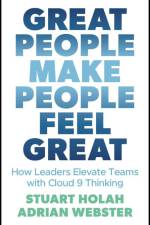
"If you want to grow, start by making other people feel taller."In Great People Make People Feel Great: How Leaders Elevate Teams With Cloud Nine Thinking, accomplished management coach and business veteran Adrian Webster and Stuart Holah set out an inspiring and practical collection of insights into how to unlock the full potential of yourself, colleagues, team members and collaborators. You'll learn to elevate your workplace by shifting assumptions, and choosing new perspectives which generate better outcomes for managers, team members and entire businesses. You'll discover the culture shift that's possible when you give people permission to bring their undiluted selves to work and inspire them to get more out of themselves than they thought possible.The book will show you how to:* Find clarity of meaning by simplifying goals and strategies so you focus on what's most important* Build effective teams and foster collaboration by understanding how to motivate people with diverse skills and strengths* Celebrate failure for its rich learning opportunities, as well as building on the lessons of success* Recognize the power of incremental small changes that add up to powerful transformationsAn essential handbook for leaders or would-be leaders in any size of organisation, Great People Make People Feel Great will benefit entrepreneurs and founders, as well as senior leadership and board members in established businesses. Each chapter takes a familiar aspect of leadership and examines it from a new angle to show that when we are prepared to ask why we often think and react automatically in certain situations, we can learn to 're-programme' our thinking and consciously adopt more effective strategies.
Comprehensive resource on the fundamentals of electric machinery and variable speed drives, and their many conventional and emerging applications Electric Machinery and Drives: An Electromagnetics Perspective provides advanced concepts of electrical machinery with control/drives and emphasizes the necessity of integration of power electronics and control strategy when studying modern electrical machinery. The text incorporates the fundamentals of electric machinery, variable speed drives, and motor controls, with the scope of including both the introduction of detailed operating principles as well as the electromagnetic design and control details from scratch. The authors start with the introduction of electric circuit notations and elementary concepts of electrical circuits, power electronics, magnetostatics, magnetic circuits, and fundamentals of electromechanical energy conversion. Later, the book elaborates on the operating principles of polyphase induction machines and synchronous machines, as well as the associated scale and vector controls of these machines. To aid in reader comprehension, the text includes a solutions manual and accompanying video animations. Electric Machinery and Drives also contains information on: Real and reactive power in single-phase and balanced three-phase circuits and devices using consumer system concepts and notationsForces and torques in simple magnetically linear and nonlinear, multi-excited electromechanical devices and systemsSimplified T-equivalent circuit model and its use in performance calculations of induction machines and associated torque-slip (speed) characteristicsBrush-commutator and brushless DC machines, and natural ABC frame and Park's two-reaction DQO frame state-space modeling of synchronous and induction machinesSpecial machines, including single-phase induction machines, switched reluctance machines, and others Electric Machinery and Drives is an ideal learning resource in undergraduate or graduate-level courses for all universities with electrical engineering programs across the world. Additionally, the text may be used as a fundamental reference by researchers and engineers in electrical, mechanical, automotive, aerospace, and automation engineering.
An authoritative compendium of new research findings and case studies in the application of communication theory during catastrophic eventsCommunicating Science in Times of Crisis: Communication and Catastrophic Events addresses the practical application and research implications of communication theory in the context of man-made and natural catastrophes. Bringing together contributions by leading experts in crisis management and strategic communication, this timely collection of resources links scientific issues with public policy while discussing the challenges and opportunities for using communication to manage extreme events in the evolving media landscape of the 21st century.In this second volume of the Wiley-Blackwell Communicating Science in Times of Crises series, 15 substantial chapters explore a varied range of catastrophic conditions, such as mass violence incidents, disease outbreaks, catastrophic mudslides, cascading and simultaneous disasters, extreme weather events, diffusion of misinformation during crises, students traveling internationally during a global health crisis, and more. Each chapter focuses on a particular issue or concern, revealing the difficult choices that confront academics and practitioners across communication disciplines and presenting original frameworks and models alongside ongoing research programs.* Discusses approaches for balancing scientific findings with social and cultural issues* Highlights the ability of legacy and digital media to facilitate science in mitigating the effects of adverse events* Examines the ethical repercussions of communication during unfolding and unpredictable events* Addresses the use of social media communication during a crisis and navigating an increasingly media-savvy society with multiple levels of science literacy* Covers key theoretical and practical aspects of the associated fields of risk management and crisis managementAvailable as a standalone book or as part of a two-volume set, Communicating Science in Times of Crisis: Communication and Catastrophic Events is essential reading for scholars, researchers, practitioners, and advanced students in the fields of crisis communication, risk and emergency management, disaster studies, policy management, social media communication, and healthcare communication.
An indispensable resource for morphologists and other linguists alike, written and edited by esteemed scholars in the fieldThe Wiley Blackwell Companion to Morphology is an authoritative, state-of-the-art overview the data that have been central to the development of morphological theory in the past decades. Featuring contributions from an international panel of linguists, this unparalleled collection brings together both seminal work and recent morphological research on topics including derivational and inflectional processes, concatenative and non-concatenative types of morphology, and the interfaces of morphology with syntax, phonology, and semantics.In-depth case studies describe important morphological phenomena, discuss how they have shaped different theoretical proposals, and analyze and contextualize the data behind well-established empirical studies. Organized alphabetically, each chapter explores a specific set of empirical data relating to a morphological problem or issue central to both past and current theoretical debates.* Provides detailed and comprehensive information about morphology and its interfaces* Describes main morphological phenomena based on a large, cross-linguistically varied body of data* Offers a balanced presentation of different morphological approaches, analytical proposals, and academic perspectives* Covers a wide range of topics and a large number of subdomains of morphology* Online version available at https://www.companiontomorphology.comAvailable both as a five-volume set and as an online resource, The Wiley Blackwell Companion to Morphology is an essential reference tool for scholars in the field of morphology and linguistics more generally , and will also be a very useful tool in advanced undergraduate as well as graduate courses in these fields.
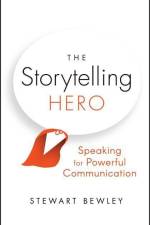
"Full of practical steps that everyone can use to become a compelling storyteller."--Steve Pierce, Deputy Managing Director and Chief HR Oficer, Hitachi, Europe"Raw and actionable, but with a dreamer's heart, 'The Storytelling Hero' helps even the most reluctant presenter find their voice, while Stew Bewley weaves through his own story to help us think carefully about message and motivation, humanity and heroes."--Aimee Riordan, Senior Communications Manager and reader, writer, storyteller at MicrosoftMake your next speech one to rememberWith expert guidance from veteran public speaking coach Stewart Bewley, you'll discover how to gain the confidence needed to become a phenomenal public speaker. Using simple tools and techniques you can apply every time you speak to a group or an individual, The Storytelling Hero will show you how to:* Eliminate self-limiting beliefs that hold you back* Find the confidence you need to command a room* Establish a memorable and impressive presence* Improve your cadence, rhythm and style* Connect with your next audienceTransform your ability to communicate your ideas, capture attention, and make a positive impression. The Storytelling Hero shows you how to hold an audience in the palm of your hand, one actionable step at a time.
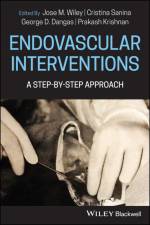
ENDOVASCULAR INTERVENTIONSA practical and systematic approach to current endovascular surgical techniquesAn increasingly popular alternative to open vascular surgery, endovascular intervention offers many advantages, including reduced patient discomfort, smaller incisions, shorter recovery time, and decreased risk of adverse complications. Practitioners and trainees alike require expert guidance on current technologies and up-to-date techniques. Endovascular Interventions provides clinicians with an easy-to-follow guide for minimally invasive treatment of vascular disease. This invaluable resource delivers concise and accurate instructions on a wide range of endovascular interventions, including aorta, renal and mesenteric interventions, lower extremity interventions, venous interventions, and supra-aortic interventions in high-risk patients.Sequential phases of skill development broaden the reader's abilities as they progress through each chapter, supplying step-by-step instructions on when each procedure should be used and how it can be safely and effectively performed. This book offers a complete reference to essential techniques and procedures, suitable for both novice and experienced vascular surgeons, cardiologists, and radiologists. Endovascular Interventions also:* Reinforces comprehension of each procedure with templated chapters, equipment lists and boxed key learning points* Provides full-color clinical images and detailed illustrations to demonstrate surgical procedures* Presents authoritative coverage of modern endovascular technologies and techniques* Written by a team of respected experts and practicing surgeons from internationally recognized hospitals and universitiesSuitable for varying skill levels, Endovascular Interventions is a precise, accessible instruction manual for safe and effective endovascular intervention, helping practicing clinicians sharpen their existing abilities and keep pace with the latest surgical technologies while instructing trainees on this innovative approach to vascular surgery.
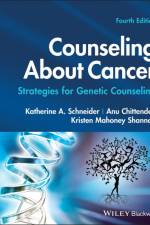
Counseling About CancerA key resource for all genetic counselors and other healthcare providers, this comprehensive reference has been completely updated and reorganized for its fourth editionOver 50 hereditary cancer predisposition genes have now been identified. Genetic testing can be a powerful tool in assessing individual cancer risk and creating robust medical plans, but can also be a complex process, with personal and familial factors carrying real emotional weight. As such, genetic counseling for patients and their families during the process of genetic testing is critical.Counseling about Cancer: Strategies for Genetic Counseling is the only comprehensive resource available for clinicians who want to understand and apply these dimensions of patient care. This updated and reorganized edition provides detailed information designed to be incorporated in a variety of clinical and health-care contexts. Updated with the latest guidance and research, it promises to continue as the indispensable guide to this challenging subject.Readers of the fourth edition of Counseling about Cancer will also find:* New chapters analyzing pediatric cancer syndromes, genetic testing technology, and more* Increased focus on gynecological cancer syndromes and related genes* Detailed case studies to reinforce themes of each chapterCounseling about Cancer is a useful reference for genetic counselors and other healthcare providers looking to familiarize themselves with best practices of patient counseling and care.
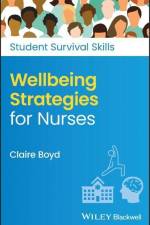
Wellbeing Strategies for NursesPractical strategies for combating burnout and improving mental health while working as a nurseWellbeing Strategies for Nurses explores clear, straightforward, and practical techniques for cultivating resilience and positive mental health strategies in the face of a demanding clinical environment. This pocket-sized book is easy to carry during your clinical placement and offers tips, advice, and hard-won words of wisdom from student and qualified nurses to support you through a challenging, yet rewarding, career. You'll find stress-busting tools as well as exercises intended for long-term relief of stress incorporated throughout the book.Readers will also find:* A thorough introduction to self-care and wellbeing for nurses, as well as discussions of stress and guided meditation practice exercises* Comprehensive explorations of breathing, humour, and nature therapy* Practical discussions of muscle relaxation and the importance of healthy foods and hydration* Treatments of the sense of smell, aromatherapy, guided meditation, mindfulness, and the five senses approach to wellbeingPerfect for pre-registration adult nursing students in their first and second years of the programme, Wellbeing Strategies for Nurses will also benefit nursing associates, health care assistants, assistant practitioners, and professionals returning to the field after a period of absence.
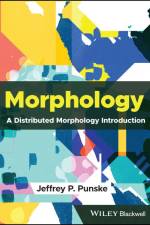
The first comprehensive morphology textbook written in the framework of Distributed Morphology, firmly grounded in cross-linguistic theoryDistributed Morphology is the theoretical framework that views morphology as syntactic, proposing that there is no divide between the construction of words and the construction of sentences. The first text of its kind, Morphology: A Distributed Morphology Introduction provides a thorough overview of Distributed Morphology using data and problem sets from a diverse selection of the world's languages. Divided into two parts, this valuable resource begins by describing the basics of morphology and then moves into an exploration of more advanced topics in morphology including morphosyntactic operations, cyclic derivation, the Mirror Principle, and non-compositional language. Each chapter includes a glossary of key terms, learning objectives, further readings, and illustrative examples to reinforce learning. Exercises and problem sets encourage students to develop their understanding and build confidence in the application of theory to practice. Through this valuable text, students will develop comprehension in morphological parsing and glossing, the concept of the lexicon, the different types of morphemes, the idea of paradigms, the basic practice of morphological analysis, and more.Offering detailed yet accessible coverage of morphological theory from the perspective of Distributed Morphology, this textbook:* Introduces the methodology used in morphology, the basic assumptions of Distributed Morphology, and key concepts from lexical grammatical approaches to language* Covers essential phonology, feature interaction, paradigms as linguistic objects, core ideas of syntax and syntactic derivation, and derivation and inflection in Distributed Morphology* Includes a Quick Reference Guide with glossing abbreviations from the Leipzig Glossing Rules, a full IPA chart with instructions, and charts of phonological features* Provides access to a companion website containing solutions to problem sets and additional instructor resourcesMorphology: A Distributed Morphology Introduction is the ideal textbook for advanced undergraduates and graduate students in morphology courses or with an interest in specializing in morphology. Offering students an unparalleled overview of this growing field of morphology, this text will ensure that developing morphologists are well-equipped to employ the latest methods in Distributed Morphology to their own research and study.
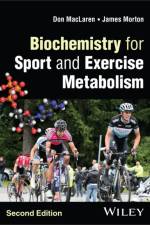
All-new edition of an introductory textbook on sport and exercise biochemistry and muscle metabolism Biochemistry for Sport and Exercise Metabolism initially examines the essence of the biochemistry of the macronutrients before exploring how exercise mode, intensity, and duration, training status, and nutritional status affects the regulation of energy producing pathways, enabling readers to apply this understanding to develop training and nutrition programs that maximize athletic performance. This textbook includes an overview of energy metabolism, skeletal muscle structure and function and related biochemical concepts, carbohydrates, lipids, and proteins, metabolism, regulation of metabolism, and factors that can influence metabolism, and fatigue. This revised and updated second edition reflects some of the latest advances in the field, with new content on metabolic regulation as well as adaptations to high intensity and strength exercise, endurance exercise, and intermittent exercise. Furthermore, there is a new chapter on biochemical techniques to provide some pertinent background on how reported metabolic changes during exercise are achieved. This textbook features learning objectives, keywords, and key points in each chapter to aid in reader comprehension and reinforce information retention. Written by two highly qualified authors, Biochemistry for Sport and Exercise Metabolism discusses sample topics including: How the energy supply for muscle contraction is achieved from carbohydrates, lipids and protein Muscle contraction, covering propagation of the action potential, excitation-contraction coupling, and the sliding filament mechanismRegulation of the energy systems providing energy for exerciseTechniques for exercise metabolism, including respiratory analysis, ergometry, blood sampling, metabolomics, a-v differences, muscle biopsy, and isotopesExploration of the metabolic events occurring during high intensity, endurance, and high-intensity intermittent forms of exercise Clearly written and completely comprehensive, the second edition of Biochemistry for Sport and Exercise Metabolism continues to be an invaluable learning resource for students across a wide range of sport-related courses.
Abonner på vårt nyhetsbrev og få rabatter og inspirasjon til din neste leseopplevelse.
Ved å abonnere godtar du vår personvernerklæring.