






Gjør som tusenvis av andre bokelskere
Abonner på vårt nyhetsbrev og få rabatter og inspirasjon til din neste leseopplevelse.
Ved å abonnere godtar du vår personvernerklæring.Du kan når som helst melde deg av våre nyhetsbrev.

Lower Limb and Leg Ulcer Assessment and Management is an indispensable resource for practitioners in primary and secondary care, offering a practical and accessible guide to treating and managing leg ulcers. This comprehensive text challenges the misconception that leg ulcers are invariably 'chronic'. In practice, proactive management will prevent the harm associated with sub-optimal management. Insights are provided into lower limb assessment, early intervention for ulcer prevention, ulcer types and their causes, along with the influence that swelling and biomechanical changes have on the lower limb. The authors draw on international best practice guidance on lymphoedema, wound pain, wound bed preparation, compression therapy, psychological impact, and evidence-based care to enhance leg ulcer management. Each chapter aims to facilitate reader comprehension and promote productive patient discussions, empowering healthcare professionals to collaborate with patients and improve leg ulcer management rapidly and effectively. This multi-disciplinary resource covers: Normal venous, arterial, and lymphatic function in the lower leg Leg ulceration due to venous hypertension, peripheral arterial disease, and lymphoedema Leg ulcers of unusual aetiology, addressing autoimmune and inflammatory disorders such as pyoderma gangrenosum, rheumatoid arthritis, scleroderma, sickle cell, and more Musculoskeletal changes in the lower limb, assessment, and management to enhance mobility and calf-muscle function Clinical management, with topics like wound management, stages of wound healing, exudate management, holistic assessment including vascular assessment, compression therapy, and Laplace's law Pain management with an emphasis on understanding the complexities and features that exacerbate or diminish the pain response The personalisation of care, understanding of social determinants of health, and the role of supportive self-management in lifelong management For professionals seeking evidence-informed approaches to delivering exceptional care, Lower Limb and Leg Ulcer Assessment and Management is an essential companion on the journey to understanding and managing leg ulcers effectively.
Explores how Christians created, used, and adapted religionized categories of non-Christians through the centuries Christian Imaginations of the Religious Other traces the genealogy of religionization, the various ways Christians throughout history have created a sense of religious normativity while simultaneously producing various categories of non-Christian "otherness." Covering a broad expanse of processes, practices, and socio-political contexts, this innovative volume analyzes the complex intersections of patterns of religionization in different eras while investigating their entanglements with racialization, sexualization, and ethnicization. With a readable and accessible style, Marianne Moyaert offers a nuanced and well-balanced critical analysis of how and why Christianityâ¿s others were named, categorized, essentialized, and governed by those exemplifying Christian normativity in Western European society. The author takes a longue durée approach â¿ a long-term perspective on history that extends past human memory and the archaeological record â¿ that integrates different case studies and a variety of ecclesial, theological, and literary documents. Throughout the text, Moyaert demonstrates how religionization shaped the ways Christians classified people, organized Christian societies, interacted with different Christian and non-Christian groups, and more. Surveys the relationship between shifts in Christian normativity and the way non-Christians are imaginedHelps readers connect the lasting effects of patterns of religionization with their everyday experiencesDiscusses the role of Christian expansion in the differential and unequal treatment of Christianityâ¿s othersExamines legal regulations and disciplinary practices that were established to define the boundaries between Christians and non-ChristiansIncorporates a wide range of scholarly resources, cutting-edge research, and the most recent insights and issues in the fieldIncludes textboxes with helpful summaries, illustrations, and commentary in each chapterChristian Imaginations of the Religious Other: A History of Religionization is an excellent textbook for undergraduate and graduate courses in interreligious studies, comparative theology, theological approaches to religious diversity, Christian-Jewish-Muslim relations, race and religion, and theorizing religion.
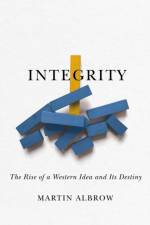
Public life is dominated from time to time by media storms around integrity. The behaviour of elected politicians like Donald Trump and Boris Johnson has led many to decry the deterioration in standards and the lack of integrity in public life. But what is integrity, and where does our concern with integrity in public life come from?In this book Martin Albrow argues that integrity has been an essential component of the rise of the West and a key feature that distinguishes the West from other civilizations. He traces the idea of integrity back to its roots in Ancient Greece and Rome, where philosophical debates gave us the special meaning of integrity: the idea that the unity of any entity, human beings included, depends on the adherence to rules outside of it. He then follows the story of integrity through the mediaeval Christian period up to the present day. By the time we reach the twenty-first century, integrity has become a free-floating signifier that attaches to anything and everything. The result is a constant questioning of integrity without conclusive answers. We have now reached the point, argues Albrow, where the West needs to relinquish its fond belief in its singularity and strive with the rest of the world to create an order where honesty, trust and reliability in our relationships with others, friends and strangers, personal or corporate, are paramount.This highly original account of an idea that lies at the heart of Western culture will be of interest to anyone concerned about the state and future of our public life.
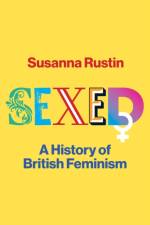
British feminism is being reinvented, and what this means is fiercely contested. For advocates of more rights based on gender identity, the renewed emphasis on sex-based rights is an alarming regression. For those who believe that recognising sex differences is crucial in efforts to improve women's lives, the challenge is to explain why. This book argues that feminism without sex makes no sense. It uncovers the history of the present conflict, and explains why champions of women's rights and freedoms have been arguing about femaleness for centuries. Mary Wollstonecraft warned of the lie that women would be "unsexed by acquiring strength of body and mind". Feminists ever since have struggled to cast off the subordinate status assigned to womanhood while simultaneously insisting on their value as women. This book shows how successive generations have confronted this riddle. Starting in the 1790s and ending with the sex-based rights movement of today, it encompasses 1830s radicals who demanded "LIBERTY FOR EVER!", Victorian petitioners who knew they would be dead before women won the vote, and rival camps of suffragists who embraced and rejected violence. It explores formal politics, from the first women MPs to the New Labour feminists who pushed through the Equality Act days before their party lost power. And the role of social movements is considered, including the Greenham peace activists and the black and Asian women's groups of the 1970s and 1980s. Susanna Rustin fills gaps, makes links, and shows that feminism in Britain has always been more complicated than the popular image of a series of waves suggests. And she concludes that while gender is a useful concept, women cannot be supported by a politics that forgets that they, like men, are sexed.
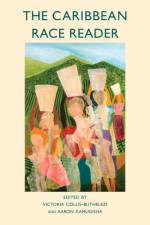
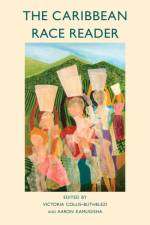
This book is the first critical anthology in English on the history and legacy of race in the Caribbean. It brings together the major debates, lines of inquiry and theories around race and racism that have emerged out of the Caribbean from the beginning of European colonization at the end of the fifteenth century to the period of decolonization in the aftermath of World War II. This critical anthology stakes out the unique contribution made by the region to the global history of race.The Caribbean Race Reader provides students and scholars of the region with vital access to some of the most important contributions on race and Caribbean society, many of which are difficult to access, and assembles them together as part of a series of key debates. At a time when the searing realities of race and antiblack racism stand out as global, existential crises, this volume both documents the Caribbean's important contribution to global histories of race and provides an excellent overview of the quest by the region's radical intelligentsia to undo racism's contemporary legacies.
This book is the first critical anthology in English on the history and legacy of race in the Caribbean. It brings together the major debates, lines of inquiry and theories around race and racism that have emerged out of the Caribbean from the beginning of European colonization at the end of the fifteenth century to the period of decolonization in the aftermath of World War II. This critical anthology stakes out the unique contribution made by the region to the global history of race.The Caribbean Race Reader provides students and scholars of the region with vital access to some of the most important contributions on race and Caribbean society, many of which are difficult to access, and assembles them together as part of a series of key debates. At a time when the searing realities of race and antiblack racism stand out as global, existential crises, this volume both documents the Caribbean's important contribution to global histories of race and provides an excellent overview of the quest by the region's radical intelligentsia to undo racism's contemporary legacies.
From Ancient philosophy to contemporary theories of fiction, it is a common practice to relegate illusory appearances to the realm of the non-existent, like shadows on the wall of Plato's cave. Contrary to this traditional mode of drawing a metaphysical distinction between reality and fiction, Markus Gabriel argues that the realm of the illusory, fictional, imaginary, and conceptually indeterminate is as real as it gets.Being in touch with reality need not and cannot require that we overcome appearances in order to grasp a meaningless reality which exists 'out there, ' outside and maybe even beyond our minds. Human mindedness (Geist) exists in the mode of fictions through which we achieve self-consciousness. This novel approach provides a fresh perspective on our existence as subjects who lead their lives in the light of self-conceptions.Fictions also develops a social ontology according to which the social unfolds as a constant renegotiation of dissent, of different points of view onto the same reality. Thus, we cannot ever hope to ground human society in a fiction-free realm of objective transactions. However, this does not mean that truth and reality are somehow outdated concepts. On the contrary, we need to enlarge our conception of reality so that it fully encompasses ourselves as specifically minded social animals.This major new work of philosophy will be of interest to students and scholars throughout the humanities and to anyone interested in contemporary philosophy and social thought.
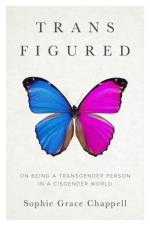
'I was four and three quarters when I asked my mother if, from now on, I could please go to school as a girl instead of as a boy...'In this extraordinary new book, renowned philosopher Sophie Grace Chappell combines personal memoir, philosophical reflection, open letters, science fiction writing, and poetry to help us all figure out transgender.What is it really like to be transgender?What can we as a society do better to accept the reality of trans lives and to welcome and include trans adults, trans children, and trans families?How can trans people thrive in a cisgendered world?For too long now, clouds of myth, misinformation, alarmism, and wrong-headed ideology have masked the reality of trans people's lives. By answering questions like these, this book blows away the clouds and gives us the truth instead.Rich, informative, and deeply moving, Trans Figured will be widely read and celebrated for years to come.
Since the beginning of the 21st century, global warming, terrorism, the pandemic and now the war in Ukraine have created a widespread feeling that the world is an increasingly dangerous place. In response to this situation, it is understandable that many people are inclined to retreat to the safety of their home - the last refuge and safeguard against the savagery of the outside world. But the home is not just a shelter: it is a space that supplants and replaces the world, a wired cocoon that gradually renders any journey to the outside world superfluous. From our couch, we can enjoy remotely the pleasures once offered by the cinema, the theatre and the café. Everything, from food to love to art, can be delivered to your door. Armed with a smartphone and a Netflix account, why would anyone risk life and limb to venture out to the cinema? Compulsory confinement, the nightmare of the pandemic years, seems to have been replaced by voluntary self-confinement. Fleeing from the cities, working remotely, relinquishing travel and tourism, we risk becoming reclusive creatures that cower at the slightest tremor. In this witty and spirited book, Pascal Bruckner takes aim at today's voluntary seclusionism and the self-inflicted atrophy that comes with it, tracing its philosophical contours and historical roots. It is no longer the tyranny of lockdowns that threatens us but rather the tyranny of the sofa: will the slipper and the dressing gown be the new symbols of tomorrow's world?
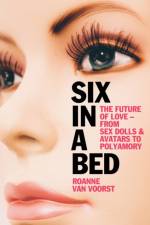
Love is the most important and intense experience of one's life. It pushes us to elation, to heartbreak, to sing for joy and sob in disappointment. Connecting in this way to others is an essential quality of being human: without love, we don't learn and develop properly as children and we don't flourish as adults - in short, we're starved of what we need. But love is on the verge of monumental change. Not only is the impact of AI and robotics set to revolutionise how we relate to each other, but sex robots are already on the market, drugs are being developed which can make you fall in love, polyamory is gaining ground and debates about whether more than two people should be able legally to get married are heating up. At the same time, there is an increasing number of people who have decided to stay single and who go by the name of sologamists. The futures anthropologist Roanne van Voorst spent three years researching love's fluid landscape and immersing herself in today's latest trends to gain insight into the human of tomorrow. She cultivated a virtual friendship, hired a rentable friend and an erotic masseuse, shared a bed with sex dolls and flirted with artificial intelligence. She dated and danced in a virtual world, spoke to polyamorists, sologamists, sex workers, pansexuals, asexuals, heterosexuals, homosexuals, men, women, and people who don't accept the binary gender label. She wanted to know how changes to love are changing our species. This book is her brilliantly engaging answer.
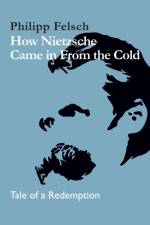
Nietzsche's reputation, like much of Europe, lay in ruins in 1945. Giving a platform to a philosopher venerated by the Nazis was not an attractive prospect for Germans eager to cast off Hitler's shadow. It was only when two ambitious anti-fascist Italians, Giorgio Colli and Mazzino Montinari, began to comb through the archives that anyone warmed to the idea of rehabilitating Nietzsche as a major European philosopher. Their goal was to interpret Nietzsche's writings in a new way and free them from the posthumous falsification of his work. The problem was that 10,000 barely legible pages were housed behind the Iron Curtain in the German Democratic Republic, where Nietzsche had been officially designated an enemy of the state. In 1961, Montinari moved from Tuscany to the home of actually existing socialism to decode the 'real' Nietzsche under the watchful eyes of the Stasi. But he and Colli would soon realize that the French philosophers making use of their edition were questioning the idea of the authentic text and of truth itself. Felsch retraces the journey of the two Italian editors and their edition, telling a gripping and unlikely story of how one of Europe's most controversial philosophers was resurrected from the baleful clutch of the Nazis and transformed into an icon of postmodern thought.
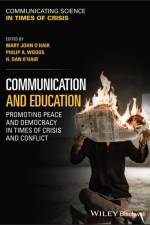
A timely and insightful exploration of the vital relationships among effective communication, education, peace, and democracy Communication and Education: Promoting Peace and Democracy in Times of Crisis and Conflict explores the complexities of addressing divisive societal challenges, reducing conflicts, and building and sustaining peace and democracy around the world. Contributions by an international panel of experts provide evidence-based practices, findings from ongoing research projects, policy analyses, and cutting-edge theories, frameworks, and models for confronting global challenges to peace and democracy. Examining the crucial role of crisis communication and education on a global scale, this research-based compendium covers a broad range of key topics, such as democratizing education, promoting peace through complexity science, understanding how factionalism threatens democracy, encouraging citizen participation, and more. Throughout the text, the authors highlight the need for equity, compassion, critical thinking, and active engagement to create a sustainable future based on democratic values. Designed to enhance the knowledge base of crisis communication related to crises impacting education, peace, and democracy, Communication and Education: Explores different strategies and practices for fostering democracy in education, such as the IDEALS framework for creating positive school cultures Discusses emotional geographies in schools and their impact on democratic school climate and teacher burnout Emphasizes empathic communication and participatory skills among teachers Offers practical strategies and examples of harnessing technology for peace and democracy Provides real-world case studies illustrating the transformative power of education, music, diverse perspectives, and open communication channels Examines the ecological interdependence of effective communication, education, democracy and peace Part of the Wiley Blackwell Communicating Science in Times of Crisis series, Communication and Education: Promoting Peace and Democracy in Times of Crisis and Conflict is essential reading for communication and education scholars, researchers, students, practitioners, and community scientists.
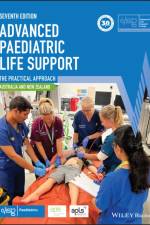
ADVANCED PAEDIATRIC LIFE SUPPORT The gold standard for treating paediatric emergencies Advanced Paediatric Life Support, Australia and New Zealand: A Practical Approach to Emergencies is the internationally renowned manual on emergency paediatric care. This text reinforces the course developed by the Advanced Life Support Group and utilises their tried and tested method of treating children in the event of a life-threatening illness or injury. Adapted specifically for Australia and New Zealand, this edition is a trusted resource used by qualified medical professionals dealing with emergencies involving paediatric patients. With a clear layout and straightforward style, this text can be used as a functional tool both for training and in the event of an emergency. In this seventh edition you will find descriptions of both common and uncommon paediatric emergencies which may be encountered in clinical practice, along with their causes, and how to best treat them during the first hours after presentation. This text offers an evidence-based approach to its subject, which includes: The latest Australia and New Zealand Resuscitation Councils (ANZCOR) guidelines A thorough introduction to the structured approach to paediatric emergencies, including important non-technical skills and communication Comprehensive explorations of the seriously ill child, including airway and breathing, circulation, decreased consciousness, seizures and exposure Practical discussions of the seriously injured child, including examinations of chest, abdominal, brain and spinal injuries Evidence-based life support treatment and the practical application of the Advanced Paediatric Life Support structured management Perfect for emergency care physicians, nurses and other allied health professionals, Advanced Paediatric Life Support, Australia and New Zealand: A Practical Approach to Emergencies will also benefit paediatric clinicians, doctors-in-training and anyone else with an interest in the team management and treatment of paediatric emergencies. Advanced Life Support Group (ALSG) is a Manchester, UK, -based charitable organisation whose medical education and training programmes improve outcomes for people in life-threatening situations, anywhere along the health care pathway, anywhere in the world. As a charity, ALSG invests all profits in educational resources and partners with the most effective and respected organisations worldwide to develop exceptionally high-quality programmes.
The essential text on understanding and improving animal welfare Understanding Animal Welfare, 2nd Edition is revised and expanded to incorporate new research and developments in animal welfare. Updated with greater accessibility in mind, the reader is guided through animal welfare in its cultural and historical context, methods of study, and applications in practice and policy. Drawing examples from farm, companion, laboratory and zoo animals, the text provides an up-to-date overview of research and its applications, while also tracing how concepts and methods have evolved over time. Readers of the second edition of Understanding Animal Welfare will also find: New developments in understanding positive animal statesThe importance of human actions in determining animal welfareNew content on âOne Welfareâ?How free-living wild animals are affected by human technology and climate change Originally intended for scientists and professionals, Understanding Animal Welfare has also found a home in undergraduate classrooms. It is now the essential text for students, practitioners, veterinarians, and researchers in animal welfare and related fields.
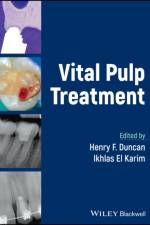
"Vital Pulp Treatment offers a comprehensive reference to the clinical applications of vital pulp therapies, rooted in the scientific base. Focusing on clinical practice, the book covers all aspects of vital pulp treatments, including pulp diagnostics, deep caries, and pulp exposure management. Each provides a concise summary of the state-of-the-art in clinical treatment, with 25-30 clinical photographs to support the text. The book begins with background information on the rationale and importance of these treatments, with discussion of how to diagnose compromised pulp. Chapters cover each important treatment modality, and consider outcomes in vital pulp treatments. A companion website offers video clips showing techniques. Vital Pulp Treatment is an important reference for anyone using vital pulp therapies in practice, as well as researchers"--
Abonner på vårt nyhetsbrev og få rabatter og inspirasjon til din neste leseopplevelse.
Ved å abonnere godtar du vår personvernerklæring.