

Gjør som tusenvis av andre bokelskere
Abonner på vårt nyhetsbrev og få rabatter og inspirasjon til din neste leseopplevelse.
Ved å abonnere godtar du vår personvernerklæring.Du kan når som helst melde deg av våre nyhetsbrev.

In this examination of the legacy of Foulkes, the theoretical foundations of group psychotherapy are applied to a range of groups, including family therapy, institutional dynamics and educational therapy. Contributors include distinguished group analysts, such as Pines and De Mar, and junior analysts selected for their original thinking.
This accessible book captures the reality of young people's experiences, their relationships and the things that are important to them. Using in-depth examples from his many years' experience, Nick Luxmoore outlines a creative approach that will enable professionals to respond appropriately to the complex needs of young people.
Using Voice and Song in Therapy is a practical and imaginative guide to the way in which singing and the expressive use of the voice can facilitate therapy. Paul Newham examines how melody creation combined with story-telling in song, can alleviate certain emotional, psychosomatic and psychological symptoms.
Jacobsen demonstrates how to interpret classic analytic and psychodynamic theories in relation to people with AS and explains how revised theories of mind, executive functioning and central coherence have helped provide new concepts and language with which to properly articulate the experiences of those with AS.
Using attachment theory as a foundation, this book addresses in depth the acute practice dilemmas concerning children who, despite the climate of increased awareness, multi-disciplinary cooperation and legislative and procedural change, cannot easily be protected. The contributors give guidelines for working with the children.
Drawing on one-to-one conversations with disabled children and follow-up interviews with their families, this volume takes an in-depth look at the effects of disability on disabled children. Informed by the social model of disability, the authors identify and draw out the implications of their findings for social work and health services.
Presenting dance/movement therapy (DMT) as a viable and valuable psychosocial support service for those with a medical illness, Goodill shows how working creatively with the mind/body connection can encourage the healing process. This book represents the first attempt to compile the work that has been done over recent years in medical DMT.
9 year old Adam dreads Sports Day, so he is delighted when Mr Williams announces that this year there will be an Alternative Sports Day with some very different challenges. There will be quizzes, riddles, and a treasure hunt - all the things that Adam enjoys. This book offers insights into how a child with AS copes with the challenges of school.
The authors explain the concepts of attachment, separation, loss and identity, using these contexts to describe how to use techniques such as family trees, wallpaper work, and eco- and geno-scaling. They offer guidance on interviewing relatives and carers, and how to gain access to key documentation, including social workers' case files.
Based on extensive studies into child welfare services, this important book brings together research into what works in service provision for minority ethnic families. Reviewing studies of the nature and adequacy of the services provided, and the outcomes for the children and their families, this book provides guidance for policy and practice.
Art Therapy - The Person-Centred Way is an enlarged edition of the first book published on person-centred art therapy, and includes many more exercises and ideas. It demonstrates that by bringing the person-centred facilitative approach to images expressed in art form, healing and growth can occur at every level of development.
This dictionary analyses and explains numerous symbols and images, with an emphasis on their use in counselling. The subjects in the dictionary all have relevance to symbols and symbolic language, and all of them have an imagery content. This book is intended to help the reader understand the wealth of symbols and symbolic language existing today.
Good Grief has been designed to explore and demystify the experience of loss - in different contexts - within the framework of the National Curriculum. Suitable for all professionals, carers and parents, Good Grief 1 facilitates the use of children's own experiences and encouraging improvisation and extension.
The scope of this book covers the many possible approaches to working with bereaved children. The contributors draw on their wide-ranging experience of working with bereaved children to examine a variety of methods and settings in which a child can find relief after bereavement.
Part I of this book provides the information needed for an understanding of personal safety skills, and the considerations peculiar to children with special needs. Possible approaches for their protection are introduced. Part II provides practical ideas for developing safety skills in children and young people with mild to severe disabilities.
This workbook is designed for a child to work through with an adult. Unlike other books, its content and layout are devised for children who read, think and process information differently. The first part is a theoretical introduction. The second part is a series of worksheets through which the child creates a unique book about themselves.
James Williams is an SP (special person) - he was diagnosed with autism in childhood. His mother, Joan Matthews, is an NP (normal person). As James grew up, his different perception of the world created problems. Together, he and his mother met the challenges with ingenuity and humour. This is a book of their practical solutions to those problems.
The contributors provide evidence of how psychodrama can be used to create paths of change for even the most severe traumatization and they also discuss the possible transmission of trauma patterns across generations. The book documents the impact of trauma and explores the development of treatment, providing models of experiential treatment.
The case studies in this book provide a detailed account of play therapy undertaken with children and an adolescent, all of whom experienced emotional problems and/or varying forms of abuse. Through the narrative form of the case studies, details of their therapeutic progress is given, which then informs discussion of wider issues.
How do you choose an appropriate approach for working with each different group you come across? Grounded in systems theory, Oded Manor's model provides a framework that bridges the gap between overly prescribed schemes that do not always meet clients' needs, and open ones that fail to provide sufficient details about practice.
In this book Lahad introduces techniques, drawn from the expressive arts therapies, which can be employed during a supervision to release information from the creative hemisphere of the brain. These techniques include storytelling, role-playing, guided fantasy, imaginary dialogues, letter-writing, drawing, and the use of colours and shapes.
This practical manual will enable people diagnosed with AS and high functioning autism to deepen their self-understanding and appreciate their value as working individuals. Through self-assessment, the reader is encouraged to explore of their employment history, and identify the work best suited to their personal needs, talents and strengths.
Between 1989 and 1991 several of Shakespeare's tragedies were performed in the central hall of Broadmoor Hospital. This book sets these important events on record. It offers insights into the impact of such drama, in such a setting, upon actors and audience.
The book is aimed to help people who are dealing with attachment problems and aid understanding into such conditions. It follows the experience of a young boy , Caleb, as he encounters difficulties forming and sustaining healthy relationships and presents a summary of current scientific thought on attachment styles and disorders.
Presenting research that will underpin effective practice with women who offend, this unique and thought-provoking text aims to help professionals meet the needs of this group as well as providing a theoretical resource for policy makers and academics.
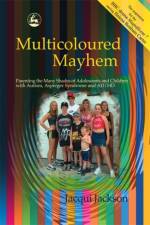
Jacqui Jackson has seven children. Luke has Asperger Syndrome, Joe has ADHD, and Ben has autism. Full of anecdotes and lively thinking, the book explains vividly what it is like to parent young people with such a range of conditions, and provides a wealth of helpful and creative advice for other parents and carers.
This innovative book explores social work, therapy and counselling as a series of encounters - between clients and human services professionals, social workers, their colleagues and other professionals, and more widely between citizens and the state. It presents in-depth discussion of the roles, language and contexts of meetings between them.
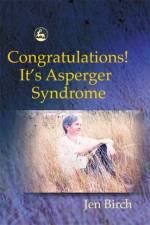
One of the increasing number of people diagnosed with Asperger Syndrome in adulthood, Jen Birch relates her story with humour and honesty, taking us through the years of confusion that led to her diagnosis. Talking positively, Jen aims to use this new-found knowledge to inform others about the syndrome and how life can be lived to the full.
In this accessible guide the authors outline ways in which care homes can help families to become partners in the caring process. Using case examples, quotations and research-based evidence, the authors offer advice and guidelines for supporting relatives who choose to be involved in the care of people with dementia living in a care home.
Written in an accessible style with insights into adoption and social work practice past and present, Birth Fathers and their Adoption Experiences offers a vital new perspective on understanding the causes and consequences of adoption, and makes positive suggestions for working with those whom it affects.
Abonner på vårt nyhetsbrev og få rabatter og inspirasjon til din neste leseopplevelse.
Ved å abonnere godtar du vår personvernerklæring.