








Gjør som tusenvis av andre bokelskere
Abonner på vårt nyhetsbrev og få rabatter og inspirasjon til din neste leseopplevelse.
Ved å abonnere godtar du vår personvernerklæring.Du kan når som helst melde deg av våre nyhetsbrev.

This book contains extensive practice information, original research material and policy findings about young people leaving public care and the work of leaving care projects. Each chapter contains good practice and policy examples, and the book concludes with a critical analysis of key practice, policy, and theoretical issues.
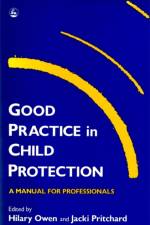
Good Practice in Child Protection is a practical handbook for use by all professionals who work with child abuse cases as they get to grips with the new legislation on child protection. The book is soundly based on theory, but its main emphasis is on practice, and it includes exercises to improve practice in specific areas of child protection work.
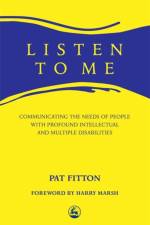
This book is written for those who have responsibilities for people with profound intellectual and multiple disabilities. It considers how to cope with the complex problems of someone with this level of disability, interpret their needs, and maintain effective contact with all the professionals and organisations who deal with them.
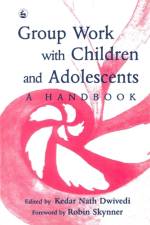
A comprehensive resource manual, this book looks at the theory and development of group work as a form of family therapy, the settings in which group work may be used, and effective therapeutic methods. The book also discusses how to deal with themes that may orient groups and the administrative and management concerns involved in groups work.
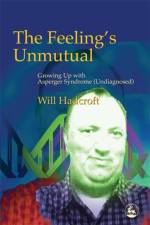
This book offers a fresh insight into the experience of feeling 'unmutual' or misunderstood, and how this can result in bullying at school and in the workplace, escalating into social phobia, paranoia and obsessive behaviour. It illustrates some of the expressions of the Asperger condition and provides an accessible introduction to those new to AS.
For the families who have contributed to this book, living with autism spectrum disorders has been a journey of self-discovery. With honesty and humor, they describe the ways autism has affected their daily lives, the challenges they have faced and the approaches they have found beneficial, and share their practical and original strategies.
Bulimia nervosa involves interpersonal, social and societal factors as well as the cognitive, developmental and behavioural aspects that have been the focus of much professional intervention to date. The author shows how people seeking to understand and emotionally support women with this problem need to be able to work with all these dimensions.
The book takes a new look at self-harm, focusing particularly on the under-explored area of `hidden' self-harming behaviour. These behaviours may not be immediately identifiable as self-harm by counsellors, therapists or their clients, but Turp shows how recognition and understanding of hidden self-harm can improve practice with those affected.
Art Therapy with Children on the Autistic Spectrum presents a new model of practice, which primarily focuses on communication difficulties. The authors describe how negative behaviours and subsequent tension may be alleviated when the autistic child is involved in interactive art making with the therapist.
Drawing on literature from philosophy, anthropology, psychology and musicology, Boyce-Tillman looks at musical traditions and notions of healing in different societies. Her work includes a number of case studies in various cultures - spirit possession cults in Africa and shamans in various traditions.
This study examines the underlying theatrical underpinning of dramatherapy, which is firmly based on an understanding of processes which are fundamentally theatrical. It approaches the subject systematically, arguing that the hidden psychological mechanisms which make theatre work are the same as those which operate in dramatherapy.
This book is a fascinating exploration of how deaf people place themselves in the contexts of both family and community, and forge their own identities. Corker lets her subjects speak for themselves through original writings and interviews, drawing from a cross-section of deaf society which spans gender, race, culture and sexual orientation.
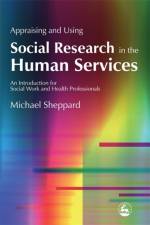
This accessible introduction provides social work students and practitioners with the knowledge they need both to evaluate research and to apply it to their own practice. Exploring a range of research methodologies, the author discusses the strengths and limitations of each and shows the reader how to identify the assumptions underlying them.
This book offers new insights into the application of a well-established approach to people who have traditionally been thought not to benefit from them. It demonstrates that rehabilitation has positive outcomes for people with dementia's quality of life and self-esteem, especially if rehabilitation is seen as a positive philosophy of practice.
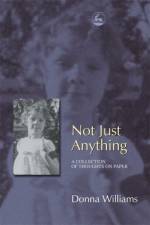
Donna takes you on a poetic adventure into places past, present and beyond. Often intertwined with the world of autistic experience, her writings divulge with immediacy, a person in the grip of overload and shutdowns, of extreme sensory and emotional highs and passions, of alienation from self, from body and fear of the intensity of emotion.
This is the fourth installment in Williams' series of autobiographies about her life with autism. A humorous, riveting, roller-coaster of a book, Everyday Heaven covers the monumental nine years from the time Ian left their accidental, 'autistic marriage', to finally knowing what life was like without the invisible cage of her 'Exposure Anxiety'.
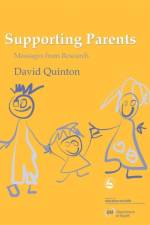
Supporting Parents brings together authoritative research on supporting parents and carers. Underpinning the government's developing policy for children's services, it is essential reading for practitioners, policy makers and academics working in child care.
Meet Adam, a young boy with AS. He helps children understand the difficulties faced by a child with AS, telling them what AS is, how it feels to have AS and how they can help by understanding their differences and appreciating their many talents. This illustrated book is an excellent starting point for family and classroom discussions.
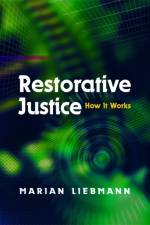
Drawing on many years' experience of working in victim support, probation, mediation and restorative practices, Marian Liebmann uses pertinent case examples to illustrate how restorative justice can be used effectively to work with crime and its effects. Liebmann also examines how restorative justice is practised around the world.
The social unconscious and its manifestations in group analysis are the focus of this important new book of Earl Hopper's selected papers. Drawing on sociology, psychoanalysis and group analysis, he argues that groups and their participants are constrained unconsciously by social, cultural and political facts and forces.
Despite the richness of the subject and the importance frequently ascribed to the phenomena of rhythm and timing in the arts, the topic as a whole has been neglected. Janet Goodridge writes from a practical movement background and draws on a wide range of sources to illuminate the subject in relation to theatre, drama, dance, ceremony, and ritual.
This book shows, for the first time, how research and clinical work can creatively complement one another, proving beneficial to both disciplines. Each chapter is written by a leading researcher and practitioner in the field, and the book covers a wide spectrum of approaches within different settings.
This is a fun-filled fantasy story for children with a difference: the hero is Ben, a boy with Asperger Syndrome. When Ben and his friend Andy find an old bottle in the school yard, they little realize the surprises about to be unleashed in their lives.
This book provides practical, hands-on strategies to teach social skills to children with high-functioning autism and Asperger Syndrome. Instruction is included to enhance the development of appropriate, measurable, and meaningful individualized education plans (IEPs). Lesson plans are included to facilitate the ability to 'teach' these goals.
The contributors to this informative book consider the nature of a supervision and examine the ways in which it can be further defined and developed. Drawing together practical and theoretical perspectives, Integrative Approaches to Supervision examines the contribution that supervision can make within both organisational and individual settings.
People with autism often are intolerant of gluten (a protein in four types of cereal) and casein (a protein found in animal milk). There are many testaments to the benefits for such people of a diet that excludes gluten, casein, monosodium glutamate and aspartame, and these persuaded Marilyn Le Breton to put her autistic son Jack on the diet.This is the book that Marilyn wishes had been available to her when she first did so. In it she explains what the diet is all about and how it works, what foods can form part of the diet and what should be excluded. She addresses frequently asked questions and misconceptions, such as 'Is the diet too difficult and time-consuming? How strictly do I need to adhere to it? Is the diet expensive to implement?' and gives practical advice on basic equipment and ingredients, what to expect when your child starts the diet, how to adapt family meals and how to minimise cross-contamination in the kitchen. The book includes a wide selection of recipes, an extensive list of addresses and websites of suppliers of foodstuffs in the UK, and suggestions for finding out more information. It is the first book of its kind to be written specifically for those living in the UK.Marilyn's own experience and sensible approach ensure that this book will be invaluable for any parent of a child with autism, or any adult considering embarking on the diet.
This book explores the territory of loss in childhood using the words of children who have found themselves bereft of hope. As well as covering the short and long term implications that arise when loss occurs, it provides positive approaches that enable children not only to cope but to grow through their experiences.
Using Voice and Movement in Therapy is a practical and imaginative guide to the way in which physical movement and the expressive use of the voice can facilitate therapy. Paul Newham examines how massage, manipulation and dance, combined with vocal expression, can alleviate certain emotional, psychosomatic and psychological symptoms.
This completely revised edition embraces new developments in this rapidly developing field. The wealth of up-to-date information provided will be invaluable not only for researchers and students but also for psychologists, teachers and other professionals, and parents, carers and family members in search of comprehensive and helpful information.
In this study the social construction of dementia is examined closely for the first time. Nancy Harding and Colin Palfrey show how Western society sees dementia as a disease, rather than a natural part of the ageing process. They take issue with the constructed view of the body as a machine, whose parts 'break down' and need replacement.
Abonner på vårt nyhetsbrev og få rabatter og inspirasjon til din neste leseopplevelse.
Ved å abonnere godtar du vår personvernerklæring.