




Gjør som tusenvis av andre bokelskere
Abonner på vårt nyhetsbrev og få rabatter og inspirasjon til din neste leseopplevelse.
Ved å abonnere godtar du vår personvernerklæring.Du kan når som helst melde deg av våre nyhetsbrev.

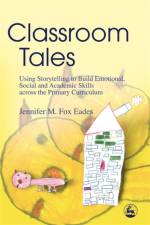
Fox Eades shows how storytelling is a crucial element of children's education that can enrich the school curriculum and encourage social and thinking skills. She discusses the different kinds of story that are useful in the classroom, and explores the impact of individual and group dynamics on the telling and reception of these stories.
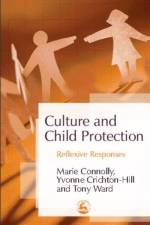
Culture and Child Protection is a concise exploration of the close links between social service practices and cultural values which offers a culturally sensitive model of child protection practice. The authors demonstrate the ways in which a combination of personal, professional and societal attitudes often influence practice decisions.
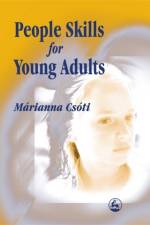
This is a complete course in social skills training for students in their teens, and is particularly appropriate for those with mild learning difficulties. It comprises a series of sessions accompanied by leader sheets. Examples of scenarios are given, and students are encouraged to act them out and discuss the issues raised in them.
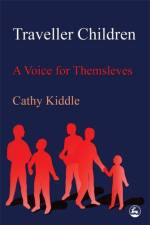
This book looks at education in the context of several distinct travelling groups including Circus, Fairground and New Travellers. Cathy Kiddle argues that education is important for Traveller children in that it enables them to develop into independent learners and, through this, independent people, able to speak for themselves.
This is a handbook for teachers and facilitators working with people with learning disabilities who are interested in creative expression through drama. Based on their considerable experience working with the Strathcona Theatre Company, Ian McCurrach and Barbara Darnley have created a step-by-step guide to running a drama group.
This book assesses the current state of foster care, the pressures which have shaped it and the challenges it faces. Arguing the importance of fostering within a coherent child care policy, the contributors examine the latest research into the delivery and support of foster care, and explore how these can be improved.
Robin Higgins takes you step by step through what is involved in choosing, organising and presenting a research project. The book combines practical advice with a look in depth at the principles of qualitative and quantative research. It is a useful companion volume to Approaches to Case Study and to anyone writing a dissertation.
A practical guide for those working with patients, this book will assist students in settling into their early placements and form a useful reference for those with more experience. It draws on anthropological and biographical as well as medical models.
This clear and instructive text gives practical advice on how to write better essays or assessments and give better presentations within social work. It shows how practitioners and students can apply theoretical considerations to practical social work and how they can articulate this connection in written or oral reports.
A decade ago the author's son first took a dislike to milk, and then to virtually every other substance she attempted to feed him. Her book was written to reassure other parents that there are lots of people out there in the same boat, and to suggest practical methods of dealing with the problem.
The authors hold your hand and give you plenty of hints and tips while you prepare your funding proposal or research project. They help you think about your title, structure your research questions and aims, and prepare to collect, organize and analyze your research data. This book makes arts therapies research fun and absorbing.
Arising from concerns about children presenting behavioural difficulties, this book outlines a number of useful approaches for teachers and others to use with individuals, small groups and classes. Its approach is designed to be used in a variety of settings such as schools, special needs education, counselling, speech therapy and youth work.
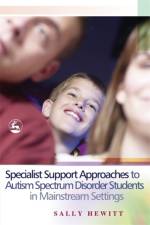
This comprehensive guide is bursting with achievable teaching strategies for those involved with ASD students in the school environment. Hewitt shows that providing specialist support in schools enables students with ASDs and associated behavioural difficulties to become more included in pre-school, primary and secondary mainstream classes.
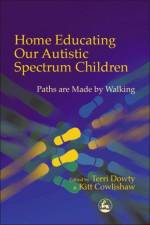
In this book parents who have chosen the home education option for their children on the autistic spectrum candidly relate their experiences: how they reached the decision to educate at home, how they set about the task, and their feelings about the issues raised by their actions.
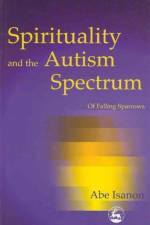
This is the first book focusing on the spirituality of people with autism spectrum disorders. Drawing on verbal and non-verbal narratives, Isanon explores the individual's struggle to come to terms with his or her humanity, and the spirituality of those who can neither reflect upon, nor express, their own life experiences.
It is a practical guide to working with children's natural imaginative abilities in order to encourage creative thinking, higher self-esteem and effective stress management. It is emphasized that all children can learn to use their imaginations in a constructive way that will contribute to happier and more creative lives as they grow to adulthood.
In this critique and extension of the work of S.H.Foulkes, Farhad Dalal presents a thorough contemporary appraisal of the theory of group analysis and its relevance to psychoanalysis as a whole. The author argues that Foulkes failed to develop a specific set of group concepts, relying instead on the traditional individualistic framework of Freud.
Karen Tanner and Pat Le Riche have brought together a range of contributions from practitioners and social work academics in order to discuss the application of ideas about observation to social work education and practice. The authors focus on how observation can be used to counteract oppressive and dehumanising practices.
This comprehensive introduction to the nature and work of therapeutic communities sets them within their historical and social context, to create a backdrop against which current practice can be viewed. The author examines communities specifically aimed at certain sectors of society, and describes the day-to-day running of a therapeutic community.
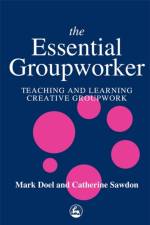
Focusing on how groupwork can be learnt and taught, the authors of this accessible book consider what is essential in effective work with groups. They develop a practice model which is applicable to a wide range of approaches and actively promotes anti-oppressive groupwork. It has been extensively trialled and refined in a social services agency.
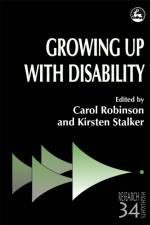
Growing Up with Disability encompasses a wide range of perspectives on childhood impairment and its social implications. The book adopts a child-centred approach, stressing the importance of communicating with disabled children, and includes interviews and pieces of their own writing. The book explores how such children can best be protected.
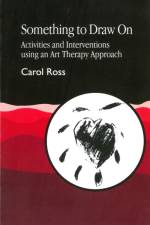
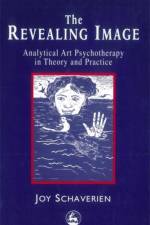
This is a book about an analytical approach within art therapy, which may be of interest in itself. The material also raises issues of interest to analysts and psychotherapists, whether or not they work with art in the clinical setting. The book clarifies areas of similarity between the disciplines, and also makes areas of difference apparent.
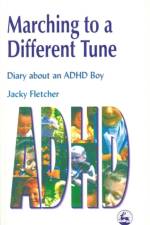
This book gives an essential new perspective to the understanding of Attention Deficit Hyperactivity Disorder - it describes this complex set of behaviours from the inside. It complements and deepens the clinical presentation of Attention Deficit Hyperactivity Disorder, at a time when this diagnosis is being applied to more and more children.
Anthea Innes provides a complete guide to running a training programme for dementia care workers. She begins with a brief outline of the key factors to consider prior to the design and implementation of a programme. In particular the book stresses the importance of getting to know the care setting in which the trainees will practise.
Risk Assessment in Social Care and Social Work outlines the theoretical issues behind the decisions, processes and organisations involved in risk assessment. Written by leading academics and experienced practitioners, it considers implications for future policy, drawing on the full range of perspectives in the most recent research.
The authors aim to advance a psychological framework from which to understand the experience of dementia from the perspective of the dementia sufferer, so making intelligible the symptoms of dementia and setting out new avenues of care such as the need to adopt psychotherapeutic/counselling approaches as an integral part of care.
This practical training manual is written for home care, residential and day care staff, who need to be able to recognise elder abuse, but may not be trained to do so. Its large format, range of exercises and photocopiable worksheets makes it a valuable source of training material.
Forensic Psychiatry has expanded over the last twenty years with a dramatic increase in forensic psychiatry posts and medium secure unit beds. There has been increased concern with the treatment, which is seen by many to be of great importance, and management of mentally ill offenders which has led to more interest in understanding.
An accessible guide to using mindfulness and reflection to improve the quality of care for vulnerable children. Features a useful tool to aid reflective practice and better respond to a child's needs.
Abonner på vårt nyhetsbrev og få rabatter og inspirasjon til din neste leseopplevelse.
Ved å abonnere godtar du vår personvernerklæring.