
Gjør som tusenvis av andre bokelskere
Abonner på vårt nyhetsbrev og få rabatter og inspirasjon til din neste leseopplevelse.
Ved å abonnere godtar du vår personvernerklæring.Du kan når som helst melde deg av våre nyhetsbrev.

The public are inundated with untruths about Jesus of Nazareth, the greatest figure in human history and the one by whom we date everything. Sometimes these truths emerge from the media and sometimes from specific assaults on Jesus by special interest groups and writers.Michael Green thoughtfully and robustly takes on the most important of these untruths.Was Jesus just a mythical figure who never lived?Were the Gospel accounts of him corrupt and written long after he lived?Can we trust the text of the New Testament?Was Mary Magdalene Jesus's lover?Were the Gnostic Gospels just as good evidence as the four Gospels which Christians read today?Did Jesus really die on the cross?And surely nobody these days believes in the resurrection? After all, hasn't the tomb of Jesus and his family been discovered?These are some of the issues addressed in this book. The author is an ancient historian as well as a New Testament scholar. He is not ashamed to call the misrepresentations about Jesus what they are - lies, lies, lies!
Get to grips with issues facing teenage girls: self-image, the pull of the in-crowd, puberty, boys, sex, regrets and godly ambition
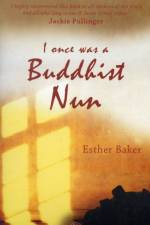
(Extract from) Chapter 11 Rock bottom`Peace I leave with you; My peace I give to you. Let not your heart be troubled neither let it be afraid.'(John 14:27 Nkjv)It was the morning of Sunday 21 July 1991, a warm summer's day. The wind-battered hilltop was today pleasantly bathed with a sunny glow. I was living in a Buddhist monastery, north of London, England. In bad weather it often felt like a bleak place, dotted with the wooden huts in which we lived. The huts had a temporary look about them, built above the ground, which seemed to encourage nasty gusts of chilled air to blow underneath. The trees and shrubs we had planted in the field were still very young, but were beginning to add a bit more greenery to the surroundings. We hadn't had the meal yet, but I wasn't hungry that day. I had other things on my mind. I was one of the few ordained members of the community left at the temple. Nearly everyone, including the lay people and guests staying with us, had departed early in the morning to attend an ordination ceremony at our other monastery in the south of England. This was one of the highlights of the year, our biggest ceremonial event - the one day when suitable men and women could take the higher ordination. I had relished seeing new people ordain. It was exciting and full of meaning for me. Ordinarily I would not have missed it. But this year I didn't want to be there. I had asked for permission not to go. I had lived in a Buddhist temple for eight years, most of that time in England as a nun (although I spent the first six months in a forest temple in Thailand before ordaining). I had taken two ordinations, initially as a novice and then as a Buddhist nun (known as a ten-precept nun). I was searching deeply for truth, and had strongly believed that Buddhism could take me there. I had given up everything that was necessary to follow the Buddhist way. Some people may consider it an extreme way to live. The life of a Buddhist nun was strict and disciplined. It involved many ascetic practices which had the aim of giving up the pleasures of the world in search for truth. They were designed to simplify life and help us detach from earthly things. Living like this was often very tiring, but it had become normal for me and very much part of me. We slept little, ate only one meal a day and experienced much sensory deprivation. We didn't listen to the radio or television, and so at some level were cut off from the world. I was known for my strong faith in Buddhism and hadn't ever really doubted the purpose of living like this. Until now. Something had changed dramatically. I had begun seriously to doubt Buddhism. This had never happened before and I was inwardly shaken and somewhat bewildered as a result, none of which I liked. I wanted and needed to be sure. I didn't know what was happening to me or where the strong persistent faith that I once had was disappearing to: it felt like sand slipping out of my fingers. Today I was at a peak of confusion and inner turmoil. I don't know where I was when I made the decision to go out of the temple. Suddenly I found myself, with my shaven head and dark brown robe, running down to the traditional Anglican church in the nearby village. It was totally spontaneous. I didn't know who or what I would find there. I just found myself tearing out of the monastery and rushing down the hill. I was aware as I went that I had asked no-one's permission to leave. This was more urgent than etiquette! I just fled. My head was in a spin. I thought, `I've got to talk to somebody,I've got to understand what's happening to me.' I felt deep down that someone in the church would have the answer, but I had no idea who or why. ...
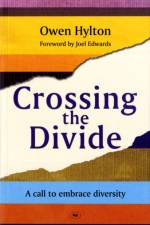
Crossing the divide and embracing diversity is at the very heart of God's plan and purpose for his church. Owen Hylton defines sin as the greatest problem of humankind, separating us from God and setting us at odds with one another. As new creations in Jesus, we can confidently and joyfully celebrate our oneness, whatever our color, status, gender, or nationality.
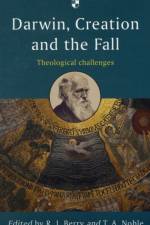
Darwin, Creation and the Fall explores how Christian doctrine of humanity relates to Charles Darwin's account of human evolution.
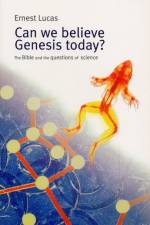
This book is about Genesis and how far scientific discoveries can help us to understand it. Many of us are confused about what Genesis tells us, and how (and why) to approach its ancient story of the origin of the world and mankind. We are usually equally confused about what Genesis is, and what it can and cannot tell us. If we are willing to look for truth and consider other ways of seeing the world, we can emerge from the fog. This book gives a fresh and important approach to some of the deep down questions which trouble us most about where we can from, and why we are here.
A comprehensive, in-depth biblical study of a key aspect of missionary practice.
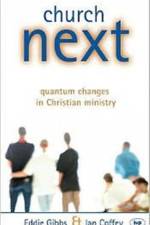
The church has always been potentially just one generation away from extinction. But now, with a generation of under-thirty-five-year-olds turning away from institutional expressions of Christianity, churches in the West recognize that they face a challenge that is more urgent and radical than it has been for many generations.In this acclaimed study, the authors identify some of the major storm centres through which churches must navigate, not in order to return to a previously more tranquil world, but to enter an entirely new one. They look at mission, church structures, developing new leaders and mentoring, worship, spirituality and evangelism, and ask how our ministry must change in order to serve a new generation of Christians.
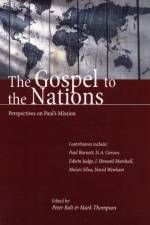
The mission of the apostle Paul, to proclaim the gospel to the nations, continues to be of vital relevance for the Christian church at the beginning of the twenty-first century. By Paul's own testimony, the gospel he was set apart to preach focused on Jesus Christ, crucified and risen, as the fulfilment of God's promises (Romans 1:1-13). Hence if we are to be true to the apostle, we must seek to understand his mission and message from the perspective of biblical theology. This impressive collection explores facets of such a perspective, under four broad headings: the Old Testament background to Paul's mission; New Testament studies; the wider context of the world in which Paul's message was proclaimed; and the use of that message in history and contemporary thought. These essays offer fresh and important contributions to Pauline studies, and were commissioned in honour of Peter T O'Brien (Vice Principal, Moore College, Sydney), who has made Paul's concerns his own through distinguished scholarship and personal ministry.
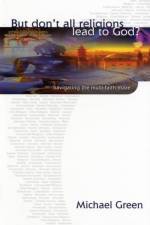
In this powerful and timely book, Michael Green explains the uniqueness of Jesus Christ. No other teacher ever claimed to bring God to us, no other teacher dealt radically with the problem of human wickedness, no other teacher broke the final barrier - death, and no other teacher offered to actually live within his followers.
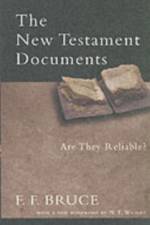
Are the New Testament documents reliable? Can we have confidence in their record of the life and teaching of Jesus and his followers? Such questions are fundamental for anyone approaching the New Testament. F F Bruce, formerly Rylands Professor of Biblical Criticism and Exegesis at the University of Manchester, was well qualified to answer them. This classic treatment has been revised by the author many times and reprinted regularly for more than half a century.
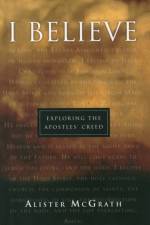
An exploration of the Apostle's Creed in six weekly sessions for church or home group use.
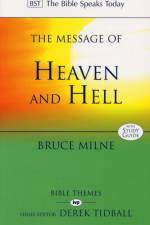
When death breaks into our lives, the great questions of human existence and destiny confront us. What is life? What is death? Is there an afterlife? Often it is only in the midst of tragedy that these issues are given much attention - but the basic orientation of Christianity is towards heavenly hope. Bruce Milne takes us on a journey through the biblical teaching about the awesome realities of heaven and hell - destinies central to our understanding of God and humanity. He begins with an examination of some key Old Testament texts, then moves on to the teaching of Jesus, and finally surveys other relevant New Testament passages. Debate continues about this area of Christian belief, but the life to come is a biblical 'fact of life', and the eternal God assures us, repeatedly and clearly, that he will meet us all in eternity.
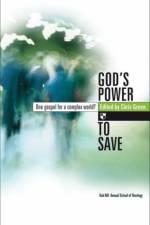
Includes analyses of pluralism in society and diversity in the New Testament.
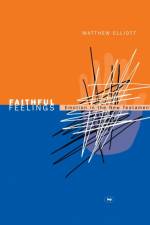
A fresh examination of emotion in the New Testament and in the Christian life.
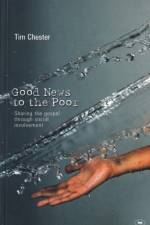
Constructs an approach to social action that is shaped and inspired by the gospel.
Can Christian artists tough it out in the real world? Or can Christian art only survive when unchallenged, in the cordoned off enclave of the Christian subculture? If our music, writing, theatre, painting, artistic expression is insipid and uninspiring, how great is the God who allows it to represent him? How exciting is the life that seems to prefer drabness to colour, shallowness to complexity, security to risk?The world of the arts and media is where ideas are rehearsed and values are tested. And yet the Christian presence in that world is insignificant, and the church has not always been supportive. Are we fearful of opening ourselves to its influence, or are Christian artists too often swallowed up by the world where they seek to be salt and light?Steve Turner urges us to develop ways of being out there, of thinking rigorously but christianly, of finding a voice, of achieving an integrity in our artistic expression while maintaining a true spiritual integrity. Only then can our art naturally and inevitably speak of the hope that we have.
Great privilege. Great pain. This is God's way: to take the privilege of faith and strengthen it with real trials so that we worship and witness with a greater passion for God. There is a certain irony to the fruit of affliction; John Bunyan's confinement taught him the pilgrim path of Christian freedom; William Cowper's mental illness yielded sweet music of the mind for troubled souls; David Brainerd's smouldering misery of isolation and disease exploded in global mission beyond all imagination. Irony and disproportion are all God's way. We think we know how to do something big, and God makes it little. We think that all we have is weak and small, and God makes it big. Barren Sarah gives birth to the child of promise. Gideon's three hundred men defeat a hundred thousand Midianites. A slingshot in the hand of a shepherd boy brings the giant down. A virgin bears the Son of God. A boy's five loaves feeds thousands. A breach of justice, grovelling political expediency, and criminal torture on a gruesome cross become the salvation of the world.
Joanna McGrath and Alister McGrath subject self-esteem to a Christian evaluation which introduces the important biblical themes of sin, grace, the cross, wholeness and the Fatherhood of God. This practical and pastoral book is rich with insights from both psychology and theology.
A fresh exposition and application of the birth of Jesus, from familiar biblical texts.
Focuses on the diverse forms and aspects of Christian apologetics.
Presents a commentary on Paul's first letter to the Corinthians.
Roger Olson traces the unity and diversity of Christian belief through the ages, structured around fifteen key theological themes. He offers a mediating evangelical approach which is non-speculative and irenic in spirit and tone, specifically written for non-specialists.
Books on preaching abound, yet there are few which take up the role of biblical theology in the process of moving from the text to the hearer. Graeme Goldsworthy has produced this handbook for ministers and lay preachers which will help them apply a consistently Christ-centred approach to their sermons. Clear and practical this volume will be a valuable resource for pastors, teachers and students preparing for ministry.
Dr Peterson argues that sanctification is a definitive event rather than a process. His work combines patient exegesis with careful synthesis, and the result is a restatement of the New Testament teaching on sanctification.
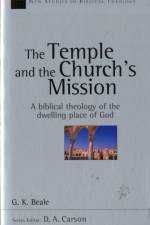
A comprehensive biblical theology of the temple, ranging from Genesis to Revelation.
Abonner på vårt nyhetsbrev og få rabatter og inspirasjon til din neste leseopplevelse.
Ved å abonnere godtar du vår personvernerklæring.