












Gjør som tusenvis av andre bokelskere
Abonner på vårt nyhetsbrev og få rabatter og inspirasjon til din neste leseopplevelse.
Ved å abonnere godtar du vår personvernerklæring.Du kan når som helst melde deg av våre nyhetsbrev.

In the second of three commentaries on the New Testament Pastoral and General Epistles, Ben Witherington puts forward a classification of these texts that takes into account recent genre studies, classifying them by the readers' contexts.
This book offers a Christian approach to living now in the expectation that tomorrow will come - a Christian framework for sustainable development, written by some of the world's experts on the subject. It is a guidebook for living in such a way that we will be better able to give a positive account for our treatment of the talents entrusted to us, when we face the divine Judge of all the earth.The contributors are R. J. (Sam) Berry, Dave Bookless, John Bryant, Flavio Comim, Joanne Green, Donald Hay, Sir Brian Heap, Margot Hodson, Sir John Houghton, Sir Ghillean Prance, David Stafford and John Wibberley.
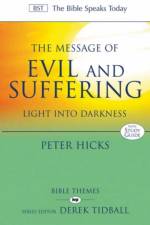
Evil and suffering have always been part of human experience - and they present a significant challenge to Christian belief in a good and all-powerful God. Evil and suffering may be a mystery to us, but they are not a mystery to God. The Bible writers have no time for an unreal idealism, in which the life of faith is free from anguish, pain and perplexity. They are confident that God's power and wisdom are great enough not just to cope with the realities of suffering and evil, but to overcome and transform them, and to enable us to be 'more than conquerors' in a broken and hurting world. With warmth and clarity, Peter Hicks expounds a range of relevant biblical texts that enable us to set the issue of evil and suffering firmly in the context of the nature and purposes of God. Central to his approach is the conviction that the key lies in the cross and resurrection of Jesus Christ, the suffering and triumph of God himself. In valuable practical sections he explores the Bible's teaching on how we are to live in a world of evil and suffering.
Explore the evolution of evangelicalism from the 1790s to the 1840s, highlighting its global impact, key figures, and the movement's role in social issues like slavery.
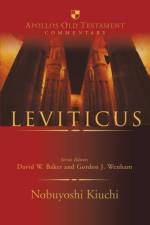
The Old Testament book of Leviticus is the sequel to Exodus in that it deals with a deeper dimension of the Sinaitic covenant, giving various rules for the life of the Israelites, and for the sacrifices and offerings to be performed in the sanctuary. It addresses the question of how the Israelites - human beings - can live in proximity to the holy God who has promised to dwell in their midst.In this excellent commentary, Nobuyoshi Kiuchi offers in-depth discussion of the theology and symbolism of Leviticus. He argues that its laws present an exceedingly high standard, arising from divine holiness, and the giving of these laws to the Israelites is intended to make them aware of their sinfulness, lead them to hopelessness, and ultimately to destroy their egocentric nature.To be confronted by the laws in Leviticus is to recognize the vast distance that separates the holy from the unclean and sinful, and so to appreciate afresh the grace of God, ultimately expressed in the life and work of Christ.
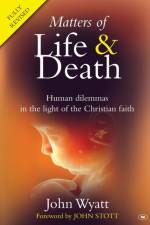
Conjoined twins dilemma...Suicide of terminally ill patient...Designer baby transplant success...Woman gives birth at sixty-six...Rarely are human dilemmas out of the news. And what medical science can do and ought to do - or ought not to do - impinges on our personal lives, families and societies.John Wyatt examines the issues surrounding the beginning and end of life against the background of current medical-ethical thought. Writing out of a deep conviction that the Bible's view of our humanness points a way forward, he suggests how Christian healthcare professionals, churches and individuals can respond to today's challenges and opportunities
Make your marriage the best it can be - look to the Maker and his instructions.
Features discussions of central topics and issues by well-known, senior scholars.
Aims to provide a challenge to evangelize the world.
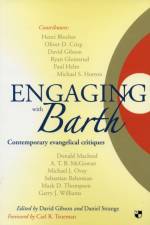
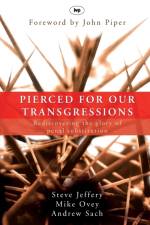
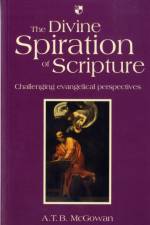
Contemporary evangelical critiques by Henri Blocher, Oliver Crisp, David Gibson, Ryan Glomsrud, Paul Helm, Michael Horton, Donald Macleod, A. T. B. McGowan, Michael Ovey, Sebastian Rehnman, Mark Thompson and Garry Williams.
Hear the stories of Black British Christians in their own words.
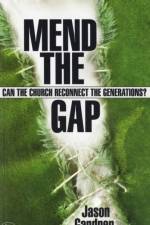
Pop music, piercings and peers.>Urgent surgery is required to mend the gap. Resisting simplistic solutions, Jason Gardner deftly analyses the reasons for the growing generation gap, including the role of the church. He provides practical steps forward for church leaders, youthworkers and parents. Underpinning this hopeful book is an unshaking belief in Christ's burning ability to inspire a 'whole big bad beautiful mix of people to follow him, regardless of their age'.
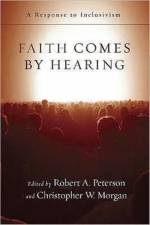
What about those who have never heard?The debate swirls and feelings run deep. What is the fate of the unevangelized? The traditional position-that apart from an explicit faith in Jesus no one is saved-seems to have fallen out of favor with many evangelicals. Here is a passionate but irenic response to the arguments of those who believe that the unevangelized can (or might) be saved apart from knowledge of Jesus Christ.Building on the insights of others, nine scholars introduce readers, even those with little background, to the ongoing discussion. Key questions are probed and answered from a biblical, theological and historical perspective.The book's positive thrust is summed up by editors: "God is passionately engaged in gathering people to know, love and worship him from every tribe, language, people and nation. And he has called us to join him on this mission."
Talks about how Christian leadership might change in the light of new cultural conditions.
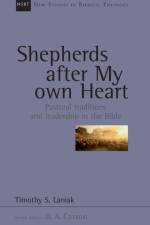
Offers an examination of a significant theme in the Old and New Testaments relevant to ministry.
An exploration of the prominence and significance of the cross of Jesus in Mark's Gospel.
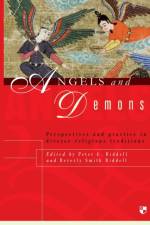
Spirit beings are fascinating. They can be wicked, good, of dual nature, or non-existent. They announce, accompany, heal, injure, sway, charm, fight, tempt and judge. They can bring us closer to, or distract us from, God.In this volume, the particular focus is on how angelic and demonic concepts are overtly expressed, or are more obliquely reflected, in different religions. Specific themes covered include spiritual warfare, spirit beings and the origin of evil, angelic and demonic roles, human suffering and spiritual powers, use of talismans, sacred texts, and the practical outworking of beliefs. The contributors - all Christian scholars - mostly write as detached observers of the religious traditions they are describing. Nevertheless, they do not shy away from taking a stand on controversial issues.Here you will find a great diversity of thought, some striking thematic similarities, and a fascinating view of worlds far removed from our usual experience.The contributors are Allen Anderson, Andy Bannister, Ruth Bradby, Keith Ferdinando, Theodore Gabriel, Chris Gnanakan, Willam Kay, Bill Musk, Martin Parsons, Chris Partridge, Peter Riddell, Nigel Scotland and Amy Summers-Minette.
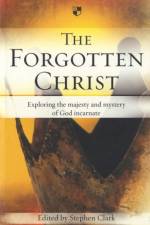
Few things are more essential to the health of the church than clear understanding of the Bible's teaching concerning the person of Jesus Christ. Doctrine informs devotion, and this, in turn, motivates discipleship. Neglect or misunderstanding of Christology will inevitably weaken Christian character and conduct. Furthermore, the ascendancy of pluralism leads many to the view that there is nothing unique about Jesus, and the media regularly present distorted portraits of him. It is essential that the church is able to proclaim the authentic and incomparable Christ to a needy world. This stimulating volume, based on the second Affinity Theological Study Conference, offers biblical and theological explorations of the majesty and mystery of God incarnate in Jesus Christ. All the contributors are fully committed to the belief that the Jesus of the Bible is the Jesus of history and the Christ of faith. These studies are intended not only to stretch and enlighten minds, but also to stir hearts and transform lives.
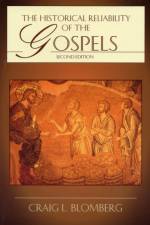
Many people continue to believe that only a small percentage of the New Testament accounts of the life and teachings of Jesus of Nazareth reflect what he really said and did. The reasons for scepticism may vary over the years, but some arguments have proved remarkably persistent - for example, the Gospels were not written by people in a position to know what Jesus was like, primitive cultures believed in miracles that we know are impossible, theological interest precludes historical accuracy, non-canonical texts disprove the stories in the Gospels, and so on. Such claims are in fact weakly supported, or have actually been disproved. However, various issues contribute to the complexity of the question of the Gospels' trustworthiness, and disagreements remain. Furthermore, confusion has been compounded by fiction promoted in popular culture, or by eccentric, unrepresentative scholarship. Since its first appearance in 1987, Craig Blomberg's response to scepticism in 'The Historical Reliability of the Gospels' has been widely appreciated. Fully revised and updated, this new edition takes account of the vast amount of relevant scholarship that has appeared over the last two decades. Ranging over a wide field - differences between parallel accounts of the same event, the striking contrast between John and the Synoptic Gospels, the theological interests of the evangelists, the miracles of Jesus, the testimony of extrabiblical sources, and critical assessment of historical methods - Professor Blomberg presents a thorough, informed engagement with the main issues in the ongoing debates. Deliberately refusing to appeal to the inspiration of the Bible or to church tradition, he convincingly demonstrates the overall historical reliability of the Gospels.
What is a 'thorn'? Pablo Martinez knows all too well first-hand. For more than twenty-five years he has suffered with a rare eye disease. Others have experienced traumatic loss, too terrible for words. Pablo meets these people all the time through his work.Pablo identifies five traits of a thorn. It is; painful; limiting; humiliating; prolonged; something to fight against.In the New Testament, Paul shared his experience of a thorn (2 Corinthians 12:7 - 10). God chose not to remove it in spite of his pleading.In the context of our salvation, Jesus suffered more than any person has ever suffered. God's identification with human tragedy is perfectly expressed in the name Emmanuel: God with us.Humbly and wisely, Pablo guides us beyond the 'why' of suffering to a place of hope.
How should we live as dual citizens: citizens both of the kingdom of God and of our nation? How much should we involve ourselves in society and public life?Many of us find integrated, whole-life discipleship very difficult. It is easier to live, not so much a double life as a dualistic one, where faith is a personal matter with little impact on work and other spheres of life.Graham Cray shows that there are profound gospel reasons for taking seriously both our national life and our call to be Christian citizens. A nation's social health is a matter of Christian action and concern because it matters to God.
Builder, fool, ambassador, athlete, parent, pilot, scum, shepherd: the apostle Paul uses rich imagery when he discusses what it means to be a Christian leader. Derek Tidball believes these images have important lessons and fresh insights for pastors and others in church leadership today. At a time when such people struggle under increasing pressure to 'produce results' and 'perform up to standard', what is needed is a different way of looking at leadership. Builders and Fools provides that. By explaining and drawing out the implications of Paul's imagery, it helps us focus on what really matters, on what God wants leaders to do and how he wants them to be.
Abonner på vårt nyhetsbrev og få rabatter og inspirasjon til din neste leseopplevelse.
Ved å abonnere godtar du vår personvernerklæring.