






Gjør som tusenvis av andre bokelskere
Abonner på vårt nyhetsbrev og få rabatter og inspirasjon til din neste leseopplevelse.
Ved å abonnere godtar du vår personvernerklæring.Du kan når som helst melde deg av våre nyhetsbrev.

For some Christians, God the Holy Spirit is something of a mystery, and they are not too sure what to say about him. Others speak with confidence and enthusiasm about him, challenging us to be 'filled with the Spirit', or to live a 'Spirit-filled life'. As a result, the work of the Spirit has sometimes been controversial.Graham Beynon looks at the main New Testament passages in which the Spirit s work is described. With freshness and clarity, he builds a picture of what the Holy Spirit does, and hence what experiencing him in our lives should look like.
What is the proper relationship between faith and deeds? How do Christians mature in the faith? What hope can we offer to those who face trials of various sorts? How do we learn to control our tongues and not get bogged down with riches?The apostle James faced these questions in profound ways and offered sound pastoral advice to his readers, scattered by persecution. His word to them can become a vital word to us if we are prepared to listen.In this keen, pastorally oriented commentary, readers will find exposition focused on what James had to say to his original readers in order to see its relevance for the church today.
For people beginning to doubt the uniqueness and supremacy of Christ, the author of the book of Hebrews provided one of the longest, most profound arguments in the New Testament. Christians today will find their understanding stretched and their loyalty confirmed by this rich presentation of our great High Priest, the Son of God, whose sacrifice of himself took away our sins and gave us continual access to God.Written in a fresh, succinct style, this commentary from influential evangelical pastor Ray C. Stedman supplies helpful background information that paves the way for our seeing what the text means for us today as well as what it meant for its original hearers.
To the Colossians, preoccupied with legal codes and intellectual disputes, Paul wrote a letter stressing not only the centrality of Christ but also the need for Christians to live out their faith in genuine community. Paul's antidote to a privatized and intellectualized faith will provide relief to many Christians today.To Philemon, a powerful church leader, Paul wrote a strong personal letter asking him to embark on a new relationship with his slave Onesimus. As a model for conflict resolution and mutual relations within the Christian community, Paul's letter has much to offer the church today.Throughout this commentary, Robert W. Wall explains what each letter meant to its original hearers and its application for us today.
The Gospel of John declares its purpose clearly--"these are written that you may believe that Jesus is the Christ, the Son of God, and that by believing you may have life in his name." Thus it fulfills a dual function, encouraging believers and providing them with evidences for proclaiming that Jesus is God's Messiah, the divine, incarnate Son of God.Christians today, as in the first century, can draw strength and courage from John's telling of the story of Jesus, a telling that consistently reflects not only the words and deeds of Jesus but their inner significance. We are called to worship as we find the Father, Son and Spirit revealed in the Gospel. And as in Jesus we discover God's light, life and love, we learn to respond in faith, humility and obedience.Throughout, Whitacre explains what the gospel meant to its original hearers and its application for us today.
Irenaeus. Tertullian. Origen. Athanasius. The Cappadocians. Augustine. Anselm. Aquinas. This book examines these vital figures in church history.
Are some things just too difficult to forgive? Like child abuse at the hands of a trusted family friend? Greta Randle's story shows us that forgiveness is not only possible, but that it is hugely liberating for the victim. 'My healing would only have been partial without God's intervention, ' she says. 'Self-help, counselling and reading have all played a part but nothing can take the place that God occupied within the whole process. He spoke to me through the Bible, used his people to pray with me. He was constant.' 'Some may ask, "Why does God allow these things?" It is my perception that it hurts God to know that the people he created allow themselves to do "these things". It was never his wish for me to be damaged as a child but he is able to redeem every situation.'
Nearly half today's adult population is unmarried. Most churches, however, emphasize marriage and family in a way that leaves many Christian singles feeling like second-class citizens. Although Jesus himself was single, the single state is often regarded as a problem in itself (rather than as having problems, as marriage does). By contrast, 'The Single Issue' sets out a positive, biblical view that honours singleness as a status equal to marriage. Avoiding trite advice on how to suffer through the single life, it offers practical insights on key concerns such as sex, celibacy and the constructive use of solitude - and points the way to a Christian community in which all members are equally valued.
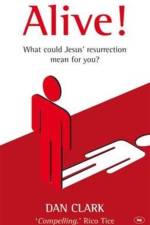
If someone came back from the grave, they would be able to answer some big questions: *What happens when we die?* Is there anybody out there?>Christians claim that Jesus Christ did just that: was bodily resurrected three days after being brutally executed. But is it true?
For anyone looking for a practical and authentic approach to discipleship.
In this clarifying overview of the biblical teaching on the doctrine of perseverance, Schreiner guides believers to carefully consider the overall message and purpose of Scripture's warnings and exhortations to persevere.
Jesus commanded his disciples to love one another. It's a simple command to understand, but very difficult to obey. And in the local church, it sometimes seems impossible. Many of us belong to highly diverse Christian communities, where we encounter people radically different from ourselves. At the same time, controversies and difficulties often threaten to tear us apart.So how can we achieve unity within the body of Christ? Gerald Sittser examines the 'one another' statements from the New Testament, distilling much-needed biblical wisdom to help us love one another. Drawing on his own pastoral experience of the best and worst of church life, he shows us what the love Jesus commanded actually requires of us, and how to live it out in struggle and servanthood, compromise and sacrifice.This enjoyable book by a best-selling author will guide us in putting one of the most important biblical principles into practice, for the good of our local churches.
Many obstacles can get in the way of having a healthy Christian faith.Some of those obstacles are intellectual, but there are emotional, relational and experiential ones as well. Even theological problems can get in the way when the very nature of faith itself is misunderstood. J. P. Moreland and Klaus Issler team up in this book to clear away the barriers to faith by helping you gain a clear grasp of what faith is, identifying the various obstacles to it and providing guidance for growing in your trust in God through Jesus Christ.
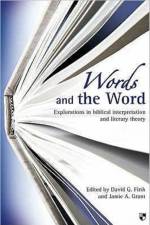
It is generally recognized that scholarly study of the Bible has taken a 'literary turn' over the past two decades. The contributors to this volume are united in their belief that a proper understanding of different aspects of literary theory can make a significant contribution to biblical interpretation.These informative and stimulating essays survey some general issues and a selection of specific approaches, filling a gap between simpler introductions and the primary texts of major theorists.Literary theory is not the only conversation partner for biblical interpretation in our day, but this volume demonstrates that it is also an important one if we are to continue to hear and understand the living Word of God in the words of the Bible.
FRESH provides bite-sized daily inspirations and challenges for new students and a challenging introduction to maintaining a strong personal Christian faith. An essential guide to keep the faith, this book is bursting with 5 weeks' worth of freshman-friendly ideas from someone who's been there and done that.
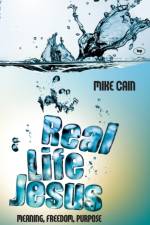
Forty pilot whales lie stranded on Darlington Beach, Tasmania. Marine conservation biologist Andrew Irvine knows he must act fast...The Bible teaches that as the whale was made for the ocean, men and women were made for God. Our relationship with him is the environment in which we are free to be fully human.Author Mike Cain unpacks Jesus' claims in John's Gospel and shows us why they cannot be ignored: sin, forgiveness and restoration affect us personally. With humour, originality, passion and sensitivity, Mike asks us to look again at Jesus: the real-life version, not the caricature.
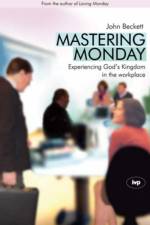
Christians can keep their church and working lives in separate compartments. They may want and even try to live for Christ in the office, factory or school, but somehow what they learn on a Sunday seems not to bear on what they are doing on Monday. Is being a Christian at work any more than not swearing or stealing paper clips?John D. Beckett thinks so, and his book is a bold call to transform the workplace into a place where the kingdom of God is experienced. He recounts some of the struggles he has encountered during his long career in business and management, and how they have enhanced his understanding of his faith and work. He introduces several biblical characters as role models for living out faith in the workplace, and focuses on five themes where biblical truths and business realities intersect.The author weaves three principles into his workplace agenda: a warm personal relationship with the Lord, a closer alignment of faith and work, and the multi-faceted expression of God's kingdom. Throughout this challenging book, he grounds these ideas in Scripture and applies them in practical ways to the working lives of his readers.
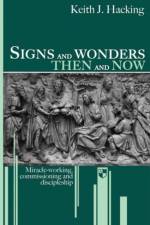
Signs and wonders', such as healing and exorcisms, are characteristic emphases associated with the 'Third Wave' of contemporary charismatic renewal, which has been particularly influential in the church, across the denominations and around the world.Exponents of such emphases claim to reflect a model for Christian discipleship that they find presented in the Synoptic Gospels and Acts by Jesus and his followers, in which 'signs and wonders' are normative for the church today.Keith Hacking's contention is that Third Wave commentators too often fail to grapple adequately with important historical, literary and theological issues that arise from the biblical text. From an engaging and thorough analysis of the relevant material in the Synoptic Gospels and Acts, he offers an approach that more accurately reflects the evidence and that, therefore, is more appropriate for informing contemporary theology and practice.
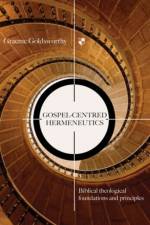
Graeme Goldsworthy concentrates on theological questions of presuppositions and the implications of the gospel for hermeneutics and biblical interpretation, commends the much-neglected role of biblical theology in hermeneutical practice, and brings fresh perspectives on some well-worn pathways.
A survey of the evidence and arguments for a central Christian doctrine.
Double listening: listening to the world and listening to God will make us more responsive and effective as Christians.
Abonner på vårt nyhetsbrev og få rabatter og inspirasjon til din neste leseopplevelse.
Ved å abonnere godtar du vår personvernerklæring.