








Gjør som tusenvis av andre bokelskere
Abonner på vårt nyhetsbrev og få rabatter og inspirasjon til din neste leseopplevelse.
Ved å abonnere godtar du vår personvernerklæring.Du kan når som helst melde deg av våre nyhetsbrev.

Siddhartha is an allegorical novel by Hermann Hesse that deals with the spiritual journey of a boy known as Siddhartha from Nepal during the time of the Buddha.The book, Hesse's ninth novel, was written in German, in a simple yet powerful and lyrical style. It was first published in 1922, after Hesse had spent some time in India in the 1910s. It was published in the U.S. in 1951 and became influential during the 1960s.
Love Among the Chickens is a novel by P. G. Wodehouse, first published as a book in the U.K. in June 1906 by George Newnes, London, and in the U.S. by Circle Publishing, New York on May 11, 1909, having earlier appeared there as a serial in Circle magazine between September 1908 and March 1909. A substantially rewritten version was published in May 1921 by Herbert Jenkins. This is the only novel to feature the recurring character Stanley Featherstonehaugh Ukridge, whose appearances are otherwise confined to short stories. The novel is written in the first person, from the point of view of Jeremy Garnet, an author and an old friend of Ukridge. Seeing Ukridge for the first time in years, with a new wife in tow, Garnet finds himself dragged along on holiday to Ukridge's new chicken farm in Dorset. The novel intertwines Garnet's difficult wooing of a girl living nearby, with the struggles of the farm, which are exacerbated by Ukridge's bizarre business ideas and methods.
This is P.D. Ouspensky's Tertium Organum, which he believed was the third major philosophical synthesis, the previous being those of Aristotle and Bacon. Ouspensky (1878-1947) was a mystic who traveled widely in Europe and the East looking for esoteric knowledge. He later studied with G.I. Gurdjieff. In this book, he uses the concept of the fourth dimension as an extended metaphor for the esoteric nature of reality. Einstein and other physicists had at that time validated the study of higher dimensions, and Ouspensky was fixated on this idea. One can only wonder at what he would think of string theory, parallel universes, and the holographic universe hypothesis (the latter of which he prefigures in this book).
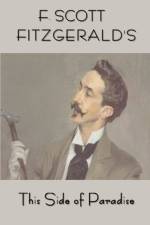
This Side of Paradise is the debut novel of F. Scott Fitzgerald. Published in 1920, and taking its title from a line of the Rupert Brooke poem Tiare Tahiti, the book examines the lives and morality of post-World War I youth. Its protagonist, Amory Blaine, is an attractive Princeton University student who dabbles in literature and has the book's theme of love warped by greed and status-seeking.In the summer of 1919, 22-year-old Fitzgerald broke up with the girl he had been courting, Zelda Sayre. After being drunk for much of the summer he returned to St. Paul, Minnesota, where his family lived, to complete the novel, hoping that if he became a successful novelist he could win Zelda back. While at Princeton, Fitzgerald had written an unpublished novel called The Romantic Egotist and ultimately 80 pages of the typescript of this earlier work ended up in This Side of Paradise.On September 4, 1919, Fitzgerald gave the manuscript to a friend to deliver to Maxwell Perkins, an editor at Charles Scribner's Sons in New York. The book was nearly rejected by the editors at Scribners, but Perkins insisted, and on September 16 it was officially accepted. Fitzgerald begged for early publication-convinced that he would become a celebrity and impress Zelda-but was told that the novel would have to wait until the spring. Nevertheless, upon the acceptance of his novel for publication he went and visited Zelda and they resumed their courtship. His success imminent, she agreed to marry him. (Wikipedia)
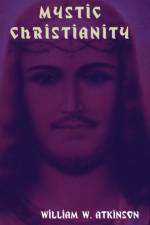
Most Christians, think of words like "meditation," and "mysticism" as words related merely to Eastern Religions and philosophies. However as this volume asserts concepts such as mysticism was and is a vital part of Christian spirituality. The author, William W. Atkinson also examines the concept of reincarnation in the origins of Christianity and by doing so offers us an interesting new look at Christianity in the context of its universality and its relation with those of Eastern religions.
Abonner på vårt nyhetsbrev og få rabatter og inspirasjon til din neste leseopplevelse.
Ved å abonnere godtar du vår personvernerklæring.