


Gjør som tusenvis av andre bokelskere
Abonner på vårt nyhetsbrev og få rabatter og inspirasjon til din neste leseopplevelse.
Ved å abonnere godtar du vår personvernerklæring.Du kan når som helst melde deg av våre nyhetsbrev.

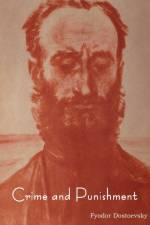
Crime and Punishment (Russian: ¿¿¿¿¿¿¿¿¿¿¿¿ ¿ ¿¿¿¿¿¿¿¿¿ Prestuplenie i nakazanie) is a novel by Russian author Fyodor Dostoevsky that was first published in the literary journal The Russian Messenger in twelve monthly installments. It was later published in a single volume. It is the second of Dostoevsky's full-length novels after he returned from his exile in Siberia, and the first great novel of his mature period.Crime and Punishment focuses on the mental anguish and moral dilemmas of Rodion Romanovich Raskolnikov, an impoverished St. Petersburg ex-student who formulates and executes a plan to kill a hated, unscrupulous pawnbroker for her money, thereby solving his financial problems and at the same time, he argues, ridding the world of an evil, worthless parasite. Several times throughout the novel, Raskolnikov justifies his actions by relating himself to Napoleon, believing that murder is permissible in pursuit of a higher purpose.
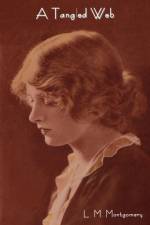
A Tangled Web is a novel by L. M. Montgomery. It is one of the few books she published that was written mainly for adults. It centers around a community consisting mainly of two families, the Penhallows and the Darks. For several generations everyone in the Penhallow family has married someone in the Dark family.
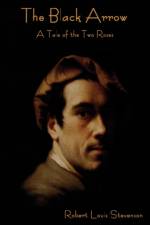
The Black Arrow: A Tale of the Two Roses is an 1888 novel by Robert Louis Stevenson. It is both an historical adventure novel and a romance. The Black Arrow tells the story of Richard (Dick) Shelton during the Wars of the Roses: how he becomes a knight, rescues his lady Joanna Sedley, and obtains justice for the murder of his father, Sir Harry Shelton. Outlaws in Tunstall Forest organized by Ellis Duckworth, whose weapon and calling card is a black arrow, cause Dick to suspect that his guardian Sir Daniel Brackley and his retainers are responsible for his father's murder. Dick's suspicions are enough to turn Sir Daniel against him, so he has no recourse but to escape from Sir Daniel and join the outlaws of the Black Arrow against him. This struggle sweeps him up into the greater conflict surrounding them all. The story of the Wars of the Roses is told in miniature by The Black Arrow. (wikipedia.org)
This is a pre-1923 historical reproduction that was curated for quality. Quality assurance was conducted on each of these books in an attempt to remove books with imperfections introduced by the digitization process. Though we have made best efforts - the books may have occasional errors that do not impede the reading experience. We believe this work is culturally important and have elected to bring the book back into print as part of our continuing commitment to the preservation of printed works worldwide.
Heretics is a collection of 20 essays by G. K. Chesterton and published by John Lane in 1905. archaeology While the loci of the chapters of Heretics are personalities, the topics he debates are as universal to the "vague moderns" of the 21st century as they were to those of the 20th. He quotes at length and argues extensively against atheist Joseph McCabe, delivers diatribes about his close personal friend and intellectual rival, George Bernard Shaw, as well as Friedrich Nietzsche, H. G. Wells, Rudyard Kipling and an array of other major intellectuals of his day, many of whom he knew personally. The topics he touches upon range from cosmology to anthropology to soteriology and he argues against French nihilism, German humanism, English utilitarianism, the syncretism of "the vague modern", Social Darwinism, eugenics and the arrogance and misanthropy of the European intelligentsia. Together with Orthodoxy, this book is regarded as central to his corpus of moral theology. (wikipedia.org) Chapters1. Introductory Remarks on the Importance of Orthodoxy2. On the Negative Spirit3. On Mr. Rudyard Kipling and Making the World Small4. Mr. Bernard Shaw5. Mr. H. G. Wells and the Giants6. Christmas and the Esthetes7. Omar and the Sacred Vine8. The Mildness of the Yellow Press9. The Moods of Mr. George Moore10. On Sandals and Simplicity11. Science and the Savages12. Paganism and Mr. Lowes Dickinson13. Celts and Celtophiles14. On Certain Modern Writers and the Institution of the Family15. On Smart Novelists and the Smart Set16. On Mr. McCabe and a Divine Frivolity17. On the Wit of Whistler18. The Fallacy of the Young Nation19. Slum Novelists and the Slums20. Concluding Remarks on the Importance of Orthodoxy
Abonner på vårt nyhetsbrev og få rabatter og inspirasjon til din neste leseopplevelse.
Ved å abonnere godtar du vår personvernerklæring.