






Gjør som tusenvis av andre bokelskere
Abonner på vårt nyhetsbrev og få rabatter og inspirasjon til din neste leseopplevelse.
Ved å abonnere godtar du vår personvernerklæring.Du kan når som helst melde deg av våre nyhetsbrev.

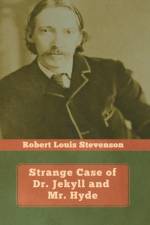
Strange Case of Dr Jekyll and Mr Hyde is a gothic novella by Scottish author Robert Louis Stevenson, first published in 1886. The work is also known as The Strange Case of Jekyll Hyde, Dr Jekyll and Mr Hyde, or simply Jekyll & Hyde. It is about a London legal practitioner named Gabriel John Utterson who investigates strange occurrences between his old friend, Dr Henry Jekyll, and the evil Edward Hyde. The novella's impact is such that it has become a part of the language, with the phrase "Jekyll and Hyde" entering the vernacular to refer to people with an unpredictably dual nature: usually very good, but sometimes shockingly evil.
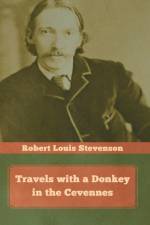
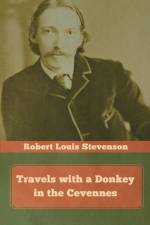
The wild Cevennes region of France forms the backdrop for the pioneering travelogue Travels with a Donkey, written by a young Robert Louis Stevenson. Ever hopeful of encountering the adventure he yearned for and raising much needed finance at the start of his writing career, Stevenson embarked on the 120 mile, 12 day trek and recorded his experiences in this journal. His only companion for the trip was a predictably stubborn donkey called Modestine. Travels with a Donkey gives the reader a rare glimpse of the character of the author, and the journalistic and often comical style of writing is in refreshing contrast to Stevenson's more famous works.
The wild Cevennes region of France forms the backdrop for the pioneering travelogue Travels with a Donkey, written by a young Robert Louis Stevenson. Ever hopeful of encountering the adventure he yearned for and raising much needed finance at the start of his writing career, Stevenson embarked on the 120 mile, 12 day trek and recorded his experiences in this journal. His only companion for the trip was a predictably stubborn donkey called Modestine. Travels with a Donkey gives the reader a rare glimpse of the character of the author, and the journalistic and often comical style of writing is in refreshing contrast to Stevenson's more famous works.
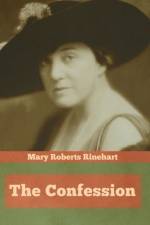
Mary Roberts Rinehart (August 12, 1876 - September 22, 1958) was an American writer, often called the American Agatha Christie, although her first mystery novel was published 14 years before Christie's first novel in 1920.Rinehart is considered the source of the phrase "The butler did it" from her novel The Door (1930), although the novel does not use the exact phrase. Rinehart is also considered to have invented the "Had-I-But-Known" school of mystery writing, with the publication of The Circular Staircase (1908). (wikipedia.org)Mary Roberts graduated from the Pittsburgh Training School for Nurses in 1896. That same year she married physician Stanley M. Rinehart. She and her husband started a family, and she took up writing in 1903 as a result of difficulties created by financial losses. Her first story appeared in Munsey's Magazine in 1903. The Circular Staircase (1908), her first book and first mystery, was an immediate success, and the following year The Man in Lower Ten, which had been serialized earlier, reinforced her popular success. Thereafter she wrote steadily, averaging about a book a year. A long series of comic tales about the redoubtable "Tish" (Letitia Carberry) appeared as serials in the Saturday Evening Post over a number of years and as a series of novels beginning with The Amazing Adventures of Letitia Carberry (1911).Rinehart served as a war correspondent during World War I and later described her experiences in several books, notably Kings, Queens and Pawns (1915). She produced as well a number of romances and nine plays. Most of the plays were written in collaboration with Avery Hopwood; her greatest successes were Seven Days, produced in New York in 1909, and The Bat, derived from The Circular Staircase and produced in 1920. She remained best known, however, as a writer of mysteries, and the growing popularity of that genre after World War II led to frequent republication of her works. Her most memorable tales combined murder, love, ingenuity, and humour in a style that was distinctly her own. Her autobiography, My Story, appeared in 1931 and was revised in 1948. At Rinehart's death her books had sold more than 10 million copies. (britannica.com)
"The Song of the Cardinal" is a fascinating story of the life of a redbird, or Kentucky cardinal, as it is popularly called, who is born in the valley of the Wabash. The author possesses the soul of an artist and a poet, which enables her to invest the story with the charm of a rich and vivid imagination; while her knowledge of the habits and peculiarities of the redbird and the love she feels for the cardinal family impart a living interest to her work that makes the reader enter into the joys and tribulations, the triumphs, failures, and final victory of the hero, with much the same personal interest one feels in the leading figures of a well-told romance of life. Into the web and woof of the story the author has also woven a beautiful picture of an old man and woman who through the song and the presence of the cardinal are brought again into the loving, sympathetic nearness to each other that marked the golden days of their early married life.
Abonner på vårt nyhetsbrev og få rabatter og inspirasjon til din neste leseopplevelse.
Ved å abonnere godtar du vår personvernerklæring.