


Gjør som tusenvis av andre bokelskere
Abonner på vårt nyhetsbrev og få rabatter og inspirasjon til din neste leseopplevelse.
Ved å abonnere godtar du vår personvernerklæring.Du kan når som helst melde deg av våre nyhetsbrev.

A comprehensive multidisciplinary review of the most relevant molecular, genetic, and behavioral approaches used to investigate the neurobiological basis of drug addiction.
Combat Medicine is meant to be a concise manual for the young clinical or basic investigator who is studying organ injury following trauma or toxic or infectious assaults either in an urban or battlefield setting, with an emphasis on current research issues in emergency and military medicine.
Nineteen cutting-edge articles by leading practitioners review critical issues concerning biocompatible materials-polymers, metals, and other materials-used in or on the human body. Each application-oriented article integrates basic science, engineering and medical experience with discussions of quality control.
Shoulder Dystocia and Birth Injury: Prevention and Treatment, Third Edition, supplements the limits of personal experience with the accumulated experience of many talented clinicians. It contains the latest causation theories and reviews of the literature.
In Neurobiology of Aggression: Understanding and Preventing Violence, leading experts in the fields of the neurobiology, neurochemistry, genetics, and behavioral and cultural aspects of aggression and violence provide a comprehensive collection of review articles on one of the most important cross-disciplinary issues of our time.
Sudden in-custody restraint deaths have emerged as a critical and imp- tant problem for police, correctional, and medical care workers. Sudden Deaths in Custody specifically addresses sudden in-custody deaths that occur after a violent confrontation.
Ranging from the evolution of pathogenicity to oceanic carbon cycling, the many and varied roles that bacteriophages play in microbial ecology and evolution have inspired increased interest within the scientific community. This title provides both classical and advanced molecular techniques.
Combat Medicine is meant to be a concise manual for the young clinical or basic investigator who is studying organ injury following trauma or toxic or infectious assaults either in an urban or battlefield setting, with an emphasis on current research issues in emergency and military medicine.
With the introduction of cardiac surgery more than five decades ago and the use of the heart-lung machine for open heart surgical procedures granting the surgeon unlimited time in which to operate inside the heart, a complex task has been given to the Perfusionist.
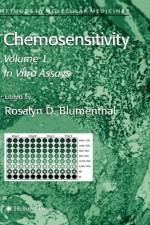
A state-of-the art collection of readily reproducible laboratory methods for assessing chemosensitivity in vitro and in vivo, and for assessing the parameters that modulate chemosensitivity in individual tumors.
This updated and expanded book was written with the underlying conviction that global health and nutrition problems can only be solved through a firm understanding of the different levels of causality and the interactions between the various determinants.
Now in its second edition, Modern Hematology: Biology and Clinical Management reflects the major advances in the understanding, diagnosis, and treatment of blood disorders. In 23 chapters, all major blood diseases are covered, as well as rare diseases that are of scientific interest.
Adenovirus Methods and Protocols, Second Edition, now in two volumes, is an essential resource for adenovirus (Ad) researchers beginning in the field, and an inspirational starting point for researchers looking to branch into new areas of Ad study.
In this comprehensive and cutting-edge book, leading experts explore the parameters that define germline stem cells and the mechanisms that regulate the cell behavior in order to better isolate, characterize and maintain them.
Management options for patients with colorectal cancer have undergone d- matic changes over the past decade. Whereas at the start of 1996 only one drug, 5-Fluorouracil, was available for the treatment of this disease, a mere 10 yr later, six drugs are licensed for use in colorectal cancer, and others are in the late phases of clinical development.
Preventive Cardiology: Insights Into the Prevention and Treatment of Cardiovascular Disease, Second Edition is intended for clinical cardio- gists, internists, primary care providers, and allied health care professionals who wish to extend their knowledge and expertise in the rapidly expanding field of preventive car- ology.
International experts from world-renowned medical schools comprehensively review for practicing clinicians and scientists alike the latest understanding of the epidemiology, causation, and consequences of diabetes and obesity.
The original edition of this text, Clinical Evaluation of Medical Devices: Principles and Case Studies, provided the first overview of key pr- ciples and approaches to medical device clinical trials, illustrated with a series of detailed, real-world case studies.
Part II focuses on the litigation process itself with views from the defense and plaintiff bar, and the physician as both expert and defendant. Part III looks at malpractice litigation from the viewpoint of the practicing physician.
More than fifty full-time urological clinicians and surgeons from the internationally acclaimed Cleveland Clinic Glickman Urological Institute describe the most common as well as the most innovative urological procedures from the standpoint of the state-of-the-art, as it is practiced at one of the world's top institutions.
A panel of prominent clinician-scientists comprehensively reviews the latest developments in pediatric pain management, with special emphasis on the setting in which pain is detected and managed.
The even more colo- ful "book of life" metaphor gave the promise that reading that book would lead to a veritable outpouring of new cures for diseases, hundreds of new drug targets, and a brave new world of medicine.
Challenges for the treatment of valvular heart disease include the growing need for effective yet less invasive interventions and therapies to treat these progressive conditions.
Additional chapters address taphonomic changes in human bodies during the early postmortem interval, arrhythmogenic ventricular dysplaisia that produces sudden death in young people, the postmortem diagnosis of death in anaphylaxis, and iatrogenici deaths.
Staying with the idea of isotopic labeling, Chapter 3 describes methods for perdeuteration and site-specific protonation and is the first of several chapters in the book that is relevant to studies of higher molecular weight systems.
A panel of respected air pollution control educators and practicing professionals critically survey the both principles and practices underlying control processes, and illustrate these with a host of detailed design examples for practicing engineers. The authors discuss the performance, potential, and limitations of the major control processes-including fabric filtration, cyclones, electrostatic precipitation, wet and dry scrubbing, and condensation-as a basis for intelligent planning of abatement systems,. Additional chapters critically examine flare processes, thermal oxidation, catalytic oxidation, gas-phase activated carbon adsorption, and gas-phase biofiltration. The contributors detail the Best Available Technologies (BAT) for air pollution control and provide cost data, examples, theoretical explanations, and engineering methods for the design, installation, and operation of air pollution process equipment. Methods of practical design calculation are illustrated by numerous numerical calculations.
Leading forensic pathologists from around the world synthesize the practical advances in a variety of important subspecialties of forensic pathology and demonstrate how the latest medical and scientific progress is being applied to solve current problems of high interest to forensic pathologists today.
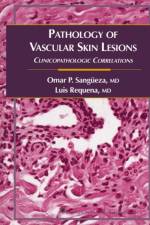
Superbly illustrated with both clinical and histopathologic photographs, the book moves from a proposed new system of classification and nomenclature for vascular neoplasms, to a full discussion of benign and malignant proliferations, including hamartomas, benign neoplasms, malignant neoplasms, and several related newly reported diseases.
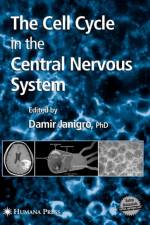
Cell Cycle in the Central Nervous System overviews the changes in cell cycles as they relate to tumor formation and development, while discussing how changes in the cell cycle can affect development resulting in later complications in life.
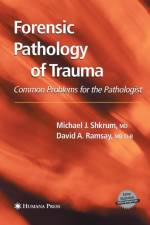
In the process of establishing the cause and manner of death, representatives of various investigative bodies have several responsibilities, including explaining the death to family members, attempting to reduce the risk of similar deaths in the future, and, if applicable, apprehending the individuals who are responsible for the death.
Abonner på vårt nyhetsbrev og få rabatter og inspirasjon til din neste leseopplevelse.
Ved å abonnere godtar du vår personvernerklæring.