







Gjør som tusenvis av andre bokelskere
Abonner på vårt nyhetsbrev og få rabatter og inspirasjon til din neste leseopplevelse.
Ved å abonnere godtar du vår personvernerklæring.Du kan når som helst melde deg av våre nyhetsbrev.

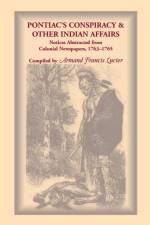
The French & Indian War ended in victory for the English, and the French were forced to cede all of their forts, settlements and land-holdings east of the Mississippi River, save for New Orleans. This change of hands was followed by a flood of new English settlers eager to take advantage of fresh farm land and hunting grounds. The Indian tribes inhabiting these lands found themselves displaced by the new settlers, who, unlike the French before them, were unwilling to share the land. Pontiac, sachem of the Ottawa, resolved to resist the incursion and in doing so united all the Indian nations who had been in the French interest against the English. Known as Pontiac's Conspiracy, this bloody Indian uprising overran and captured nine frontier forts in fifteen days and nearly usurped English control in the Ohio Valley. This collection of Colonial newspaper abstracts allows the reader to experience the drama and uncertainty of Pontiac's Conspiracy just as it was experienced by the Colonials who lived through it. These articles offer eye-witness accounts of soldiers and civilians massacred, houses and fortifications burned and English settlers fleeing east with only the clothes on their backs. Readers may ponder the enormous amount of preparation needed, and the myriad hazards encountered by troops dispatched on military expeditions into the frontier. The events described here occurred nearly a century before the practical application of the telegraph, and belated newspaper articles such as these were the only means by which the public could be kept informed of the depredations and disasters taking place all along the Ohio. It is easy to imagine the eagerness of Easterners awaiting their weekly papers and the latest news from the West, after skimming even a few pages of this text. This is the sixth volume of abstracts compiled by Armand F. Lucier describing Indian affairs in Colonial America. Like the previous five volumes, it includes a full-name index.
A compilation of information and burial records for all known cemeteries in Sycamore Township, with the exception of Rest Haven Memorial Park. Included are a large number of names from records that do not have grave markers in Hopewell and Reading Community Cemetery.
Originally published in 1993, we have split the original work into two parts and added a supplement containing the 1775 census and two hundreds (subdivisions) of the 1776 census (which were inadvertently omitted from the initial publication) and corrections. This represents a collection of data covering the period: 1773 (when the county was formed) through 1790. Volumes 1 and 2 have been extracted from the following: tax lists of 1774, 1776 (missing two Hundreds now contained in the supplement), 1778, 1783; censuses of 1776 and 1790; Dr. Archer's ledgers; orphans' court proceedings; family Bibles; estate administrations; registers of St. John's and St. George's; Quaker monthly meetings of Deer Creek and Little Falls; wills; court minutes; commercial licenses; survey certificates; land records index; marriage licenses; gleanings from various publications such as the Bulletin of the Historical Society of Harford County and other periodicals and histories; list of Non-Associators and Non-Enrollers in 1775; tombstone inscriptions; and other data drawn from the author's research and collections. This series contains over 30,000 entries.
During the 19th century, Georgetown played an important role in commercial and social activities, and for a time it competed for prominence with its neighbors-the City of Washington and Alexandria. Newspapers printed in Georgetown covered commercial and social activities for both sides of the Potomac River, government activities in the City of Washington, and tidbits of foreign news. Perhaps surprisingly, editors of Georgetown newspapers often subscribed to newspapers from cities up and down the eastern seaboard of the United States, and routinely inserted marriage and death notices they deemed of interest to their audiences. This compilation reflects marriage and death notices in nine newspapers that were published in Georgetown during the period 1801-1838. Not all months are covered because not many newspapers survived for some periods. Newspapers represented here are taken from microfilm copies purchased from the Library of Congress. Georgetown lost its charter and was absorbed by the City of Washington; thus in October 1880, most street names were changed. The introductory material presents a map and a list of street names under the old and new systems. Also found is a list of early ministers that can be linked to a particular religion or church.
These abstracts contain information from deeds, leases, releases, mortgages and other agreements that reveal family relationships. The abstracts are presented in the original order that they were entered in the deed books. The deed book page number is indicated. In addition to family relationships, these abstracts contain hundreds of names of witnesses and neighbors. The compiler made a note when a name was signed in German. A full name index is included.
This volume includes data previously released under the title, "Pastoral Records of the Jefferson and Feagaville Lutheran Parish Churches, Frederick County, Maryland, 1850-1998". It includes baptisms, marriages and deaths from the Jefferson and Feagaville Lutheran Parish Churches. Also included are tombstone inscription data taken from the Union (Lutheran/Reformed), St. Paul's Lutheran, Jefferson United Church of Christ (Old Reformed), St. Luke's Lutheran, and Mt. Zion Lutheran cemeteries.
This volumes covers wills abstracts including Administrator bonds.
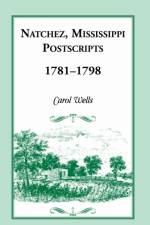
Natchez, Mississippi, was under Spanish rule from 1779 until 1798. Official documents were translated from the Spanish in 1818. At some later date, the handwritten translation was transcribed into type. This work is compiled from that typed transcript, which is located at Northwestern State University of Louisiana. It includes such records as depositions, declarations, wills, deeds, bills of sale and reports of disagreements. Most of the records date between 1781 and 1798, although there are scattered earlier and later dates. Over 550 surnames are given, over 100 slaves are named, and there are fifty-five connections to other cities and regions. Each entry includes the page number of the original typescript so that the reader can easily reference the subject. A surname index is included.
This volume contains abstracts of the registration records of free blacks in Alexandria County, Virginia. Alexandria County was created in 1801 when Virginia ceded part of Fairfax County to create the District of Columbia. It comprised that portion of the District of Columbia which lay on the west side of the Potomac River, and was known as Alexandria County, District of Columbia. Alexandria County remained a part of the District of Columbia until the territory was returned to Virginia in the retrocession of 1846. It then continued to exist as Alexandria County, Virginia, until 1920 when it was renamed Arlington County. The registration records abstracted here were originally created in response to a Virginia law of 1793 which required all free blacks to register with the town or county clerk, and get a freedom certificate to carry with them at all times as ready proof of their free status. In order to get a freedom certificate, the blacks had to produce acceptable evidence of their freedom. A black person could be free by virtue of being the child of a free mother, by manumission under a wide variety of conditions (such as at the owner's death per the terms of the owner's will), by self-purchase, etc. These abstracts indicate the nature of the proof provided, be it references to wills, deeds, and bills of sale, or affidavits by credible witnesses. Thus these abstracts name a great many people in addition to several thousand free blacks (many of the people named being white), and they provide a great deal of data on relationships, and some physical descriptions, all of which is of great interest to genealogists and social historians.
Abonner på vårt nyhetsbrev og få rabatter og inspirasjon til din neste leseopplevelse.
Ved å abonnere godtar du vår personvernerklæring.