
![Early Planters of Scituate [Massachusetts] af Harvey Hunter Pratt](https://cdnbackdoor.tales.as/thumbnail/150x225/00065/90328/cover.1501702729.jpg)




![Ulster Scots and Blandford [Massachusetts] Scouts af Sumner Gilbert Wood](https://cdnbackdoor.tales.as/thumbnail/150x225/00065/90316/cover.1501702687.jpg)















Gjør som tusenvis av andre bokelskere
Abonner på vårt nyhetsbrev og få rabatter og inspirasjon til din neste leseopplevelse.
Ved å abonnere godtar du vår personvernerklæring.Du kan når som helst melde deg av våre nyhetsbrev.

The twenty-one volumes of "Visitations" (1894-1921) together with the fourteen volumes of "Notes" (1896-1921) contain a vast wealth of English and Welsh pedigrees and supporting documentation. The "Visitations" series records the genealogical information contained in the Herald's Visitations of the sixteenth and seventeenth centuries. The pedigrees start with the grandparents of the principle person, and contain notices of all descendants of their name, covering five generations in most cases. A significant amount of genealogical and biographical information is given for each person. These volumes consist mainly of pedigrees, but there are also some wills, land records, extracts from parish registers, copies of monumental brasses, etc. In addition, the volumes contain illustrations of arms on record at the College of Arms, reproductions of autographs, seals, book-plates, portraits, etc. The "Notes" series contains genealogical data on the older generations of the families discussed in the "Visitations" series, to which they are directly keyed. The "Notes" series contains some pedigrees, but the bulk of the material in these volumes consists of documents, abstracts and other supporting material.Volume 14 consists solely of pedigrees, some with illustrations of family crests. Pedigrees include: Acton of Gatacre Park; Blake; Challinor; Chevallier; Cobbold; Corder; Cripps of Cirencester; Cross; Denne; Evans; Farnham of Quorndon; Fry; Fynes, alias Clinton; Good; Holmes; Landon; Lombe; Mortimer; Nelson; Pytches; Rouse; Rouse of Kilkhampton; Scott of Great Barr; Suckling; Surtees; Tarleton; Wolseley; Woollcombe; Worthington. The original full-name index adds to the value of this work.
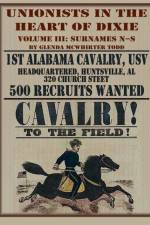
This series of books includes the most extensive collection of records and information ever published on the 1st Alabama Cavalry, USV and its soldiers. The author has transcribed all of the military records, including muster rolls, on each of the soldiers, and in some cases, a transcription of pension records. Southern Claims are included on some of the soldiers. Each volume includes numerous pictures of some of the soldiers, as well as several Civil War sketches drawn by artist, Joe Harper, descendant of Private Joseph Harper. Unionists in the Heart of Dixie, Volume III of this series of books includes the surnames of soldiers beginning with N through S. It examines the reasons why the soldiers from Alabama, and other southern states, supported their country by fighting for the Union; describes the Unionist "Leave-Aloners," who wanted to be left alone but were forced to choose a side; and provides accounts of Cahaba, Libby, and Andersonville Prisons. This volume also covers Civil War foot soldiers, Civil War uniforms, first enlistees of the 1st Alabama Cavalry (US Volunteers) who were immediately sent to Nashville, Tennessee and were assigned to the 1st Middle Tennessee Cavalry, US, which later became the 5th Tennessee. It includes information on the battles of Stone's River, in Murfreesboro, Tennessee; Day's Gap, in Alabama; the USS Sultana; John R. Phillips (after the war); headquarters of the 1st Alabama Cavalry Volunteers, Moulton, Alabama, August 21, 1865; and Civil War hospitals in Nashville, Tennessee. The questions most often asked of the author have been: "Who were these men? Why did they fight for the Union? What happened to them during and after the war?" The author has attempted to answer these questions; however, it is not known when some of the soldiers later died.
Until 1851, the work of the Assistant Postmasters General was assigned on a geographical basis. After November 15, 1851 the Postmaster General assigned work to his assistants on the basis of function, and the Second Assistant Postmaster General was made responsible for mail transportation. As means of transportation were developed and additional services were established, the Office of the Second Assistant Postmaster General became known as a Bureau. In 1946, the Bureau was re-organized and on August 20, 1949 it was abolished and its functions were taken over by the Bureau of Transportation. Most of the records of the Bureau of the Second Assistant Postmaster General described in this inventory were created before the 1946 reorganization. At that time, the Bureau's functions included: supervision of domestic and international mail by means of railroad, electric and cable cars, steam vessels, buses, trucks, or airplanes; supervision of the routing and distribution of the mail; management of international postal service; and supervision of the Bureau's administrative and budgetary services. The records of the Post Office Department in the National Archives on July 1, 1967, amounted to 2,756 cubic feet and comprised Record Group 28, Records of the Post Office Department. These records are described in this preliminary inventory. Forrest Holdcamper has additionally revised and consolidated four earlier inventories: Preliminary Inventory No. 36, Records of the Bureau of the First Assistant Postmaster General, 1789-1942 by Frank J. Nivert and Arthur Hecht; Preliminary Inventory No. 82, Records of the Bureau of the Second Assistant Postmaster General, 1814-1946 by Arthur Hecht; Preliminary Inventory No. 99, Records of the Office of the Postmaster General by Arthur Hecht; and Preliminary Inventory No. 114, Records of the Bureaus of the Third and Fourth Assistant Postmasters General, the Bureau of Accounts, and the Bureau of the Chief Inspector of the Post Office Department by Arthur Hecht, Fred W. Warriner Jr., and Charlotte M. Ashby.
Members of the Bosworth Post (Grand Army of the Republic) had this volume published for sale at a fair held in Portland, Maine, in 1884, to aid the Soldiers and Sailors Monument. This sketch presents "the prominent facts relating to the troops from Portland, in the war of the rebellion, including the regiments which 'rendezvoused' in our city."The majority of the book is devoted to accounts of the following companies: First Maine Infantry, Fifth Maine Infantry, Tenth Maine Infantry, Twelfth Maine Infantry, Thirteenth Maine Infantry, Seventeenth Maine Infantry, Twenty-Fifth Maine Infantry, Twenty-Seventh Maine Infantry, Twenty-Ninth Maine Infantry, Thirtieth Maine Infantry, and the First Maine Cavalry. The names of Portland officers are listed within their regiments. An account of the re-capture of the Revenue Cutter, "Caleb Cushing;" a list of Portland officers not previously mentioned; a list of Portland Naval officers; and an alphabetical list of interred soldiers and sailors, grouped by cemetery, complete this work.
More than 500 Confederate soldiers are buried in Cypress Hills National Cemetery in Brooklyn and Queens Counties, part of the City of New York. All of these men died while being held as prisoners of war in the New York area. Their stories deserve to be recounted. Mr. Walter has breathed life into more than 500 Confederate POWs via brief summaries of their military careers gleaned primarily through research with the Consolidated Service Records at the National Archives. He has also compiled a list which provides the correct names and/or units of those for whom the cemetery records are in error, the causes of their death, and dates of death. Appendices, a bibliography and a fullname index of individuals for whom biographies do not exist enhance this work. Anyone interested in the Civil War or New York history will want to add this volume to their library. John Walter, founder of the Institute for Civil War Research, is a professional genealogist and research historian. He specializes in military genealogy and New York City records.
Abonner på vårt nyhetsbrev og få rabatter og inspirasjon til din neste leseopplevelse.
Ved å abonnere godtar du vår personvernerklæring.