



![Pioneer History of Meigs County [Ohio] af Stillman Carter Larkin](https://cdnbackdoor.tales.as/thumbnail/150x225/00066/10151/cover.1501739617.jpg)
Gjør som tusenvis av andre bokelskere
Abonner på vårt nyhetsbrev og få rabatter og inspirasjon til din neste leseopplevelse.
Ved å abonnere godtar du vår personvernerklæring.Du kan når som helst melde deg av våre nyhetsbrev.

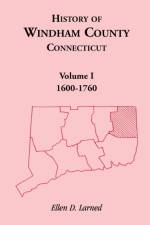
"To write of one county among the many counties of this great country may seem a little thing. To give special attention to one class of men in a single county may seem a matter of still less importance. When that county is the county of Litchfield, in Connecticut, and the class of men selected comprises those who for more than a hundred and fifty years have been the pastors of its churches, the question has a new significance." In addition to the abundance of valuable data preserved on these pages, this well-written book is a pleasure to read. It opens with the foundations, followed by the pioneers, manners and customs, and an eighteenth century sermon. Biographies and personal sketches precede the section devoted to Episcopal churches. Baptists, Methodists, the clergy as citizens, the clergy in literature, wit and humor, and ministers' children are also discussed. A lengthy appendix contains lists of congregational ministers arranged by town. Numerous vintage photographs of churches and people enhance the text.
Annual Town Reports provide a rich source of genealogical data, which the author has gleaned and compiled to create this valuable genealogical series. Vital Records are the key to placing our ancestors in a certain place at a certain time. These birth, marriage, and death records are arranged alphabetically by surname. Birth records give the child's name, birth date, parents' names, and place of residence. Other information is included when available, such as: father's occupation, mother's maiden name, place of residence, etc. Marriage entries are arranged alphabetically by the groom's surname and provide the following information: names of bride and groom, date of marriage, and sometimes the place of marriage, birth dates and birth places of bride and groom, occupations, and names of parents. The brides' maiden names are emphasized with bold type. Death entries give the date and place of death. Additional information may include: cause of death, birth date and place, marital status, occupation, and parents' names.
The similar pronunciation of the T and the D at the beginning of German surnames creates an interchangeable sound, making it imperative for family history researchers to check the records of surnames beginning with each of those letters. While searching for Trexler family records, the author was able to identify 173 families with identical of similar surnames. The greatest variation in the subject surname spellings was found in 18th century records, which are the focus of this work. By the early 19th century, families and individuals had developed a pattern of consistent use of their chosen surname spelling. The purpose of this work is to help individuals researching these and similar surnames to identify target individuals easily, regardless of the surname changes that resulted as the family evolved. Therefore, this work does not include extensive family histories, but it does give actual source records from which 173 individual family units have been documented. A researcher interested in a particular individual or family unit will be able to quickly eliminate a great deal of background research, and he or she can concentrate on the particular geographic area in which the individual is found and the variations in surname spellings under which they are found. Supplemental sections in this book include cemetery, census, church, chancery, city directory, probate, wills, distributions, immigration, deeds, land, tax records, marriage records, Revolutionary War, War of 1812, militia records, newspaper references and miscellaneous records which did not fit into one of the previously defined groups. They include both published and non-published sources with all variations of the subject surnames. They are grouped under each heading by geographic locality, followed by the name of the record, and then by the name of the individual in the record. There is a full name index as well as a general index.
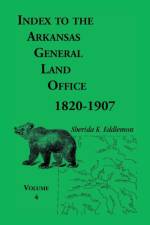
Spanish explorer Hernando DeSoto blazed the trails of the Arkansas area in 1541, followed by French explorers Louis Joliet and Jacques Marquette. In 1682, French explorer La Salle claimed this wilderness in the name of France, naming it Louisiana. There were many Native American tribes living in this region: The Osage, Caddo, Akansa and the Quapaw. France then ceded this region to Spain in 1762. Spain permitted Americans to settle in the Arkansas area in 1783. In 1801 Spain returned the Louisiana area to France. The U.S. acquired this territory with the Louisiana Purchase in 1803, requiring residents to file claims with the government in order to prove legal ownership of the land. Between 1820 and 1906, more than 13,000 entries were filed for the eastern Arkansas counties of Monroe, Lee, Woodruff, White, Crittenden, Independence, Lonoke, St. Francois, Prairie and Cross. Land was sometimes available for only $1.25 per acre, or a parcel could be bid upon. This index of land transactions filed with the General Land Office (GLO) is an excellent resource for the genealogist, containing abstracts of land transactions over an eighty-seven-year span beginning in 1820 after statehood. Records are arranged alphabetically by purchaser's last name, and include: first name, middle initial, a legal description and location of the land, the amount of land in acres, the date of purchase, and the county. Contact information is provided in the preface for obtaining access to the original records. This volume covers the following counties: Benton and Carroll.
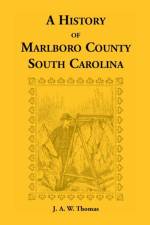
Marlboro County, located in the northeast corner of South Carolina, was established in 1785 in the Pee Dee region of the state (see Gregg's Early Pee Dee Settlers in the Main Catalog under "South Carolina"). It is believed that the area was inhabited solely by Indians until about 1730. The book presents chapters on the county's early history and settlers; industrial affairs of the early settlers; the American Revolution and the build-up toward it; operations on Pee Dee; Bishop Gregg; members of the legislature; Scottish settlers; the town of Clio; the courthouse; Bennettsville; Brightsville; Blenheim; the "Confederate War"; early ministers; Baptist, Methodist and Presbyterian churches; the town of McColl; Adamsville; educational matters; "The Colored People"; 1886; "Down to the Twentieth Century"; and families such as David, Evans, Wilds, Hodges, Irby, Pegue, Rogers, Brown, Magee, Carloss, Mason Lee, Coxe, Townsend, Henagan, Bruce, Kolb, Pouncey, Cochrane, Spears, Vining, Terrell, Thornwell, Gillespie, Ellerbe, Forniss, Pledger, Thomas, Parker, Ammons, Fletcher, Easterling, Ayer, Covington, Eden, Meekins, Wilson, Campbell, McColls, McLaurins, McCall, Hawley, Weatherly, McRae, Hinshaw, McLeod, McLucas, Bennett, Stubbs, Moore, McInnis, Huckabee, Matheson, James, Williams, Bedgegood, Pugh, Breeden and Adams. In the chapter on the "Confederate War" there are rosters listing more than 800 soldiers, and an everyname index lists over 3,200 names. A fold-out map of Marlboro County and a map of the Old Marlborough Court House complement the work.
In this, her third volume of Tennessee newspaper abstracts, Mrs. Eddlemon has again attempted to capture all names of local residents from all types of announcements, ads, and notices. They are drawn from three early Tennessee newspapers, all of which predate the first complete Federal census, and hence, are of great genealogical interest. The material includes lists of delinquent taxpayers, dead letters at the post office, runaway spouses and slaves, and all kinds of sales of goods and services, in addition to the usual marriage and death notices. The papers covered in this volume are: The Jackson Gazette, 1825-1828, The Sparta Review, 1823-1825, and The Knoxville Register, 1821-1822.
The first Englishman to explore the Kanawha Valley was Captain Thomas Batts of Virginia, who went so far west as the Falls in 1671, but permanent settlement did not begin until just over 100 years later. This history deals primarily with the upper valley from its origin near Gauley Bridge west past Charleston to Davis Creek. It provides a wealth of historical and genealogical information on dozens of early families, and is very attractively illustrated with over a dozen drawings. An appendix gives additional genealogies, and military and other lists. A bibliography and a full-name index complete this work.
This is a charming eyewitness account of the battles, marches, and hardships of the 1st and 2nd Brigades of Missouri troops enlisted to serve the Confederacy. Interwoven into the story is a description of how members of these two brigades corresponded with their families back home while blocked from easy, direct communication by intervening Union forces. The mail carriers, one Capt. Grimes and a Miss Ella Herbert, were the major instruments of the "Underground" mail service. Battles mentioned include: Wilson's Creek, Pea Ridge, Corinth, Iuka, Port Gibson, Siege of Vicksburg, Sherman's Georgia Campaign, Franklin, and Nashville. The author includes comments about the brutal, costly, marauder-bandit warfare in Missouri conducted by irregular troops and common criminal elements taking advantage of wartime conditions. A short appendage to the volume gives a history of the Confederate Home in Higginsville, Missouri, and biographical sketches of the people responsible for its establishment. Students of Civil War operations west of Appalachia will find this history fascinating and eye-opening in many ways. The text is attractively illustrated with photos of many of the principals. A new full-name index has been added.
This excellent genealogy traces eleven generations of descendants of Michael Mitchell, born circa 1670. Primarily a male-line genealogy, a few female lines are traced in recent generations. Michael's ancestry is unknown. A brief account of his wife's ancestry is given along with some mention of the origin of the surname and of several Mitchell immigrants. The text is extensively documented, with a lengthy bibliography, a complete full name index, and a chart outlining the family.
Abonner på vårt nyhetsbrev og få rabatter og inspirasjon til din neste leseopplevelse.
Ved å abonnere godtar du vår personvernerklæring.