






Gjør som tusenvis av andre bokelskere
Abonner på vårt nyhetsbrev og få rabatter og inspirasjon til din neste leseopplevelse.
Ved å abonnere godtar du vår personvernerklæring.Du kan når som helst melde deg av våre nyhetsbrev.

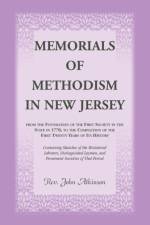
This work is concerned with important facts and incidents connected with the rise and progress of Methodism in New Jersey within the first twenty years of its history, along with sketches of most of the ministers of this period, and several of the more prominent and influential laymen. "The first of this sect, of whom we have any information, was John Early, a native of Ireland, where he was born in the year 1738. He immigrated to this country in 1764, and settled in New Jersey." But, it is the zealous Captain Thomas Webb (preaching as early as 1770) that must be credited with laying the foundation of Methodism in New Jersey, and inspiring the first class-reader, Joseph Toy. The early efforts of Bishop Asbury, the first conference of 1773 followed by subsequent conferences up to 1789, the first church, progress in Burlington and New Mills, Benjamin Abbott and Salem, brief sketches of preachers: Watters, Pillmore, Ivy, Tunnell, Everett, Rowe, Thomas, Spry, Ringold, Hickson, and Magary, and much more are covered. Adams, Borden, Brush, Chew, Cloud, Combs, Coke, Cook, Cooper, Cox, Crane, Cromwell, Duke, Dudley, Ellis, Fidler, Foster, Garrettson, Gill, Greentree, Haggerty, Heiser, Jackson, James, Lee, Merrick, Metcalf, Mills, Molliner, Morrell, Ogden, Partridge, Pedicord, Phoebus, Pyle, Sears, Shadford, Shaw, Sparks, Sterling, Swain, Walker, Ware, and Wesley are some of the many names that pepper these pages.
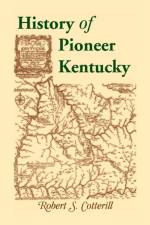
Relying heavily on manuscripts from the Draper and Durrett collections, Mr. Cotterill's book carries the reader from the earliest Indian legends about Kentucky, through the first pioneer settlements in the mid-eighteenth century, up to 1792 when Kentucky entered the Union. Dramatic tales of early exploration, abundant hunting, paradisiacal scenery and the constant terror of Indian attack abound. Of course, the most famous among the many adventurers that helped build Kentucky is Daniel Boone, and his stories figure prominently in this book. With carefully documented research, Mr. Cotterill explains more than just the chronology of events. He calls Kentucky "The Debatable Land" because it was not inhabited by any one Indian tribe and Virginia's claims to it were tenuous. England, during and after its war with the newly declared United States, encouraged the Northwest Indian tribes to make the raids on Kentucky settlements that culminated in the late 1780s with "Year of Sorrows." Mr. Cotterill also provides excellent descriptions of the physical, intellectual and spiritual qualities that typified the first Kentuckians.
This work is the third in a series of books about Maryland families. The author, already known for his works on the Fry, Hines, Hurley, Lowder, Maddox, Niekirk, Pratt and Walker families, now turns his attention to the Fulks families, whose name has been variously spelled Fowke, Foulks, Foulk, Fulks, Fout, Fouck, Fouts, Foltz and Fought, among other versions. Beginning with Fowke records from the 1400s, the book is designed to be an introductory look at the descendants of the Fulks families, being primarily an account of the descendants of Baltus Fulks of Maryland (1735-1806) and Gerard Fowke of Virginia (1606-1669). Chapter subjects include a second Gerard Fowke (1662-1734), Foulke family members of Delaware, Fulks families of Maryland, the Gloyd families (who intermarried with the Fulks family), William Fulks, Ignatius Fulks (1800-1881), William Robert Fulks, Fulks families of Virginia, and Fulks of Kentucky and Tennessee. The bibliography lists about a hundred sources used in the preparation of this volume, and the every-name index lists 2,000 or more names included in the book.
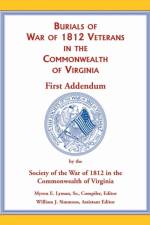
This addendum provides over 900 new War of 1812 veterans with known burial locations in Virginia. It provides more information on approximately 185 others as identified in the original publication by the War of 1812 Society in the Commonwealth of Virginia, Burials of War of 1812 Veterans in the Commonwealth of Virginia. It also lists fifteen deletions. These additions make a total of more than 5325 identified veteran burials in Virginia.The reader will need to use the original Burials alongside this addendum for a thorough understanding of the work and for a full listing of abbreviations, references, and codes. This addendum lists alphabetically the additions, updates, and deletions to the veteran information. This addendum also features supplements to the original appendices and illustrations. Appendices include: Additions to Veteran List by County/Independent City, Additions to Cemetery List by County/Independent City, Additions to Code to and Bibliography of Service Sources, Additions to Code to and Bibliography of Burial Sources, Additions to General Bibliography of Other Sources, and Additions to Index of Names Other than Veterans and Unit Commanders. New photographs show cemetery plaques and monuments placed by the Society since the first book's publication.The paragraphs of veteran information follow the same format as the original book. A key to the bolded category abbreviations is located at the bottom of each page. Readers should also take note of the additional explanations regarding birth and death dates and places, rank, unit (for militia soldiers), and cemetery names and locations.
This Land Tax Records book contains all of the readable years between 1782 and 1799. The first two years (1782 and 1783) were done by a single individual. The 1784 to 1786 years are missing with only additions and errors listed; however, all readable additions between 1784 and 1792 are included. 1787 is the first year records exist showing the county was divided into two districts, an upper and lower. Complete years for 1789 and 1790 are missing with only additions and alienations. Beginning with 1791 there are records for one or both districts through 1799. The forms for the most part are the same during the period. The columns of the Land Tax typically include: Proprietors or Persons Names Owning Land; Quantity of Lands (# of Acres); Price or Rate of Land per Acre (2/6, 7/6, 10/); Total Amt. of Value (of Land); and, Amount of the tax @ __ rate sometimes at top of the first page in District. It is interesting to note that the currency of pounds, shillings and pence was used in Land Tax Records far longer than in Personal Property records. In fact, 1797 was the first year property value and tax were noted in dollars and cents.Mr. Hamilton has compiled a wealth of valuable genealogical data presented in a convenient table format with entries listed alphabetically by surname within each section. Chapters include: 1782 Land Tax by William Kendall Sr. and Seth Powell; 1783 Land Tax by John Harmanson and William Satchell; 1784 Eliminations, Alterations and Errors; 1785 Eliminations, Alterations and Errors; 1786 Eliminations, Alterations and Errors; 1787 Eliminations, Alterations and Errors; 1787 Land Tax "Nathaniel Goffigon" District (partial); 1787 Land Tax "Littleton Upshur" Upper District; 1788 Land Tax "Nathaniel Goffigon" District; 1788 "Nathaniel Goffigon" Alienations and Alterations; 1788 "Littleton Upshur" Alterations and Alienations; 1789 "Littleton Upshur" Alterations and Alienations; 1791 "Nathaniel Goffigon" Alterations and Alienations; 1791 Land Tax "Littleton Upshur" Upper District; 1792 Land Tax "Littleton Upshur" Upper District; 1792 "Nathaniel Goffigon" Alterations and Alienations; 1792 "Littleton Upshur" Alterations and Alienations; 1793 Land Tax "Matthew Guy" District ; 1793 Land Tax "Nathaniel Goffigon" Upper District; 1794 Land Tax "Matthew Guy" District; 1794 Land Tax "Nathaniel Goffigon" Upper District; 1795 Land Tax by Thos. Lytt. Savage; 1796 Land Tax by Matthew Guy; 1797 Land Tax by Matt. Guy; 1798 Land Tax by Thos. Lytt Savage; 1799 Land tax by Golding Ward; and, Largest Landowners by Year or District.
Colerain Township, located in Hamilton County, Ohio, was established in 1794. Predating the establishment of the state of Ohio in 1803, John Dunlap, a native of Coleraine, Ireland, surveyed the area. The early history of the township includes a siege on Fort Dunlap by Native American warriors for over twenty-four hours. They gave up when they heard reinforcements were on their way from nearby Cincinnati's Fort Washington. After the Treaty of Greenville, the area was cleared for mainly rural farming, with small villages dotting the landscape, which housed a post office, a tavern or two, and maybe a few stores or shops that supported the farmers. The area remained rural until the end of WWII when suburban sprawl rapidly changed the small two-lane roads into bustling thoroughfares and the cornfields into cul-de-sacs with two or three bedroom homes and a garage for the family car. Today, Colerain Township is home to over 60,000 residents, making it one of the largest townships in Ohio. However, those who live there call it home. This book celebrates the history, heritage, and story of Colerain Township, and its journey from the isolated frontier wilderness, to rural farming, to a modern suburban community, bursting with people and business. Numerous photographs, an appendix, a bibliography, and a full-name index add to the value of this work.
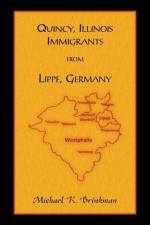
Starting in the 1850s, the number of Niederdeutsch immigrants from Westphalia, Germany, greatly increased while the immigration from southern Germany was proportionately lower. In the process of researching his ancestors, the author concluded that the majority of Quincy's German immigrants were Niederdeutsch (low Germans). While, none of Brinkman's ancestors came from Lippe, he became interested in the migration of Niederdeutsch to Quincy, which resulted in this book, which lists the German immigrants in Quincy, who came from Lippe, Germany.An introduction precedes the biographies, which includes: Description and Short History of Lippe; Maps of Fürstentum Lippe and Westphalia; Other Lippes; Map of Germany; Organization of Lippe Government; Migration to Quincy from Western Lippe; Direct or Indirect Migration; Pathfinders; Settlement Patterns of Lippe Immigrants; Residence Study; Cluster Settlements in Adams County, Illinois; Marriage Study; Boston Brown Bread and Pumpernickel; German Occupations; and American Occupations.Biographical entries include: date and place of birth, surname, given name, date of marriage, emigration, town in Germany, death in Quincy, occupation, residence, migration, and sources. A list of sources, a locality index, and a surname index add to the value of this work.
Elizabeth Brown, "Quatie," a full blood Cherokee of the Bird Clan, was born in 1791 in the southern Appalachian Mountains of what is now Tennessee. Quatie became a wife, a mother, a helper to her husband - John Ross, Chief of the Cherokees, and First Lady of the Cherokee Nation.The Cherokee Nation of her time was the largest and most progressive of all the Native American tribes. The Cherokees had their own schools, their own postal system, and their own newspaper, The Cherokee Phoenix (established in 1828). They built Christian churches, schools and houses; planted fields and orchards, kept herds of beef cattle, manufactured cloth, built roads, and operated taverns and ferries. They had a system of laws which were enforced by peace officers and native courts. In 1828, the Cherokee Nation adopted a written constitution and established a government with a legislature, courts, and an executive branch.Quatie was born in a world where the Cherokee culture and the white culture met and lived in peace together for a time. Unfortunately, the new-comers lusted for the Cherokee's land, which caused the peace between the two cultures to be short lived.Chapters include: Growing Up in the Land of "The Real People;" The Story of Quatie's People; Losses; Wife of a Chief; Chief John Ross, "The Indian Prince;" The "First Lady" of the Cherokees; Peaceful Protests; "The Place Where They Cried;" A Mother's Love; A Soldier's Midnight Vigil; and, A New Hope. An appendix and a bibliography add to the value of this work.
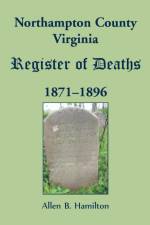
This is Northampton County, Virginia's Register of Deaths for 1871 to 1896, a continuation of Sandra Perkins work 1853 to 1870. Many of the entries between 1873 and 1877 were difficult if not impossible to read because pages are either faint or dark. To compensate, the author borrowed the Library of Virginia's copy to make the best and most complete list. This list of over 2,200 names is in alphabetical order with a full-name index in the back with reference page for the parent's names and sources that provided the information. The following is a breakdown of the order of information gleaned from the Death Register: Name in Full, Race (White / Colored or Black), Sex, Date of Death, Place of Death, Name of Disease or Cause of Death, Age (Years / Months / Days), Names of Parents, Where Born, Occupation, Marital Status, and Source of Information (name of person giving information of death and designation of informant such as physician, surgeon, coroner, head of the family, friend, etc.)The top of each original form states "It is hereby requested that the Commissioner of the Revenue in making up their reports shall certify the aggregate number and also give separately the number of White and Colored". The author has included this information for each year, as well as a breakdown of the causes of death by year. This is shown in the 1871-83 and 1884-96 charts. There are six years missing. These include 1879-1881. The Mortality Schedules from June 1, 1879 to May 31, 1880 have been included to fill in some of this gap. This includes fifty-seven from the Capeville District, thirty-four from Eastville District, twenty-three from Johnsontown District and twenty-five from Franktown District for a total of 139.
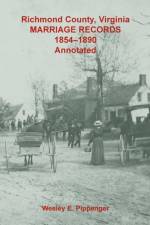
This work is a compilation of data found in 1,702 marriage records of Richmond County, Virginia, for the years 1854 through 1890. The number of marriages greatly increased after the War of the Rebellion. The data are derived from multiple sources, including: marriage licenses or applications, minister returns of marriage, consents by guardian or parent, or entries in either of two bound marriage registers, and supplemented with family Bible records, cemetery records, military records, and other publications. The index contains an entry heading for C.S.A. to list 160 Confederate soldiers identified. A bibliography and an every-name index add to the value of this work. The index contains over 12,000 entries.
From the landings of the first European colonists to 19th century histories to 1950s film westerns, Native Americans have been portrayed with unquestioned prejudice and ugly bias. It would not be until the 1970s that history scholars would begin to seriously demand a change in how Native Americans were viewed and their lifeways studied. The search for a full understanding of North America's numerous groups of native peoples and their contributions to U.S. history continues. This volume explores the Indian-non-Indian interactions from the 17th through the 19th centuries, with a focus on military encounters. The essays are arranged in a roughly chronological order, beginning with early contacts in 1609 between the Lenape and Dutch in the Delaware region, and the Mohawks and French in New France. The Wiechquaeskeck of southwestern Connecticut also deal with the Dutch in Governor Willem Kieft's War in the early to mid-17th century. The Abenaki (1694), Shawnee (1791), and the southeastern U.S. tribes (mid-19th century) deal with incursions on to their lands. The final essay looks at the St. Albert Mounted Rifles, a corps of the Canadian Militia, in 1885, which was composed mostly of Metis men. In these essays, the Native Americans, whether working with the whites or against them, are active participants in constructing their lives under the impact of the early European arrivals and their descendants.
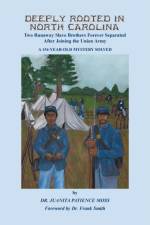
Foreword by Dr. Frank Smith, Founding Director, African American Civil War Museum. This solved mystery will be of interest to Civil War 'buffs' looking for a brand new story as well as to descendants of Civil War veterans. For many African Americans, being able to call ancestral names brings a kind of closure to us, who during slavery, were counted as 3/5 of a person. Two young runaway slaves from Edenton, N.C., enlisted in the Union Army under the surname 'Patience.' The elder Thomas joined the 5th MA Colored Cavalry while the younger Crowder joined the 103rd PA Infantry. After the war, Thomas returned to North Carolina while Crowder went with his regiment to Pennsylvania, never to meet again. Not until 2000 when the author, Crowder's descendant, discovered Thomas' name inscribed on the Wall of Honor in Washington, D.C., was it known that two Patiences had served during the Civil War. Are they brothers? This question was answered in 2018 through 23andMe DNA reports. Not only that, an amazing 'WOW!' moment is in store for interested sleuths. May readers of other ethnicities be so inspired, they will want to call the names of their unknown ancestors, too.
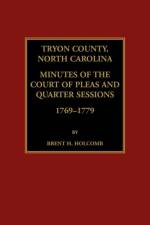
The single most important record for any North Carolina county is the minutes of the Court of Pleas and Quarter Sessions. The court of Pleas and Quarter Sessions is the lowest court of record for the county. It was where the business of the county was carried on. As the title of the court suggests, the court met four times a year, or quarterly. From a genealogical point of view, the names of more people will appear in this court record than in any other body of county records. In fact, the only place where some names will be found is within such court minutes. Lists of deeds proved and recorded are found in the court minutes, as well as lists of wills proved or administrations on intestate estates taken out. The construction of roads and the road juries (sometimes called road gangs) who were to lay out and maintain the roads are spelled out in these records. Civil suits involving less than $150 (usually over debt), minor criminal cases, depositions, jury lists, tax officials' names with their districts, tavern licenses and tavern rates, and care of the poor of the county are among the many kinds of records included in the court minutes. The records in this volume were extracted from the microfilm copy (produced by the North Carolina Department of Archives and History) of the Tryon County Court Minutes (C.094.30001).Tryon County was abolished in 1779 to form Lincoln and Rutherford Counties. Of the four counties involved in the North Carolina-South Carolina border problem in the colonial period (Tryon, Mecklenburg, Anson, and Bladen), Tryon County is the only one which has extant court minutes for the period prior to the border surveys of 1772.A map of Tryon County at the time of its formation, a map of North Carolina in 1775, a full-name index, and a place name index add to the value of this work.
This volume opens with a letter from the Secretary of the Interior, ¿communicating documents in relation to private land claims in New Mexico,¿ February 10, 1860. It contains transcripts of documents relating to nineteen private land claims (claim numbers twenty to thirty-eight) in New Mexico which were referred to the Committee of Private Land Claims on February 10, 1860. November 30, 1859, the General Land Office presented these documents to Congress for their final action. ¿These claims have been investigated and approved by the surveyor general of New Mexico, with the exception of number 26, which has been rejected by him.¿ Individual claims generally contain a Notice, Grant¿Spanish, Grant¿Translation (English), Testimony, and Report. Some claims also contain Power of Attorney, Order of Possession, Conveyance, Notice of Appeal, Receipt for Deed, and/or Certificate of Possession. The Notice lists the names of petitioners, the grantee(s), heirs and others involved; it describes the land, its location, and its boundaries. The Report gives a detailed chronological account of the claim. Claimants include: Town of Las Vegas and Thos. Baca et als., Town of Tajique, Town of Torreon, Town of Manzano, Town of San Isidro, Town of Cäon de San Diego, Juan B. Vigil et al., Town of Las Trampas, Heirs of Sebastian Martin, Town of Antonchico, Indians of Laguna, Gaspar Ortiz, Town of Mora, Heirs of P. Armendaris, Heirs of Pedro Armendaris, Antonio Sandoval, Town of Charnita, Town of Tejon, and Ramon Vigil.
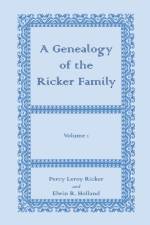
This 12-generation genealogy-a work in progress since 1905--tracks almost 350 years of Ricker family history, from 1647 to 1990, beginning with brothers George and Maturin Ricker, immigrants from the Isle of Jersey (off the coast of France) who settled in present-day Dover, New Hampshire, in the late 17th century. The introductory pages contain histories of George and Maturin, as well as an account of Ricker origins in 11th-century Saxony; the Ricker Coat of Arms and heraldry information is also included. More than 500 sources have been tapped to produce this work, which includes more than 40,000 individuals (and more than 2,800 different surnames).Female as well as male lines have been researched; but the direct Ricker line is the focus. The genealogy is laid out in Register style for the user's ease. First, second and third marriages are detailed, as well as names of adopted and bastard children; and Mayflower connections too. The Rickers were one of the first New Hampshire families; this genealogy traces their movement through New England, and then into Nova Scotia, New Brunswick, and eastern townships of Canada, as well as most of the United States, as family branches moved north and west. Within these records can be found the military history of Rickers who served in the French and Indian, Revolutionary, 1812, Aroostook, Seminole, Civil, Spanish-American and Vietnam wars, as well as WWI and WWII. A 1689 map of Cocheco, New Hampshire (present-day Dover area), portraits of Rickers and illustrations of Ricker homes and property complement the genealogy. An everyname index and index of localities make finding information easy.
The Great Depression left many fractured families in its wake. In 1932, a five-year-old girl walked down a country road with a suitcase in one hand and her favorite doll in the other: her journey from the bustle of 1932 New York City to her rural Virginia immigrant grand-parent's hundred-acre farm.
With the Great Depression swirling around the country, two little girls begin the daily farm routine by asking: "What shall we do today? "What shall we play?" From chores to farm explorations, follow the girls' adventures, preserved here in verse and illustration.
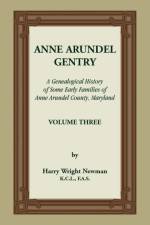
This volume contains the genealogical history of seven colonial adventurers from four families: Cockey, Harwood, Ridgely (Robert Ridgely, Henry Ridgely, and William Ridgely), and Todd (Thomas Todd, shipwright, and Captain Thomas Todd)."My interest has not only been in studying the social and genealogical background of the Maryland pioneers, but during my frequent trips to Britain endless hours were spent in an attempt to bridge the gape [sic] between Maryland and the other side." - Harry Wright Newman.Each family section opens with a brief narrative. Individual genealogical sketches vary considerably in length, from multiple pages to a single paragraph, and provide a wealth of names (spouse(s), children, relatives and others) and dates (birth, marriage, death, etc.). Sketches may also provide any combination of the following: residence(s); information from estate inventories, deeds, wills, court documents, tombstone inscriptions, and other sources; occupation, military service, and/or civil/judicial/political service. Sources are listed at the end of each genealogy. A full-name index adds to the value of this work.
Maude Porter's narrative takes place in the Mississippi River town of Clearwater, Minnesota. Daughter of village founders Tom Porter and Abigail Camp Porter, she owns a millinery store upstairs of Boutwell's Hardware Store. From here, she can keep her eye on the comings and goings of the village. What she sees causes quite a commotion, but what she hears over her newly installed telephone could spell trouble.In this sequel to Scruples & Drams, readers see what life is like in the late nineteenth century and early twentieth century for the "new women" who were educated, strong-minded, and holding down careers. Women like Maude have concerns about the health and well-being of many women who are over-worked, under-educated about their bodies, and become pregnant way too often. While Maude understands that suffrage and equal rights are important, she also sees how the consumption of alcohol ruins families and communities and causes some men to be brutal.At first Maude believes education is the key to ridding the town of the many drunks and their brawls outside Quinn's Saloon. Ultimately, though, she and others, men and women, come to realize that prohibition is the only answer to setting their world in order. For Clearwater, the answer is clear: shut down Pat Quinn's Saloon.
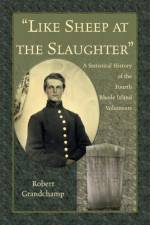
Known as the "Fighting Fourth," the Fourth Rhode Island Volunteers was the last infantry unit raised in Rhode Island in 1861. After Union setbacks in the West, and after the humiliating defeat at Bull Run, the regiment had no trouble recruiting ten companies from throughout the state in August and September 1861. The men of the Fourth were true volunteers who enlisted before large bounties became an enticement to enlist.The companies of the regiment were recruited as follows: Company A (Providence), Company B (Providence), Company C (Providence), Company D (Burrillville, Glocester, and Hopkinton), Company E (Smithfield and Woonsocket), Company F (Providence), Company G (Middletown and Newport), Company H (North Kingstown), Company I (Pawtucket), and Company K (Warwick).This roster represents the most complete and accurate set of data of the officers and men who served in the Fourth Rhode Island Volunteers. It was carefully transcribed from the original muster rolls and descriptive books held at the Rhode Island State Archives. The roster lists all the men known to have actually served in the regiment from 1861-1864, and does not include those who deserted before the regiment was mustered in on September 30, 1861. In certain cases additional information regarding casualties, deserters, and those who died at home has been added to the register from sources including Rhode Island newspapers, town hall records, the letters and journals of members of the Fourth Rhode Island, pension and service records, as well as the personal observations by this writer in the cemeteries of Rhode Island and elsewhere.Additional chapters include: Field and Staff, Regimental Band, Enlistments by Town, Regimental Statistics, and the poem, "The Rhode Island Dead at Newbern."
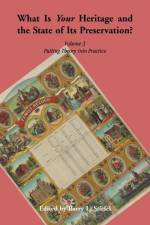
During the Spring 2018 semester several students at the College of Charleston's Historic Preservation and Community Planning program participated in their Senior Seminar titled "What Is Your Heritage and the State of Its Preservation?" This was the third time this seminar topic had been taught, with the first in 2014 and the second in 2016. For this class each student had to conduct a lengthy, in-depth research paper on the state of preservation of heritage sites, material objects, or traditions associated with their family's history. The assignment used genealogical research methods in an unconventional way by elevating the assessment of ancestors beyond typical names, dates, and generational succession so commonly found on most family trees. The students had to ask profound questions to guide their inquiry, such as "Where (as in a specific spot) did my ancestors come from?";"What was life like for them?"; and "What cultural traditions were important for them?". In this way people, whether through a specific individual or a group, became connected and contextualized within time, place, and society. Moreover, the students had to utilize and synthesize the knowledge, skills, and experiences they acquired in other classes from past semesters. Essays contributed within this volume are by Rebecca Lawing, Flannery Wood, Ellen Feringa, Madison Alspector, Madison Moga, and Alec Meier.Barry L. Stiefel, Ph.D. is an associate professor in the Historic Preservation and Community Planning Program at the College of Charleston, where he enjoys collaborating on projects with students.
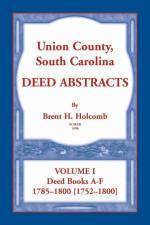
Union County was formed in 1785; in 1800 it became Union District. In the colonial period, the area of Union County was considered part of Craven County or Berkeley County, South Carolina. Prior to the border surveys of 1764 and 1772, the area was included in the North Carolina counties of Anson, Mecklenburg, and Tryon. For this reason, many grants and deeds from North Carolina are referenced in the Union County deeds. Union County bordered on the counties of Spartanburg, Laurens, Newberry, Fairfield, York, and Chester. Little changes in its boundaries occurred until 1897 when a portion of Union County was taken, with portions of Spartanburg and York Counties, to form Cherokee County.The deeds in this volume appear to have been recorded between 1785 and 1800, though recording dates are absent from the first deeds in Book A. As is common, there are deeds recorded from a much earlier time period. The earliest deed included in this work dates from 30 May 1752. The deeds in this volume have been abstracted from South Carolina Archives microfilm, Rolls C2204, C2205 and C2206. References within the deed to recordings in the Secretary's office and the Auditor's office refer to the royal grants and land memorials respectively.Abstracts typically include: deed book and page number(s), date of sale/lease, name of grantor/lessor, name of grantee/lessee, the grantee/lessee's county and/or district of residence, amount charged and/or paid, number of acres and location of property (in a few cases the property is a slave rather than land), names of witnesses, name of justice of the peace and/or other official approving deed, date approved, and date recorded. A map of Union District (1822), a full-name index, and a place index add to the value of this work.
Carefully boxed and bound with a silk ribbon, the letters of Lieutenant Albert Zimmermann to his wife Barbara from Karachi, India, in 1943-1945 were discovered nearly sixty years later, long after they were dead. These letters are unique. No other personal correspondence of a Naval Intelligence Officer in World War II is known to have survived. The 119 letters give a glimpse into the struggle of a husband and wife to cope with the anxiety of separation and uncertainty at the height of the war. They tell of her trials in raising their children alone, and of his attempts to advise her, while he is stationed on the other side of the world.Al Zimmermann was an honors graduate in mechanical engineering from the University of Pennsylvania, and he was a partner in a wool brokerage when Pearl Harbor was attacked. He had been recruited into undercover intelligence work before the war, and in 1942 he was commissioned as a Naval Intelligence Officer. He was sent to Karachi, India, in 1943, where he became Commanding Officer of the Naval Liaison Office. He was the senior U.S. Naval Officer in the part of India that in 1947 became the country of Pakistan.The letters tell of Zimmermann's long days of duty, and they tell obliquely of the many things that he must do, but cannot tell his wife about. They tell of his illnesses - racking coughs, dysentery, sand fly fever, dengue - and we learn that both Al and Barbara develop stomach ulcers. He is caught in a web of intrigue in India that is sometimes hard for him to understand. But he survived and made friends in high places. His month-long journey in 1943 along the North-West Frontier of India with another American intelligence officer - Major Gordon Enders - and a British baronet - Major Sir Benjamin Bromhead - was the first official step by America into the ancient contest known as the Great Game. He was probably the first U.S. Navy man to cross the Khyber Pass, and he was one of the first Americans to reach the remote principality of Chitral.Zimmermann knew how to use poor handwriting and coded references to pass the censor in order to tell his wife about the interesting people that he met, and of the many exotic places that he visited in Karachi and elsewhere in India and Ceylon. He took many photographs and movies, some of which he sent home from India, and others that he brought back with him in May 1945. In this book, there are 150 pictures of his historic trip along the Afghan border, and many of his other photos and stills from his movies. Some of his official records were found in the National Archives, and a nine-page document that had remained classified until 2010 is in the Appendix. A full-name, place, and subject index adds to the value of this work.
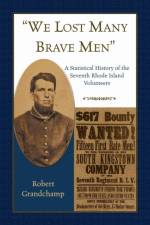
On May 22, 1862, Governor William Sprague issued general orders for the raising of the Seventh Rhode Island Volunteers. Camp Bliss was erected in Southern Providence as the destination for these recruits and many men came to Camp Bliss in the summer of 1862. A few had seen service in the United States Army and other volunteer regiments, and some were politicians and gentlemen from the hierarchy of the state, but the majority were farmers and mill workers from southern and western Rhode Island. By the end of August 1862, over 900 Rhode Islanders had gathered at Camp Bliss. Governor Sprague selected Zenas Randall Bliss of Johnston as their commander.The ten companies of the Seventh Rhode Island were recruited from the following Rhode Island communities: Company A (Charlestown, Hopkinton, and Richmond), Company B (Providence), Company C (Glocester), Company D (Burrillville and West Greenwich), Company E (Cumberland, Smithfield, and Woonsocket), Company F (Exeter and North Kingstown), Company G (South Kingstown), Company H (East Greenwich and Warwick), Company I (Bristol and Newport), and Company K (Coventry, Foster, and Scituate). These brave Rhode Islanders fought (and many died) in the following engagements: Fredericksburg, Vicksburg, Jackson, the Wilderness, Spotsylvania, North Anna, Cold Harbor, Petersburg, Weldon Railroad, Poplar Springs Church, and Hatcher's Run.The book opens with a brief history of the Seventh Rhode Island Volunteers and a new look at Rhode Island Civil War Casualties. Individual chapters are devoted to Companies A through K; and Companies B, D, and G of the New Organization, which were composed of the veterans of the Fourth Rhode Island Volunteers when the Fourth was combined with the Seventh Rhode Island Volunteers in the fall of 1864. Other chapters include: Field and Staff, Enlistments by town, Regimental Statistics, and Further Reading.
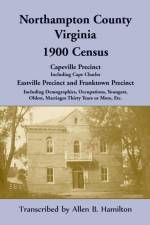
This is the 1900 Census, the first of the 20th century, the first that documented the new railroad town of Cape Charles, and the first that did not include a Johnsontown District. In 1900, the population of the county was 13,770; 4,618 more than the 1880 Census total, which was 9,152. In addition, the 1900 Census contained nearly twice the information found in the 1880 census, with twenty-one columns vs. eleven columns. It covered three major districts: Capeville (4,986); Eastville (4,618), which includes the Town of Eastville and the Alm's house in Machipongo; and Franktown (4,166), which includes the Towns of Franktown, Nassawadox and Exmore.Carefully transcribed information is presented in a table format with the following column headings: Number of dwelling house in the order of visitation; Number of family in order of visitation; Name of each person whose place of abode on June 1, 1900 was in this family; Relationship of each person to the head of the family; Color or race; Gender; Date of Birth (Month); Date of Birth (Year); Age at last birthday; Marital Status (S-single, M-married, W-widowed, D-divorced); Number of years married; Mother of how many children; Number of those children living; Birth state; Father's birth state; Mother's birth state; Year of Immigration to the United States; Occupation, Trade or Profession of each person ten years of age and over; Ownership of Home (Owned or rented), Ownership of Home (Owned free or mortgaged); and, Ownership of Home (Farm or house).Missing information such as birth year has been included when found to be correct from other sources. Additional information including occupation names and totals, marriages of thirty years or more, youngest and oldest residents in 1900 and student's names by district are recorded in the back of this transcription. The enumeration date is at the top right of each page. Original page numbers are also on the top right of each page. A full-name index adds to the value of this work.
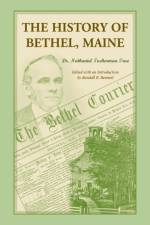
Edited with an introduction by Randall H. Bennett. Dr. Nathaniel Tuckerman True's The History of Bethel, Maine originally appeared in the pages of the town's first newspaper, The Bethel Courier, between 1859 and 1861. Now presented with editorial revisions and corrections by Randall H. Bennett, Curator of Collections at the Bethel Historical Society, Inc., True's history is recognized as one of the earliest and most significant efforts of its type to appear in Maine before the Civil War. Included is information on land grants, the settlement of the upper Androscoggin River valley, town meetings, church history, biography, and the famous "Last Indian Raid" in New England, which took place in Bethel in 1781. Regarding Indians, Dr. True provides a wealth of data about the Ossipee, Pequawket, and Anasguniticook tribes of western Maine and northern New Hampshire, with special attention paid to the Indian language and its English translation. In some of his sketches of Bethel's pioneer families, he provides genealogical information. Chapters include: Sudbury Canada Grant; Joseph Twitchell; Proprietors and Surveys; Early Settlers; Indians and the 1781 Raid; Molly Ockett; Matalluck; Other Indians of Note; Block Houses; Plantation Record; 1785 Freshet; Notable Residents; Hunting; Act of Incorporation; Ecclesiastical History; Physicians; Lawyers; Ministers; Education; Revolutionary Soldiers; Resident Proprietors in Lower Parish; Politics; Village of Bethel Hill; and, Geology, Natural History and Botany. Also included is a selection of period illustrations provided by the Bethel Historical Society, Inc. A full-name index adds to the value of this work.
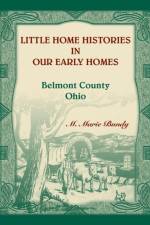
This book was first published in 1943 by the author's father's first cousin, Beulah Patten McDonald, and her husband. It contains first-hand accounts written by numerous individuals and information passed down in families about life in the early 1800's through the turn of the century in this section of southeastern Ohio. This book preserves a forgotten part of our local history.Most of the families were Quakers who migrated here, seeking a land free from the evils of slavery. The easternmost part of Ohio was the entry to the Northwest Territory which had banned slave ownership. Before land ownership could occur, this section of Ohio was surveyed into the Seven Ranges which were divided into townships and the townships into sections. These divisions are still in place today and the author has used this system in some cases to identify locations. Where possible, the author has used the current number and street address to identify location of property.The book is being reprinted from the original with some minor changes and additions for clarification. For the most part, grammar and spelling of the original articles has not been corrected; however, dates and the spelling of names have been checked for accuracy, and, the person's name has been substituted for a pronoun used in some of the articles. Additions to the articles are italicized. Pictures have been included where available. A full-name index adds to the value of this work.
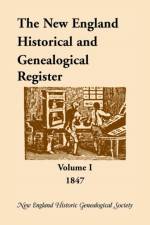
This quarterly journal, commonly called simply The Register, is certainly the oldest, and arguably the best, genealogical periodical published in the United States. Within its volumes, researchers will find some of the most valuable genealogical compilations and source record transcriptions to be found anywhere. It is difficult, one might even say foolhardy, to attempt to do research on New England families without reference to this important series.However, copies of the original editions of these volumes are becoming increasingly difficult to find, so Heritage Books has reprinted the early volumes of this important serial in order to make them more accessible to the rank and file genealogist. Each volume has an index, and in addition, a comprehensive index to the first fifty volumes is also available. In the description below it is only possible to touch on some of the main articles-each volume also contains much additional material.Register, Volume I, 1847 Genealogies: Butler, Chase, Cotton, Endicott, Farmer; Gookin, Minot, Parsons, and Wolcott. Memoirs: Albert G. Upham, M.D.; Rev. Zephaniah S. Moore, D.D.; Governor Hutchinson; Governor Endecott; Enoch Parsons, Esq.; Hon. Samuel Sewall; John Farmer, M.A.; and, Graduates of Harvard College. Other Records: Kingston, New Hampshire, physicians; Boston ministers; New England college graduates; first settlers of New England; Merrimack County, New Hampshire, attorneys; Rock County, New Hampshire, ministers; marriages and deaths from newspapers; Scotch prisoners to Massachusetts; Newbury, Massachusetts, inscriptions; plus much additional material.
In WWI under a crippling naval blockade of its North Sea ports which ultimately resulted in the starvation of thousands of its citizens and as land warfare in Europe drags on, Germany endeavours to counter-blockade Britain via U-boat attacks on shipping and by mining waters round the British Isles. Hundreds of fishing vessels from every port and harbour in Britain are pressed into minesweeping duties and minelayers sow fields to restrict and destroy German vessels. Their efforts allow the powerful Royal Navy to hold the German Navy in port - except for occasional skirmishes, including the Battle of Jutland. American destroyers hunt U-boats in British waters, while minelayers create a barrier between the Orkney Islands and Norway, to try to deny the enemy entry into the Atlantic. Desperate, Germany mounts a U-boat offensive off North America in the summer 1918, to induce the U.S. to bring her destroyers home. Although nearly one hundred vessels are sunk, this action fails. Germany surrenders in late autumn 1918 and allied vessels are left with the deadly task of removing thousands of mines laid in the war. One hundred and fifty photographs, maps, and diagrams; appendices; and an index to full-names, places and subjects add value to this work.
Abonner på vårt nyhetsbrev og få rabatter og inspirasjon til din neste leseopplevelse.
Ved å abonnere godtar du vår personvernerklæring.