Gjør som tusenvis av andre bokelskere
Abonner på vårt nyhetsbrev og få rabatter og inspirasjon til din neste leseopplevelse.
Ved å abonnere godtar du vår personvernerklæring.Du kan når som helst melde deg av våre nyhetsbrev.

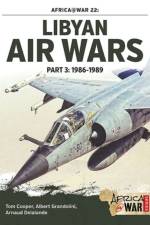
Confrontations between Libya, and the USA and France reached their highest point in the period between April 1986 and early 1989.
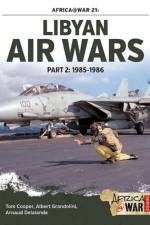
The first volume in this mini-series spanned the first decade of confrontations between Libya and several of its neighbors, but foremost the USA and France, between 1973 and 1985, the second is to cover the period of less than a year - between mid-1985 and March 1986, when this confrontation reached its first climax. Through mid and late 1985, rela
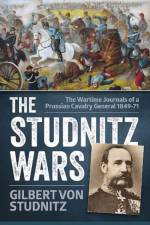
The journal of Prussian Major General Benno von Studnitz was originally published in 1891 in a very limited German language edition. Now, translated and edited by his great-grandson, the General's journal appears for the first time in English.
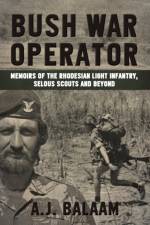
From the searing heat of the Zambezi Valley to the freezing cold of the Chimanimani Mountains in Rhodesia, from the bars in Port St Johns in the Transkei to the Drakensberg Mountains in South Africa, this is the story of one man's fight against terror, and his conscience. Anyone living in Rhodesia during the 1960s and 1970s would have had a father, husband, brother or son called up in the defense of the war-torn, landlocked little country. A few of these brave men would have been members of the elite and secretive unit that struck terror into the hearts of the ZANLA and ZIPRA guerrillas infiltrating the country at that time - the Selous Scouts. These men were highly trained and disciplined, with skills to rival the SAS, Navy Seals and the US Marines, although their dress and appearance were wildly unconventional: civilian clothing with blackened, hairy faces to resemble the very people they were fighting against. Twice decorated - with the Member of the Legion of Merit (MLM) and the Military Forces' Commendation (MFC) - Andrew Balaam was a member of the Rhodesian Light Infantry and later the Selous Scouts, for a period spanning twelve years. This is his honest and insightful account of his time as a pseudo operator. His story is brutally truthful, frightening, sometimes humorous and often sad. In later years, after Rhodesia became Zimbabwe, he was involved with a number of other former Selous Scouts in the attempted coups in the Ciskei, a South African homeland, and Lesotho, an independent nation, whose only crimes were supporting the African National Congress. Training terrorists, or as they preferred to be called, 'liberation armies', to conduct a war of terror on innocent civilians, was the very thing he had spent the last ten years in Rhodesia fighting against. This is the true, untold story of these failed attempts at governmental overthrows.
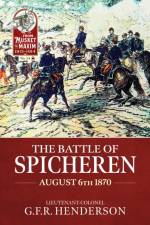
This is a companion volume - and a much less well-known study - to the same author's classic, The Battle of Spicheren August 6th 1870, providing an account of the 'other' battle fought that day, at Woerth, in Alsace.
'...Close protection is defined as the provision of armed or unarmed specialists to protect a nominated principal from harm' Excerpt from a Standing Committee on Army Organisation by the Director of Military Operations, dated 30 November 1979.
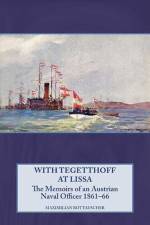
The imperial Austrian navy which fought and won the signal victory of Lissa on 20 July 1866, during the so-called Seven Weeks' War of 1866, has in recent years been subjected to more detailed scrutiny than has hitherto been its lot, and it is with an eye to following this trend that we present the following translation of part of the memoirs of ...
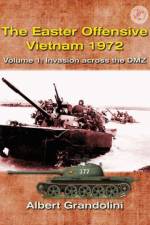
On 30 March 1972 the South Vietnamese positions along the Demilitarized Zone (DMZ) that separated the North from South Vietnam were suddenly shelled by hundreds of heavy guns and multiple rocket launchers.
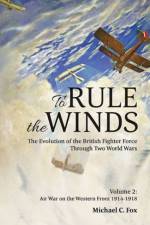
This second Volume in the To Rule the Winds series deals with the evolution of the Royal Flying Corps through the First World War and its transformation, in 1918, into the Royal Air Force.
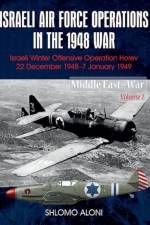
Operation HOREV - the Israeli winter offensive from December 1948 until January 1949 - practically ended Israel's War for Independence (also known as the 1948 Arab-Israeli War), with an Israeli victory that forced Egypt to seek ceasefire and to negotiate a settlement with the fledgling nation.
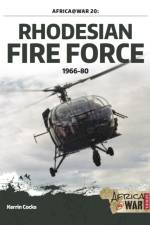
On 11 November 1965, Rhodesian prime minister Ian Smith unilaterally declared his country independent of Britain. International sanctions were immediately instituted against the minority white regime as Robert Mugabe's ZANLA and Joshua Nkomo's ZIPRA armies commenced their armed struggle, the Chimurenga, the war of liberation.
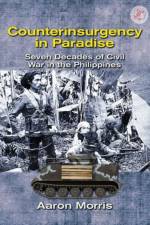
"Besty known in the USA as a former colony and exotic tourist attraction, the Republic of the Philippines has seen civil unrest, insurgencies and separatism movements since independence in 1946. ... While previous publications have discussed human rights issues, the Huk Revolt of the 1940s and 1950s, the military unrest in the 1980s, and the socio-political structure of various rebel movements in the Philippines, this is the first major work excvlusively covering the military history of the Philippines in the 70 years of independence. The insurgency of the Huks, and early Moro separatist rebels, the Moro and Marxist revolts against Marcos' dictatorship, and the counter-terrorism operations of recent times, are discussed in relation to the transformation of the military threat and the corresponding transformation of the AFP, from a conventional military, towards the deployment of elite forces and extra-judicial means to suppress a series of revolts which have threatened the integrity of the state."--Back cover.
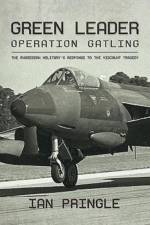
On 3 September 1978, a Russian-supplied heat-seeking missile shot down an Air Rhodesia Viscount civilian airliner shortly after it took off from the lakeside holiday resort of Kariba in the Zambezi Valley.
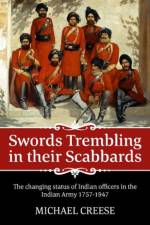
The Indian Army founded by the East India Company in the nineteenth century was unique among the armies of the world in that it had two groups of officers - British and Indian.
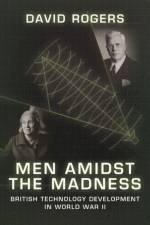
The Royal Society Fellows have knowledge and skills in many fields of engineering, medicine, science and technology. Within their own fields they are high profile individuals yet it is doubtful that there will ever be a definitive list of who did what during World War Two although individually and collectively, the Fellows were involved in many wartime activities.
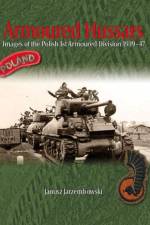
This wonderful album is a brilliant pictorial history of the 1st Polish Armored Division composed of about 250 photographs, documents and publications largely collected by WO1 Alexander Leon 'Manka' Jarzembowski, a veteran of 2nd Armored Regiment, as he soldiered for Poland between 1917-1949. The collection lay in albums unseen for decades until recent interest in the Division and its Commanding Officer, General Stanislaw Maczek, caused Jarzembowski's son, Jan, to revisit his father's archive in order to provide a narrative for the almost forgotten Division and for his father's memory.
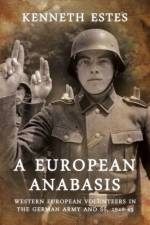
Kenneth Estes studies the 100,000 West Europeans who fought against Russia as volunteers for the Wehrmacht and Waffen-SS. A retired Marine Corps lieutenant colonel, Estes shows tremendous knowledge of combat and writes gripping battlefield prose.
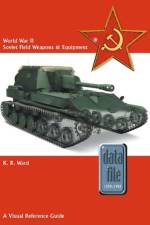
All major and many minor and less well-known items of Soviet weaponry and equipment, rendered precisely in 3D, including detailed cutaways showing their internal workings, information which is often absent from other publications. Technical details are also provided.
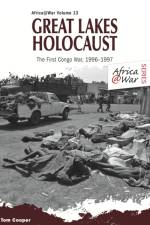
Great Lakes Holocaust is the first in two volumes covering military operations in Zaire - as the Congo was named from 1971 until 1997 - and the Democratic Republic of Congo at the turn of the 21st century.
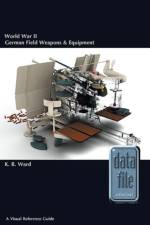
This title is the first in a series that employs a simple and effective concept to illustrate and describe the multiplicity of equipment and weapons systems used on the ground during World War II.
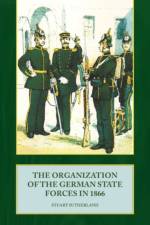
The so-called Seven Weeks' War of 1866 between Prussia and Italy and Austria was notable not only for its effect on future German history but also because it was the last time the armies of the smaller German states fought as independent contingents.
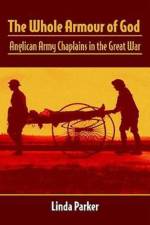
The Whole Armour of God examines and reassesses the role of the Anglican army chaplains in the Great War. The tensions and ambiguities of their role in the trenches resulted in criticism of their achievements.
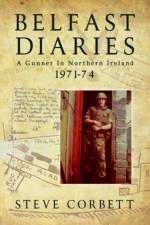
"It's a very weird sensation to be shot at ... Very often you see the gunman when it's too late or you don't see him at all. You might as well just be targets on a rifle range.
Learning From Foreign Wars examines how the Russian army interpreted and what lessons it learned from the wars in Europe between 1859 and 1871, and the American Civil War. This was a time marked by rapid change - political, social, economic and technological.
This work examines the nature of the relationship between the British Government and the Polish Government in Exile, 1939-1945. The relationship was extremely difficult owing to the extremity of the time and the situations of the two governments. Before 1939 there had been little contact between Poland and Britain.
Abonner på vårt nyhetsbrev og få rabatter og inspirasjon til din neste leseopplevelse.
Ved å abonnere godtar du vår personvernerklæring.