




Gjør som tusenvis av andre bokelskere
Abonner på vårt nyhetsbrev og få rabatter og inspirasjon til din neste leseopplevelse.
Ved å abonnere godtar du vår personvernerklæring.Du kan når som helst melde deg av våre nyhetsbrev.

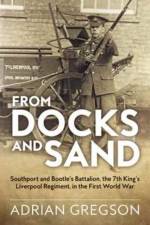
This book is a study of the importance of community identity to a fighting unit in the First World War. In this case, the unit in question is primarily 7th King's Regiment - and more widely, the 55th West Lancashire Division (1914-1918). The book is based upon the author's own PhD thesis - 'The 1/7th Battalion King's Liverpool Regiment and the Grea
Bandit Mentality captures Lindsay 'Kiwi' O'Brien's Bush War service from 1976-1980 at the coalface of the Rhodesian conflict. Starting in the BSA Police Support Unit - the police professional anti-terrorist battalion - he served across the country as a section leader and a troop commander before joining the UANC political armies as a trainer and ad
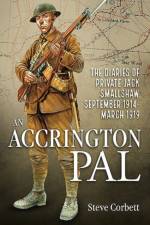
September 1914, and the whole of Europe was at war following the assassination of Archduke Franz Ferdinand and his wife Sophie by Gavrilo Princip in Sarajevo on 28th June 1914. In France and Belgium, the British Expeditionary Force were struggling to hold back the German hoards as their casualties began to mount. Back in Britain the call went out f
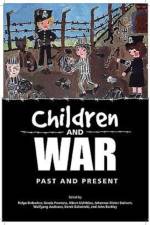
The amount of international research on 'Children and War' carried out by academics, governments and non-governmental organizations has continually increased in recent years. At the same time there has been growing public interest in how children experience military conflicts and how their lives have been affected by war and its aftermath. In light of the many brutal post-colonialist civil wars or 'new wars', especially in Africa and Asia, child soldiers have in particular gained increased attention. Simultaneously, since the 1990s, the history of the Holocaust and World War II has also increasingly been written from the perspective of children; those who speak out now and publish their memoirs experienced the Holocaust as children. A similar generational change has also taken place in the societies of the perpetrators: Germans and Austrians who experienced the war as children took over the role of war witnesses from the soldiers of the German Wehrmacht. Moreover, intensified focus on children's experiences and their strategies for dealing with what they went through is evident in Eastern Europe as well. In Children and War: Past and Present scholars from different academic disciplines, practitioners in the field, and representatives of government and non-governmental institutions approach this sensitive subject from different angles and in various methodological ways. The book shows how children expressed their experiences in letters, memoirs and diaries during and after World War I and World War II and how children remembered those wars. Many of the authors also deal with various long-term psychological effects. Using the example of children's literature in World War I and the representation of child survivors in the postwar cinema, another focus of the book is on the representation of children in different wars. Based on post-colonial and contemporary wars in Africa, images of girl and boy soldiers created by the media, NGOs and governments as well as trends in how they are represented in contemporary research are also discussed. The last section of the book concentrates on various institutions such as welfare organizations and NGOs dealing with children in different wars. How have institutions supported children? And concerning contemporary conflicts, how does the international community face the question of international justice and adapt to children's needs?
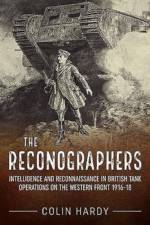
This is the first book devoted to the subject of reconnaissance in the nascent Tank Corps in the Great War. It is a neglected field in spite of passing references to reconnaissance in a number of early books on the history of the Tank Corps. This is also the first attempt to provide a conceptual framework in which to consider intelligence and reconnaissance work and to see it in the broader context of military reconnaissance. Adding the term 'Reconography' to the military lexicon draws attention to a little-known monograph on the subject which has never entered the popular domain before now. The introduction of the tanks on the Western Front in 1916 launched a new form of armored warfare. After their baptism on 15 September 1916, the tanks became dependent on a few reconnaissance officers to guide them into action. The importance of these officers was fully recognized within the Tank Corps itself, but less so outside. The reconnaissance officers came to form an elite group of talented men, a special caste, whose contribution to the nascent Tank Corps was far greater than their numbers might suggest. It is surprising, therefore, that the contribution made by these officers has hitherto been neglected in the historiography of British tank operations in the First World War. This book aims to appeal at a number of levels: it seeks to pull together the activities, skills and techniques of tank Intelligence and reconnaissance officers and assess their place and contribution to British tank operations in the Great War; it places tank reconnaissance work in the wider context of intelligence and reconnaissance activities prior to the war and it also provides a case study of the tensions that inevitably occur when new wine is put into old bottles, or more prosaically, new technology into existing organizations. It has been necessary to create conceptual structures in which reconnaissance operations can be analyzed; it attempts to breathe life into what some might regard as a dull technical subject by devoting space to key figures in Tank Corps' intelligence and reconnaissance activities. Fortunately, and perhaps as a consequence of their activities, they were some of the most colorful and interesting figures in the Tank Corps at that time. In awarding the author the WFA-Helion Holmes Prize, the judges concluded that 'his work reflects deep research, a high standard of writing and a notable originality'.
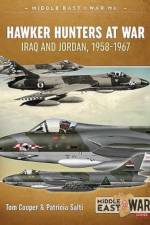
Designed by Sydney Camm as a swept wing, daytime interceptor with excellent maneuverability, the Hunter became the first jet aircraft manufactured by Hawker for the Royal Air Force. It set numerous aviation records and saw widespread service with a large number of RAF units in Europe and abroad. When the Royal Air Force received newer aircraft capable of supersonic speeds to perform the interceptor duties, many Hunters were modified and re-equipped for ground-attack and reconnaissance missions instead. Because they were deemed surplus to British requirements, most of these were subsequently refurbished and exported to foreign customers - so also to Iraq and Jordan. Hawker Hunters at War covers every aspect of Hunter's service in the two countries, from in-depth coverage of negotiations related to their export to Iraq and Jordan, to all-important details of their operational service during 1958-67. It culminates in detailed examination of their role in the June 1967 Arab-Israeli War (also known as the 'Six Days War') and extensive tables listing all aircraft delivered and their fates. Almost entirely based on interviews with retired commanding officers and pilots of the former Royal Iraqi Air Force, Iraqi Air Force and Royal Jordanian Air Force - as well as plenty of unpublished official documents from British, Iraqi and Jordanian archives - the narrative is providing an unprecedented insight into a number of contemporary affairs. Profusely illustrated with well over 100 photographs and 15 color profiles showing all aspects of camouflage, markings and various equipment, Hawker Hunters at War is the ultimate profile of Hunter's colorful and action-packed service in Iraq and Jordan during a period when this legendary type formed the backbone of local air forces.
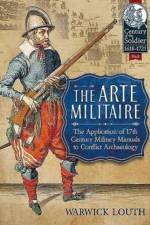
Military manuals have been used as a source through a range of historical studies, but only recently has their potential to Conflict Archaeology truly been recognized. Military manuals allowed the progression of the Military Revolution from the informed amateur towards the scientific, mathematical choreography for massed troops at the height of the Military Revolution, and their use as a viable historical resource often taken at face value - negating their worth. Using correlated GIS, landscape archaeology, metal detecting, military knowledge and experimental archaeology, we might understand more fully the limitations and strengths drill books provide us. Like a dance, military theory provides a certain number of ways individuals may progress through a landscape. Using examples taken from recent investigations at sites such as Edgehill, Lutzen and Lostwithiel, this paper shall examine to what extent individual drill can be identified in the archaeological record. This publication hopes to prove to what level and extent this can be applied to predictive modeling of artifact collections on battlefields - thus providing depth to the archaeological study of fields of conflict. Like investigations on the Little Bighorn battlefield, through use of wear analysis of the material remains of conflict, we can effectively tell the nuances of individual drill, practice and movement of people across a landscape; their drill actively mirroring subtleties in our understanding of interpretation. Taking the works of such writers and artists as Bariffe, de Gheyn and Ward, the author attempts to actively break down how individual and group drill will leave material remains and the archaeological means these might be taken down, but equally, this work also attempts to investigate and breach the subject of whether such manuals can also be used to dictate the survivability of 17th century fortifications - often within urban landscapes devoid of their civil war origins, as can be seen at Alton and Basing House. Theoretical in its nature and utilizing and combining elements of research not previously collaborated, The Arte Militaire is unique in not merely showing how military manuals were used, but rather how they can still be seen within the historical landscape.
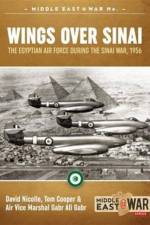
Sixty years since the tripartite aggression of France, Great Britain and Israel against Egypt, this is the first account about Egyptian military operations during the Suez War of 1956 (or 'Suez Crisis', as it is known in the West). Based on research with the help of official Egyptian documentation and recollections of crucial participants, this book provides an unique and exclusive insight into the 'other side' of a war that many consider has marked 'the end of the British Empire'. From the Western point of view, the situation is usually explained in quite simple terms: in retaliation for President Gamal Abdel Nasser's nationalization of the Universal Suez Canal Company - and thus the strategically important waterway of the Suez Canal - France and Great Britain (operating in concert with Israel) launched the operation codenamed 'Musketeer'. Divided into three phases, each shaded into the other; this aimed at obliterating the Egyptian Air Force, occupying the whole of the Suez Canal and toppling Nasser's government. From the Egyptian point of view, backgrounds were much more complex than this. Striving to modernize the country, a new and inexperienced government in Cairo launched a number of major projects, including one for the construction of a gigantic Asswan Dam on the Nile. The only Western power ready to help finance this project, the USA conditioned its support with basing rights for its military. With the last British soldiers still about to leave the country - and thus end Egypt's occupation by foreign powers for the first time in 2,000 years - Nasser found this unacceptable. Around the same time, Egypt found itself under pressure from Israeli raids against border posts on the Sinai. Left without a solution, Cairo decided to nationalize the Suez Canal in order to finance the Aswan Dam project, but also to start purchasing arms from the Soviet Union. In an attempt to bolster Egyptian defenses without antagonizing Western powers, Nasser concluded the so-called 'Czech Arms deal' with Moscow - resulting in the acquisition of Soviet arms via Czechoslovakia. Little known in Cairo at the time, such moves tripped several 'red lines' in Israel and in the West - in turn prompting aggression that culminated in a war. Wings over Sinai is, first and foremost, an account of the battle for survival of the Egyptian Air Force (EAF). Caught in the middle of conversion to Soviet-types, this proved more than a match for Israel, but were hopelessly ill-prepared to face the military might of Great Britain and France too. Sustained, days-long air strikes on Egyptian air bases caused heavy damage, but were nowhere near as crippling as the losses usually claimed and assessed by the British, French and Israelis. The EAF not only survived that conflict in quite a good order, but also quickly recovered. This story is told against the backdrop of the fighting on the ground and the air and naval invasion by British and French forces. Richly illustrated with plenty of new and previously unpublished photographs, maps (and 15 color profiles), this action-packed volume is illustrates all aspects of camouflage, markings and various equipment of British and Soviet origin in Egyptian military service as of 1956.
-Published in cooperation with the Association of the United States Army.-
Towards a Wider War examines British policy, grand strategy, military operations and tactical execution in the critical period of the 'Phoney War' - culminating in Scandinavia and the forlorn campaign in Norway. Recognizing that political and military leaders rarely plan for failure, the work assesses the strengths and weaknesses of British performance in the last year of peace and during the first critical months of war. Fundamentally, major problems were evidenced across the spectrum of war, but perhaps the greatest failing demonstrated remained in the higher direction of war and the mismatch between avowed strategy and operational capability. Based on official and unofficial records - and a review of the existing secondary literature - Towards a Wider War offers a reasoned and balanced assessment of British war-making at the start of the Second World War. Following a summation of the actual experience of war, the work investigates and assesses the style and manner of Britain's higher direction of war and the effectiveness of each of the services at the strategic, operational and tactical levels of war - as well as their abilities to cooperate in the joint environment. Along the way, fresh insight is offered into the centrality of economic warfare in British planning; the place of the War Cabinet in executing oversight of the war; and the workings of the Chiefs of Staff Committee and the role of the Joint Planning Committee. Of the services, the Royal Navy was most prepared for war in a European theatre in 1939. Force structure alone made this so, yet German aggression against Poland demonstrated the limitations of maritime power. Both the British Army and the Royal Air Force were undergoing major expansion programs when war arose and, for the former, it was thought three years would be required before deficiencies were alleviated. Sustaining public support during the interim was by no means assured - and in the background stood the necessity to avoid another bloodletting on the Western Front. These factors loomed large in London in late 1939 and that Italy - a presumed belligerent - had opted for neutrality painted initial strategic plans false. Increasingly, Britain (and France) looked to defeat Germany by removing her access to those commodities that made modern warfare possible: petroleum, iron ore and finance. That it increasingly appeared Nazi Germany was allied to Communist Russia only made the problem of making war more vexing. Towards a Wider War offers a unique single-volume analysis of British war-making at the pivotal beginning of the Second World War when all remained to be won -- or lost -- in the far north.
Rikugun: Guide to Japanese Ground Forces 1937-1945 is the first nuts-and-bolts handbook to utilize both the voluminous raw allied intelligence documents and post-war Japanese documentation as primary sources. This first volume covers the tactical organization of Army and Navy ground forces during the 1937-45 war.
On 6 June 1944 British, American, Canadian and French troops landed in Normandy by air and sea. This was one of the key moments of the Second World War, a long-anticipated invasion which would, ultimately, lead to the defeat of Nazi Germany. By the day's end a lodgment had been effected and Operation OVERLORD was being hailed as a success. In reality the assault had produced mixed results and at certain points along the French coastline the position was still far from certain. The key Allied objectives had also not been captured during the first day of the fighting and this failure would have long-term consequences. Of the priority targets, the city of Caen was a vital logistical hub with its road and rail networks plus it would also act as a critical axis for launching the anticipated follow-on attacks against the German defenders. As a result an entire brigade of British troops was tasked with attempting its capture but their advance culminated a few miles short. This new book examines this significant element of the wider D-Day operation and provides a narrative account of the operations conducted by 3 British Infantry Division. It examines in some detail the planning, preparation and the landings that were made on the beaches of Sword sector. To do this it considers the previously published material and also draws upon archival sources many of which have been previously overlooked to identify key factors behind the failure to capture the city. Its publication coincides with the 70th anniversary of the Allied liberation of France.
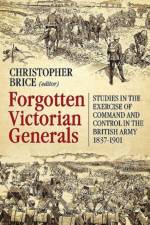
Addressing a historical period so far mostly ignored, this new work provides some examples of the many interesting and talented officers who exercised command during the Victorian Era.
Sir Henry Brackenbury is a now largely forgotten but extremely important soldier, writer, and administrator of the late Victorian era. To Lord Wolseley Brackenbury was "not one of but the cleverest man in the army" and "that first-rate man of business", to the conservative Duke of Cambridge he was "a very dangerous man" whilst King Edward VII remembered him as the man who "pulled the army out of a hole in South African". Born to a minor Lincolnshire landowning family of modest but comfortable means, and as the youngest son of a youngest son, it was always essential that Henry Brackenbury had a 'career'. Although initially studying for a career in the legal profession he was commissioned as a Lieutenant in the Royal Artillery in 1856.He saw active service during the Indian Mutiny, but after that he settled down into a series of administrative and teaching appointments within the Royal Artillery and as Professor of Military History at the Royal Military Academy Woolwich. Finding he had a considerable amount of spare time on his hands he was encouraged to write a history of the origins of artillery in Europe. With this he started an illustrious literary career which would see him produce five books alongside a large number of journal and newspaper articles. He had a simple narrative style alongside an ability to engage the more technical reader. Being of limited personal means the financial success of his literary work was extremely important.He worked for the National Aid Society on the continent during the Franco-Prussian War, and in 1872 he was asked by Garnet Wolseley to join his staff and accompany him to Ashantiland. This was the start of a long association as one of what would become known as the 'Wolseley Ring' that would see Brackenbury serve in Natal, Cyprus, Zululand and ultimately the Sudan where Brackenbury would lead the River Column and end the war by being promoted to Major-General.The reminder of his career saw him undertake three key administrative posts. As Head of the Intelligence Branch of the War Office, where he became a Chief of Staff in all but name. Later as Military Member of the Governor General of India where he combined the roles of a Chief of Staff and Secretary of State for War completely reforming the administrative and financial systems of the Indian Army and establishing the Indian Army's first mobilisation scheme. Finally as Director General of the Ordnance he had to deal with the large scale demands that the South African War placed on his department and him personally. His extremely interesting and significant military career has largely been overlooked until now. Alongside the private papers in the public domain the author has been granted unprecedented access to the private archives of the Brackenbury family and has viewed many letters of a more personal nature, and has been able to produce the first detailed biography of Sir Henry Brackenbury.
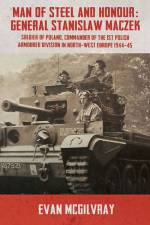
This is a biography of one of the most undervalued commanders of the Second World War, General Stanislaw Maczek, a soldier overlooked by most military historians in the West both because he was Polish and above politics.
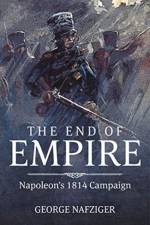
""The End of Empire"" is a continuation of Nafziger's definitive military studies of the Napoleonic era beginning with the 1812 campaign and progressing through the 1813 campaign. Having suffered a massive reversal of fortunes in Russia Napoleon found himself confronted, in Germany, by the combined forces of Russia, Prussia, and Austria.
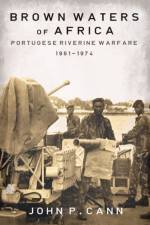
During World War II, Portugal played its cards uncommonly well as a neutral and subsequently became a member of NATO. This membership resulted in a modernizing of its navy and its integration into the Atlantic Alliance.
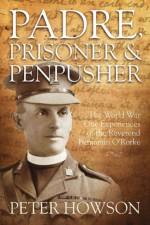
Few army chaplains had as varied a career during the First World War as the Reverend Benjamin O'Rorke. A regular army chaplain who had seen service in the Boer War he was mobilised with 54 other chaplains at the start of hostilities. He went to France with 4 Field Ambulance where he was taken prisoner by the Germans at the end of August 1914.
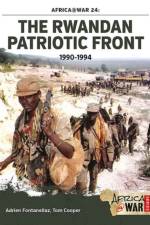
On 1 October 1990, hundreds of Banyarawanda militants that served with the Ugandan Army deserted their posts to form the Rwandan Patriotic Front (RPF) and invade Rwanda. Thus began the Rwandan Civil War, which was to culminate in the famous genocide of nearly one million of Tutsi and moderate Hutus, in 1994.
In 1971, Idi Amin Dada, seized power in a military coup in Uganda. Characterized by human rights abuses, political repression, ethnic persecution, judicial killings, corruption and economic mismanagement, Amin's rule drove thousands into exile. With Tanzanian leader Julius Nyerere offering sanctuary to Uganda's ousted president, Milton Obote, Ugand
Abonner på vårt nyhetsbrev og få rabatter og inspirasjon til din neste leseopplevelse.
Ved å abonnere godtar du vår personvernerklæring.