











Gjør som tusenvis av andre bokelskere
Abonner på vårt nyhetsbrev og få rabatter og inspirasjon til din neste leseopplevelse.
Ved å abonnere godtar du vår personvernerklæring.Du kan når som helst melde deg av våre nyhetsbrev.

A detailed account of the Ethiopian-Eritrean War of Independence 1961-1991.
The journal of Paymaster John Harley is an exposé of life in both the British army and civilian life in Georgian times; full of intrigue, scandal and the strange.
Jacob Lord Astley and the Stow on gthe Wold Campaign, 1646, a nd the end of the Civil War in the Welsh Marches.
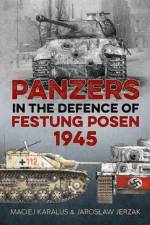
Panzers in Defence of Poznan 1945 by Maciej Karalus and Jaroslaw Jerzak is the first book published in English to describe the bitter battle for Festung Poznań in 1945.
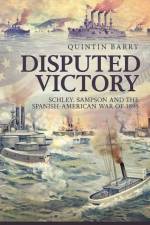
An account of the naval campaign of Santiago de Cuba during the Spanish-American War of 1898 and the subsequent public controversy and Court of Inquiry.
Covers the Scottish & Welsh Wars of Edward I & II up the Battle of Bannockburn.
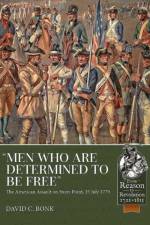
The 1779 American Revolutionary War campaign leading up to the American assault and capture of Stony Point, New York, led by General Anthony Wayne.
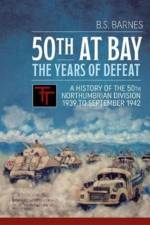
This is an oral history of the 50th Northumbrian Division from 1939 to September 1942. The years of defeat.
At a time when many books about the Great War of 1914-1918 are largely reiterations of earlier strictly chronological accounts, wherein not much is new except perhaps the author's style, it is refreshing, even exciting, when a book offering new vistas comes along. Such a book is this one.
Almost half a century has passed since the Nigerian Civil War ended. But memories die hard, because a million or more people perished in that internecine struggle, the majority women and children, who were starved to death. Biafra's war was modern Africa's first extended conflict.
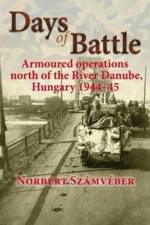
Days of Battle describes a hitherto neglected part of the military history of Hungary during World War II.
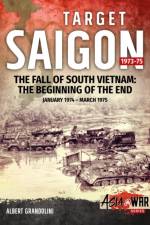
A detailed account, based heavily on Vietnamese sources, of the continuing efforts of North Vietnam to invade the South.
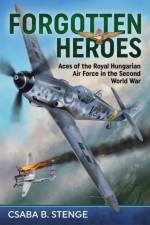
Detailed account of Hungarian air aces during the Second World War drawn from much unpublished material.
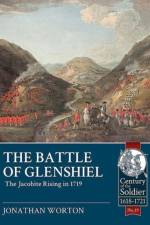
Glenshiel: The Jacobite Rising in 1719 reconstructs this least well known of the Jacobite rebellions, including the decisive battle fought in the mountainous Scottish Highlands.
A comprehensive visitor's guide to the First World War battlefields around Arras, south of the Scarpe, with descriptions of the battles, detailed maps and photographs.
Black Hawks Rising acknowledges the formation and deployment of the African Union Mission to Somalia (AMISOM) in March 2007. Initially confined to peacekeeping within the Mogadishu enclave, it transformed into a peacemaking mission. Many gave the mission little chance of success. As a fighting force, however, AMISOM took on the Somali insurgents in
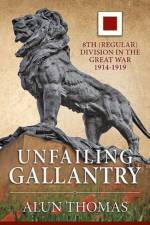
"This book argues that the 8th Division, a war-raised formation made up of units recalled from overseas, became a much more effective and experienced organization by the war's end. it ruther argues that the formation did not use one solution to problems but adopted a sophisticated approach dependent on the tactical situation. This is supported by original sources including war diaries, after-action reports and the post-war correspondence with the British official historian. From its first acquainance with the peculiar nature of trench-warfare following its arrival in France in late 1914, 8th Division undertook a series of operations that attempted to break the deadlock ... by the "advance to victory" of late 1918, 8th Division was able to operate at a tempo far higher than it had achieved before. Unique selling points: first examination of the Division since the 1920s; gives the background to classic works such as General Jack's Diary and Sir John Baynes' Morale; shows that not all troops marched in lines on 1st July 1916; use of new tactics, especially in 1917-1918; e.g. "neutralsation" not "destruction."-- Page [i].
The Bavarian army which fought the War of 1866 was not greatly distinguished for its performance, but a translation of the Bavarian general staff history of the war is a document which should be available in English, since it gives an official analysis of the conflict.
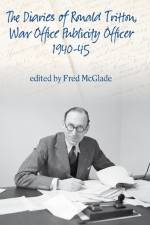
The diary kept by Ronald Edward Tritton is a revealing and often frank record of the internal conflicts at the Public Relations Department of the War Office and the Ministry of Information during the Second World War.
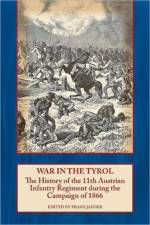
War in the Tyrol is a translation of part of Geschichte des k. k. Infanterie-Regiments Georg Prinz von Sachsen Nr.11, edited by Franz Jaeger. The 11th Infantry Regiment, or to give its 1866 name the 11th Infantry Regiment Crown Prince of Saxony, was one of the oldest formations in the Austrian army. Raised as long ago as 1629, when the Thirty Years' War was raging in central Europe, it had served with distinction at the battles of Zenta (1697), Aspern (1809) and Leipzig (1813) and had been praised for its performance in the Hungarian campaign of 1849. Over the years it went through many changes of name and makeup, as well as many changes in the region from which it recruited, before in 1854 having the headquarters of its recruiting district moved to the town of Pisek, in southern Bohemia. The population of the surrounding region was German, with a small Czech minority. During the 1859 conflict with France and Piedmont, the regiment formed part of 8th Corps, under Ludwig von Benedek, later to command Austrian troops in the Bohemian theater in 1866. The 11th took part in the battle of Melegnano with some distinction, and at the battle of Solferino was part of the brave and successful defense of San Martino against the Piedmontese army. After that war the regiment moved garrisons a couple of times in Italy before in 1862 being transferred to the city of Trient [Trento], in the southern part of the crownland of Tyrol. Here it came under the command of Major General Franz Baron Kuhn von Kuhnenfeld, one of the more celebrated Austrian commanders of the mid-19th century. Like all other regions of Tyrol, the land around Trient was very mountainous and rugged, and Kuhn had made a special study of mountain warfare. He accordingly trained the units under his command to not only march but fight in narrow valleys and along ridges, and this training was to serve the 11th well when war broke out with Italy in June 1866. The account describes what happened when the Austrians met the Italian volunteers under Giuseppe Garibaldi, who had been given the task of freeing Tyrol from Austrian rule. Naturally, since the Italians were ultimately unsuccessful, the history emphasizes the Austrian victories and plays down the Italian successes except where it has to give them credit, for example in the account of the fall of Fort Ampola on 19 July. Nonetheless, taken in company with general accounts and narrations from the Italian side, it provides a piece of the tactical and strategic puzzle which was the war for South Tyrol in 1866, a place which was to be fought for far more fiercely and longer from 1915 to 1918.
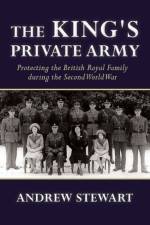
Following the surrender of France in June 1940 Britain prepared to defend itself against a potential German invasion. In great secrecy a decision was taken to establish an elite bodyguard to protect the British Royal Family. Led initially by Major Jimmy Coats, a Coldstream Guards officer and celebrated winter sportsman, it was given the innocuous title of 'The Coats Mission', but its proposed role was perhaps the most important assigned to any unit in the British armed forces. It was intended that this group would evacuate King George VI, Queen Elizabeth and the two princesses, Margaret and her sister Elizabeth, to a place of safety away from London. For the next two years it trained and prepared for the role in the face of what was believed to be a very real threat, and this study, drawing on previously unseen documents, interviews and archival material, provides its history and explains how the Royal Family's protection was viewed. Beginning with the prewar shelter preparations for the Royal Households and running through the increased anxiety of the 1940 invasion threat and Blitz, the renewed danger in 1941 and then the progressive reduction in the special measures in the years that followed, The King's Private Army offers the first dedicated account of a largely unknown but potentially critical element of the defense of the United Kingdom during the Second World War.
Using newly-released secret intelligence sources, neglected memoirs and much more besides, this book tells the story of military aviation in Yemen since 1962.
An account of the English soldiers who fought for the Portuguese against Spain 1662-1668. A rediscovery of a lost episode of British military history.
Abonner på vårt nyhetsbrev og få rabatter og inspirasjon til din neste leseopplevelse.
Ved å abonnere godtar du vår personvernerklæring.