




















Gjør som tusenvis av andre bokelskere
Abonner på vårt nyhetsbrev og få rabatter og inspirasjon til din neste leseopplevelse.
Ved å abonnere godtar du vår personvernerklæring.Du kan når som helst melde deg av våre nyhetsbrev.

An outspoken and hard hitting account of the Gallipoli Campaign by the Commander of the 52nd Lowland Division.
The first in-depth history, since 1919, of the Tank Corps' actions in the Great War, incorporating newly identified material obtained in recent research.
Using recently declassified materials and interviews this book reveals new details of highly classified US and British Cold War aerial intelligence collection flights.
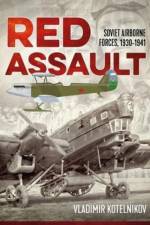
Red Assault investigates the Red Army Command in the 1930s using the memoirs of pioneer military paratroopers and documents discovered in archives and museum collections.
Ceylon at War reveals the vital role played by a strategically-located island as Ceylon became a major Allied redoubt in the war against Japan.
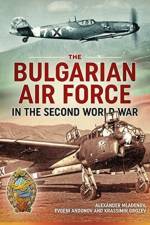
A concise research on the wartime development and operations of the Bulgarian Air Force. It covers the entire spectrum of air-to-air, air-to-ground and reconnaissance operations undertaken by the Bulgarian air arm between 1941 and 1945 as well as the naval operations in the Black Sea.
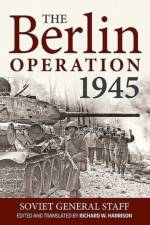
Berlin Operation, 1945, tells the story of the Red Army¿s penultimate offensive operation in the war in Europe. Here the forces of three fronts (Second and First Belorussian and First Ukrainian) forced the Oder River and surrounded the defenders of the German capital, reduced the city and drove westward to link up with the Western allies in central Germany.This is another in a series of studies compiled by the Soviet Army General Staff, which during the postwar years set itself the task of gathering and generalizing the experience of the war for the purpose of training the armed forces¿ higher staffs in the conduct of large-scale offensive operations.The study is divided into three parts. The first contains a brief strategic overview of the situation, as it existed by the spring of 1945, with special emphasis on German preparations to meet the inevitable Soviet attack. This section also includes an examination of the decisions by the Stavka of the Supreme High Command on the conduct of the operation. As usual, the fronts¿ materiel-technical and other preparations for the offensive are covered in great detail. These include plans for artillery, artillery and engineer support, as well as the work of the rear services and political organs and the strengths, capabilities and tasks of the individual armies.Part two deals with the Red Army¿s breakthrough of the Germans¿ Oder defensive position up to the encirclement of the Berlin garrison. This covers the First Belorussian Front¿s difficulty in overcoming the defensive along the Seelow Heights along the direct path to Berlin, as well as the First Ukrainian Front¿s easier passage over the Oder and its secondary attack along the Dresden axis. The Second Belorussian Front¿s breakthrough and its sweep through the Baltic littoral is also covered.Part three covers the intense fighting to reduce the city¿s defenders from late April until the garrison¿s surrender on 2 May, as well as operations in the area up to the formal German capitulation. This section contains a number of detailed descriptions of urban fighting at the battalion and regimental level. It closes with conclusions about the role of the various combat arms in the operation.
'Desert Storm' reveals the whole war fought between Iraq and an international coalition, from the start of this campaign to its very end. This book offers a refreshing insight into this unique conflict.
The letters written by George Ulrich Barlow to his father George Hilario Barlow, Governor of Madras, whilst serving with Wellington's army in the Peninsula and at Waterloo.
Volume 1 of Nicaragua, 1961-1990 provides an in-depth coverage of military history during the first phase of one of major armed conflicts of Latin America in modern times.
A wide ranging study that chronicles the remarkable growth of the Pakistan Armoured Corps over 95 years, and embraces its evolution, culture, doctrine, equipment, operational performance, garrisons, personalities, etc.
A day by day account of the period 1991-93; the fourth decade of Northern IE - Ireland's troubles.
After 70 years this book re-evaluates the importance, impact and outcome of Market Garden, alongside a wider reappraisal of the fighting in the Low Countries in the autumn of 1944.
Of Islands, Ports, and Sea Lanes provides a unique insight into the significance of African and Indian Ocean ports and sea lanes during the Second World War.
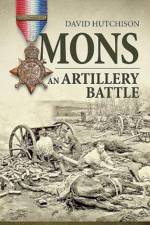
This book is a history of the Battle of Mons in August 1914. It diverges widely from the story enshrined as fact in the Official History, and by subsequent accounts dependant on it. It is based on an examination of the war diaries of almost every British unit involved in the battle, with particular reference to the artillery, thus illuminating the tactical intentions of all arms in every phase of the battle. The artillery had made tactical preparations for the handling of their guns in battle. All units in the British Army conformed to Field Service Regulations. The central role that both these played in the battle is explored.In documenting the orders to, and subsequent actions of, junior units, many routinely referenced statements in even recent publications pertaining to the battle are challenged. The British went into battle without much of its field artillery. The German field artillery went into battle with totally defective ammunition. These two facts alone profoundly alter the conventional narrative. The primary importance of well-positioned artillery, supporting British army manoeuvres, is explained. The routine protection that the guns supplied to their allocated infantry battalions is described; and the devastating effect of German howitzer fire on a number of British infantry and artillery units documented.Each of the three senior British generals reacted differently to the stress of battle, and their anxieties can be followed and explored in detail. General French, in command of the British Expeditionary Force, remained in tighter control of events than is generally portrayed. General Smith-Dorrien, of II Corps, is confirmed as the main architect of the fighting on the day; and with luck on his side, fought an almost faultless campaign. Both were relying on General Haig, to bring his I Corps up in support II Corps. Not only did he disobey this order to advance, but he did not warn either General French or II Corps that he was withholding support. This breached Army Regulations, and endangered the whole force. The records reveal that he side-lined his staff, and issued such a series of orders and counter-orders, that he exasperated and demoralised his men. General Haig¿s report on the battle is an oft-quoted primary source. From the day before the battle, it is so inaccurate as to be almost valueless as a summary of events. If the full details of his actions on the day had been known at the time, he could have been dismissed for incompetence. He might even have been court-martialled.How each of the three generals perceived the role of the artillery under their command is also explored, from the point of view of their previous military experience. The origins of the poor use of artillery by the British Army later in the war can be traced back; partly to the professional army structure of 1914 and the qualities that would be lost as their casualties mounted; and partly to cavalry generals winning out over infantry generals in the direction of future campaigns of the British army.The Battle of Mons was a dress-rehearsal for the war on the Western Front. It was of disproportionate importance in determining how the British army was handled in the future. It deserves to be better understood by students of the period.
The aerial operations during the Revolutions of 1922 and 1947 in Paraguay, covering all the recce, light bombing missions, as well as the few dogfights.
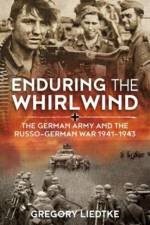
This work seeks to address the notion of German numerical-weakness in terms of Germany's ability to replace its losses and regenerate its military strength, and assess just how accurate this argument was during the crucial first half of the Russo-German War (June 1941-June 1943).
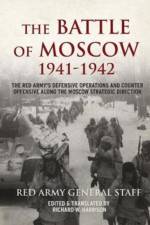
"The Battle of Moscow, 1941-1942" is a detailed examination of one of the major turning points of World War II, as seen from the Soviet side.
A diary of a young British officer during the campaigns of the Duke of York against the French between 1793 and 1795.
The army and the navy of Venice and Ottoman Empire during the campaigns fought for the possession of the 'pearl of the Mediterranean'. The legendary Venetian resistance impressed the courts of whole Europe, transforming the conflict in the 'Campo di Marte' of the continent.
Religious, military, political, and social history is explored through the varied personal experiences of Catholic chaplains on the Western Front.
The shared experiences and sacrifices of Scots in London in World War One - often untold stories and unseen pictures illustrate this fascinating new account.
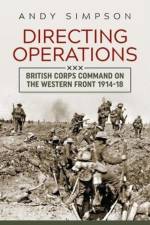
The first book to undertake a systematic and detailed analysis of the role of British corps command on the Western Front in World War One.
A groundbreaking book when first published in Russia in 2005, now Valeriy Zamulin's study of the crucible of combat during the titanic clash at Kursk - the fighting at Prokhorovka - is available in English.
Hot Skies over Yemen is a richly illustrated and unique point of reference about one segment of modern aerial warfare in Yemen that remains entirely unknown until today.
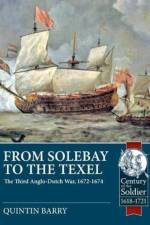
This book is a study of the Anglo Dutch war of 1672 to 1674, describing the naval battles which were fought, and the men and ships which fought them.
The replacement of Infantry casualties in British battalions during the First World War.
A book which covers the relationship between the British and the Sikhs in the eighteenth and nineteenth century.
Abonner på vårt nyhetsbrev og få rabatter og inspirasjon til din neste leseopplevelse.
Ved å abonnere godtar du vår personvernerklæring.