



Gjør som tusenvis av andre bokelskere
Abonner på vårt nyhetsbrev og få rabatter og inspirasjon til din neste leseopplevelse.
Ved å abonnere godtar du vår personvernerklæring.Du kan når som helst melde deg av våre nyhetsbrev.

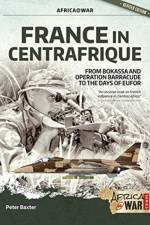
Examining the past and present relationship of France with her erstwhile African colonial possessions, Operation Barracuda, Operations Almandin I, II and II, Operation Boali and the various regional, international and European regional interventions feature.
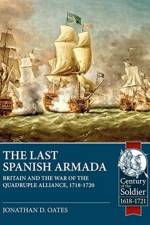
Overshadowed by the better known Spanish Armada of 1588, three centuries ago, the final Spanish Armada set sail against England and Scotland. This little known invasion is often treated as part of the little known Jacobite campaign of 1719. However, this invasion and the subsequent campaign in Scotland were part of the virtually unknown War of the Quadruple Alliance. This conflict has never been hitherto covered in a book in the English language.This book is a study of war and diplomacy involving several of the European powers, with fighting on the high seas, in Scotland, Spain, Sardinia, and Sicily. It is a tale of a once great power taking advantage of apparently favourable international circumstances to regain parts of its lost empire. Success seemed possible, but the fortunes of war are fluctuating and luck only goes so far. Eventually the realities of military power reasserted themselves with bloody results.This book presents an account of this little known war. The emphasis is on Britain¿s naval, diplomatic and military efforts, whilst not neglecting those of its allies and enemies, both abroad and at home. It draws on a variety of little or unused primary sources held at the National Archives and elsewhere and boasts a cast of interesting and unusual characters.
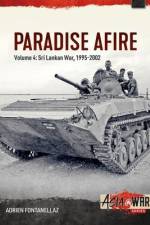
Using a wide range of sources, this volume provides an in-depth account of military operations between 1987 and 1990 of the Sri Lankan War.
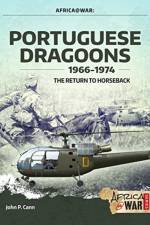
In 1966 Portugal needed a force that could combine mobility with the ability to engage insurgents; one solution was to create horse cavalry units.
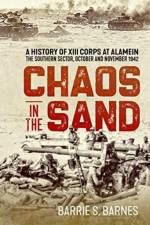
After the protracted and bloody battles in the Gazala Line , May/June 1942, the defeated Eighth Army was in full retreat towards the positions at Alamein. Here the Eighth Army licked its wounds and replenished its stocks of men and materials. Montgomery was appointed as the new commander and instilled into his troops a new air of confidence. Most studies of Alamein focus on the northern coastal sector where the main action was fought. This study looks at the southern sector held by XIII Corps: 50th Northumbrian Division, 1st Greek Brigade under its command. 44th Home Counties Division and the 7th Armoured Division with 2nd Free French Brigade under its command. Though the fighting here was not on the same scale as the coastal sector it was none the less a series of bloody actions and hundreds of men perished. XIII Corps had the job of holding on their front German and Italian armoured divisions that would otherwise be sent north to impede the main attack by Eighth Army. After the first attacks in the north and south failed to break through the Axis forces Montgomery organised Operation Supercharge, a thrust in the north headed by infantry and artillery. 151 [Durham Brigade] was moved north to take a leading role in this attack in early November. After a bloody fight the Durhams and Scots troops broke through and the British armour streamed out into the desert as the Axis forces retreated.
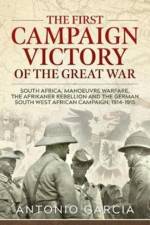
The First Campaign Victory of the Great War provides an insightful account of South Africa's First World War German South West Africa campaign and combines the fields of military theory and military history in a novel campaign history. In analysing the campaign through the lens of "manoeuvre warfare theory" the work adds a new and unique dimension
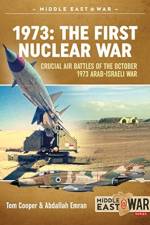
1973: the First Nuclear War provides an in-depth insight into the Israeli efforts to prevent the deployment of Egyptian Scud missiles - whether armed with Soviet nuclear warheads or not - in the Port Said area.
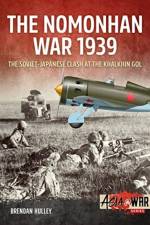
Following the Japanese occupation of Manchuria, in 1931, Japan turned its interest to nearby Soviet territories. The result was a series of border incidents - starting with the Battle of Lake Khasan in 1938.
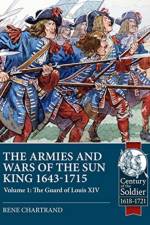
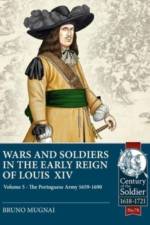
Volume 1 deals with the Sun King's early years, from his birth in 1638, the resounding victory of Rocroi when he was five and a child king, the unstable years of the Fronde civil wars, his seizure of absolute power in 1661, the initial foreign military adventures culminating with the French army's blitzkriegs of 1667-1668.
This volume consists of two diaries by Lieutenant William Bamford, an Irishman in the British Army in the mid-18th century.
Wars in the 19th Century were accompanied by a very heavy loss of life from infectious diseases. Typhus fever, dysentery, malaria, typhoid fever and yellow fever caused many more deaths than wounds inflicted by enemy actions. During the Peninsular War, for example, for every soldier dying of a wound, four succumbed to disease. This book examines th
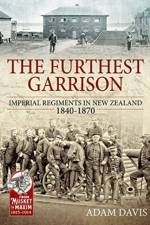
The Furthest Garrison focuses on Imperial Forces in New Zealand, with particular reference to Auckland.
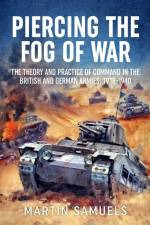
Since the late 1970s, anglophone and German military literature has been fascinated by the Wehrmacht's command system, especially the practice of Auftragstaktik. There have been many descriptions of the doctrine, and examinations of its historical origins, as well as unflattering comparisons with the approaches of the British and American armies prior to their adoption of Mission Command in the late 1980s. Almost none of these, however, have sought to understand the different approaches to command in the context of a fundamental characteristic of warfare - friction. This would be like trying to understand flight, without any reference to aerodynamics. Inherently flawed, yet this is the norm in the military literature.This book seeks to address that gap. First, the nature of friction, and the potential command responses to it, are considered. This allows the development of a typology of eight command approaches; each approach then being tested to identify its relative effectiveness and requirements for success. Second, the British and German armies' doctrines of command during the period are examined, in order to reveal similarities and differences in relation to their perspective on the nature of warfare and the most appropriate responses. The experience of Erwin Rommel, both as a young subaltern fighting the Italians in 1917, and then as a newly-appointed divisional commander against the French in 1940, is used to test the expression of the German doctrine in practice. Third, the interaction of these different command doctrines is explored in case studies of two key armored battles, Amiens in August 1918 and Arras in May 1940, allowing the strengths and weaknesses of each to be highlighted and the typology to be tested. The result is intended to offer a new and deeper understanding of both the nature of command as a response to friction, and the factors that need to be in place in order to allow a given command approach to achieve success. The book therefore in two ways represents a sequel to the author's earlier work, Command or Control? Command, Training and Tactics in the British and German Armies, 1888-1918 (London: Cass, 1995), in that it both takes the conceptual model of command developed there to a deeper level, and also takes the story from the climax of 1918 up to the end of the first phase of the Second World War.
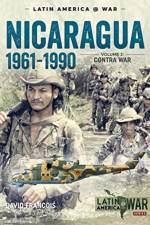
Nicaragua, 1961-1990, Volume 2 provides an in-depth coverage of military history during the second phase of one of bloodiest, and most-publicised armed conflicts of Latin America in modern times.
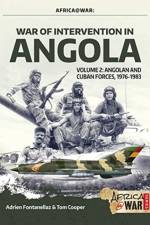
Based on extensive research, with help of Angolan and Cuban sources, the War of Intervention in Angola, Volume 2, traces the military build-up of the Cuban and Soviet-supported Angolan military, the FAPLA and its combat operations.
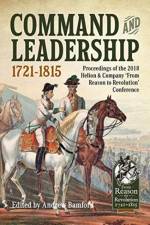
The inaugural ¿From Reason to Revolution Conference¿ took as its theme ¿Command and Leadership¿, which was explored in a variety of different ways by eight speakers whose papers took in the armies of France, Austria, Portugal, and Britain (and touched in passing on those of Prussia and the Netherlands too), and whose geographical remit encompassed North America, Europe, and Africa. This volume presents the proceedings of that conference.The first three chapters consider lower-level leadership, with a focus on ideas of expertise and professionalism. Will Raffle explores the tensions between local experts in New France and professional officers from the mother country, taking as its case study the campaign for Oswego in 1756. Tobias Roeder looks at the Habsburg officer corps during the eighteenth century and the tensions between the dictates imposed by the profession of arms on the one hand and the social expectations of a gentleman on the other. Lastly, Mark Thompson reviews a little-known body of men from the Peninsular War in the shape of the Portuguese Army¿s corps of engineers.The next pair of chapters address the opposing commanders in the Jacobite Rising of 1745, drawing some interesting parallels between two young royals who were both obliged to rely on their own charisma and force of character to address difficult and complex military situations. For Charles Edward Stuart, Jacobite Prince of Wales, the challenge was to create an army from scratch out of a collection of self-willed and self-opinionated individuals. Arran Johnston looks at how he did this, but also at the tensions that were inherent in the Jacobite command structure. Conversely, Prince William, Duke of Cumberland, inherited command of an army of regular troops but one which had its morale at rock bottom after defeat at Falkirk, and Jonathan Oates addresses how Cumberland was able to restore order and self-respect to his command, and take it on to victory at Culloden.The final three chapters jump forwards by a half-century, to look at the events of the French Revolutionary Wars. Carole Divall looks at the Flanders campaigns of 1793-1795, considering the problems faced by generals on both sides and concluding that all would have been far better off without the interference of their respective political masters. Jacqueline Reiter, by contrast, considers someone who was both general and politician in the shape of John Pitt, 2nd Earl of Chatham, and her study of his role in the 1799 Helder Campaign both restores a reputation as a brigadier unfairly sullied by Sir John Fortescue but also considers the tensions caused by his dual role as subordinate general on the one hand and senior cabinet minister on the other. Finally, Yves Martin looks at the three very different personalities who successively commanded the French Army of the Orient in Egypt, providing very illuminating pen-portraits of three larger-than-life characters each with pronounced strengths and weaknesses.
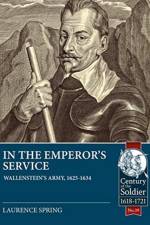
Albrecht von Wallenstein! His very name is synonymous with the Thirty Years War. From a poor nobleman he rose to become the Duke of Friedland and Mecklenburg. Many see his assassination at Eger in 1634 as the end of the ¿interesting¿ period of the war, since he was the last of the war¿s titans to be killed.However, his army continued to serve the Emperor loyally to the end of the war, and a few regiments existed well into the 20th century. These would see action in the First World War as part of the Austrian Army and, after the Austrian Anschluss of March 1938, in the German Army during the Second World War.Despite Wallenstein¿s Army being infamous, very little has been written about it, especially in English. However, by using archives from record offices from Germany, Czechoslovakia (formerly Bohemia), Sweden and Britain, as well as the latest archaeological evidence from mass graves of the Thirty Years War period, this book looks to rectify this by giving a vivid account of what life was like for a soldier in Wallenstein¿s Army.The chapters include recruiting the army, its officers, as well as the logistics of clothing, equipping and feeding the army. There are also chapters on regimental colours, how to quarter an army, and the arms industry, plus case studies on siege warfare using Stralsund and the Alte Veste as an example, as well as Wallenstein¿s tactics at the Battle of Lutzen.It also dispels the myths that have arisen about Wallenstein¿s Army, such as it being one of the first to be well clothed during the war, and did not follow the Catholic League¿s General Johan von Tilly¿s alleged doctrine of ¿a ragged soldier and a bright musket¿ (which in itself is incorrect).Therefore this book will be essential reading to anyone interested in the Thirty Years War, the English Civil War or warfare in the early modern period.
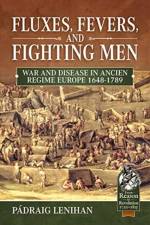
The proportion of wartime soldiers dying of disease as against combat injury, ran at about 70-75 percent in armies campaigning in Europe in the century and a half (1648-1789) between the end of the Thirty Years War and the French Revolution. During this time, field armies doubled in size and regimes usually fought for limited territorial gains, so it was safest to ¿occupy, entrench, and wait¿. Consequently, this was an era of massive and protracted encampments: the Christian army that sat down before Belgrade in 1717 had more mouths than any city within 500 miles, but lacked basic urban amenities like regular markets, wells, privy pits, and night soil collectors. Yet the impact of sickness on military operations has been neglected. This study uncovers how many soldiers sickened and died by consulting quantitative data, such as casualty returns and hospital registers, generated by the new state-contract armies which displaced the mercenary hordes of the Thirty Years¿ War. As plague began to recede from Europe, this study explains what exactly were these ¿fluxes and fevers¿ that remained to afflict European armies in wartime and argues that they formed a single seasonal continuum that peaked in late summer. The isolation and incarceration of the military hospital characterized the response of the new armies to ¿disorder¿ and to revivified notions of contagion. However, the hospital often prolonged the late summer morbidity/mortality spike into mid-winter by generating ¿hospital fever¿ or typhus, the lice-borne disease that erupted whenever the cold, wet, hungry, transient, and unwashed huddled together. The cure was the disease. This scope of the study includes French army operations in some of its contiguous campaigning theatres, north Italy (1702 and 1734), the Rhineland (1734), Roussillon (1674), possibly Catalonia (1693), and, further afield, Bohemia (1742). The study also includes three case-studies involving the British army that include Ireland (1689), Portugal (1762), Dutch Brabant (1748), and the Rhineland (1743). The outliers are studies of Habsburg operations in and around Belgrade (1717 and 1737), and Russian operations in Crimea (1736).
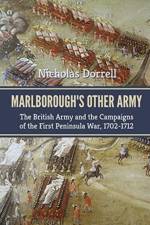
The book provides a complete guide to the forces fighting in Marlborough's armies in Iberia.
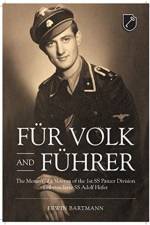
From the war on the southern sector of the Eastern Front to a bomb-shattered Berlin populated largely by old men and demoralised lonely women, this candid eyewitness account offers a unique and sometimes surprising perspective on the life of a young Leibstandarte SS Adolf Hitler volunteer.
This book traces the little-known and fascinating history of the United Arab Emirates' Armed Forces.
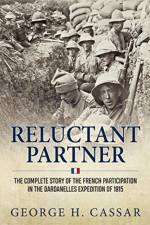
The brainchild of Winston Churchill, the Dardanelles campaign was intended to strike at Turkey through the Dardanelles Straits. The French government consented to join the expedition, less because it had faith in the success of the enterprise than to prevent the British from establishing themselves in areas of the Ottoman Empire that it coveted. Th
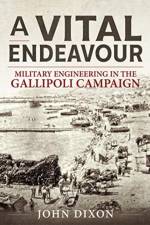
This book addresses the work of the Royal Engineers during the Gallipoli Campaign. It seeks to demonstrate the involvement and commitment of the Corps of Royal Engineers for almost nine months of the campaign.
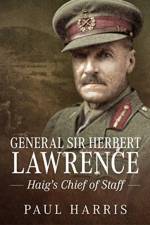
As Chief of Staff to Field Marshal Sir Douglas Haig in 1918, General Sir Herbert Lawrence played a key role in the defeat of Germany in the First World War. This biography traces his remarkable career.
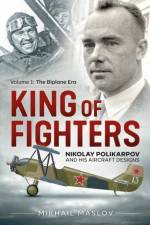
The book which is presented to the reader describes all Polikarpov's original projects, both those put into reality and unimplemented ones. It took the author many years to prepare for the creation of the book.
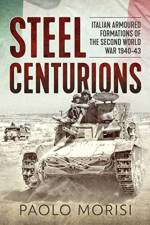
Forged on the battlefields of France, Greece and North Africa, the Italian Army's armoured units fought effectively despite inferior weapons and equipment and the challenging conditions that they faced This book describes the formation and battle performance of the major armoured units such as the Ariete, Littorio and Centauro divisions together w
Abonner på vårt nyhetsbrev og få rabatter og inspirasjon til din neste leseopplevelse.
Ved å abonnere godtar du vår personvernerklæring.