


Gjør som tusenvis av andre bokelskere
Abonner på vårt nyhetsbrev og få rabatter og inspirasjon til din neste leseopplevelse.
Ved å abonnere godtar du vår personvernerklæring.Du kan når som helst melde deg av våre nyhetsbrev.

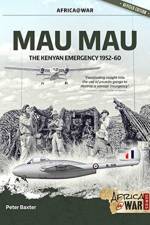
The work covers the emergence and growth of Mau Mau, and the strategies applied by the British to confront and nullify what was in reality a tactically inexpert, but nonetheless powerfully symbolic black expression of political violence.
A collection of essays presenting new insights and research into the Seven Years War Battle of Rossbach.
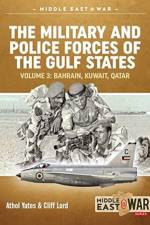
The Military and Police Forces of the Gulf States, Volume 3, covers the military, police, and selected para-military services of Bahrain, Kuwait and Qatar from early 20th Century until 2010.
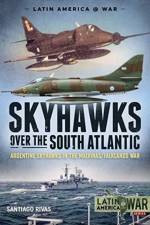
By 1982, the backbone of the Argentine combat aviation was formed of Douglas A-4 Skyhawks, they took on the overwhelming struggle to fight the British Task Force that opposed the Argentine forces on the Malvinas/Falkland Islands.
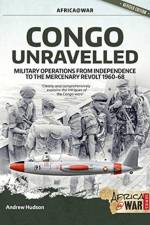
Congo Unravelled solves the intractable complexity of this violent period by dispassionately outlining the sequence of political and military events that took place in the troubled country.
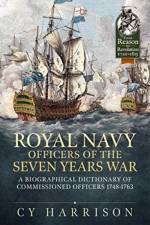
Covering over 2,000 officers who served during the Seven Years War, this book provides previously un-published details of each officer's career and family.
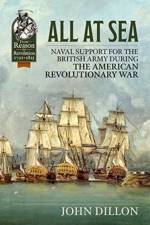
How the British Army relied on the Navy for support during the American Revolutionary War.
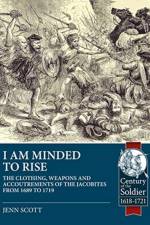
The clothing, weapons and accoutrements of the men who fought for the Stuarts in Scotland from the beginning of the Jacobite cause in 1689 to Glenshiel in 1719.
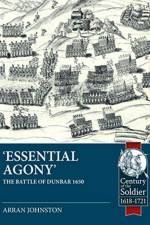
On 3 September 1650, the forces of Oliver Cromwell clashed with the army of Scotland at Dunbar, changing the course of British history.
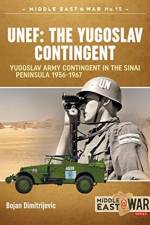
The story of the JNA's difficult task of entering the Sinai Peninsula right on the heels of withdrawing Israeli forces in 1956 is the centrepiece of this book. It is illustrated by more than 150 original photographs, most of which have never been published before.
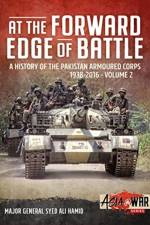
The first illustrated history of the Pakistan Armoured Corps. Volume 2, is illustrated by over 100 photographs, 15 colour profiles, and a similar number of maps.
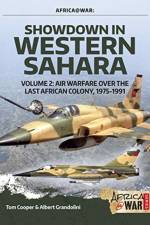
This second volume continues the examination of the struggle in Western Sahara that involved POLISARIO, Morocco, Mauritania and France from 1975-1991.
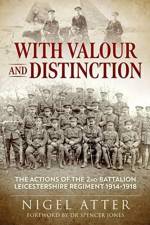
This book focuses on the 2nd Battalion Leicestershire Regiment who fought on the Western Front, Mesopotamia and Palestine during the First World War.
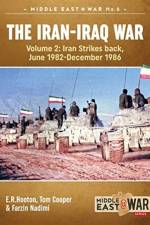
Volume 2 takes up the account after Iraq withdrew from Khuzestan and is based upon material from both sides, from US Intelligence data, British Government documents and secret Iraqi files. Iraq¿s withdrawal exposed the great southern city of Basra to Iranian attack but it was shielded by fortifications based upon a huge anti-tank ditch, the so-called Fish Lake, which the Iranians tried to storm in the summer of 1982. This bloody failure left Tehran in a position where prestige prevented a withdrawal into Iran but the armed forces lacked the resources to bring the conflict to a favourable conclusion. During the next four years the Iranians tried to outflank the Fish Lake defences initially through the marshes in the north and finally through an attack on the Fao Peninsula which increased national prestige but was a strategic failure and paved the way for Iraq¿s massive victories in 1988. This followed a series of successful defensive battles in which the Iranians were driven back with great loss. This account describes the battles in greater detail than before and, by examining them, provides unique insights and ends many of the myths which are repeated in many other accounts of this conflict.
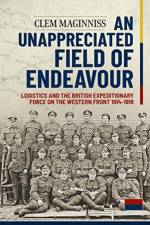
A penetrating and refreshing analysis of the contribution of military and commercial logistics to the operations of the BEF on the Western Front.
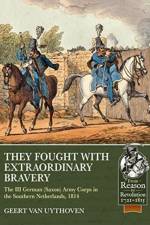
The story of III German Army Corps in 1814, composed of a mix of units of Napoleon's former Allies Saxony and the Saxon Duchies.
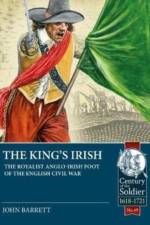
The first detailed account of the thousands of troops from Ireland who took part in the English Civil war. Their campaigns and charcteristics, equipment, and impact.
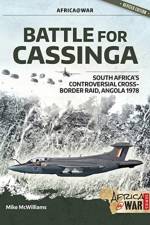
Battle for Cassinga is the first-hand account by a South African paratrooper who was involved in the 1978 assault on the Angolan headquarters of PLAN, SWAPO's armed wing.
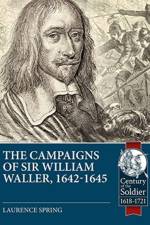
This book not only looks at Sir William Waller's campaigns from June 1642 to April 1645, but also the logistics of putting an army into the field.
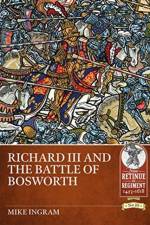
This is the story of two very different men, Richard III, the last Plantagenet King of England, and Henry Tudor and how they met in battle on 22 August 1485 at Bosworth Field.
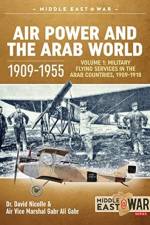
Based on decades of consistent research, but also newly available sources in both Arabic and various European languages, Volume 1 tells the story of the men and machines of the first half century of military aviation in the Arab World.
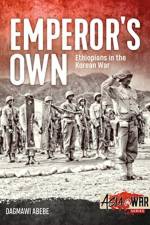
The little-known story of Ethiopian's Imperial Bodyguard, the Kagnew Battalion, during the Korean War of 1950-53.
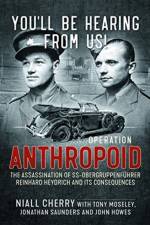
An investigation into Operation Anthropoid - the assassination of SS-Obergruppenfuhrer Reinhard Heydrich in Prague in 1942.
This book provides intricate details on the military capabilities and intentions of armed forces on both sides, their training, planning, and the conduct of combat operations.
The book takes the statement of LSgt Taylor of the 9th Lancers "Germany? I thought we were off for another go at the French" and aims to explain how in a period of 99 years the military alliances between Britain and France and Germany had become reversed. The narrative has parallel stories of social and military reform interwoven with the dynastic
Provides an important contribution and re-interpretation of the discussion surrounding Passchendaele, based firmly on an extensive array of sources, many unpublished, and supported by illustrations and maps.
This is the first work ever to offer a comprehensive, in-depth study of the build-up, training, composition, equipment, and combat operations of all the three branches - the army, the air force, and the navy - of the secessionist military during the Nigerian Civil War.
This book is a historical study of the events of October 1941 in the Viaz'ma pocket, based on documents found in the Russian Federation's Central Archive of the Ministry of Defense, the German Bundesarchiv, and the US National Archives.
In the spring of 1870 an Anglo-Canadian military force embarked on a 1,200 mile journey, half of which would be through the wilderness, bound for the Red River Settlement, the sight of present day Winnipeg. At the time the settlement was part of the vast Hudson's Bay Company controlled territories which Canada was in the process of purchasing.Today Canada is the second largest country in the world, but at the time it was a recent creation made up of three British North American colonies. The British government of the day, focussed on financial retrenchment and anchored on anti-imperialist values, would have happily severed its ties with its North American colonies. The dynamic American republic, resurgent after the cataclysm of the Civil War, aspired to take control of all of the British North American territories, including Canada and the Hudson's Bay Company lands. Canadian Prime Minister John A. Macdonald knew that for his new country to survive and prosper it would have to expand across the continent and incorporate the Hudson's Bay Company's lands, and ultimately the colony of British Columbia on the Pacific Ocean as well. The HBC was in decline and wanted to give up the responsibility for its vast territories. Macdonald would have preferred Britain to take on this responsibility until Canada was ready, but Westminster was unwilling. Ready or not, Canada would have to act or risk the United States getting in ahead of them.In all of this, the interests of the indigenous people received scant consideration, and this included the residents of the Red River Settlement. The population here, about 14,000 strong, was mostly comprised of the descendants of the Kildonan Scots, farmers who had arrived under the auspices Lord Selkirk earlier in the century, the mixed race descendants of English speaking HBC workers and First Nations women, and the mixed race descendants of French speaking North West Company workers and First Nations women. The latter group, known as the M¿s, had long before the time of Canada's pending takeover developed a distinct cultural identity, referring to themselves as "A New Nation".In 1869 the M¿s were nervous of the pending Canadian takeover. They feared their property rights, the most tenuous in the community, would not be respected. They also worried that their culture would be overwhelmed by an influx of English speaking settlers. Their concerns were reinforced when Canadian surveyors and road builders arrived in the community. The Canadians behaved exactly as the M¿s had feared prompting the beginning of an opposition with demands for guarantees.The man who rose to lead the M¿s opposition was Louis Riel, and while his demands were just, during the winter of 1869/70, supported by the organized military power of the buffalo hunt, he rode roughshod over the views of the other communities in residence at Red River. These included not only the Kildonan Scots and English-speaking mixed race people, but also M¿s opponents and the much smaller and troublesome Canadian Party. Prime Minister Macdonald had been lax in acting to accommodate the interests of the Red River residents, but there was in fact little interest in Canada for the events unfolding there. Matters were transformed when Riel approved the execution of a member of the Canadian Party in March of 1870. Much of English speaking Canada found its voice and demanded a vigorous response.Macdonald, under considerable pressure, wanted a military expedition dispatched and he was adamant that the British should lead it. Even after a deal was completed, resulting in the creation of the new province of Manitoba, he remained firm in his belief that a force should be sent to assume control. Despite having already announced the withdrawal of its Canadian garrison, the British government reluctantly agreed to commit imperial troops to the venture. The completion of the deal between Canada and the Red River settlement was in fact a precondition of British involvement in the affair. It was also critical that the British troops get to the settlement and back again before the winter set in.Colonel Garnet Wolseley was chosen to lead the expedition, and as such, though in many respects an obscure and minor operation, it is an important subject of study given that it was his first independent command and he would rise to become Commander in Chief of the British Army. It demonstrated an attention to detail that would be fundamental to his rise up through the army hierarchy and utilized a transportation technique that he would attempt to replicate in his more famous Gordon Relief Expedition of 1884/1885. It also introduced a number of the personalities who would later become firmly entrenched as members of the Wolseley Ring.There was no good route from Canada to the Red River Settlement. The expedition, comprised of British regulars and Canadian militia, travelled first by steamer to Thunder Bay on Lake Superior and then by an incomplete road to Shebandowan Lake. The state of the road would become one of the major talking points of the whole affair. From Shebandowan Lake they went by row boat utilizing the old North West Company's canoe highway, carrying all the supplies they would need for the journey. They suffered the challenges of having to cross 47 portages, run multiple river rapids, and weather significant storms on some of the larger lakes of the interior. It rained, frequently torrentially, for roughly half of the days between their arrival at Thunder Bay and their reaching of Fort Garry at the Red River Settlement. On the days it didn't rain, they were feasted upon by the billions of insects resident in the woods of the Canadian Shield.Many historians have written on the events of the troubles at Red River in 1869/70, but the expedition itself is usually treated as a footnote and given a few lines or at most a paragraph. The author has found only one relatively recent account (published in the 1980s) that dealt with the expedition in detail and he has frequently, though respectfully, disagreed with many of the assertions and conclusions found therein. Consequently, it has been found necessary to go to the expeditionary force documents and first hand accounts of the men who took part, to properly understand exactly what the Red River Expedition was about and what the men who made up the force actually went through. By doing this author believes he has come up with a lively and original recounting of this little known story in British Imperial and Canadian history.
The "German Corpse Factory" is one of the most famous and scandalous propaganda stories of the First World War. It has been repeated many times down to the present day as the prime example of the falsehood of British wartime propaganda. But despite all the attention paid to it, the full story has never been properly told.
Abonner på vårt nyhetsbrev og få rabatter og inspirasjon til din neste leseopplevelse.
Ved å abonnere godtar du vår personvernerklæring.