










Gjør som tusenvis av andre bokelskere
Abonner på vårt nyhetsbrev og få rabatter og inspirasjon til din neste leseopplevelse.
Ved å abonnere godtar du vår personvernerklæring.Du kan når som helst melde deg av våre nyhetsbrev.

This is the story of how, in 1808, the Royal Navy used its dominance in the Baltic to rescue the Spanish Army of the Marques de La Romana.
Suriname became independent in 1975 under the Netherlands' decolonisation program. Bureaucratic mismanagement by the democratic government led to a military coup in 1980 and ultimately a civil war that lasted from 1986 to 1992. The volume is illustrated by more than 120 contemporary photographs, maps and authentic colour profiles.
How did an Austrian-born misfit who had never risen higher in military service than the rank of lance-corporal attain mastery over Germany and most of Europe? Much of that dubious credit can be attributed to the actions of his earliest paramilitary army, the Sturmabteilungen (SA, Storm Troops), and the men chosen by the Führer to lead it. This series analyses the lives and careers of those men, the first volume covering 49 officers, 35 of whom were, like their leader, veterans of the First World War who had found themselves stunned, bitterly disillusioned, and in many cases unemployed and destitute in the aftermath of that four-year struggle. They eagerly sought the opportunity to return to uniform, battled the enemies of the Nazi Party in the streets of inter war Germany, and saw their efforts rewarded by their own leader's betrayal, as he essentially decapitated his SA in favor of its own subordinate formation, Heinrich Himmler's SS, in the 'Night of the Long Knives' (30 June -1 July 1934). But the SA did not end with that devastating blow, and despite its loss of prestige and power it was to play an important role in military training and internal security within and outside the borders of the Reich. During World War II, many of its leaders were tasked with administering occupied territories and representing Germany as ambassadors to other Axis nations. Still others, men of all SA ranks, served individually as members of the German armed forces, tens of thousands of them losing their lives on all fronts and many of them receiving the highest awards for bravery and leadership. Relying primarily on contemporary documentation, including the official personnel files of these men, Michael Miller and Andreas Schulz have compiled the first in-depth study yet produced on the SA leadership corps, a series designed to provide as comprehensive a picture as possible of the hauptamtlicher (full-time, actively serving) and ehrenamtlicher (honorary) SA-Führer.
This book outlines the plans for the English attack on the Spanish West Indies in 1655, their defeat on Hispaniola and occupation of Jamaica until the end of 1655.
A study of the sieges of eight fortresses in Scotland and England during the Jacobite rebellion of 1745-1746.
This work analyzes the upheavals which occurred in the charge of cavalry, from a tactical, socio-cultural and anthropological point of view, in order to understand how this arm adapted to the evolutions of the art of war and was able to keep an important role on the battlefield.
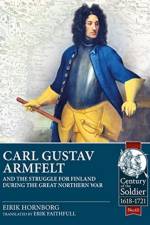
A comprehensive account of the military career of one of the great and tragic figures from the final death throes of the Swedish empire.
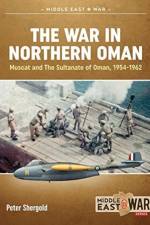
This volume is covering one of the least-well-known conflicts in the Middle East, fought in Oman during the second half of the 1950s; and one of very few insurgencies that was successfully suppressed. As such, it provides a host of valuable 'lessons learned'.
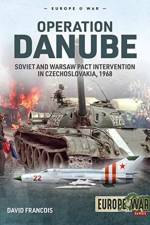
Guiding the reader meticulously through the details of the forces involved, their organisation and equipment, Operation Danube offers a uniquely in-depth, blow-by-blow account of the invasion of Czechoslovakia and is profusely illustrated with more than 100 photos, maps, and exclusive colour artworks.
A history of necessity and innovation, takes an in-depth look at 22 iconic South African armoured vehicles.
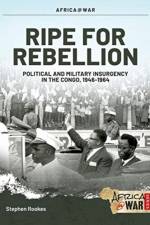
Ripe for Rebellion is the first of two volumes examining the so-called 'Congo Crisis'.
Heeresgruppe Weichsel, or Vistula, was created on the order of Adolf Hitler in part to "organise the national defence on German soil.
Fighter pilot Manfred von Richthofen (the Red Baron) lacked innate aerobatic ability. As a tyro, he attempted to solve this problem through denial, going so far as to sneer at stunting as pointless. Great War air combat experience proved quite the reverse, and so we would anticipate a short and sad fighting life for the fellow. Yet the Red Baron became the Great War's single greatest scorer, as measured by total victories. How did he do it? This book is concerned with tactics, especially those tactics used by the Red Baron and his opponents. It offers the how and why of Great War aerial combat. The author leans heavily on his expertise in engineering and aerodynamic techniques to explain this, with his reasoning presented in a readable, non-mathematical style. Absent are both the usual propaganda-laced Air Service reports and psychobabble. Offered instead is the logic behind Great War aerial combat; i.e., those elements determining success or failure in the Red Baron's air war. Gunnery experience led to the machine gun as the weapon best suited for aerial combat. Joined with a suitable aircraft, the extremely successful Fokker diving attack resulted. In reaction, effective defensive techniques arose, using forms of shrewd tactical cooperation by two-seater crews: pilot and gunner. These are detailed. Numbers mattered, establishing the level of assault firepower. Tactics of machines flying together in formation are given, as well as those of 'formation busters', intent upon reversing the odds and turning large numbers into a disadvantage. A pilot's nature and emotions had much to do with choosing between the options defining tactics. What were the aces like? How were tactics tailored to suit personality? What traits made for the ability to grapple with a jammed machine gun? A dozen high achievers are examined in terms of tactics and background. In a fascinating study Leon Bennett covers all of these aspects of WWI aerial combat, and more. Similarly, the author turns his attention to examining the cause of von Richthofen's death, employing the tools of logic, rather than merely accept one of the many conflicting eyewitness reports as truth. In doing so, much testimony is exposed as unlikely. The bullet scatter to be expected from ground antiaircraft fire matters greatly, and is developed, along with the odds against lone riflemen hoping to hit a fast-moving low altitude target. The most dangerous altitude for front-line crossing is established. The author concludes by rating the possibility of a rifleman downing the Red Baron as quite realistic - certainly as likely as any of the more celebrated possibilities. This is an important book, offering a groundbreaking account of WWI aerial tactics, and a thorough examination of the final combat and death of the Red Baron.
The Kingdom of Serbia waged war against Austria-Hungary and the other Central Powers from 28 July 1914 when the Austro-Hungarian government declared war, until the capitulation of Austria-Hungary. In the first two years of the war, Serbia defeated the Austro-Hungarian Balkan Army. The following year, her army was faced with the Axis invasion. Unwilling to surrender, the Serbian Army retreated through Albania and evacuated to Corfu where it rested, rearmed and reorganized. From there the army transferred to the Salonika Front, where it recorded successes by 1916. After a long lull, the struggle to penetrate the Front began in September 1918. Serbian and other Allied forces broke through the Front and Bulgaria was soon forced to surrender. The Serbian Army advanced rapidly and on 1 November 1918 Belgrade was liberated. Thanks to the Serbian military victories and diplomatic efforts, the Kingdom of Serbs, Croats and Slovenes (later Yugoslavia) was created. Serbia paid for her victory in the Great War in a disproportionately exorbitant manner: it is estimated that she lost close to one million inhabitants, of whom about 400,000 were conscripts and the rest civilians, which accounted for nearly a third of the total population, or close to 60% of the male population. No other country that participated in the Great War paid so dearly for its freedom. The Serbian Army in the Great War, 1914-1918 offers readers a very thorough analysis of the Serbian Army of the period, including its organization, participation in military operations, weapons, equipment, uniforms, and system of orders and medals. This book is a synthesis of all available literature and periodicals, appearing for the first time in the English language. The book is well supported by around 500 illustrations, out of which more than 300 are contemporary photographs and other documents, while this is complemented by dozens of color plates of uniform reconstructions and color photographs of the preserved pieces of uniform, equipment and weapons. A special emphasis has been placed on the colors of Serbian uniforms from the period. The book is the result of two decades of research and will enable readers to gain a clearer picture of this subject.
This is the first nuts-and-bolts handbook to utilize both the voluminous raw allied intelligence documents and postwar Japanese documentation as primary sources. This second volume covers the armament of the ground forces. It takes advantage not only of postwar Japanese research, but also the extensive technical intelligence efforts of the Allies n
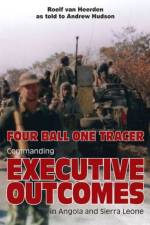
Brutally honest and devoid of hyperbole, this is Roelf van Heerden's Executive Outcomes. Unapologetic, unassuming and forthright, the combat exploits of Executive Outcomes (EO) in Angola and Sierra Leone are recounted for the first time by a battlefield commander who was physically on the ground during all their major combat operations.
A new biography of the famous Anglican army chaplain and priest Geoffrey Studdert Kennedy, 'Woodbine Willie', providing a new examination of his remarkable career.
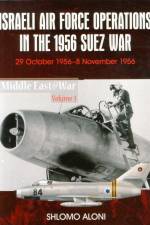
By participating in 1956 Suez Crisis Israel exploited an opportunity to join forces with France and the United Kingdom in an attack against Egypt in order to accomplish diplomatic, military and political objectives: to open the Red Sea international shipping lane to ships sailing from and to Eilat; to strengthen its alliance with France; to end ...
Extensively annotated translation of the Austrian semi-official history of the first half of the Hungarian War of Independence 1848-1849.
A series of case studies exploring the experiences of various units deployed to oppose the Jacobite Rising of 1745.
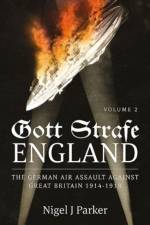
Gott Strafe England Volume 2 continues the detailed analysis of the German Strategic Air Offensive against Great Britain through the years 1917 and 1918.
This book comprises a new edition of the memoirs of a private soldier, James Gilling, originally published in 1855. Gilling served in the Ninth Lancers of the British army, and he gives a well-written, frank, and lively account of his time in India from 1843 to 1850, during which time he took part in both Anglo-Sikh Wars. It is the only published memoir written from the ranks of a lancer regiment at this period, and includes many outspoken opinions about army life, the conduct of war in India, and his fellow soldiers of all ranks. Original copies of this book are extremely rare; none have been traced in the major British and US libraries. The text has been transcribed from a photocopy in the National Army Museum London, UK. The memoir is an unusually frank and detailed account of the life of a cavalry soldier in India, with stories of incidents and individuals, alternating with the author's experiences in the fierce struggle against the well-trained armies of the Sikh nation. Gilling by his own admission was no hero, but just an ordinary soldier who got into scrapes and didn't enjoy soldiering very much, but did his duty when required. In 1850 he purchased his discharge from the army, and emigrated to the United States of America, where he settled in Lyons City, Iowa, and took up his old trade as a hairdresser. He died in 1861. However, this is not merely a reprint of a rare nineteenth century memoir. The author, a specialist on the British cavalry of the early nineteenth century, has written a full introduction on the life in the cavalry at this period, including the careers of the many officers and comrades mentioned by Gilling. This introduction is drawn from extensive research in primary archives at the British Library, National Archives, and regimental archives, as well as contemporary published and unpublished journals. The work is fully annotated, and includes an extensive list of sources. It therefore provides new depth and perspective on the life of those who formed the ranks of the mounted arm of the British army. This book will appeal to the many people with an amateur but often very knowledgeable interest in the history of the British army, as well as to all those with a more specialist interest in the history of the British army, including university staff and students and special-interest groups and societies. The book will have a particular appeal for those Sikhs worldwide who have an interest in the military heritage of their community, as well as to family historians with ancestors who served in the British army in India.
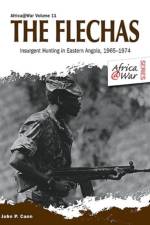
In 1961, Portugal found itself fighting a war to retain its colonial possessions and preserve the remnants of its empire. It was almost completely unprepared to do so, and this was particularly evident in its ability to project power and to control the vast colonial spaces in Africa. Following the uprisings of March of 1961 in the north of Angola, Portugal poured troops into the colony as fast as its creaking logistic system would allow; however, these new arrivals were not competent and did not possess the skills needed to fight a counterinsurgency. While counterinsurgency by its nature requires substantial numbers of light infantry, the force must be trained in the craft of fighting a 'small war' to be effective. The majority of the arriving troops had no such indoctrination and had been readied at an accelerated pace. Even their uniforms were hastily crafted and not ideally suited to fighting in the bush.
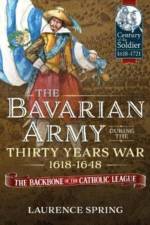
The Bavarian Army was one of only a few armies to have fought throughout the Thirty Years War. This book covers not only the Bavarian Army's organisation, but also recruitment, officers, clothing, weaponry, pay and rations of a soldier during the Thirty Years War.
The book both creates a new and complete narrative of the war in the region, and analyses the administrative structures of the rivals. It also analyses the command structure and regiments under the command of Henry Hastings, Lord Loughborough.
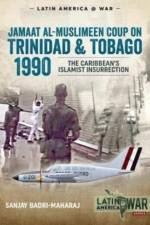
'Trinidad 1990' details the dramatic events of July 1990 and the successfully operation that quelled it. It was a coming of age for the Trinidad and Tobago Defence Force which, without external intervention, contained and then defeated an Islamist uprising. Illustrated by more than 100 photographs, maps and colour profiles.
Abonner på vårt nyhetsbrev og få rabatter og inspirasjon til din neste leseopplevelse.
Ved å abonnere godtar du vår personvernerklæring.