









Gjør som tusenvis av andre bokelskere
Abonner på vårt nyhetsbrev og få rabatter og inspirasjon til din neste leseopplevelse.
Ved å abonnere godtar du vår personvernerklæring.Du kan når som helst melde deg av våre nyhetsbrev.

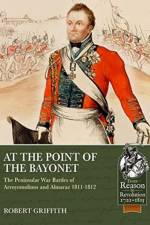
Arroyomolinos and Almaraz showed that Rowland Hill was a general of considerable skill and daring. This is the first detailed study of two small but important actions of the Peninsular War.
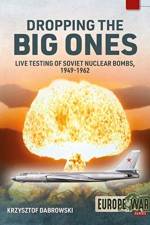
The first English-language publication providing a detailed reconstruction of live-testing of nuclear weapons by crews of the Soviet Bomber Aviation.
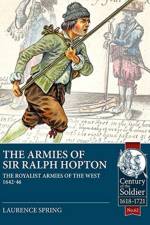
By using contemporary sources this book not only looks at the armies of Sir Ralph Hopton from 1642 to 1646, but also the raising and equipping his men and the campaigns they served in.
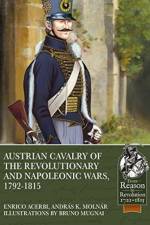
The Austrian cavalry that fought against Revolutionary and Napoleonic France, from original sources, including unpublished iconography and detailed illustrations depicting uniforms and equipment.
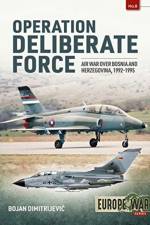
Operation Deliberate Force is the first ever authoritative, inclusive and richly illustrated account of the combat operations run by all of the involved parties during the four dramatic weeks in Bosnia in August and September 1995.
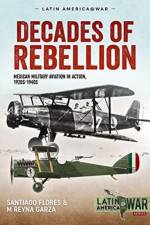
The first authoritative and detailed account of aerial operations over Mexico in the period 1910-1939, and as such an indispensable source of reference for enthusiasts and professionals alike.
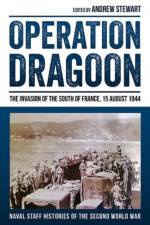
The Allied landings that took place in Southern France in August 1944 represented both one of the concluding elements of the wartime Mediterranean campaign and a decisive follow-on to the invasion of Normandy that had taken place two months before.
"Originally published as Eye of the Firestorm: Strength Lies in Mobility by Naledi, Tyger Valey, South Africa 2013."
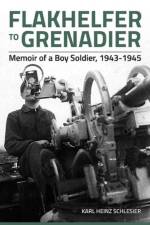
On January 7 1943, the German Government, in order to free adult soldiers for frontline duty, ordered that all male students of secondary schools born in 1926 and 1927 be drafted into anti-air craft service in the homeland. Students were to arrive in batteries on February 18 1943. After serving from one year (those born in 1926) to thirteen months (those born in 1927), the boys were transferred into the Reich Labor Service and from there into the armed forces. They were replaced by boys born in 1928 who served to the end of the war. About 200,000 boys became Flakhelfer. Most were called up at sixteen, but many, like the author, Karl Heinz Schlesier, were only fifteen. The boys served in batteries of light and heavy flak. Although the government insisted school programs continue for Flakhelfer, the effort was a sham, especially where heavy bombing occurred. Schlesier, a student of Rethel Gymnasium in Düsseldorf, served as Flakhelfer in the regions that suffered the most numerous and heaviest air raids of the war in the Rhineland (Düsseldorf) and the Ruhr (Recklinghausen). His is a coming of age story in a world gone mad, where a teenage boy launched shrapnel into a sky filled with bombers, where Christmas-tree-like flares marked cities about to burn, where working beside Russian POWs, protecting industries with slave labor, courting a girl among bombed-out ruins, and spending leave with family hiding in claustrophobic bomb shelters was unremarkable, as was finally being thrown, unprepared, into a disintegrating frontline only fifty kilometers from his childhood home. The memoir is based solely on Schlesier's diary notes and memories of that period. He has consciously avoided including what he learned after the war. His views, opinions, and interpretations of events are from inside the Germany of that time. If some are inconvenient today, they mirror the chaos of the world he experienced. Then, to live or not to live was accidental. Schlesier wrote this memoir as an old man in response to a granddaughter's question about what he did in the war. This is his answer. Perhaps, he also gives a voice to the silent generation of boys born in Germany in 1926 and 1927. This generation has been silent because the horror it knew pales in comparison to the horror of the Holocaust.
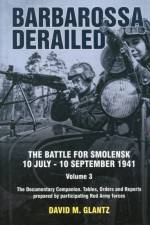
Volume 3, the documentary companion to Barbarossa Derailed, contains the documentary evidence for the two volumes of narrative. In addition to key Führer Directives issued by Adolf Hitler to provide direction to his forces during the Barbarossa Campaign, this book includes the daily operational summaries of the participating Soviet fronts, armies,
"The 1919-1920s Red Army lectures on Afghanistan by the Russian Empire's and the Soviet Union's foremost Orientalist and Afghanistan expert."--t.p.
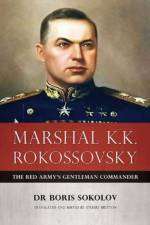
Russian edition published in 2009 by Molodaia Gvardiia as Rokossovskii.
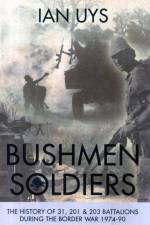
The Bushman soldiers were the most outstanding all-round fighters of the Border War. As the first of the indigenous population to take up arms on South Africa's behalf, they were among the last to lay them down. The border's oldest and most bush-wise people, they became feared as relentless trackers and dedicated soldiers.
With Trumpet, Drum and Fife' is described as a 'short treatise covering the rise and fall of military musical instruments on the battlefield'. Despite there being a plethora of books about military music, 'With Trumpet, Drum and Fife' stands out from the crowd in that it explores new areas of the world of military musical instruments. It is easy to read format and conciseness unwraps a depth and breadth of detail contained within. The chapters of the book guide you from the Ancient World through to the Restoration and up to the modern day giving examples of the origins and developments of the instruments employed. The author gives unique and well-researched accounts of the role of drummers within the military environment. The text explores the historical context of land battles and the importance of signaling instruments used in times of conflict. The status and pecking order of musicians within the military and the unique development of Drummers' uniforms are also detailed with the images contained within the book highlighting specific areas of interest.
Originally published by Greenwood Press, 1997.
In the wake of the Red Army's signal victory at Stalingrad, which began when its surprise counteroffensive encircled German Sixth Army in Stalingrad region in mid-November 1942 and ended when its forces liquidated beleaguered Sixth Army in early February 1943, the Soviet High Command (Stavka) expanded its counteroffensive into a full-fledged winter offensive which nearly collapsed German defenses in southern Russia. History has recorded the many dramatic triumphs the Red Army achieved during the initial phases of this winter offensive, culminating with its rapid advance deep into the Donbas and Khar'kov regions in February 1943. It has also described the subsequent feats of German Field Marshall Erich von Manstein, who, tasked by his Führer, Adolph Hitler, to restore German fortunes in southern Russia, skillfully orchestrated a counterstroke of his own that indeed restored stability to Germany's defenses in the East and paved the way for the climactic battle of Kursk in July 1943. As is so often the case, however, history has misled its audience for several cogent reasons. On the one hand, the Soviet Union and its historians, anxious to conceal the ambitiousness of its offensive and, at the same time, preserve the reputations of the Red Army and its senior commanders, willfully avoided describing the offensive's true scope and the many failures and shortcomings the Red Army experienced during its conduct. On the other hand, German and other Western historians, frequently basing their accounts on inaccurate Soviet sources, focused only on the most dramatic aspects of the offensive, ignoring much of their adversary's actions and, not coincidentally, missing his intent. This volume, and the series that provides it context, restores the lost and concealed to the historical record. Exploiting newly released Russian archival materials, it reveals the unbounded ambitions that shaped the Stavka's winter offensive and the full scope and scale of the Red Army's many offensive operations. For example, it reflects on recently rediscovered Operation Mars, Marshal Zhukov's companion-piece to the more famous Operation Uranus at Stalingrad. It then reexamines the Red Army's dramatic offensive into the Donbas and Khar'kov region during February, clearly demonstrating that this offensive was indeed conducted by three rather than two Red Army fronts. Likewise, it describes how the Stavka expanded the scale of its offensive in mid-February 1943 by ordering major strategic efforts, hitherto ignored, by multiple Red Army fronts along the Western (Orel-Smolensk) axis and, in Zhukov's forgotten operation Polar Star, along the Northwestern (Demiansk-Leningrad) axis as well. Finally, by restoring the full scope of these failed or partially failed Red Army offensives to history, this volume also reassesses the impact of Manstein's dramatic counterstrokes in the Donbas and Khar'kov regions, concluding that their impact was equivalent to that of a full-fledged strategic counteroffensive. This study includes over 100 operational maps to highlight key aspects of the offensives.
The Hungarian armed forces (known as the Honvédség) were built up in the 1930s, their expansion gaining momentum once Hungary became free of the strict post-WWI Trianon treaty limitations in August 1938. Politically, Hungary was looking for a strong ally, who would help it to recover at least some of the territories containing sizable Magyar ethnic populations that had been lost after the First World War. Initially, in the mid-1930s, Italy gave political assistance and supplied military material, then - on the eve of WWII - Germany also lent support.In November 1938, Hungary managed to peacefully recover a chunk of its former territory from Czechoslovakia, followed by the Sub-Carpathian area during a brief border war in March 1939, then the northern part of Transylvania from Rumania in August 1940. Later, in April 1941, the Bachka region and parts of Baranya were also taken back from the dismembered Yugoslavia, in a swift military action. The rub was that Hungary was sucked into the cauldron of the Eastern front, and soon the Honvéds (Hungarian soldiers) found themselves deep in Soviet territory, outgunned and outnumbered by the Red Army. Later on, from August 1944, the beleaguered Honvédség had to fight against the mighty Soviet army in defense of its own territory. Alongside tiny Croatia, Hungary remained the last German ally up to the bitter end.This comprehensive reference, to be published in two volumes, and the fruit of over twenty years of meticulous research, strives to provide a complete picture of the Hungarian armed forces between the years 1919-1945. It starts with a brief history of the Magyars, describes the political situation in Hungary before and during WWII, the building of the armed forces, the growth of domestic arms manufacturers, the organization of the armed forces units and how they changed during the war. The various campaigns of the war are described in great detail, illustrated with many photographs and maps.This, the first volume, contains approximately 550 photographs, many previously unpublished, as well as numerous tables and maps of the various campaigns. The authors drew on official Hungarian and German archives, and a multitude of private sources, both from individuals living in Hungary and Hungarian émigrés from the Western Diaspora. The result of this Herculean effort is a two-volume series destined to be the reference work on the topic, a must for people fascinated by military history, or generally interested in the 1100-year-long rich history of Hungary and its Magyar Warriors. Volume 2 will cover all small arms, artillery, soft-skin and armored vehicles, motorcycles, as well as aircraft, the insignia, markings and camouflage of armored vehicles and aircraft, both of Hungarian indigenous design and those supplied by Germany and Italy, complete with technical data, production and delivery figures. An extensive selection of b/w photographs and color plates will be included.
This groundbreaking new study, now significantly expanded, exploits a wealth of Soviet and German archival materials to present a detailed mosaic and definitive account of what took place, why, and how during the prolonged and complex battles in the Smolensk region from 10 July through 10 September 1941. The structure of the study is designed speci
Paperback reprint of the newly typeset edition by Helion & Company, Solihull, West Midlands, England, 2004.
Virtually born in battle, collecting precious combat experience and playing involved in so many conflicts, the Iraqi Air Force remains one of the most misinterpreted military services in the Middle East. Wings over Iraq provides a uniquely compact yet comprehensive guide to its operational history, officers, aircraft, and major operations.
In 1961, Portugal found itself fighting a war to retain its colonial possessions and preserve the remnants of its Empire. It was almost completely unprepared to do so, and this was particularly evident in its ability to project power and to control the vast colonial spaces of Africa. Following the uprisings of March 1961 in the north of Angola, Portugal poured troops into the colony as fast as its creaking logistic system would allow; however, these new arrivals were not competent and did not possess the skills needed to fight a counterinsurgency. While counterinsurgency by its nature requires substantial numbers of light infantry, the force must be trained in the craft of fighting a ¿small war¿ to be effective. The majority of the arriving troops had no such indoctrination and had been readied at an accelerated pace. Even their uniforms were hastily crafted and not ideally suited to fighting in the bush. In reoccupying the north and addressing the enemy threat, Portugal quickly realized that its most effective forces were those with special qualifications and advanced training. Unfortunately there were only very small numbers of such elite forces. The maturing experiences of the Portuguese and their consequent adjustments to fight a counterinsurgency led to the development of specialized, tailored units to close the gaps in skills and knowledge between the insurgents and their forces. This book is about the fuzileiros or Portuguese marines, a naval force that operated in the riverine littorals of Africa and that was both feared by the enemy and loved by those loyal to Portugal. The fuzileiros underwent one of the longest and most physically demanding specialist infantry training regimes in the world, lasting some forty-two weeks. Perhaps only 15 to 35 percent of the inductees eventually passed the course and were awarded the traditional and highly coveted navy blue beret. When deployed to Africa, they underwent further acclimation for weeks until they were able to move through the slime and mud of a riverbank with ease, as their lives depended on it. They became experts at riverine warfare and regularly ranged inland on extended patrols, many of which are recounted here. They were comfort able with the uncomfortable fighting nvironment, and this ability translated into an unpredictability that the enemy feared. This book is the story of how they came to be formed and organized, the initial teething difficulties, and their unqualified successes.
The North African campaign was one of the hardest fought episodes of the Second World War, yet the vital part played by the Italian Army is frequently overlooked. The key theme of the book is the Folgore Parachute Division's involvement in the Axis war effort through an analysis of their training, weaponry and battle tactics.
Abonner på vårt nyhetsbrev og få rabatter og inspirasjon til din neste leseopplevelse.
Ved å abonnere godtar du vår personvernerklæring.