






Gjør som tusenvis av andre bokelskere
Abonner på vårt nyhetsbrev og få rabatter og inspirasjon til din neste leseopplevelse.
Ved å abonnere godtar du vår personvernerklæring.Du kan når som helst melde deg av våre nyhetsbrev.

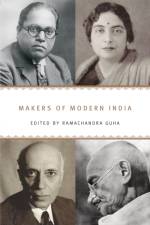
Modern India is the world's largest democracy, a sprawling, polyglot nation containing one-sixth of all humankind. Makers of Modern India collects for the first time the writings of nineteen of India's foremost thinker-activists, ranging from legends like Gandhi and Nehru to pioneering subaltern and feminist thinkers.
John and George Keats-Man of Genius and Man of Power-embodied sibling forms of Romanticism. George's emigration to the U.S. frontier created an abysm of loneliness and alienation in John that would inspire his most plangent and sublime poetry. Gigante's account places John's life in a transatlantic context that has eluded his previous biographers.
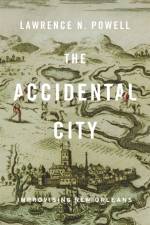
America's most beguiling metropolis started out as a snake-infested, hurricane-battered swamp. Through intense imperial rivalries and ambitious settlers who risked their lives to succeed in colonial America, the site became a crossroads for the Atlantic world. Powell gives us the full sweep of the city's history from its founding through statehood.
Rule of law has vanished in America's criminal justice system. Prosecutors decide whom to punish; most accused never face a jury; policing is inconsistent; plea bargaining is rampant; and draconian sentencing fills prisons with mostly minority defendants. The author looks to history for the roots of these problems - and solutions.
Transcendentalism went underground for a stretch, but is back in full force in Brandom's new book. An emphasis on our capacity to reason, rather than merely to represent, has been growing in philosophy over the last 30 years, and Brandom has been at the center of this development. This is a paradigmatic work of contemporary philosophy.
As the twentieth century ended, computers, the Internet, and nanotechnology were central to modern American life. Yet the physical advances underlying these applications are poorly understood and underappreciated by U.S. citizens. In this overview, Cassidy views physics through America's engagement with the political events of a tumultuous century.
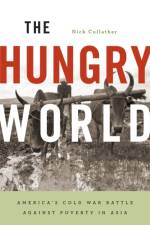
Tells the history of how the United States government, along with private philanthropies like the Ford and Rockefeller foundations, aimed to win the hearts and bodies of rural Asia in the post World War II decades by crafting strategies to develop and modernize agriculture and the peasant's way of life.
Legality is a profound work in analytical jurisprudence, the branch of legal philosophy which deals with metaphysical questions about the law. In this book, the author shows how law can be thought of as a set of plans to achieve complex human goals.
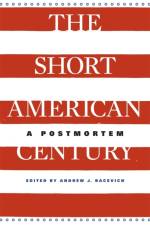
In February 1941, Henry Luce announced the arrival of "The American Century." But that century-extending from World War II to the recent economic collapse-has now ended, victim of strategic miscalculation, military misadventures, and economic decline. Here some of America's most distinguished historians place the century in historical perspective.
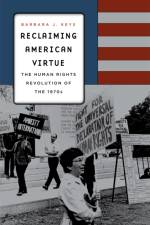
Human rights emerged as a reaction to the Vietnam trauma, Barbara Keys shows. Instead of looking inward for renewal, Americans looked outward for ways to restore their moral leadership. From world's judge to world's policeman was a small step, and intervention in the name of human rights became a cause both the left and right could embrace.
The Patria is a fascinating four-book collection of short historical notes, stories, and legends about the buildings and monuments of Constantinople, compiled in the late tenth century by an anonymous author. It is the only Medieval Greek text to present a panorama of the city as it existed in the middle Byzantine period.
Lorenzo Valla (1406-1457) was the leading philologist of the first half of the fifteenth century, as well as a philosopher, theologian, and translator. His extant Latin letters, though few, afford a direct and unguarded window into the working life of the most passionate, difficult, and interesting of the Italian humanists.
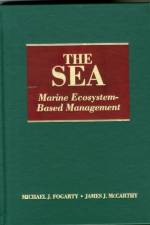
Any viable strategy for sustaining the world's oceans must reflect the relationships among all ecosystem components, human and nonhuman species included. Marine Ecosystem-Based Management is a state-of-the-art synopsis of the conservation approaches that are currently being translated from theory to action on a global scale.
African Hebrew Israelites of Jerusalem are often dismissed as a fringe cult, but John L. Jackson questions what "fringe" means when cultural practices of every stripe circulate freely on the Internet. He reveals how race, religion, and ethnographic representation must be understood anew in the 21st century lest we reenact past errors.
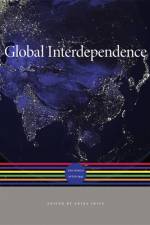
Global Interdependence provides a new account of world history from the end of WWII to the present, an era when transnational communities challenged the long domination of the nation-state. Leading scholars elucidate the political, economic, cultural, and environmental forces that have shaped the planet in the past sixty years.
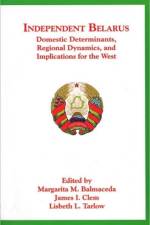
To discuss developments in Belarus, an international group of scholars and policymakers gathered at Harvard University in 1999. The broad spectrum of issues covered is examined in this volume, providing an understanding of Belarus today and its prospects for the future.
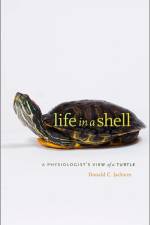
Helps to discover how the turtle's proverbial slowness helps it survive a long, cold winter under ice. In this title, the author offers insight into what exactly it's like to live inside a shell - to carry the heavy carapace on land and in water, to breathe without an expandable ribcage, to have sex with all that body armor intervening.
World War II was a watershed event for many American minorities, but its impact on Chinese Americans has been largely ignored. Using extensive archival research and oral histories and letters from over 100 informants, Wong explores how Chinese Americans carved a newly respected and secure place for themselves during the war years.
This book provides a comprehensive overview of the most significant form of collective religious expression in America: local congregations. Among its more surprising findings, the book reveals that, despite media focus on the political and social activities of religious groups, the arts are far more central to the workings of congregations.
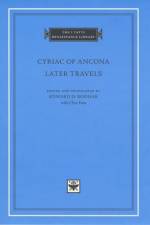
Cyriac of Ancona is sometimes regarded as the father of classical archaeology. Cyriac's accounts of his travels, with commentary reflecting wide-ranging antiquarian, political, religious, and commercial interests, provide a fascinating record of the encounter of the Renaissance world with the legacy of classical antiquity.
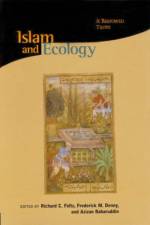
Articulating a contemporary Islamic environmental ethic is all the more urgent because Western-style conservation efforts do not fit all cultural and philosophical traditions. This volume outlines the Islamic world view and reviews the ways it can be interpreted, reassessed, and applied to environmental problems like pollution and water scarcity.
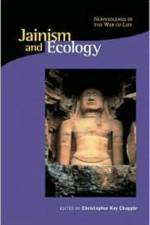
The 2500-year-old tradition of Jainism offers a worldview seemingly compatible with the goals of environmental activism. This volume reflects the dynamic nature of the Jain faith and its willingness to engage in discussion on a modern social issue.
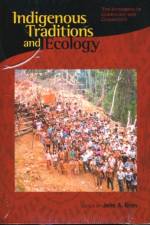
The authors, a diverse group of indigenous and non-native scholars and environmental activists, address urgent questions facing indigenous communities as they struggle with threats to their own sovereignty, increased market and media globalization, and the conservation of endangered bioregions.
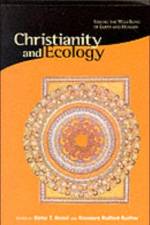
What can Christianity as a tradition contribute to the struggle to secure the future well-being of the earth community? This collaborative volume explores problematic themes that contribute to ecological neglect or abuse and offer constructive insight into and responsive imperatives for ecologically just and socially responsible living.
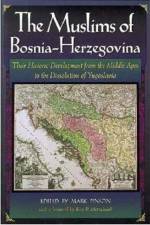
Ranging from medieval times to the collapse of Yugoslavia in 1992, this volume concentrates on the internal development of the Muslim community in Bosnia-Herzegovina and its relations with various suzerains.
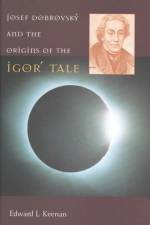
This controversial and groundbreaking book revisits the origins of one of the most beloved works of East Slavic literature, Slovo o polku Igoreve (The Igor' Tale). Keenan argues that the text is not an authentic 12th-century document but rather was created by the Bohemian scholar Josef Dobrovsky in the late 18th century.
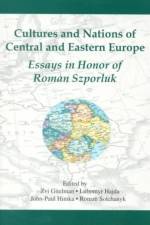
Written in honor of one of the foremost observers of nationalism and culture in Central and Eastern Europe, this volume brings together 35 eminent scholars from the United States, Canada, Ukraine, and Poland. Supplemented by a bibliography of the work of Roman Szporluk, these fresh, urgent essays mirror Szporluk's broad and comparativist approach.
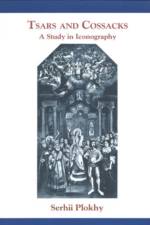
Ukrainian Cossacks used icon painting to investigate their relationship not only with God but also their relationship with the Russian tsar. In this groundbreaking study, Serhii Plokhy examines the political and religious culture of Ukrainian Cossackdom, as reflected in the Cossack-era paintings, icons, and woodcuts.
Abonner på vårt nyhetsbrev og få rabatter og inspirasjon til din neste leseopplevelse.
Ved å abonnere godtar du vår personvernerklæring.