














Gjør som tusenvis av andre bokelskere
Abonner på vårt nyhetsbrev og få rabatter og inspirasjon til din neste leseopplevelse.
Ved å abonnere godtar du vår personvernerklæring.Du kan når som helst melde deg av våre nyhetsbrev.

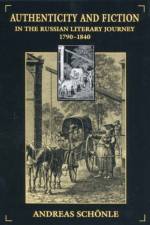
In illuminating analyses of major texts as well as lesser known but influential works, Andreas Schoenle surveys the literary travelogue-a form marked by a fully developed narrator's voice, interpretive impressions, scenic descriptions, and extended narrative-from its emergence in Russia to the end of the Romantic era.
The noted economist Yair Mundlak presents a theory of the growth of the agricultural sector in America within the context of a growing economy. He explores the various aspects of the dynamics of agriculture and their relationship to the dynamics of the economy at large, offering a unique blend of theory, methodology, and empirical analysis.
Examining teaching, graduate training, research, and their ethical context in the research university, Donald Kennedy, former President of Stanford University and currently a faculty member, suggests that meaningful reform cannot take place until more rigorous standards of academic responsibility are embraced by both faculty and the administration.
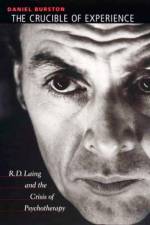
One of the great rebels of psychiatry, R. D. Laing challenged prevailing models of madness and the nature and limits of psychiatric authority. Here, Laing's widely praised biographer distills the essence of Laing's vision, which was religious and philosophical as well as psychological.
The best way to have a full family life and a career is to "halve it all." That's the message of this book, based on interviews with a wide range of couples. Deutsch is skeptical of the story of inequality told since women found themselves working a second shift at home. Equality based on shared parenting is possible and is emerging all around us.
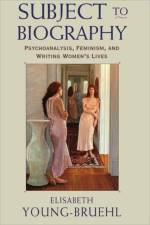
Young-Bruehl here reflects on the relations between self-knowledge, autobiography, biography, and cultural history. She considers what remains valuable in Sigmund Freud's work, and what areas-theory of character, for instance-must be rethought to be useful for current psychoanalytic work, for feminist studies, and for social theory.
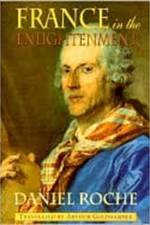
The foremost historian of 18th-century France explores how the Old Regime's institutions operated and how they were understood by the people who worked within them. Roche depicts the "culture of appearances"-the food and clothing, living quarters, and reading material of the peasant, the merchant, the noble, the King, from Paris to the provinces.
Tracing Samuel Johnson's rocky climb from anonymity to fame, in the course of which he came to stand for both the greatness of English literature and the good sense of the common reader, Lipking shows how this life transformed the very nature of authorship.
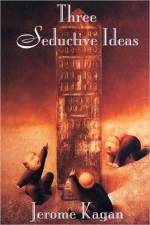
Do the first two years of life really determine a child's future development? Are human beings motivated only by pleasure? Do people have stable traits, like intelligence, fear, anxiety, and temperament? This book, by one of the founders of developmental psychology, takes on the powerful assumptions behind these questions-and proves them mistaken.
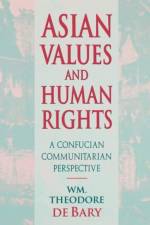
Highlighting Confucianism's philosophical development and Chinese historical experience with community organization, constitutionalism, education, and women's rights, de Bary argues that while the Confucian sense of personhood differs from Western concepts of the individual, it is not incompatible with human rights, but could, rather, enhance them.
Unearthing long-buried plays and songs, rethinking materials often deemed too troubling or lowly to consider, and overturning ideas about classics from Uncle Tom's Cabin to The Jazz Singer, the author offers an original history of blackface as a cultural ritual that, for all its racist elements, was ultimately liberating.
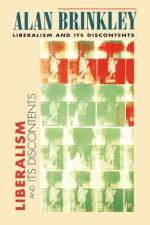
Brinkley offers an account of postwar liberalism since the 1930s. Looking beyond the internal weaknesses of liberalism and the broad social and economic forces it faced, he considers the role of alternative political traditions in liberalism's downfall. What emerges is a picture of a tradition far less uniform and stable than has been argued.
This study of the Wounded Knee trials demonstrates the impact that legal institutions and the media have on political dissent. Sayer draws on court records, news reports, and interviews to show how both the defense and the prosecution had to respond continually to legal constraints, media coverage, and political events outside the courtroom.
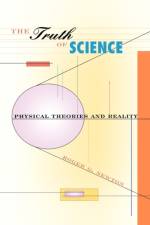
Bringing a reasonable voice to the culture wars that have sprung up around the notion of scientific truth, this book offers a clear and constructive response to those who contend, in parodies, polemics and op-ed pieces, that there really is no such thing as verifiable objective truth--and consequently no such thing as scientific authority.
Through My Own Eyes offers a firsthand look at how single American mothers with the slimmest of resources manage from day to day. For three years the authors followed the lives of fourteen women from poor Boston neighborhoods, all of whom had young children and had been receiving welfare intermittently.
Drawing on medicine, psychiatry, neuroscience, pharmacology, epidemiology, social work, and sociology, this book is an accessible reference on the history and use of cocaine, its physical and psychological effects, the etiology and epidemiology of this addiction, and the pharmaceutical agents and psychosocial interventions used to treat it.
This collection consists of Richard Herrnstein's most important and original contributions to the social and behavioral sciences--his papers on choice behavior in animals and humans and on his discovery and elucidation of a general principle of choice called the matching law.
Technological advance is the key driving force behind economic growth, argues Richard Nelson. Drawing on a deep knowledge of economic and technological history as well as the tools of economic analysis, he exposes the intimate connections among government policies, science-based universities, and the growth of technology.
This book looks at the newly empowered citizens of Russia's protodemocracy facing choices at the ballot box that just a few years ago, under dictatorial rule, they could not have dreamt of. Colton finds that despite their unfamiliarity with democracy, subjects-turned-citizens learn about their electoral options from peers and the mass media.
In these original essays, distinguished scholars of modern East Asia distill from long years of research interpretive accounts of late nineteenth- and twentieth-century China, Japan, and Korea. All of the contributors describe particular features of the modern experience of East Asian countries, while also addressing common themes.
This reinterpretation of the history of modern Spain from the Enlightenment to the threshold of the twenty-first century explains the surprising changes that took Spain from a backward and impoverished nation, with decades of stagnation, civil disorder, and military rule, to one of the ten most developed economies in the world.
Gumbrecht evokes the year 1926 through explorations of such things as bars, boxing, movie palaces, hunger artists, airplanes, hair gel, bullfighting, film stardom, and dance crazes. From the vantage points of Berlin, Buenos Aires, and New York, the reader is immersed in the activities, entertainments, and thought patterns of the citizens of 1926.
Rosselli (1899-1937) was one of the most influential of European antifascist intellectuals. Born into a wealthy Jewish family, and abandoning a career as a professor of political economics, he devoted his fortune and ultimately his life to the struggle against fascism. Pugliese interweaves strands of heresy, exile, and tragedy in this biography.
In this moving and eloquent portrait, Heilbron describes how the founder of quantum theory rose to the pinnacle of German science. He shows how Planck suffered morally and intellectually as his lifelong habit of service to his country and to physics was confronted by the realities of World War I and the brutalities of the Third Reich.
In this rich collection of Sanskrit verse, Ingalls provides English readers with a wide variety of poetry from the vast anthology of an 11th-century Buddhist scholar. Although the style of poetry presented here originated at the royal courts, Ingalls shows how it was adapted to aspects of life as diverse as love, sex, heroes, nature, and peace.
Detailing the unfolding discovery of a crucial link in our evolution, this book is written in the voice of Walker, whose involvement with Proconsul began when his graduate supervisor analyzed the tree-climbing adaptations in the arm and hand of this extinct creature. Today, Proconsul is the best-known fossil ape in the world.
Fraser shows how physicians, public health personnel, and state legislators, beginning at the turn of the century, mounted a campaign ostensibly to improve maternal and infant health, especially in rural areas. They brought traditional midwives under the control of a supervisory body, and eventually eliminated them.
In an exploration of a topic nearly neglected in the current history of the Shoah, Blatman sets out to explain the effort invested by the Nazi regime in liquidating the remnants of the enemies of the "Aryan race" before it abandoned the stage of history.
Abonner på vårt nyhetsbrev og få rabatter og inspirasjon til din neste leseopplevelse.
Ved å abonnere godtar du vår personvernerklæring.