












Gjør som tusenvis av andre bokelskere
Abonner på vårt nyhetsbrev og få rabatter og inspirasjon til din neste leseopplevelse.
Ved å abonnere godtar du vår personvernerklæring.Du kan når som helst melde deg av våre nyhetsbrev.

Completely revised and enlarged with six new chapters, the second edition of Neurons and Networks is an introduction not just to neurobiology, but to all of behavioral neuroscience. It is an ideal text for first- or second-year college students with minimal college science exposure.
In this twenty-fifth anniversary edition of his Bancroft Prize-winning book, Dawley reflects once more on labor and class issues, poverty and progress, and the contours of urban history in the city of Lynn, Massachusetts, during the rise of industrialism in the early nineteenth century.
In a new preface to this foundational book on the American jury, Abramson responds to his critics, defends his views on the jury as an embodiment of deliberative democracy in action, and reflects on recent jury trials and reforms.
The world's multinational enterprises face a spell of rough weather, Vernon argues, not only from the host countries in which they have established their subsidiaries, but also from their home countries. The challenge for policy makers, Vernon argues, is to bridge the quite different regimes of the multinational enterprise and the nation-state.
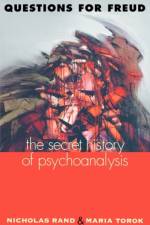
The authors develop a new biographical and conceptual approach to psychoanalysis, one that outlines Freud's contradictory theories of mental functioning against the backdrop of his permanent lack of insight into crucial and traumatic aspects of his immediate family's life.
In this book, senior scholars in the field review and synthesize recent theoretical developments in important areas--optimal taxation, public sector dynamics, distribution theory, and club theory, to name a few--which challenge us to understand and improve public policy.
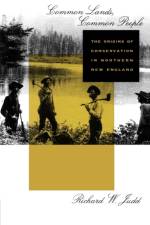
In this innovative study of the rise of the conservation ethic in northern New England, Richard Judd shows that the movement had its roots in the communitarian ethic of countrypeople rather than among urban intellectuals or politicians.
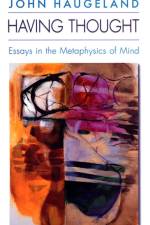
The unifying theme of these thirteen essays is understanding. Haugeland addresses mind and intelligence; intelligibility; analog and digital systems and supervenience; presuppositions about the foundational notions of intentionality and representation; and the essential character of understanding in relation to what is understood.
Statisticians tell us that impoverished backgrounds are decent predictors of impoverished futures. This book seeks out the stories behind the exceptions. While the authors reveal consistencies between pathmakers' approaches and those of their middle-class counterparts, it also exposes striking differences between men and women, blacks and whites.
From his vast storehouse of knowledge about the Adams family, Nagel pulls out the feminine threads of that tapestry to write all about the Adams women, from Abigail to daughter Nabby, from Louisa Catherine Adams, wife of John Quincy, to Clover Adams, wife of Henry, with others making more than cameo appearances.
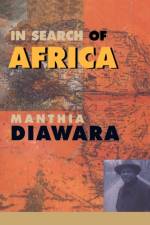
In 1996 Diawara, a distinguished professor of film and literature in New York City, returned to Guinea, 32 years after he and his family were expelled from the newly liberated country. Diawara's journey gives us the story of a quest for a childhood friend, for the past and present, and above all for an Africa that is struggling to find its future.
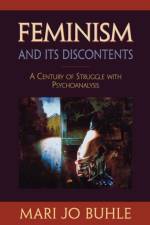
Any encounter between psychoanalysis and feminism would seem to promise a standoff. But in this history, Buhle reveals that the 20th century's two great theories of liberation actually had a great deal to tell each other. She brings together far-flung intellectual tendencies rarely seen in intimate relation-and offers a new way of seeing both.
Between the Civil War and World War II, Catholic charities evolved from volunteer, local origins into a centralized, professional workforce that played a major role in American welfare's development. This book documents the efforts of Catholic volunteers to care for Catholic families and resist Protestant and state intrusions at the local level.
A former NSC staffer, Stern guides us through a post-Cold War world in which the threat of all-out nuclear war is being replaced by the threat of terrorist attacks with weapons of mass destruction. The book depicts a near future in which independent and state-sponsored terrorism using biological, chemical, and nuclear weapons could occur.
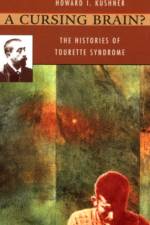
A Cursing Brain? traces the problematic classification of Tourette syndrome through three distinct but overlapping stories: the claims of medical knowledge, patients' experiences, and cultural expectations and assumptions.
Traversing four decades and three continents, Elizabeth Cobbs Hoffman's story of the Peace Corps and the people and politics behind it is a fascinating look at American idealism at work amid the hard political realities of the second half of the twentieth century.
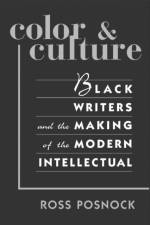
Posnock offers a new historical perspective on "black intellectuals" as a social category, ranging from Douglass to Patricia Williams, from Du Bois to Samuel Delany and Adrienne Kennedy. These writers challenge two durable assumptions: that high culture is "white culture" and that racial uplift is the sole concern of the black intellectual.
The world-renowned dioramas in Harvard's Fisher Museum have introduced New England's landscape to countless visitors and have appeared in many ecology, forestry, and natural history texts. This first book based on the dioramas conveys the phenomenal history of the land, the beauty of the models, and new insights into nature.
In his study of Brandenburg, Germany, Vogt directly challenges both the "antifascist" paradigm employed by East German historians and the "sovietization" interpretive model that has dominated western studies. He argues that Soviet denazification was neither an effective purge of society nor part of a methodical "sovietization" of the eastern zone.
This book mounts a sustained attack on ideas that are dear to many practitioners of analytic philosophy. It rejects the idea that thoughts are essentially representational items whose content is independent of context. In doing so, it undermines the foundations of much contemporary philosophy of mind.
The literary genres given shape by the writers of classical antiquity are central to our own thinking about the various forms literature takes. Examining those genres, the essays collected here focus on the concept and role of the author and the emergence of authorship out of performance in Greece and Rome.
Do drug addicts have an illness, or is the addiction under their control? Should they be treated as patients or as criminals? Challenging the conventional wisdom, the authors draw on recent debate in law, public policy, medicine, and biopsychology to show that these standard dichotomies are themselves false.
Few Americans understand the Constitution's workings. Its real importance for the average citizen is as an enduring reminder of the moral vision that shaped the nation's founding. Maxwell Bloomfield looks at the broader appeal that constitutional idealism has always made to the American imagination through publications and films.
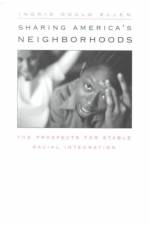
This book presents an encouraging report on the state of racial integration in American neighborhoods. It shows that while the majority are racially segregated, a substantial and growing number are integrated, and remain so for years. Still, many integrated neighborhoods unravel quickly, and the book explores the root causes.
Elder brother of Harvard President Lawrence and poet Amy, Percival Lowell is best known as the astronomer who claimed intelligent beings had built canals on Mars. But the Lowell who emerges here was a polymath: not just a self-taught astronomer, but a shrewd investor, skilled photographer, inspired public speaker, and adventure-travel writer.
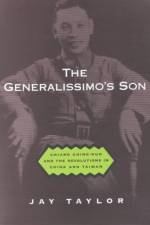
Chiang Ching-kuo led Taiwan on a zigzag but ultimately successful transition from dictatorship to democracy. Jay Taylor underscores the interaction of political developments on the mainland and in Taiwan and concludes that if China ever makes a similar transition, it will owe much to the Taiwan example and the Generalissimo's son.
This landmark guide covers research into every aspect of African-American life and work, offering a compendium of information and interpretation about almost 400 years of African-Americans's experiences as an ethnic group and as Americans. A companion CD-ROM makes more than 15,000 bibliography entries available for computer searching.
Should a lawyer keep a client's secrets even when disclosure would exculpate a person wrongly accused of a crime? When can lawyers justifiably make procedural maneuvers that defeat substantive rights? Simon offers a fresh look at these and other traditional questions about the ethics of lawyering.
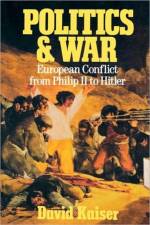
Kaiser looks at 400 years of modern European history to find the political causes of war in four distinct periods, and shows how war became a natural function of politics. In a new preface and chapter, he shows which aspects of four past areas of conflict do-and do not-seem relevant to the near future, and sketches out new possibilities for Europe.
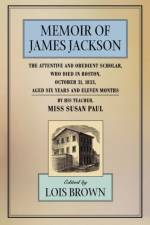
This document-the first African American biography and a work predating Jacobs's Incidents in the Life of a Slave Girl by almost 30 years-is an historical treasure. Paul's portrayal of Jackson's Christian sensibility, his idealism, and his racial awareness emphasizes his humanity and exemplary American character over his racial identity.
Abonner på vårt nyhetsbrev og få rabatter og inspirasjon til din neste leseopplevelse.
Ved å abonnere godtar du vår personvernerklæring.