


















Gjør som tusenvis av andre bokelskere
Abonner på vårt nyhetsbrev og få rabatter og inspirasjon til din neste leseopplevelse.
Ved å abonnere godtar du vår personvernerklæring.Du kan når som helst melde deg av våre nyhetsbrev.

The Battle for Children links two major areas of historical inquiry: crime and delinquency with war and social change. In a study based on impressive archival research, Fishman reveals the impact of the Vichy regime on one of history's most silent groups-children-and offers enlightening new information about the Vichy administration.
For most of us the word "desert" conjures up images of barren wasteland, vast, dry stretches inimical to life. But for a great array of creatures, the desert is a haven and a home. Travel with Mares into the deserts of Argentina, Iran, Egypt, and the American Southwest to encounter a rich and memorable variety of small, tenacious animals.
In a set of cases decided at the end of the 19th century, the Supreme Court declared that Congress had "plenary power" to regulate immigration, Indian tribes, and new territories. Attuned to the demands of a new century, the author argues for abandonment of the plenary power cases, and for more flexible conceptions of sovereignty and citizenship.
This highly successful manual has served for nearly three decades as the definitive guide to the safe use of radioactive materials. Completely revised and updated, the fourth edition presents a new dimension by adding coverage of nonionizing radiation, and is thus concerned with the entire field of radiation protection.
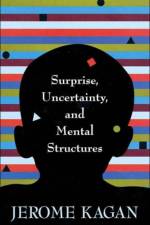
In the distinctive manner that has made him one of the most influential forces in developmental psychology, Kagan challenges scientific commonplaces about mental processes, pointing in particular to the significant but undervalued role of surprise and uncertainty in shaping behavior, emotion, and thought.
This collection of essays, which originally appeared as a book in 1962, is virtually the complete works of an editor of Commentary magazine who died, at age 37, in 1955. Long before the rise of Cultural Studies as an academic pursuit, in the pages of the best literary magazines of the day, Robert Warshow wrote analyses of the folklore of modern life that were as sensitive and penetrating as the writings of James Agee, George Orwell, and Walter Benjamin. Some of these essays--notably The Westerner, The Gangster as Tragic Hero, and the pieces on the New Yorker, Mad Magazine, Arthur Miller's The Crucible, and the Rosenberg letters--are classics, once frequently anthologized but now hard to find. Along with a new preface by Stanley Cavell, The Immediate Experience includes several essays not previously published in the book--on Kafka and Hemingway--as well as Warshow's side of an exchange with Irving Howe.
The story of West Indian immigrants to the United States is generally considered to be a great success. Mary Waters, however, tells a very different story. She finds that the values that gain first-generation immigrants initial success are undermined by the realities of life and race relations in the United States.
The public is right to be concerned about child protective services, shows Waldfogel, but many perceptions of the CPS system and the problems it is designed to alleviate are inaccurate. This book goes beyond the headlines, using historical, comparative, and specific case data to formulate a new approach to protecting children.
Taking us to Gombe National Park in Tanzania, a place made famous by Jane Goodall's studies, the book offers a close look at how predation by wild chimpanzees-observable in the park as nowhere else-has influenced the behavior, ecology, and demography of a population of red colobus monkeys.
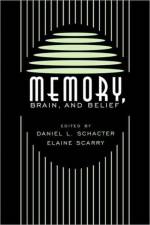
The scientific research literature on memory is enormous, yet no single book has focused on the complex interrelationships of memory and belief. This book brings together scholars from neuroscience, cognitive psychology, literature, and medicine to discuss such provocative issues as "false memories," retrospective biases, and implicit memory.
How far should society go in permitting people to buy and sell goods and services? Radin addresses this controversial issue in an exploration of contested commodification. As a philosophical pragmatist, the author argues for an incomplete commodification, in which some contested things can be bought and sold, but only under regulated circumstances.
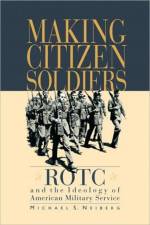
In his examination of the Reserve Officers Training Corps (ROTC), Michael Neiberg argues that the creation of officer education programs on civilian campuses emanates from a traditional American belief (which he traces to the colonial period) in the active participation of civilians in military affairs.
Kozulin argues that the Vygotskian concept of "psychological tools" offers a useful way to analyze cross-cultural differences in thought and to develop practical strategies for educating immigrant children from widely different cultures.
Gordon reveals a complex history of contest and confrontation in the Japanese workplace. Beginning with Occupation reforms and their influence, Gordon traces worker activism and protest in the 1950s and '60s, and how they gave way to management victory in the 1960s and '70s.
Focusing on the nineteenth century, Goldman recounts the emergence of new roles for American Jewish women in public worship and synagogue life. Goldman's study of changing patterns of female religiosity is a story of acculturation-of adjustments made to fit Jewish worship into American society.
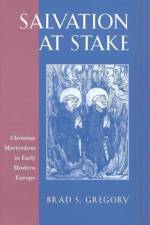
Thousands were executed for incompatible religious views in 16th-century Europe. The meaning and significance of those deaths are studied here comparatively, providing an argument for the importance of martyrdom as a window onto religious sensibilities and a crucial component in the formation of divergent Christian traditions and identities.
This book examines the first great law and economics movement in the early part of the twentieth century through the work of one of its most original thinkers, Robert Hale.
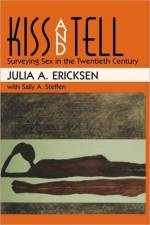
Kiss and Tell chronicles the history of sex surveys in the United States over a century of changing social and sexual mores. Julia Ericksen and Sally Steffen reveal that the survey questions asked, more than the answers elicited, expose and shape the popular image of appropriate sexuality.
Ranging from the 1860s when women first sought entrance into law to the 1930s when most institutional barriers had crumbled, this book defines the contours of women's integration into the most rigidly gendered profession.
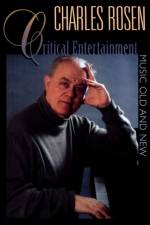
This book brings together many of the essays that have established Rosen as one of the most influential and eloquent voices in the field of music in our time. They cover a broad range of musical forms, historical periods, and issues, offering enlightenment on subjects as diverse as music dictionaries and the aesthetics of stage fright.
In a learned and lively narrative discussing over 200 significant rulings, Lucas A. Powe, Jr. explores why the Supreme Court under Chief Justice Earl Warren was the most revolutionary and controversial Supreme Court in American history. Powe finds the Warren Court to be a functioning partner in Kennedy-Johnson liberalism.
The result of a study that followed hundreds of teen-aged girls for three years, this book reveals the subtleties, the complexities, and the realities of girls' ideas about their shapes, eating habits, and physical ideals. Nichter uses an engaging narrative style to explore the influence of peers, family, and media on girls' sense of self.
Cardano was an Italian doctor, natural philosopher, and mathematician who became a best-selling author. He was also a leading astrologer, who trafficked with some of Renaissance Europe's most powerful people. Grafton follows this astrologer's extraordinary career and explores the discipline of astrology in the hands of a brilliant practitioner.
Part ecological and historical puzzle, this book brings a vanished countryside to life and offers a rich record of human imprint upon the land. With Thoreau as muse, Foster adds the perspective of a modern forest ecologist and landscape historian, using the journals to trace themes of historical and social change.
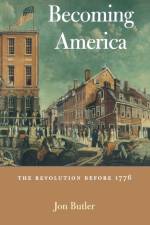
In his view of Britain's mainland American colonies after 1680, Butler reveals a strikingly "modern" character belying the quaintness fixed in history. Multinational, profit-driven, materialistic, politically self-conscious, power-hungry, religiously plural-the colonies became a "new order of the ages" anticipating the American Revolution.
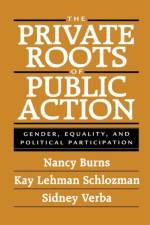
Why, after several generations of suffrage and a revival of the women's movement in the late 1960s, do women continue to be less politically active than men? The Private Roots of Public Action is the most comprehensive study of this puzzle of unequal participation.
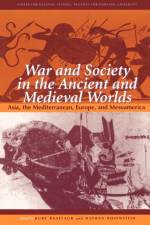
The product of a colloquium at Harvard's Center for Hellenic Studies, this volume offers a broadly based, comparative examination of war and military organization in their complex interactions with social, economic, and political structures as well as cultural practices.
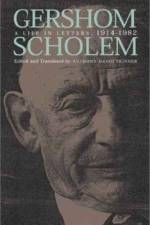
Perhaps the greatest scholar of Jewish mysticism in the twentieth century, Scholem (1897-1982) once said of himself, "I have no biography, only a bibliography." Yet, in thousands of letters written over his lifetime, his biography does unfold, inscribing a life that epitomized the intellectual ferment and political drama of an era.
This book reasserts the importance of the French Revolution to an understanding of the nature of modern European politics and social life. Livesey argues that the European model of democracy was created in the Revolution, a model with very specific commitments that differentiate it from Anglo-American liberal democracy.
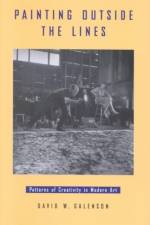
In a work that brings new insights, and new dimensions, to the history of modern art, David Galenson examines the careers of more than 100 modern painters to disclose a fascinating relationship between age and artistic creativity.
Abonner på vårt nyhetsbrev og få rabatter og inspirasjon til din neste leseopplevelse.
Ved å abonnere godtar du vår personvernerklæring.