









Gjør som tusenvis av andre bokelskere
Abonner på vårt nyhetsbrev og få rabatter og inspirasjon til din neste leseopplevelse.
Ved å abonnere godtar du vår personvernerklæring.Du kan når som helst melde deg av våre nyhetsbrev.

This biography of statesman Edmund Burke (1730-1797), covering three decades, is the first to attend to the complexity of Burke's thought as it emerges in both the major writings and private correspondence. David Bromwich reads Burke's career as an imperfect attempt to organize an honorable life in the dense medium he knew politics to be.
By 1945 Washington and London envisioned a new era in which the U.S. shouldered global responsibilities while Britain focused its regional interests narrowly. Mapping the End of Empire reveals how Anglo-American perceptions of geography and perspectives on the Muslim world shaped postcolonial futures from the Middle East to South Asia.
For six terror-filled weeks in 1870 German armies bombarded Strasbourg, killing hundreds of citizens, wounding thousands, and destroying landmarks. Rachel Chrastil tells how the city became the epicenter of a new kind of warfare whose indiscriminate violence shocked contemporaries and led to debates over the wartime protection of civilians.
The Cultural Revolution began from above, yet it was students and workers at the grassroots who advanced the movement's radical possibilities by acting and thinking for themselves. Resolving to suppress the resulting crisis, Mao set events in motion in 1968 that left out in the cold those rebels who had taken it most seriously, Yiching Wu shows.
Giovanni Pontano, the dominant literary figure of quattrocento Naples, wrote two brilliantly original poetical cycles. On Married Love is the first sustained exploration of married love in first-person poetry. Eridanus combines familiar motifs of courtly love with an allusive matrix of classical elegy and Pontano's distinctive vision.
In her introduction to Northanger Abbey--part of Harvard's celebrated annotated Austen series--Susan Wolfson proposes that Austen's most underappreciated, most playful novel is about fiction itself and how it can take possession of everyday understandings. Wolfson's running commentary will engage new readers and delight scholars.
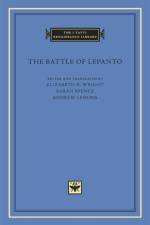
The defeat of the Ottomans by the Holy League fleet at Lepanto (1571) was among the most celebrated international events of the sixteenth century. The Battle of Lepanto anthologizes the work of twenty-two poets who composed Latin poetry in response to the news of the battle, the largest Mediterranean naval encounter since antiquity.
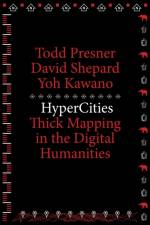
More than a physical space, a hypercity is a real city overlaid with information networks that document the past, catalyze the present, and project future possibilities. Hypercities are always under construction. HyperCities puts digital humanities theory into practice to chart the proliferating cultural records of places around the world.
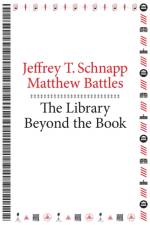
Jeffrey Schnapp and Matthew Battles reflect on what libraries have been in order to speculate about what they will become: hybrid places that intermingle books and ebooks, analog and digital formats, paper and pixels. They combine the cultural history of libraries with innovations at metaLAB, a research group at the forefront of digital humanities.
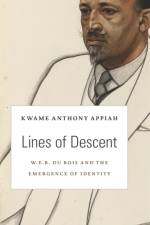
W. E. B. Du Bois never felt so at home as when he was a student in Berlin. Germany was the first place white people had treated him as an equal. But anti-Semitism was prevalent, and Du Bois' challenge, says Kwame Anthony Appiah, was to take the best of German intellectual life without its parochialism--to steal the fire without getting burned.
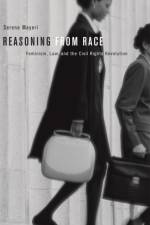
In the 1960s and 1970s, analogies between sex discrimination and racial injustice became potent weapons in the battle for women's rights, as feminists borrowed rhetoric and legal arguments from the civil rights movement. Serena Mayeri's Reasoning from Race is the first history of this key strategy and its consequences for American law.
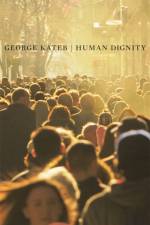
We often speak of the dignity owed to a person. And dignity is a word that regularly appears in political speeches. Charters are promulgated in its name, and appeals to it are made when people all over the world struggle to achieve their rights. But what exactly is dignity? When one person physically assaults another, we feel the wrong demands immediate condemnation and legal sanction. Whereas when one person humiliates or thoughtlessly makes use of another, we recognize the wrong and hope for a remedy, but the social response is less clear. The injury itself may be hard to quantify.Given our concern with human dignity, it is odd that it has received comparatively little scrutiny. Here, George Kateb asks what human dignity is and why it matters for the claim to rights. He proposes that dignity is an "existential" value that pertains to the identity of a person as a human being. To injure or even to try to efface someone's dignity is to treat that person as not human or less than human--as a thing or instrument or subhuman creature. Kateb does not limit the notion of dignity to individuals but extends it to the human species. The dignity of the human species rests on our uniqueness among all other species. In the book's concluding section, he argues that despite the ravages we have inflicted on it, nature would be worse off without humanity. The supremely fitting task of humanity can be seen as a "stewardship" of nature. This secular defense of human dignity--the first book-length attempt of its kind--crowns the career of a distinguished political thinker.
Obesity among American children has reached epidemic proportions. Laura Dawes traces changes in diagnosis, treatment, and popular conceptions of the most serious health problem facing American children today, and makes the case that understanding the cultural history of a disease is critical to developing effective public health policy.
Offering a fresh look at trade during the second industrial revolution, Global Markets Transformed describes a world of commodities on the move--wheat and rice, coffee and tobacco, oil and rubber, all traveling around the planet through commodity chains of producers, processors, transporters, and buyers, often invisible to one another.
Emily Rosenberg examines the social and cultural networks that emerged from global exchanges between 1870 and 1945. Transnational connections were being formed many decades before "globalization" became a commonplace term in economic and political discourse, and these currents underscore the fluidity of spatial and personal identifications.
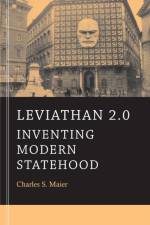
Thomas Hobbes laid the theoretical groundwork of the nation-state in Leviathan, his tough-minded 1651 treatise. Charles Maier's Leviathan 2.0 updates this classic to explain how modern statehood took shape between the mid-nineteenth and mid-twentieth centuries, before it unraveled into the political uncertainty that persists today.
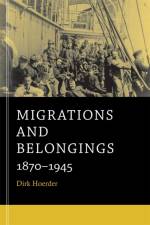
Migrations and Belongings traces burgeoning population flows across several continents from 1870 to 1945 and explains the variables involved and the processes of acculturation by which "belonging" takes shape. Migration, it shows, is both a critique of unsatisfactory conditions in one society and a contribution of human capital to another.
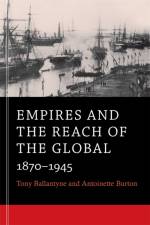
Empire was not fabricated in European capitals and implemented "out there." Imperial systems affected the metropole as well as the farthest outpost. Empires and the Reach of the Global shows how imperialism has been a shaping force not just in international politics but in the economies and cultures of today's world.
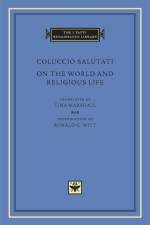
Salutati's first surviving treatise was written for a lawyer who entered a Florentine monastery and requested a piece encouraging him to persevere in religious life. On the World and Religious Life is a wide-ranging reflection on humanity's misuse of God's creation and the need to orient human life with a proper hierarchy of values.
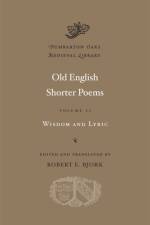
Old English Shorter Poems offers tantalizing insights into the Anglo-Saxon mental landscape. These poems and charms find meaning in the loss of fortune and reputation, exile, and alienation. Wisdom also emerges as folk remedies, such as charms to treat stabbing pain, cysts, childbirth, and nightmares of witch-riding caused by a dwarf.
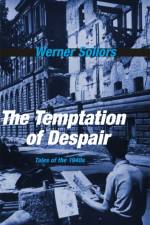
In Germany the end of World War II calls forth images of obliterated cities, hungry refugees, and ghostly monuments to Nazi crimes. Drawing on diaries, photographs, essays, reports, fiction and film, Werner Sollors makes visceral the sorrow and anger, guilt and pride, despondency and resilience of a defeated people--and the paradoxes of occupation.
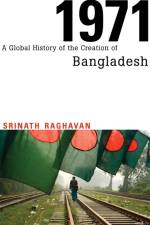
The war of 1971 that created Bangladesh was the most significant geopolitical event in the Indian subcontinent since partition in 1947. It tilted the balance of power between India and Pakistan steeply in favor of India. Srinath Raghavan contends that the crisis and its cast of characters can be understood only in a wider international context.
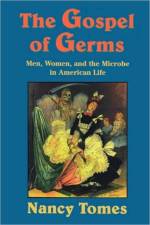
All around us the alarms are going off, warning of the danger of new, deadly diseases. Tomes reminds us this is really nothing new. A remarkable work of medical and cultural history, this book returns to the first great "germ panic" in American history, which peaked in the early 1900s, to explore the origins of our modern disease consciousness.
Since the late 1980s the international relief community has seen its resources stressed beyond capacity by humanitarian crises. Covering topics from emergency public health measures to the psychological trauma of relief workers, this volume presents a seasoned assessment of current practice and proposals for improving operational efforts.
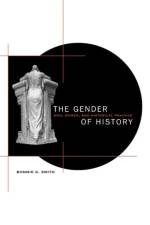
In this study of the gendering of the practice of history, Smith resurrects amateur history written by women in the 19th century-a type of history condemned as trivial by "scientific" male historians. She demonstrates the degree to which the profession defined itself in opposition to amateurism, femininity, and alternative ways of writing history.
Wolfson describes the body of doctrine known as the Kalam. Kalam, an Arabic term meaning "speech" and hence "discussion," was applied to early attempts in Islam to adduce philosophic proofs for religious beliefs. It later came to designate a system of religious philosophy which reached its highest point in the eleventh century.
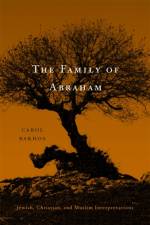
"Abrahamic religions" has gained currency in scholarly and ecumenical circles as a way to refer to Judaism, Christianity, and Islam. Carol Bakhos steps back from the convention to ask: What is Abrahamic about these three faiths? She challenges references to Judaism and Islam as sibling religions and warns against uncritical adoption of the term.
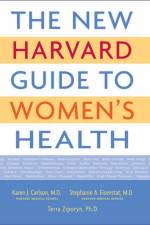
This exhaustive resource offers information on everything from adolescent acne to menopause in the belief that better-informed women can have better partnerships with their physicians.
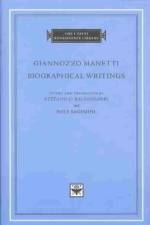
Manetti (1396-1459) was a leading humanist biographer of the Renaissance. This voulme brings together his biographies of Dante, Petrarch, and Boccaccio, which helped establish the canon of Italian literature, and his parallel lives of Socrates and Seneca-the standard biographical sources for those philosophers throughout the early modern period.
Abonner på vårt nyhetsbrev og få rabatter og inspirasjon til din neste leseopplevelse.
Ved å abonnere godtar du vår personvernerklæring.