














Gjør som tusenvis av andre bokelskere
Abonner på vårt nyhetsbrev og få rabatter og inspirasjon til din neste leseopplevelse.
Ved å abonnere godtar du vår personvernerklæring.Du kan når som helst melde deg av våre nyhetsbrev.

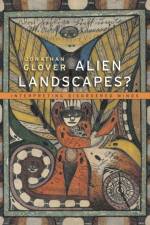
Do people with mental disorders share enough psychology with other people to make human interpretation possible? Jonathan Glover tackles the hard cases-violent criminals, people with delusions, autism, schizophrenia-to answer affirmatively. He offers values linked with agency and identity to guide how the boundaries of psychiatry should be drawn.
For decades, privacy took a back seat to the public's right to know. But as the Internet and changing journalism have made it harder to distinguish news from titillation, U.S. courts are showing new resolve in protecting individuals from invasive media scrutiny. As Amy Gajda shows, this judicial backlash is now impinging on mainstream journalists.
Many legal theorists maintain that laws are effective because we internalize them, obeying even when not compelled to do so. In a comprehensive reassessment of the role of force in law, Frederick Schauer disagrees, demonstrating that coercion, more than internalized thinking and behaving, distinguishes law from society's other rules.
Kant's The Critique of Judgment laid the groundwork of modern aesthetics when it appeared in 1790. Eli Friedlander's reappraisal emphasizes the internal connection of judgment and meaning, showing how the pleasure in judging is intimately related to our capacity to draw meaning from our encounter with beauty.
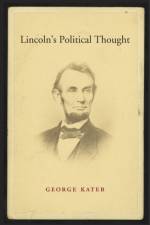
At the center of Lincoln's political thought and career is an intense passion for equality that runs so deep in the speeches, messages, and letters that it has the force of religious conviction for Lincoln. George Kateb examines these writings to reveal that this passion explains Lincoln's reverence for both the Constitution and the Union.
Unemployment, monetary and fiscal policy, and the merits and drawbacks of free markets were a few of the issues the journalist and public philosopher Walter Lippmann explained to the public during the Depression, when professional economists skilled at translating concepts for a lay audience were not yet on the scene, as Craufurd Goodwin shows.
Jessica Pliley links the crusade against sex trafficking to the FBI's growth into a formidable law agency that cooperated with states and municipalities in pursuit of offenders. The Bureau intervened in squabbles on behalf of men intent on monitoring their wives and daughters and imprisoned prostitutes while seldom prosecuting their male clients.
America's rise from revolutionary colonies to a world power is often treated as inevitable. But Charles N. Edel's provocative biography of John Q. Adams argues that he served as the central architect of a grand strategy whose ideas and policies made him a critical link between the founding generation and the Civil War-era nation of Lincoln.
In this story of one man's encounter with an indigenous people of Peru, Michael Brown guides his readers upriver into a contested zone of the Amazonian frontier, where more than 50,000 Awajun-renowned for pugnacity and fierce independence-use hard-won political savvy, literacy, and digital skills to live life on their own terms, against long odds.
Christopher Beauchamp debunks the myth of Alexander Graham Bell as the telephone's sole inventor, exposing that story's origins in the arguments advanced by Bell's lawyers during fiercely contested battles for patent monopoly. The courts anointed Bell father of the telephone-likely the most consequential intellectual property right ever granted.
In Cara Caddoo's perspective-changing study, African Americans emerge as pioneers of cinema from the 1890s to 1920s. But as it gained popularity, black cinema also became controversial. Black leaders demanded self-representation and an end to cinematic mischaracterizations which, they charged, violated the civil rights of African Americans.
Exploring the morally entangled territory of language and race in 18th- and 19th-century America, Sean Harvey shows that whites' theories of an "Indian mind" inexorably shaped by Indian languages played a crucial role in the subjugation of Native peoples and informed the U.S. government's efforts to extinguish Native languages for years to come.
Katherine Grandjean shows that the English conquest of New England was not just a matter of consuming territory, of transforming woods into farms. It entailed a struggle to control the flow of information-who could travel where, what news could be sent, over which routes winding through the woods along the early American communications frontier.
Christopher Pastore traces how Narragansett Bay's ecology shaped the contours of European habitation, trade, and resource use, and how littoral settlers in turn, over two centuries, transformed a marshy fractal of water and earth into a clearly defined coastline, which proved less able to absorb the blows of human initiative and natural variation.
Wilfrid Sellars ranks as one of the leading critics of empiricism-a philosophical approach to knowledge that seeks to ground it in human sense experience. Robert Brandom clarifies what Sellars had in mind when he talked about moving analytic philosophy from its Humean to its Kantian phase and why such a move might be of crucial importance today.
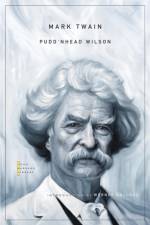
The unsolved riddle at the heart of Pudd'nhead Wilson is less the identity of the murderer than the question of whether nature or nurture makes the man. In his introduction, Werner Sollors illuminates the complex web of uncertainty that is the switched-and-doubled-identity world of Mark Twain's novel.
Since 1945, as the U.S. has engaged in near-constant "wars of choice" with limited congressional oversight, the executive and armed services have shared primary responsibility for often ill-defined objectives, strategies, and benefits. Matthew Moten shows the significance of negotiations between presidents and the generals allied with them.
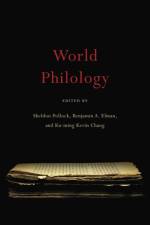
Philology-the discipline of making sense of texts-is enjoying a renaissance within academia. World Philology charts the evolution of philology across the many cultures and time periods in which it has been practiced and demonstrates how this branch of knowledge, like philosophy and mathematics, is essential to human understanding.
Using culture rather than politics or economics as a reference point, Xu Guoqi highlights significant yet neglected cultural exchanges in which China and America have contributed to each other's national development, building the foundation of what Zhou Enlai called a relationship of "equality and mutual benefit."
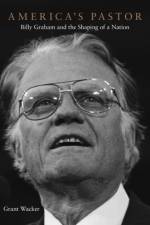
More than a conventional biography, Grant Wacker's interpretive study deepens our understanding of why Billy Graham has mattered so much to so many, and how his uncanny ability to appropriate trends in the wider culture allowed him to transform his born-again theology into a moral vocabulary capturing the aspirations and fears of average Americans.
This translation of the introduction to Wang Hui's Rise of Modern Chinese Thought (2004) makes part of his four-volume masterwork available to English readers for the first time. A leading public intellectual in China, Wang charts the historical currents that have shaped Chinese modernity from the Song Dynasty to the present day.
Political conflicts are not simply manufactured from thin air, Russell Muirhead argues. They originate in authentic disagreements over what constitutes the common welfare. The remedy is not for parties to just get along but to bring a skeptical sensibility to their own convictions and learn to disagree as partisans and govern through compromise.
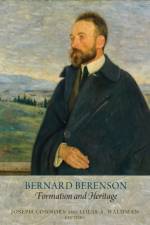
Bernard Berenson: Formation and Heritage explores the intellectual world of Berenson (1865-1959), who put the connoisseurship of Renaissance art on a firm footing at the turn of the twentieth century. Essays explore his relationships with various cultural figures including William James, Jean Paul Richter, Katherine Dunham, and many others.
Arte da Lingua Malabar, a sixteenth-century grammar of Tamil written in Portuguese by a Jesuit missionary, reflects the first linguistic contact between India and the West. This English translation by Jeanne Hein and V. S. Rajam also includes analysis of the grammar and a description of the political context in which it was written.
Baghdad: The City in Verse captures the essence of life lived in one of the world's enduring metropolises. This unusual anthology offers original translations of 170 Arabic poems from Bedouin, Muslim, Christian, Kurdish, and Jewish poets--most for the first time in English--from Baghdad's founding in the eighth century to the present day.
The twelfth-century Latin beast epic Ysengrimus is one of the great comic masterpieces of the Middle Ages. It recounts the persecution of the wolf Ysengrimus--who represents a hybrid abbot-bishop--by his archenemy Reynard the fox. The narrative's details are carefully crafted to make the wolf's punishment fit the abbot-bishop's crime.
The realignment of the social order that occurred over the course of the Sung dynasty set the pattern for Chinese society over most of the later imperial era. Bossler examines that realignment from the perspective of specific families, using data on Sung elites-grand councilors who led the bureaucracy and locally prominent gentlemen in Wu-chou.
Here are nearly 700 hundred previously unpublished letters, postcards, and telegrams representing the three-decade correspondence between Freud and his admiring younger colleague, Ernest Jones, who also became his biographer and a principal player in the development of psychoanalysis in England and the United States.
What happened when the ear tuned to God's voice found itself under the inspection of Enlightenment critics? This book takes us into the ensuing debate about "hearing things"-an intense, entertaining, even spectacular exchange over the auditory immediacy of popular Christian piety.
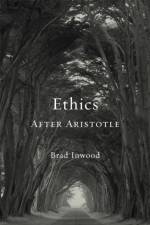
The earliest philosophers thought deeply about ethical questions, but Aristotle founded ethics as a well-defined discipline. Brad Inwood focuses on the reception of Aristotelian ethical thought in the Hellenistic and Roman worlds and explores the thinker's influence on the philosophers who followed in his footsteps from 300 BCE to 200 CE.
Abonner på vårt nyhetsbrev og få rabatter og inspirasjon til din neste leseopplevelse.
Ved å abonnere godtar du vår personvernerklæring.